
Magazine · Identification & dating
Decoding Silver Hallmarks on Pocket Watch Cases
Understanding the complex system of silver hallmarks found on antique pocket watch cases is essential for any serious collector. These markings serve as a chronological roadmap, detailing the purity of the metal and the official assay office responsible for its certification.
November 23, 2026 · 5 min read
AI-drafted from search research. Not yet editorially reviewed — check important facts against the cited sources.
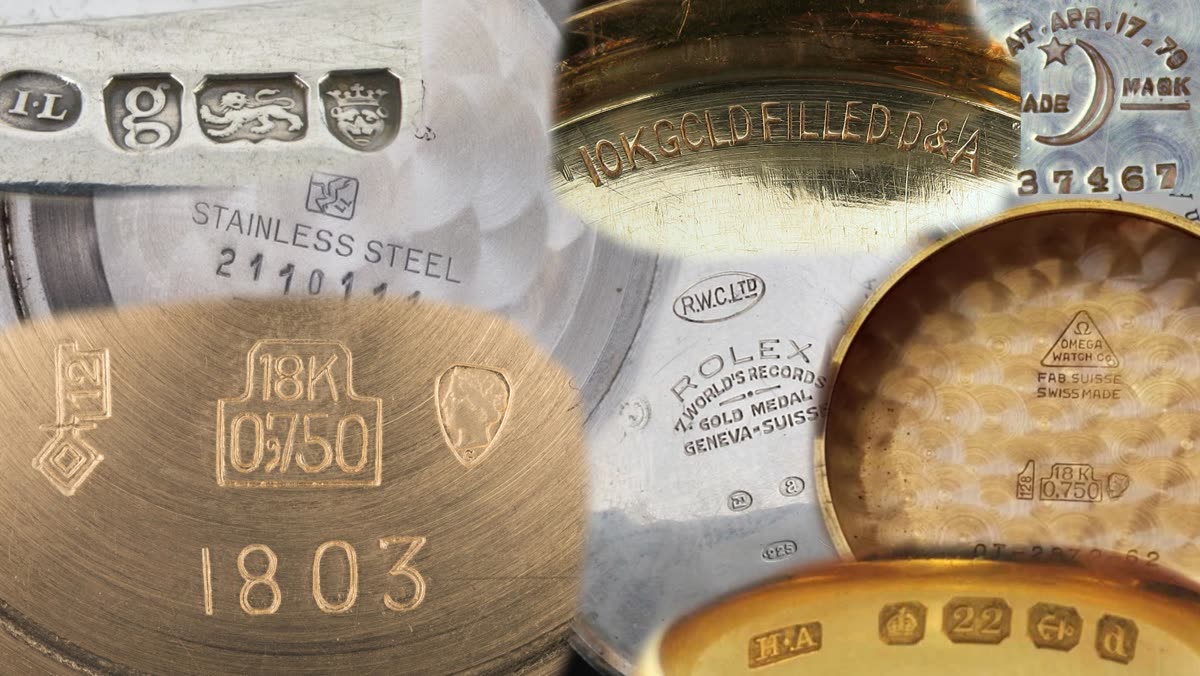
Key takeaways
- Hallmarks certify metal purity and assay date, not the entire watch's manufacturing date.
- British silver hallmarks follow a strict sequence of standard, office, and date marks.
- Swiss and American cases utilize different marking systems, such as the Helvetia or coin silver standards.
- Always use a jeweler's loupe for inspection; marks are often worn or faint.
- Consult specialized records to cross-reference serial numbers for final dating.
What are silver pocket watch hallmarks?
A hallmark is an official mark, or series of marks, stamped onto precious metal items to certify that they have been tested at an assay office and conform to a specific standard of fineness. For the horologist, these marks are the primary documentary evidence for the watch case. It is critical to understand that a hallmark signifies the moment the case was submitted for assay, which may differ from when the movement was manufactured or when the watch was finally assembled and sold [L2].
The practice of hallmarking has roots in the guild systems of medieval Europe, designed to protect the consumer from substandard precious metals. On pocket watches, these marks are usually found inside the back cover or, in the case of 'hunter' models, on the inner dust cover. While the case provides a date of certification, one must be cautious; dating a pocket watch accurately requires synthesizing evidence from the movement, the dial, and the case hallmarks as a collective [L2].
Anatomy of a Case Hallmarking Cluster
How to interpret English silver pocket watch hallmarks
English silver pocket watch hallmarks are arguably the most systematic in the world. They typically appear in a horizontal row and follow a rigid structure defined by the Worshipful Company of Goldsmiths and other provincial offices. The standard mark for sterling silver is the Lion Passant, denoting a fineness of .925. However, you may encounter different fineness marks, such as the Britannia figure, which indicates a higher purity of .958 [L4].
Beyond the metal standard, you must identify the date letter, which changes annually according to the assay office's specific cycle. Because these letter cycles repeat, context is essential. A letter 'A' could represent 1776, 1836, or 1916 depending on the font, the shape of the shield surrounding the letter, and the other accompanying marks. For researchers, these sequences remain the gold standard for verifying the English provincial trade output throughout the eighteenth and nineteenth centuries [L13].
Understanding Swiss silver hallmarks
Swiss watchmaking culture evolved a distinct system of Swiss hallmarks. By the late 19th century, Switzerland mandated specific control marks to regulate the export of watch cases. The most recognizable is the 'Helvetia' (the female personification of Switzerland) for silver, usually accompanied by the 'grouse' or 'capercaillie' symbols. Unlike the English system, Swiss hallmarks are often smaller and may be found on the case bow or the edge of the movement plate, reflecting the industrial integration of case production [L28].
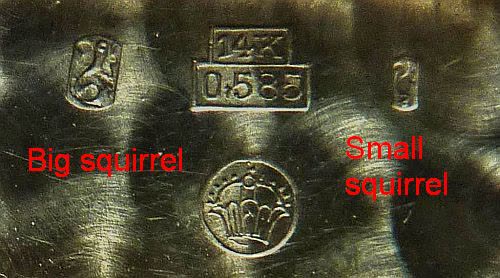
The distinction between coin silver and sterling
In the American market, you will often encounter coin silver cases. These were not typically subject to the same strict assay hallmarking laws as those in Britain. Instead, they were often marked simply as 'Coin,' 'Standard,' or 'Pure Coin,' indicating a fineness of approximately .900. These cases were frequently produced during the mid-to-late 19th century and often lack the formal date letters used by the British Goldsmiths' Company, requiring serial number analysis for precise dating [L15].
How to handle and care for hallmarked cases
When documenting a watch for an archive or insurance, note the presence of repairer's marks or service marks. These are often tiny, hand-scratched initials or numbers found inside the case back. These markings provide a narrative of the watch’s life, reflecting every time it was serviced by a watchmaker. These scratches should never be buffed out, as they are part of the object's provenance [L9].
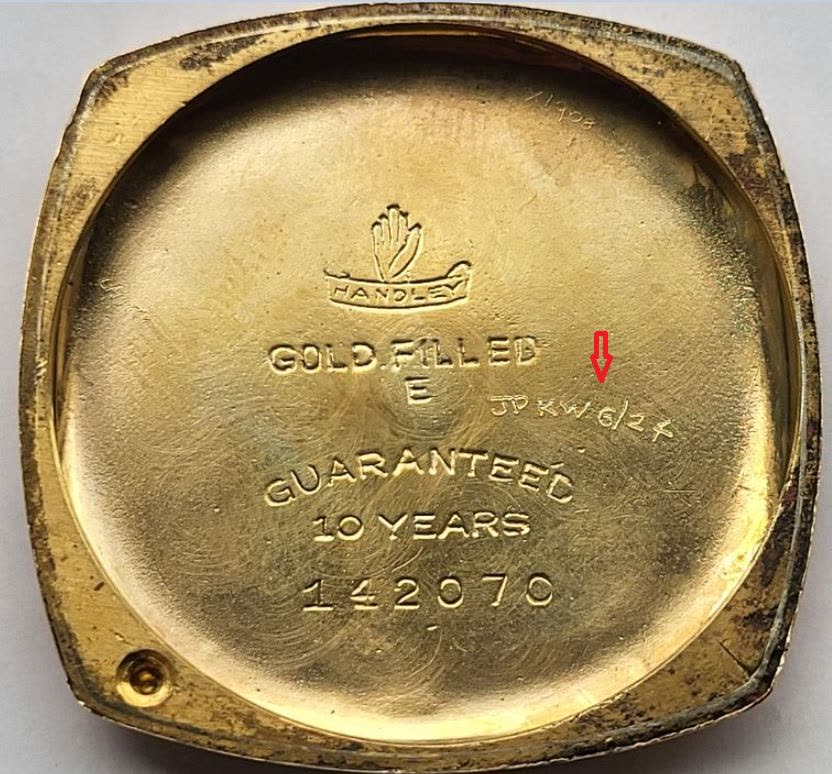
Where can I find makers' marks?
The maker's mark or sponsor's mark is often found adjacent to the silver assay marks. This identifies the individual or firm that registered the case with the assay office. In the UK, this is the primary way to link a watch to a specific factory or workshop. If you are struggling to identify a mark, reference works by Jackson or Priestley are the authoritative sources for cataloging these identities [L16].
How to verify the provenance and metal quality of a stamped case?
Verifying a hallmark requires a standardized approach to minimize error caused by worn strikes or 'pseudo-hallmarks.' Always verify the consistency between the case hallmarks and the movement's hallmarks, if present. A jeweler’s loupe of at least 10x magnification is essential for identifying the fine details of symbols, such as the shape of the surrounding shield or the specific font of a date letter, which are diagnostic indicators.
| Feature | What it suggests | What to check next |
|---|---|---|
| Shield profile | The jurisdiction of the assay office | Match with historical registry plates |
| Date letter font | The specific year of hallmarking | Verify consistency with movement serial dates |
| Maker's mark | The identity of the casemaker | Compare with historical trade directories |
| Purity decimal | The millesimal fineness of the alloy | Look for corroborating standard stamps |
What to record
- Total count and exact location of every individual punch mark.
- The geometric shape (shield, circle, diamond) surrounding each mark.
- The precise sequence of the stamps, as orientation often denotes the order of application.
- Presence of additional 'import' marks, which may indicate the watch was re-hallmarked upon entering a foreign market.
- Condition of the strike; note if the edge of the stamp is flattened or intentionally obscured.
- The presence of any jeweler or retailer scratch marks, which may provide a history of service.
Commonly asked questions regarding markings
Frequently asked questions
Why do some cases have multiple sets of hallmarks?
Multiple sets often occur when a watch was imported into another country. Upon arrival, the host nation required the case to be submitted to their own assay office to ensure it met local purity standards. Consequently, the case may bear both its original manufacturing hallmarks and a secondary set of import marks, providing a record of its commercial journey.
Can I polish my case to make the hallmarks more visible?
No. Polishing removes microscopic amounts of metal and will, over time, soften the edges of the hallmarks or erase them entirely. If the marks are obscured by grime, a professional may use an ultrasonic cleaner or soft-bristled brush. Never use abrasive metal polishes on hallmarked areas, as this constitutes unnecessary material loss that degrades the watch's historical integrity.
Sources
- Priestley, P., Watch Case Makers of England — case makers and responsibility marks
- Priestley, P. T., Watch Case Makers of England — case makers and responsibility marks
- Jackson, C. J., English Goldsmiths and Their Marks — jurisdiction-specific hallmark tables
- Pocket Watch Database — maker-specific movement serial and grade records, a secondary compilation
- Jackson, C. J., English Goldsmiths and Their Marks
- Bly, J. (ed.), Miller's Silver & Sheffield Plate Marks
- Jackson, C. J., English Goldsmiths and Their Marks — hallmark interpretation
- Priestley, P. T., Watch Case Makers of England — case evidence