
Glossary · Trade
Fire-gilding
A traditional, hazardous method of gilding using a mercury amalgam.
Explanation
Fire or mercury gilding applies an amalgam of gold and mercury to a cleaned brass, copper or silver surface. Heating drives off the mercury and leaves a thin, durable layer of gold. It was the standard method for gilding clock cases, ormolu mounts and watch movements before electroplating.
The process released toxic mercury vapour and was largely replaced by electrogilding during the nineteenth century. Fire-gilt surfaces have a characteristic warm, rich colour, and their condition is an important consideration in restoration.
What to record
- Fire gilding is usually thicker and warmer in tone than modern electroplating.
- Worn high points showing brass beneath are normal on handled surfaces.
Never attempt to re-gild by the mercury process; restoration should be done by specialists using safe methods.
In the object catalogue
Catalogued objects whose own source record mentions “Fire-gilding”. The quoted line shows where; it is the seller’s or museum’s wording, not independent verification.
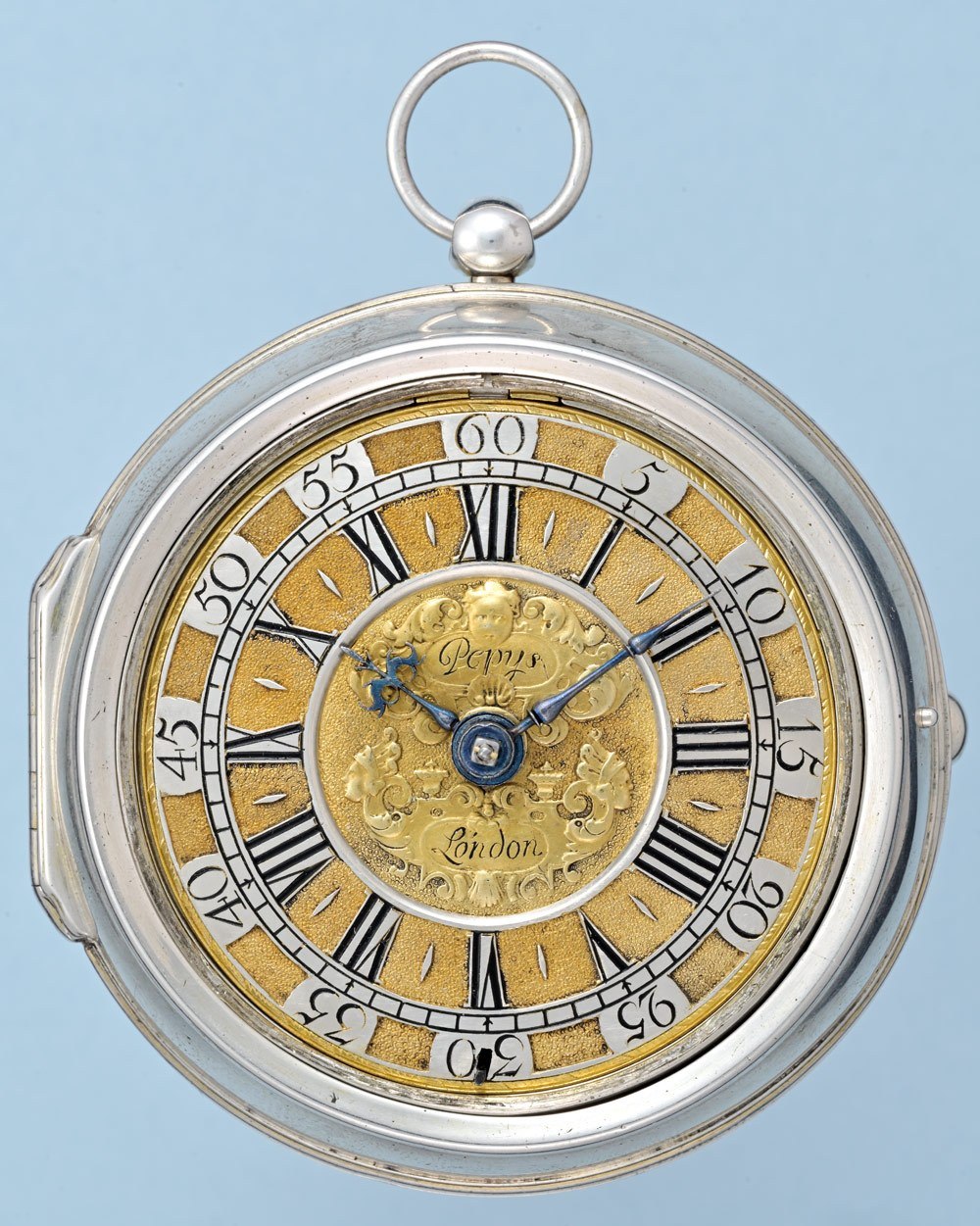
Pocket watch
English Verge Pocket Watch with Silver Pair Cases
“This English verge pocket watch dates to approximately 1700 and is housed in matching silver pair cases. The movement is a full-plate design featuring fire-gilding and is suppor…”
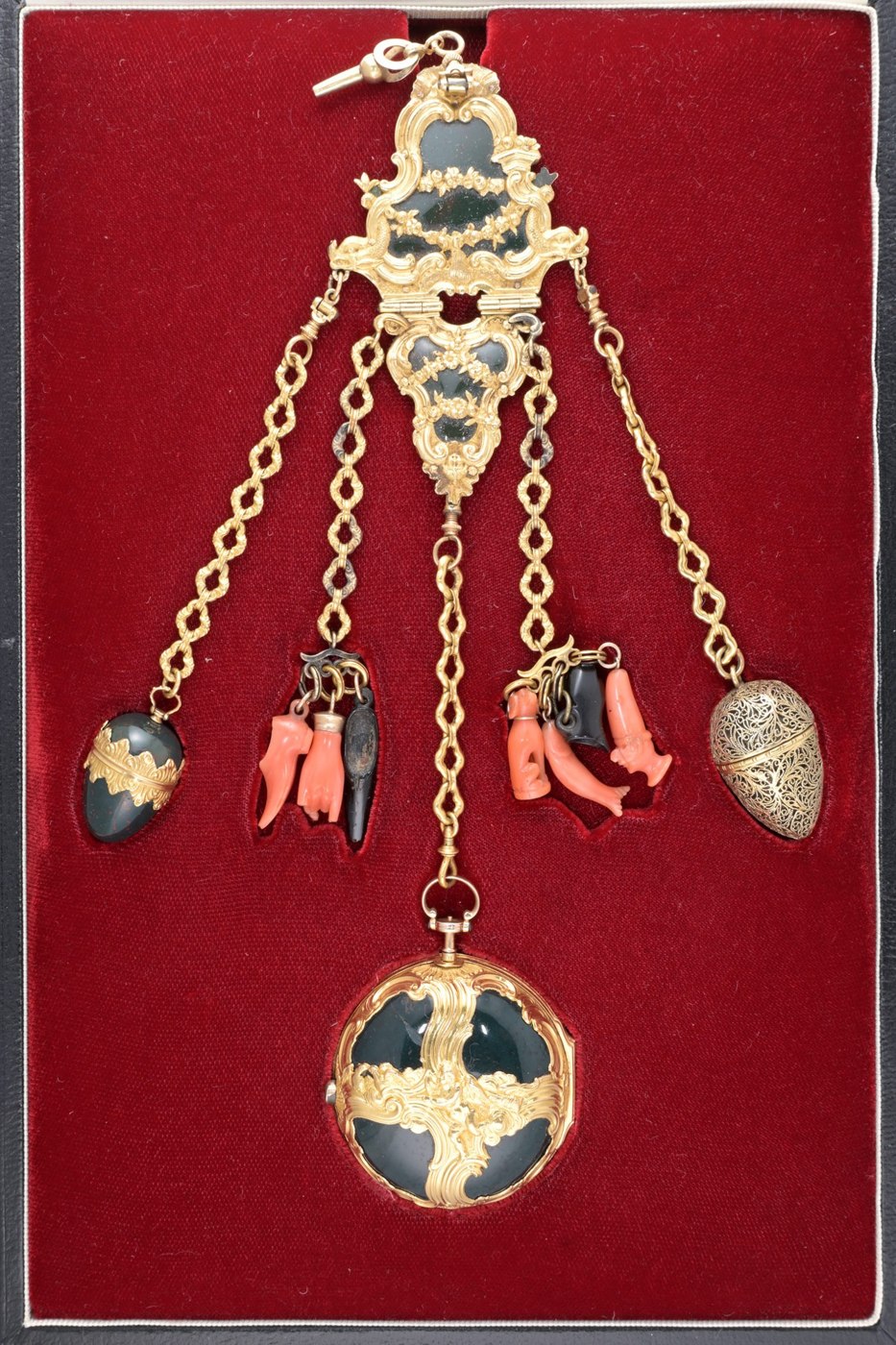
Pocket watch
Gold and Bloodstone Chatelaine Watch
“This mid-18th century English pocket watch is presented with its coordinating chatelaine. The watch features a consular case constructed from polished bloodstone, accented by 22…”