
Glossary · Mechanism
Bar movement
A movement using separate bars instead of a full top plate.
Explanation
A bar movement uses separate bars (bridges) for each wheel or pair of wheels instead of a full or three-quarter plate — the Swiss 'bar' or 'bridge' layout that became standard in quality watches from the mid-19th century. Bars allow individual wheel removal and show the train; the Geneva bar layout is the classic form.
In the object catalogue
Catalogued objects whose own source record mentions “Bar movement”. The quoted line shows where; it is the seller’s or museum’s wording, not independent verification.
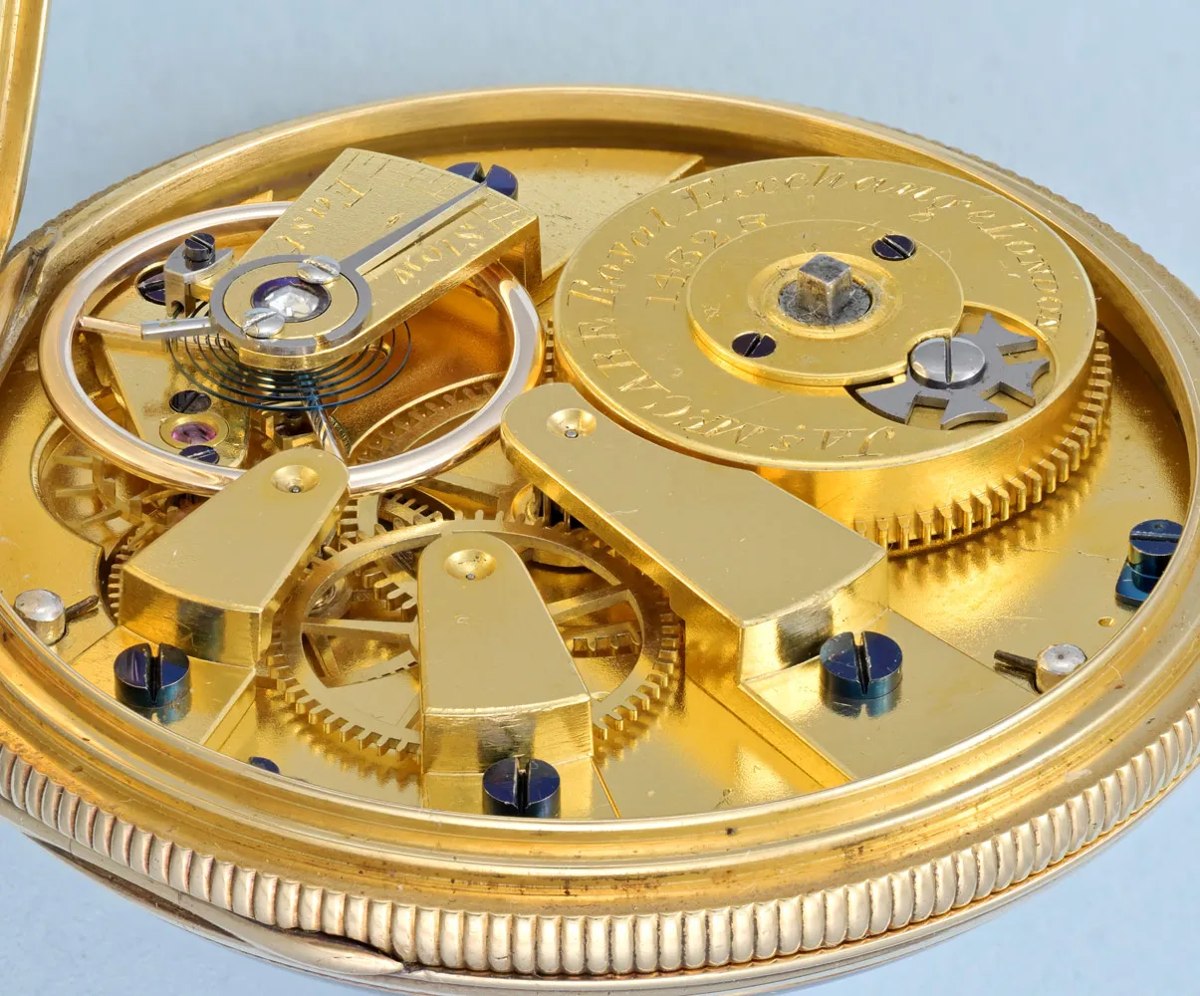
Pocket watch
James McCabe 1834 Gold Lepine Calibre Duplex Pocket Watch
“This nineteenth-century open face pocket watch features a keywind gilt Lepine calibre bar movement with a duplex escapement, crafted by James McCabe of Royal Exchange, London, a…”
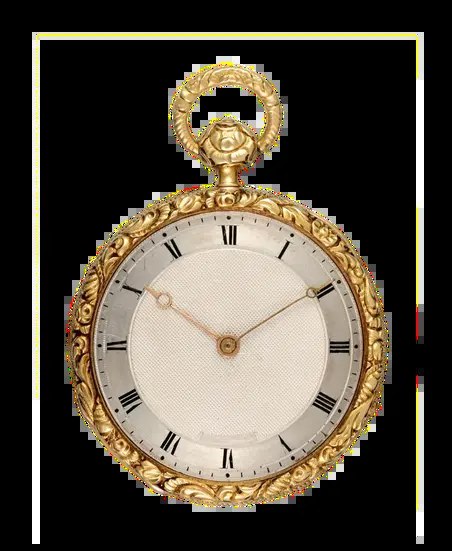
Pocket watch
J F Bautte et Cie Swiss Quarter Repeating Cylinder Pocket Watch
“Reported by the source as dating to circa 1830 and signed by J F Bautte et Cie a Geneve, this open-face pocket watch features a 36 mm 18-carat gold case with heavily chased and …”
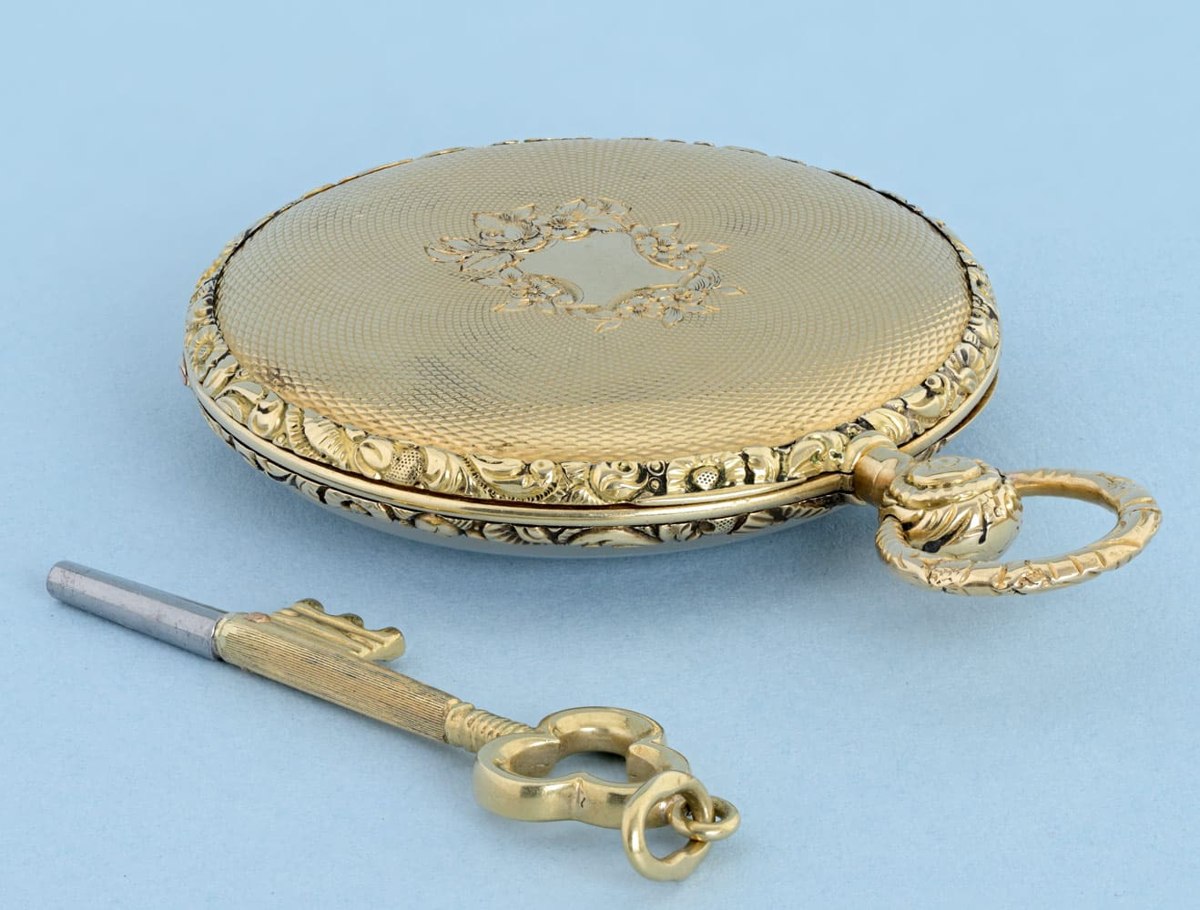
Pocket watch
Vacheron & Constantin Gold Quarter Repeating Pocket Watch
“According to the source, this Swiss open-face pocket watch dates to circa 1840 and is signed by Vacheron & Constantin, Geneva. The 42 mm 18-carat gold case features an engine-tu…”
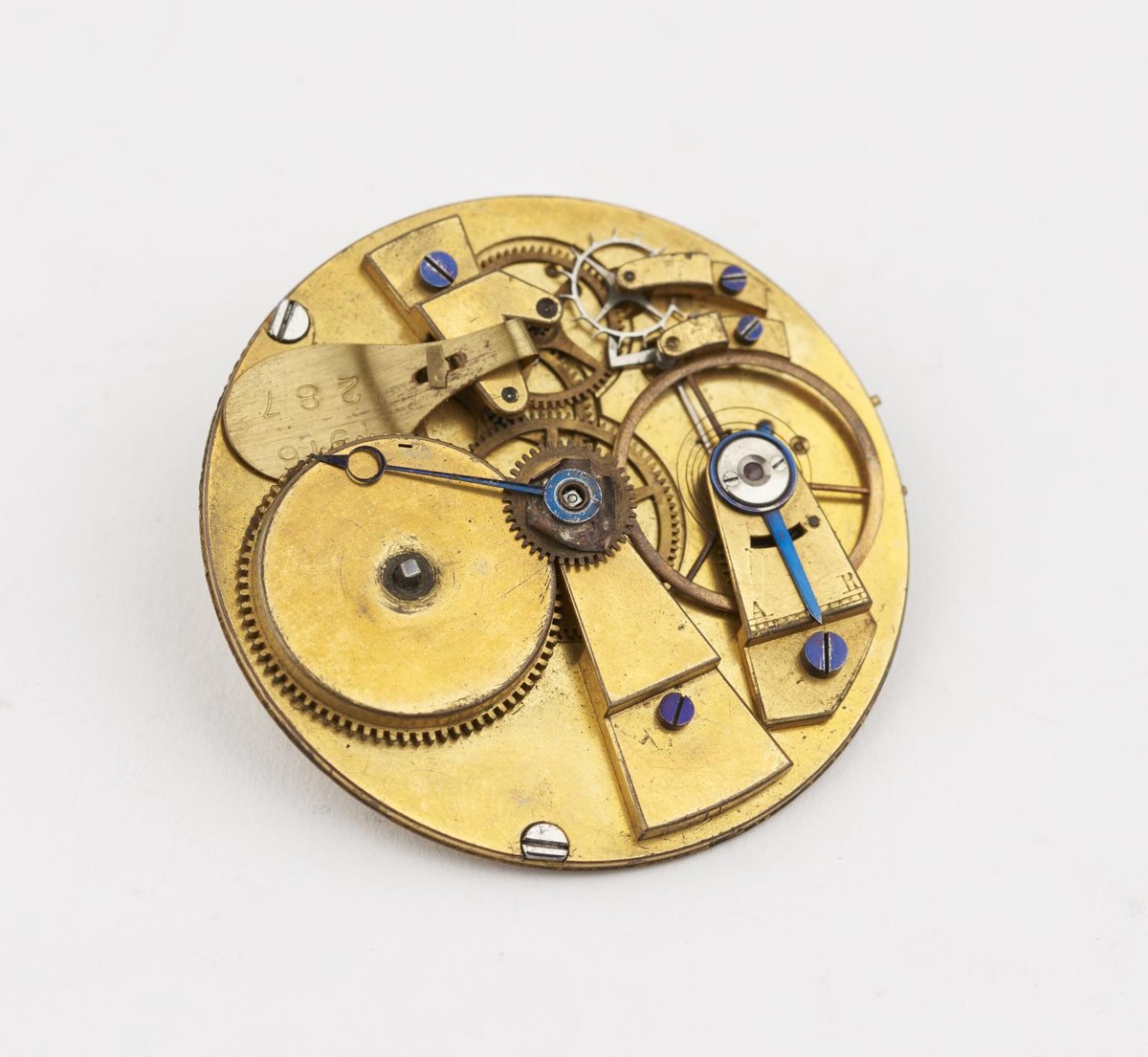
Movement
Bar movement with Geneva lever escapement no. 16670
“Bar movement with Geneva lever escapement no. 16670”
Pocket watch
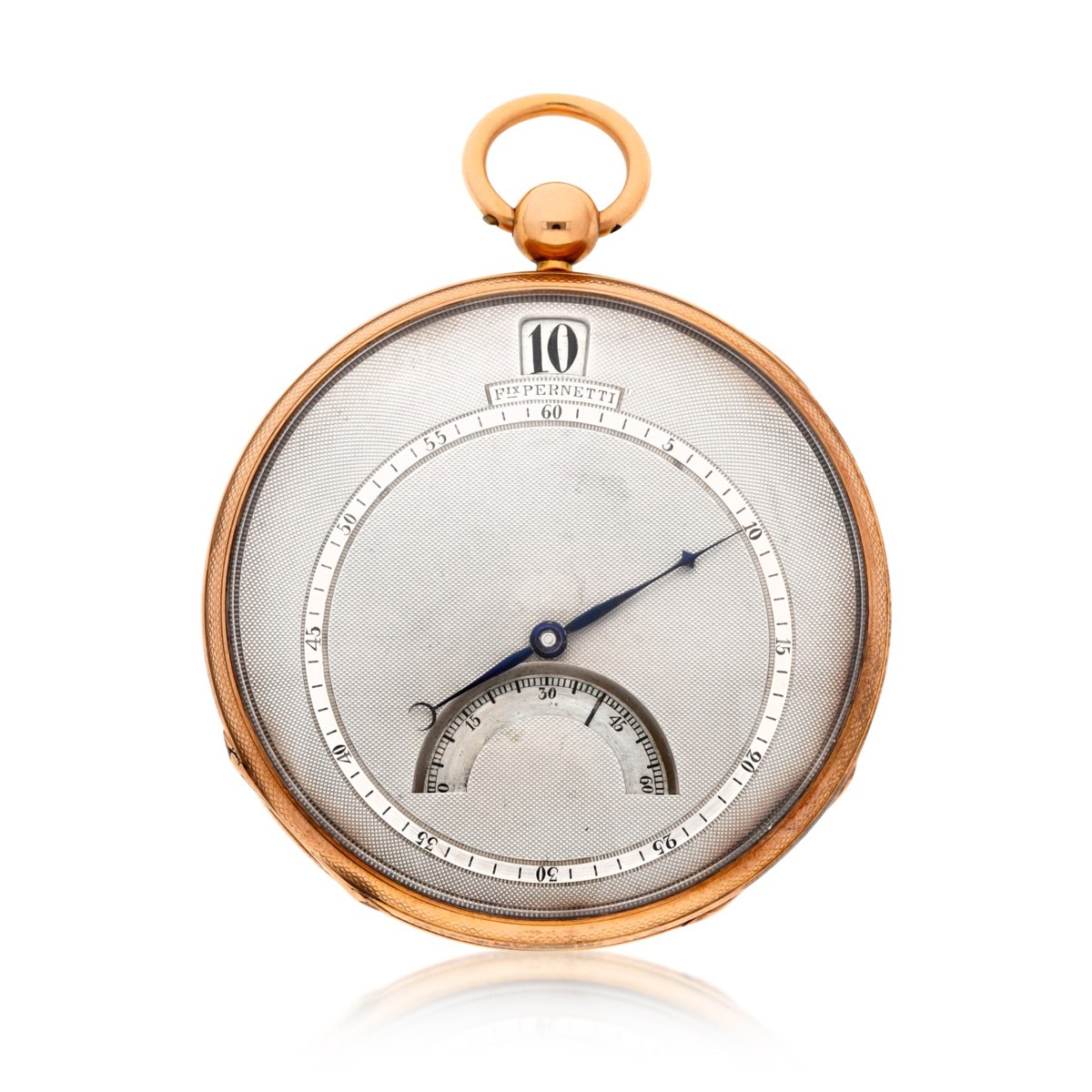
F. Pernetti, à Genève Gold Jump Hour Cylinder Watch with Sector for Seconds
“This open-face pocket watch, signed 'Fix. Pernetti' beneath the hour aperture, is dated by the source to circa 1830 and features an engine-turned gold case measuring 54 mm acros…”
Pocket watch
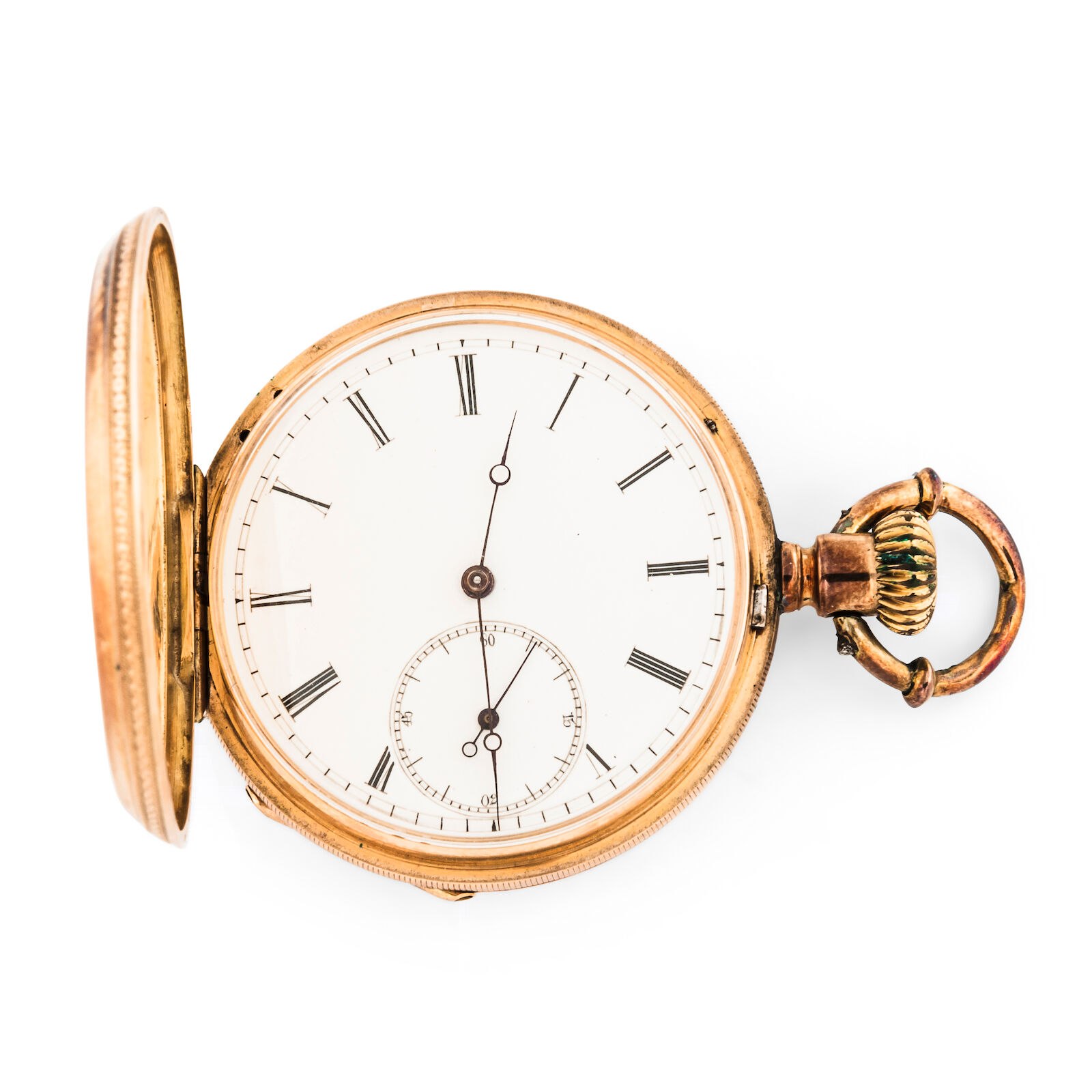
Albert Duval 14kt Gold Hunter-case Watch
“This yellow-metal hunter-case pocket watch is dated by the auction source to circa 1900 and catalogued as 14kt gold. The cuvette is engraved 'No. 20387 Albert Duval', providing …”