
Component record · Keyless work
Yoke Spring
Partially verifiedThe small spring in the keyless work that presses the yoke (clutch lever) so that the clutch wheel engages the winding pinion in the normal crown position.
What it does
Returns the clutch wheel to the winding position when the crown is pushed in, and holds it there.
How it works
Pulling the crown moves the setting lever, which pushes the yoke and slides the clutch wheel along the stem into mesh with the setting wheels. The yoke spring resists that movement.
Pushing the crown back lets the setting lever return, and the yoke spring pushes the yoke and clutch wheel back so that the clutch wheel's teeth engage the winding pinion again.
Because the spring is small and under tension, it is notorious for flying off during disassembly; it is usually removed under a cover or with the keyless plate.
Evolution
Many twentieth-century calibres integrate the yoke spring into a single keyless cover plate, reducing loose parts.
Known variations
- Separate yoke spring
- Spring formed as part of the setting-lever spring or keyless plate
Identification for collectors
- A crown that will not return firmly to winding, or that winds only intermittently, can indicate a weak or missing yoke spring
Common failure modes
- Broken or weak spring
- Spring lost during service
- Spring incorrectly seated so the clutch wheel half-engages
Photographs
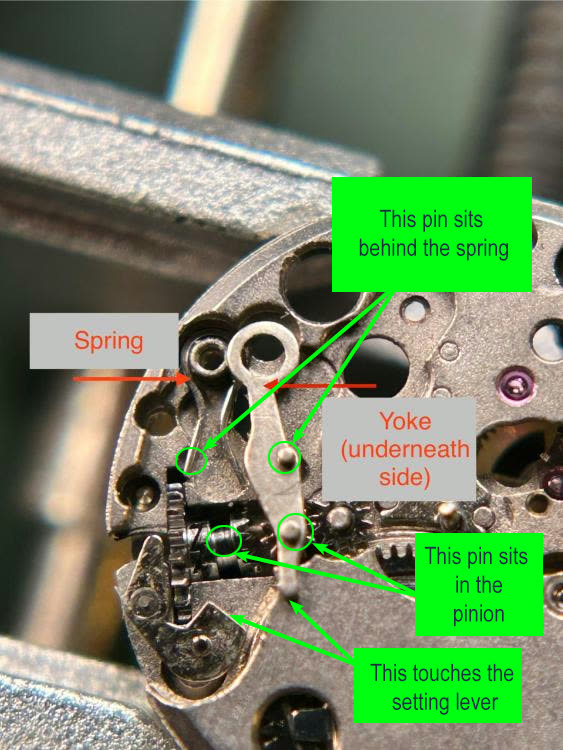
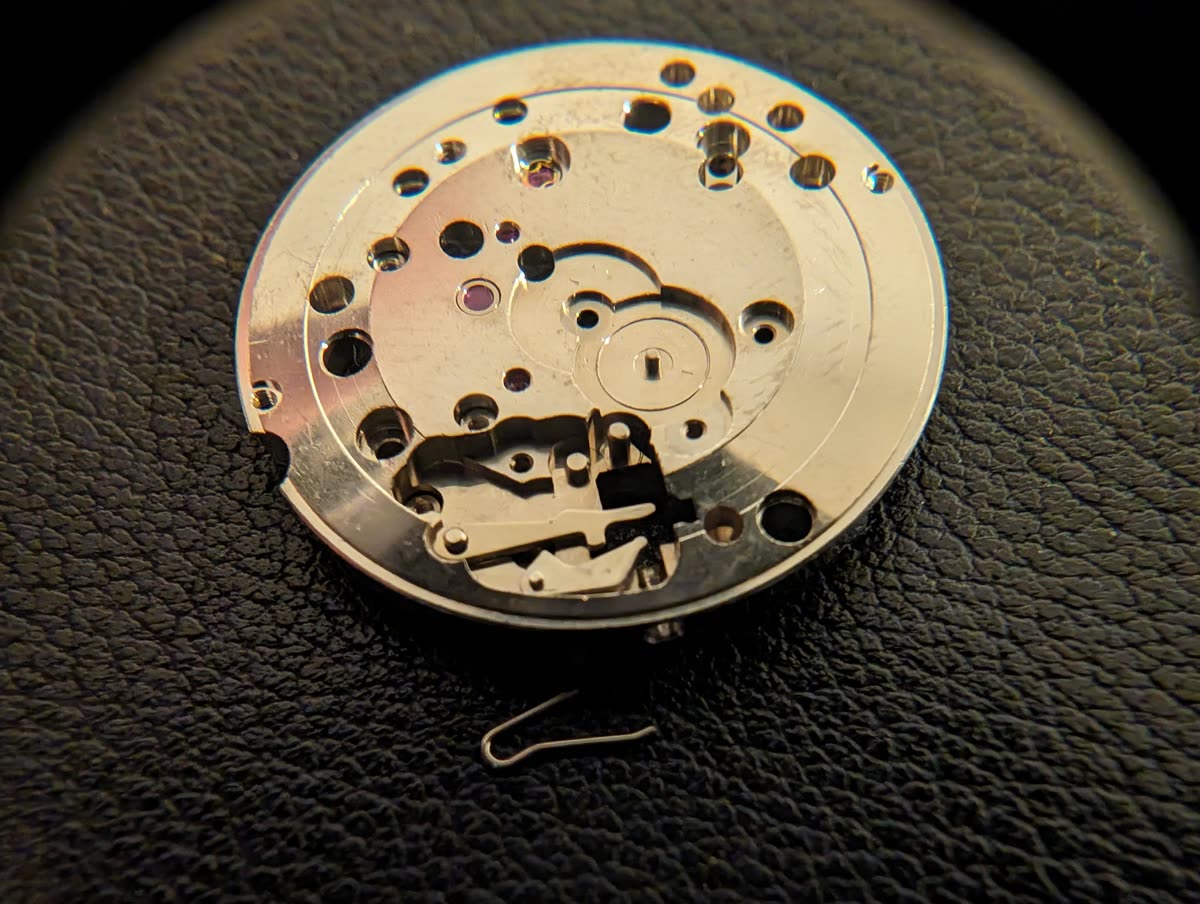
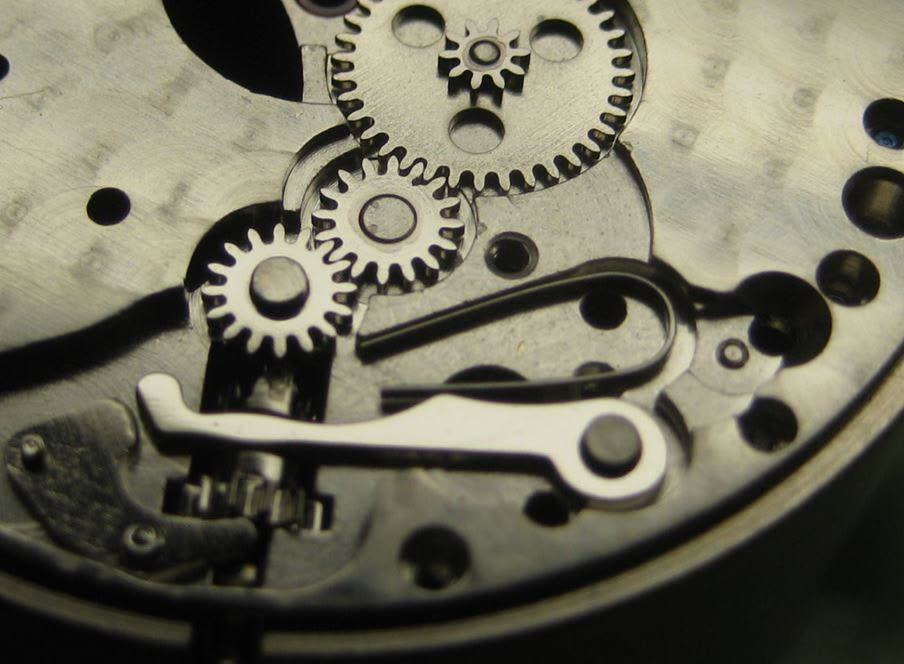
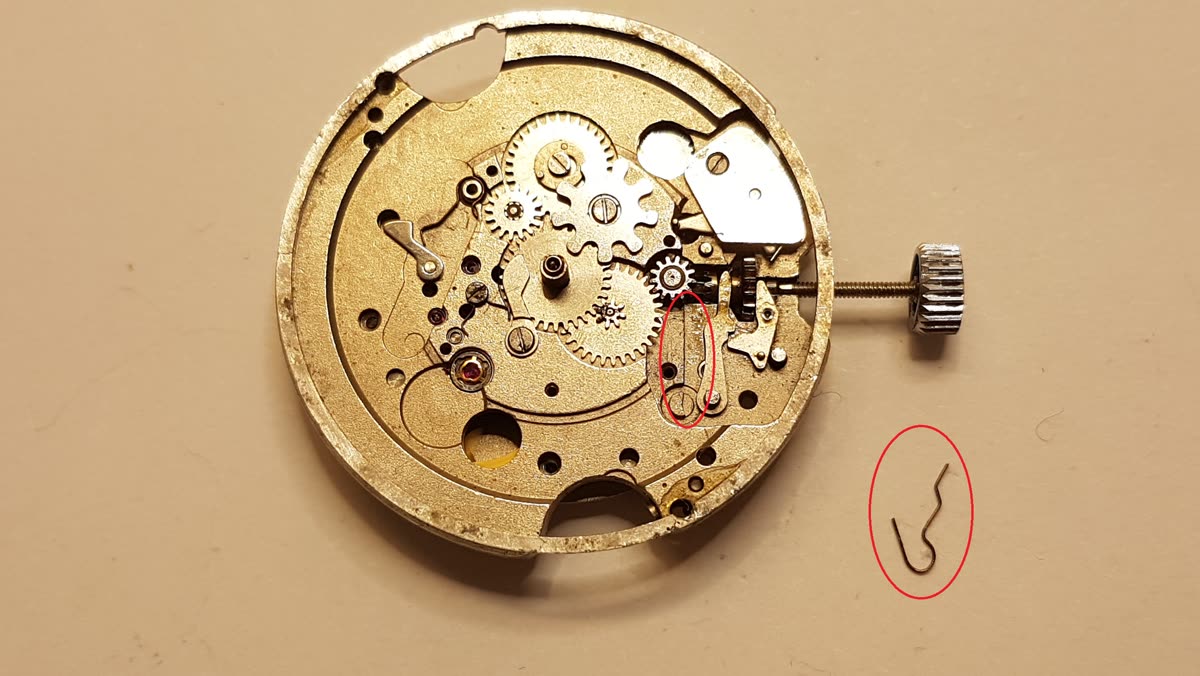
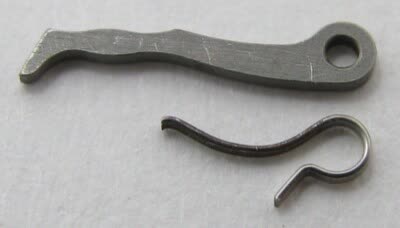
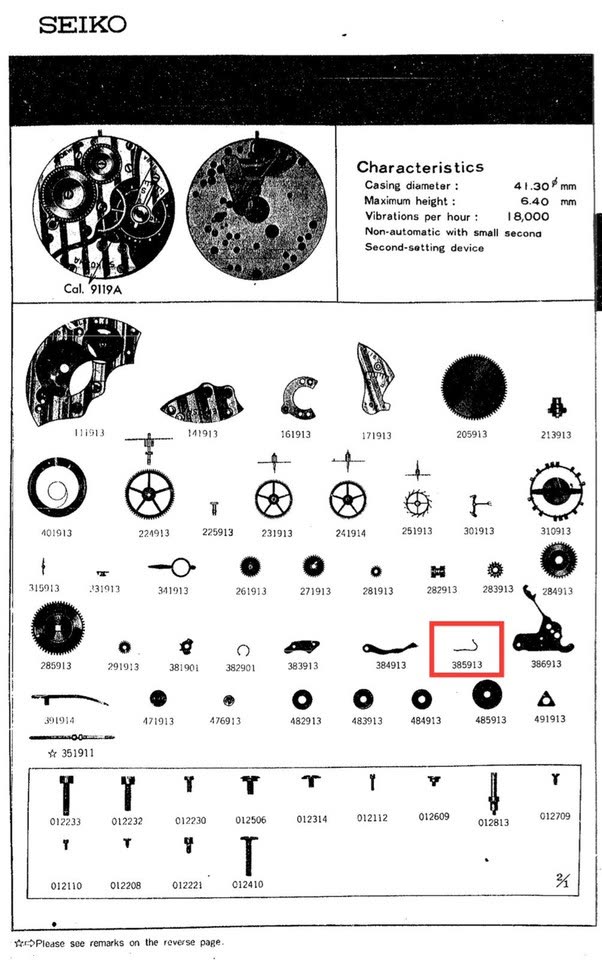
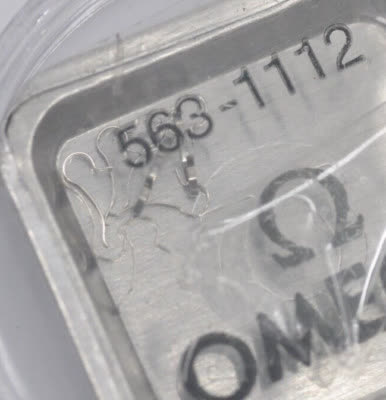
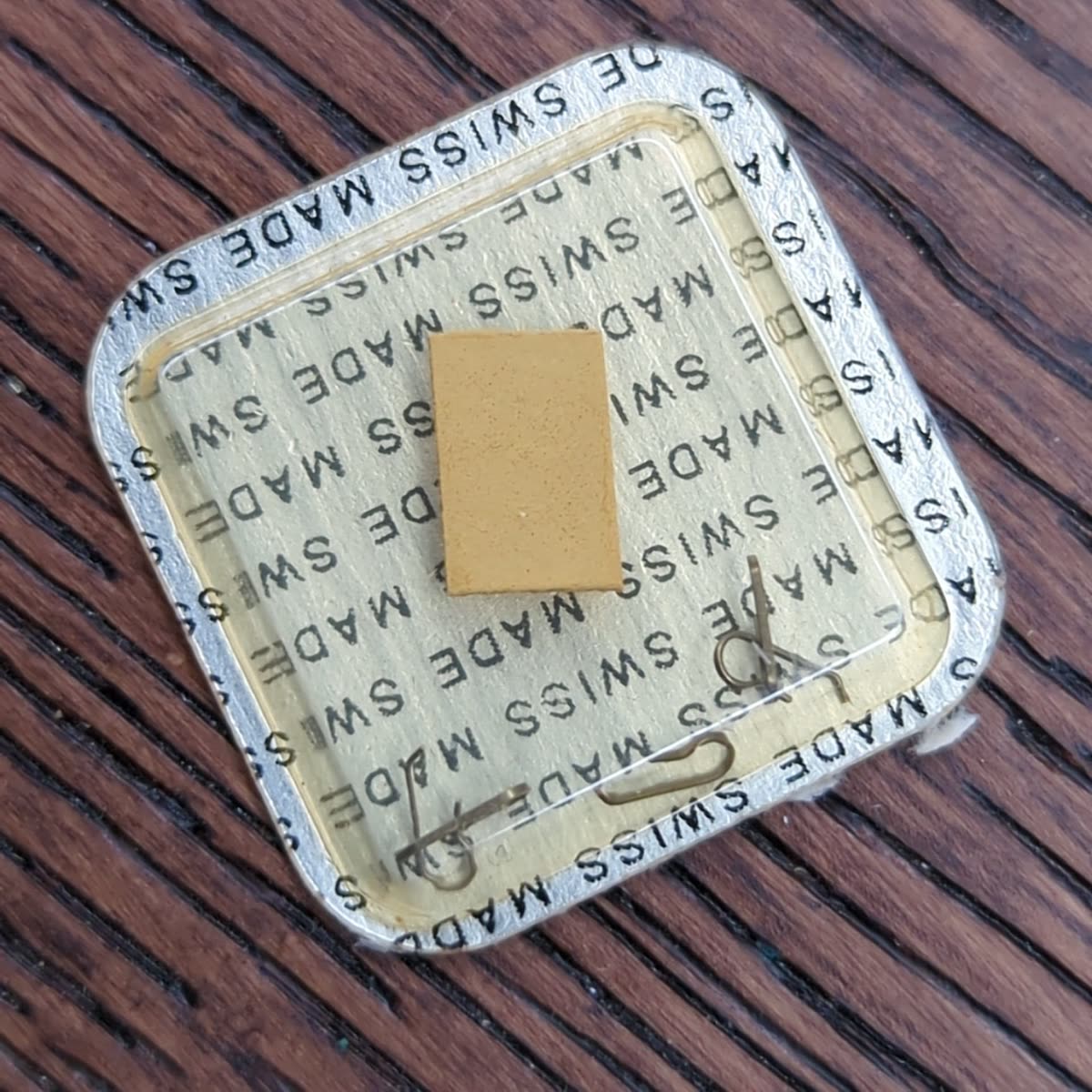
Photographs are illustrative examples of the type, not necessarily the exact object described. Verify details against the source file page.
Sources & references
- de Carle, D., Practical Watch Repairing
- de Carle, D., Watch and Clock Encyclopedia
- Fried, H. B., The Watch Repairer's Manual
- Daniels, G., Watchmaking
Where sources disagree, the disagreement is stated rather than resolved silently.