
Component record · Train
Alarm Hammer (Clock)
Partially verifiedThe hammer in an alarm clock that vibrates rapidly against the bell when the alarm is released.
What it does
Sounds the alarm by striking the bell many times a second, driven by the alarm spring through its own small train.
How it works
The alarm has its own mainspring and a short train ending in an escape wheel that rocks a verge or pallet attached to the hammer, so the hammer swings to and fro against the bell.
At the set time a notch or cam on the alarm-set wheel lets a spring-loaded lever drop, releasing the alarm train. A shut-off lever on the case stops the hammer until the alarm is reset.
The hammer's distance from the bell controls volume and tone; bending it closer increases loudness until the hammer starts to block against the bell.
Evolution
Twin-bell and single-bell alarms, internal bells and buzzers all use the same hammer principle, adapted to cost and loudness.
Known variations
- Single-bell and twin-bell hammers
- Hammers striking an internal bell or case back
Identification for collectors
- A short steel arm with a round head, vibrating against the bell when the alarm runs
Common failure modes
- Hammer bent out of reach of the bell
- Worn alarm verge
- Weak or broken alarm mainspring
Photographs
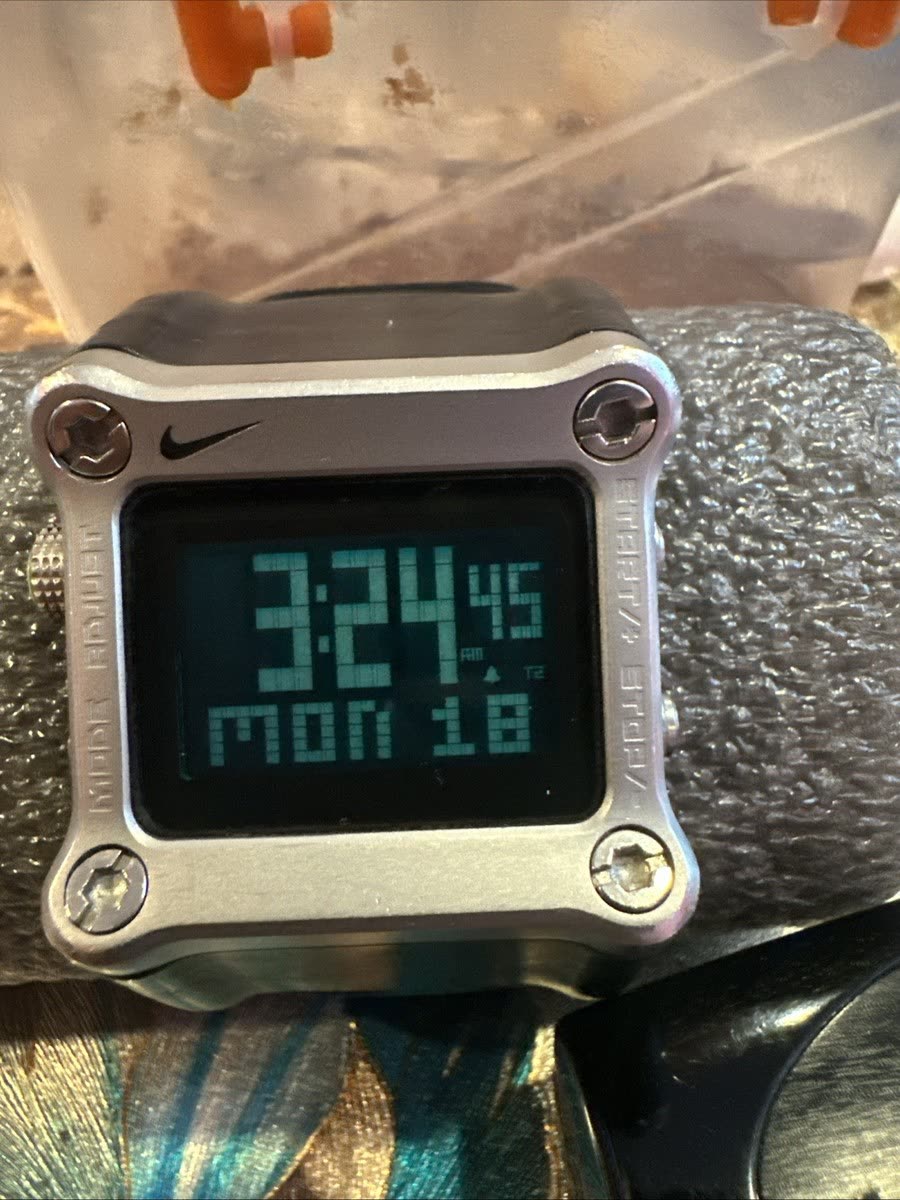
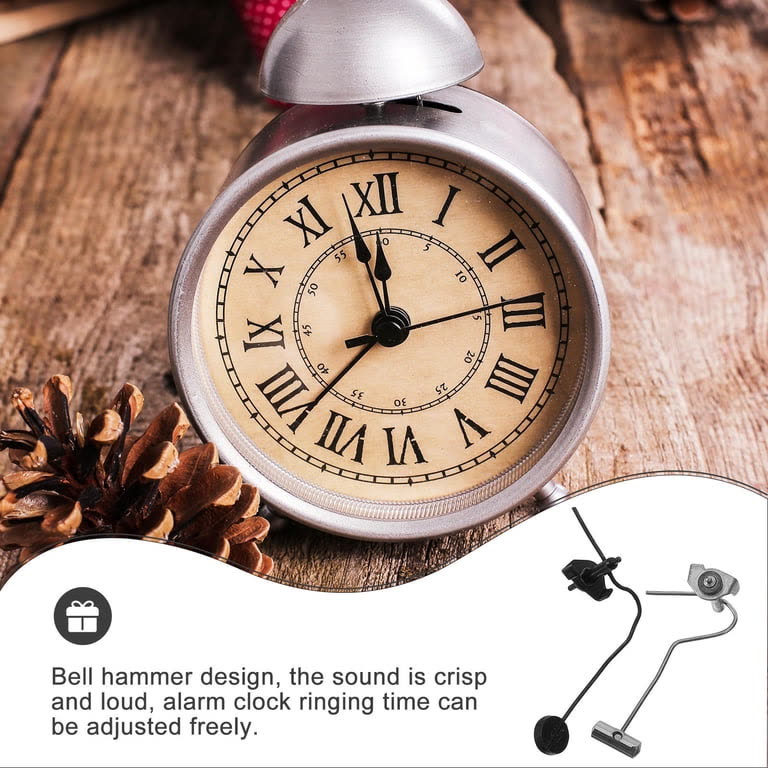
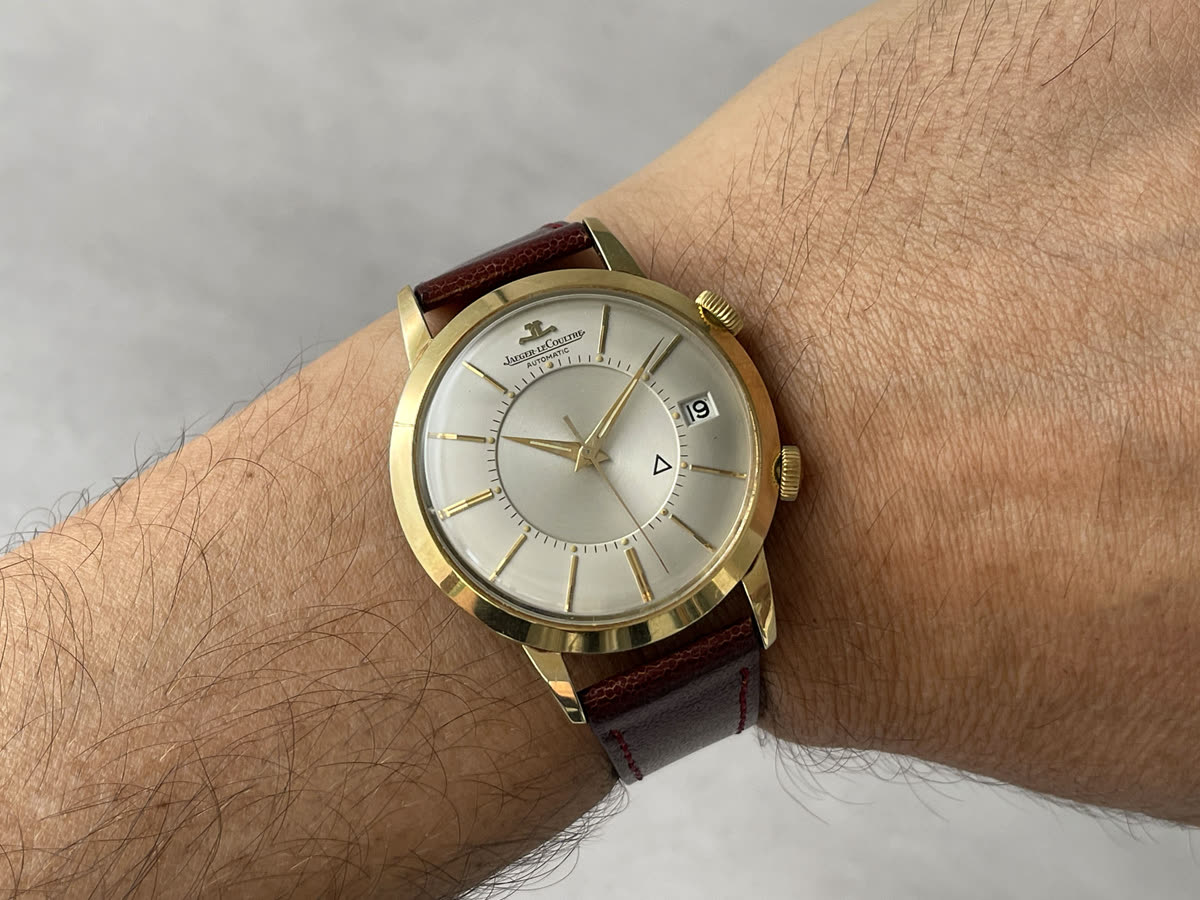
Photographs are illustrative examples of the type, not necessarily the exact object described. Verify details against the source file page.
Sources & references
- Britten, F. J., Watch and Clockmakers' Handbook, Dictionary and Guide
- de Carle, D., Practical Clock Repairing
Where sources disagree, the disagreement is stated rather than resolved silently.