
Clock type · Specialist
Picture-Frame Clocks
Needs researchClocks whose dial is set within, or disguised as, a decorative picture or mirror frame, so the timepiece reads at a glance as a framed picture, print or looking-glass rather than an overt clock.
Background
Bilderuhren, or picture clocks, are paintings or visual representations containing a discreetly integrated working clock. These clocks originated primarily during the first half of the 19th century, with significant production centers located in Austria, Switzerland, France, and Belgium.
They often depict urban vedute, landscapes, or village scenes where the dial is integrated into a building such as a clock tower. While early versions featured hand-painted canvases, wood, or metal sheets, mass-produced examples using oil prints appeared toward the end of the 19th century.
Written from the sources listed below; each statement was checked against the cited text.
Recognising one
- In French examples, the dial is often made of enamel and attached directly to the movement, while the painting features a circular cutout to reveal it.
- German and Austrian versions typically feature a dial that is integrated as part of the painting itself.
- French clocks were often equipped with an additional striking mechanism known as the Angelus chime.
Condition and survival
- Collectors should exercise caution with newer, assembled pieces, as their value is significantly lower than that of authentic originals.
- When assessing condition, it is important to ensure that striking or musical mechanisms are still complete, as these were often removed when they became defective.
Where sources differ
- Period. This guide records: “c. 1880s – present”. The production of picture clocks primarily took place during the first half of the 19th century, with the fashion appearing to end in the early 20th century.
- Definition. This guide records: “Clocks whose dial is set within, or disguised as, a decorative picture or mirror frame”. Picture frames into which a clock is integrated are not considered true picture clocks, as the clock sits outside the image field without relation to the art.
Movement & mechanism
- Small spring-driven movement, typically of standard commercial grade, mounted behind or within the frame structure
- Movement scaled and positioned to suit the decorative frame rather than the frame being designed around a movement, unlike most other clock forms
Identification
- A dial integrated into, or partly concealed within, an otherwise conventional picture or mirror frame
- Modest, standardised movement grade in most examples, since the case rather than the mechanism is the principal design feature
Terminology
- Mirror clock — a closely related form in which the dial is set into a mirror rather than a picture frame
Known variations
- Mirror clocks
- Print or engraving-set picture-frame clocks
- Photograph-frame novelty clocks
Collecting notes
Picture-frame and mirror clocks are collected chiefly for their decorative and social-history interest rather than mechanical sophistication, with condition of the frame, glass and any painted or printed picture element weighed alongside the movement.
Photographs
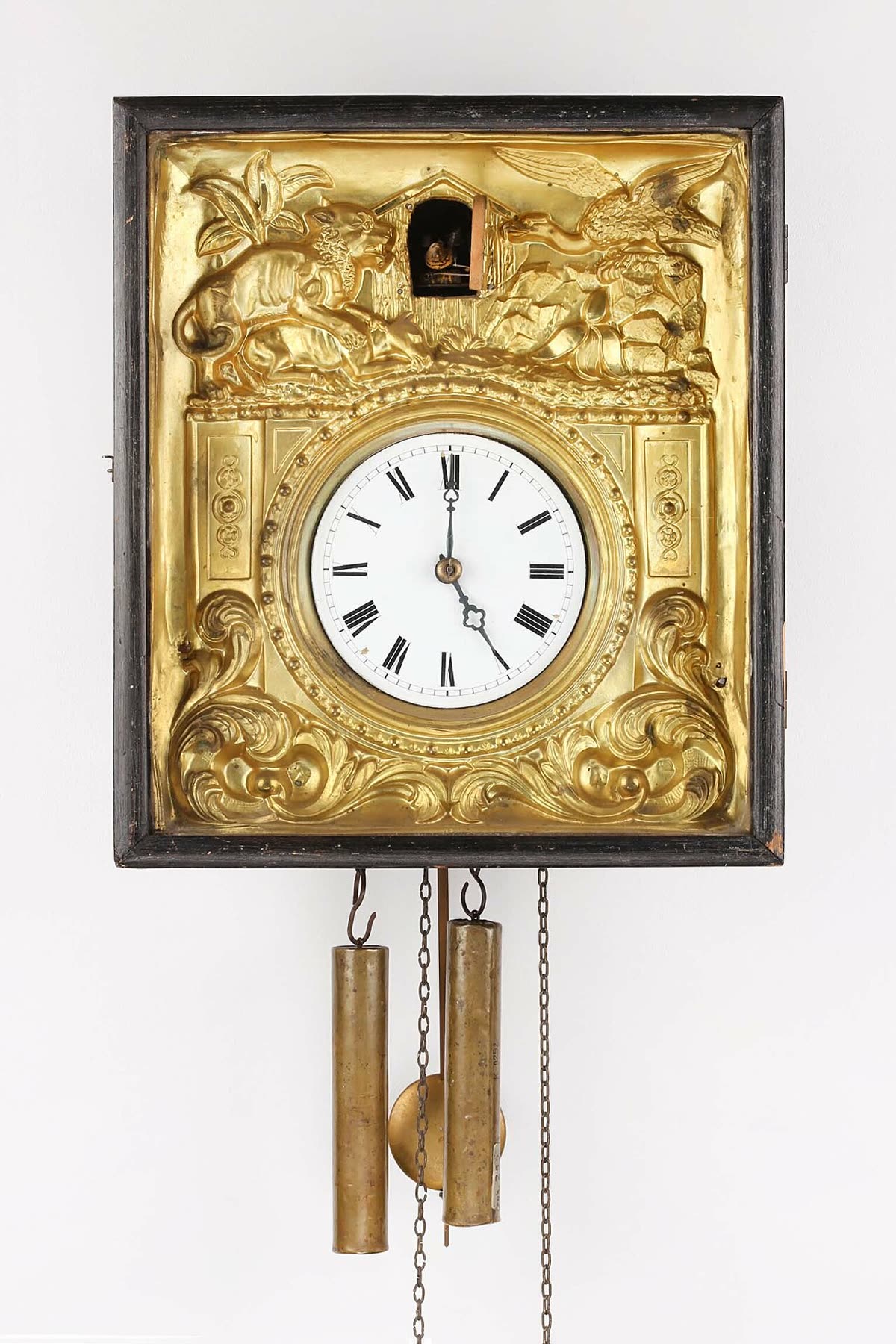
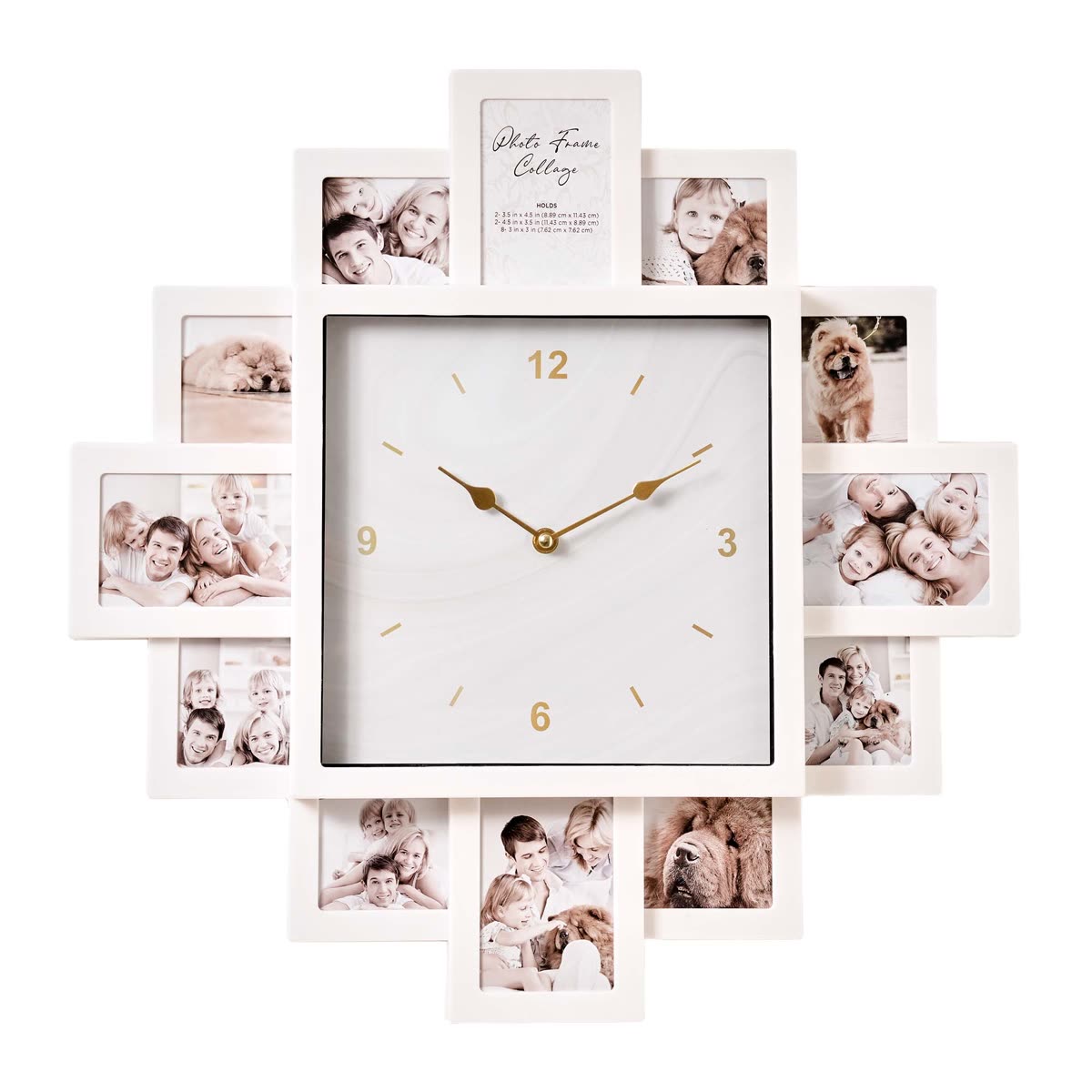
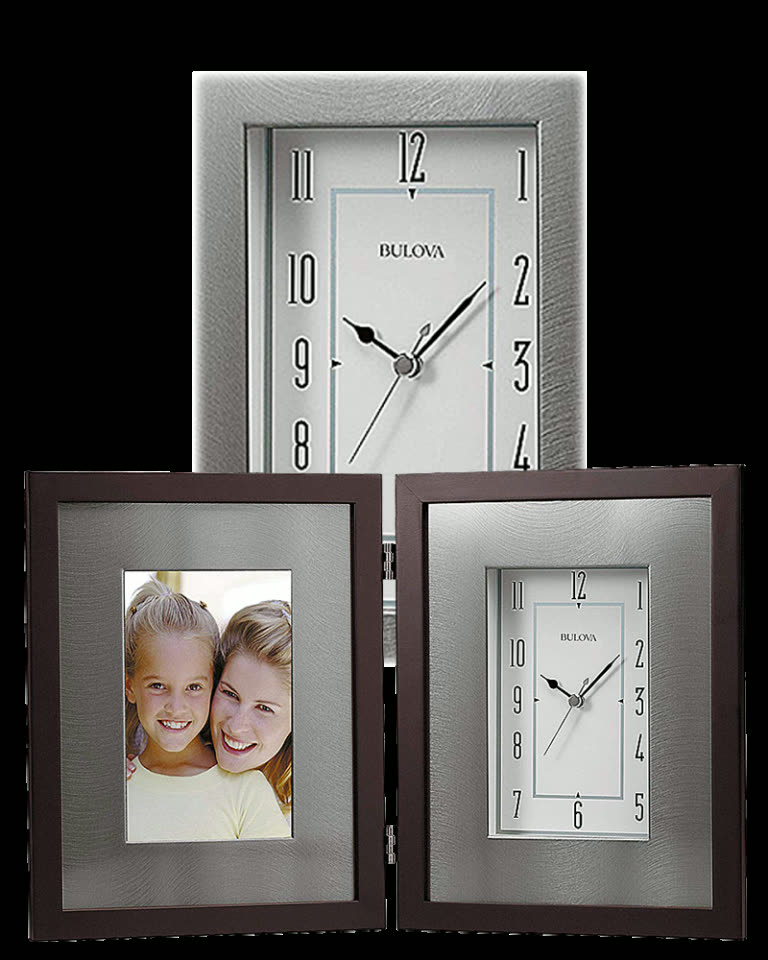
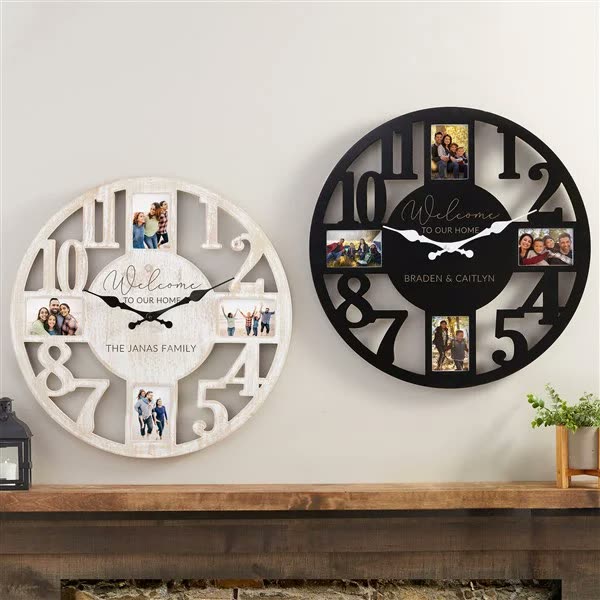
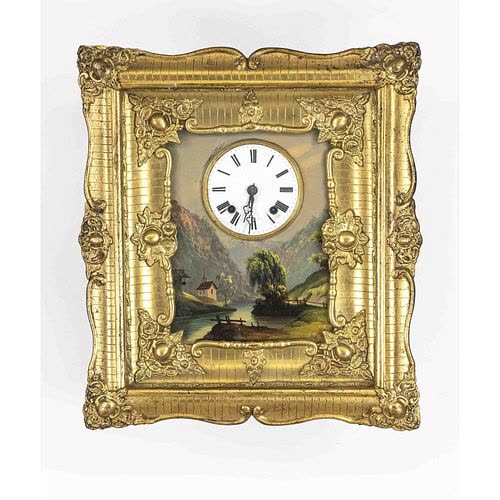
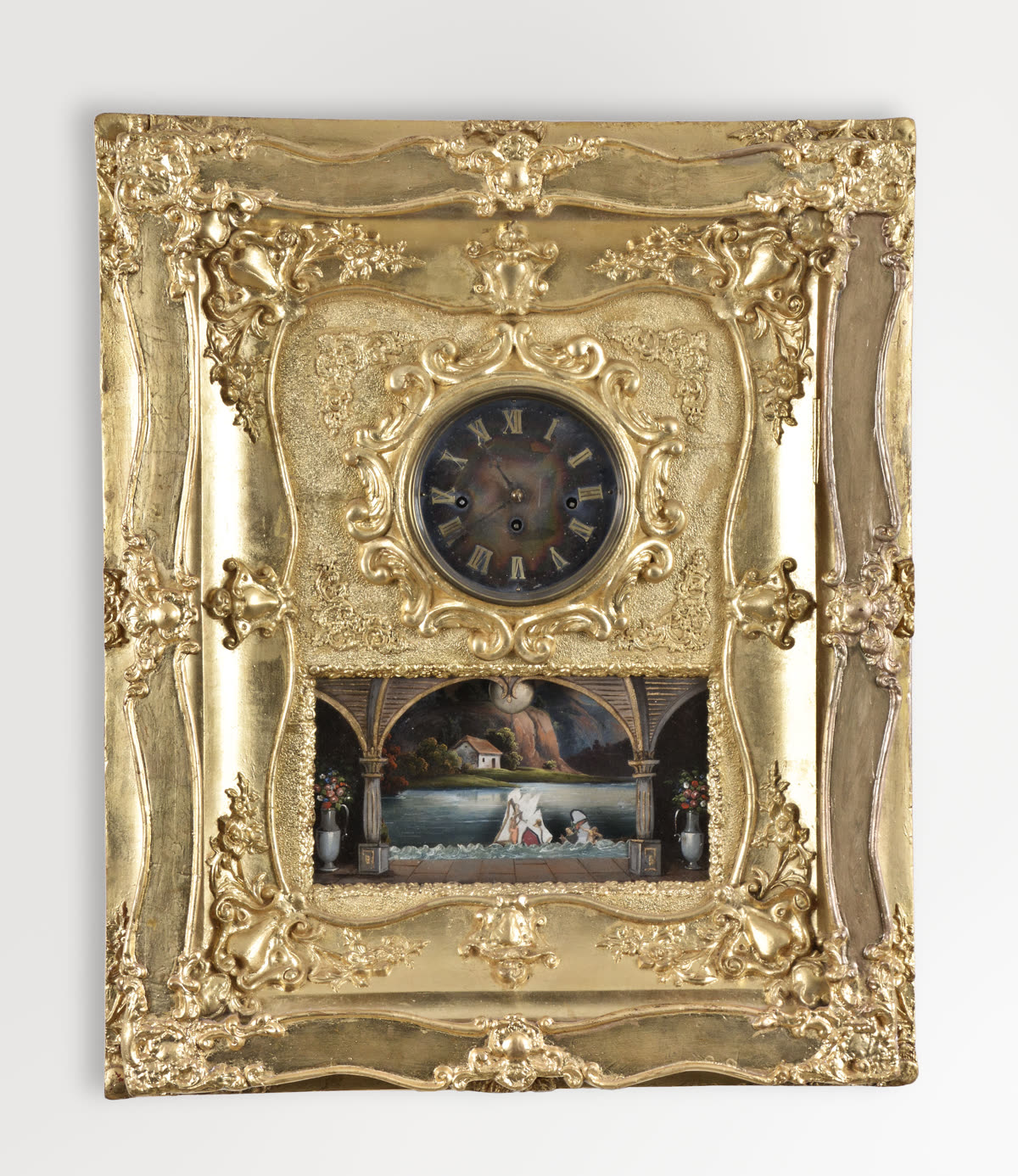
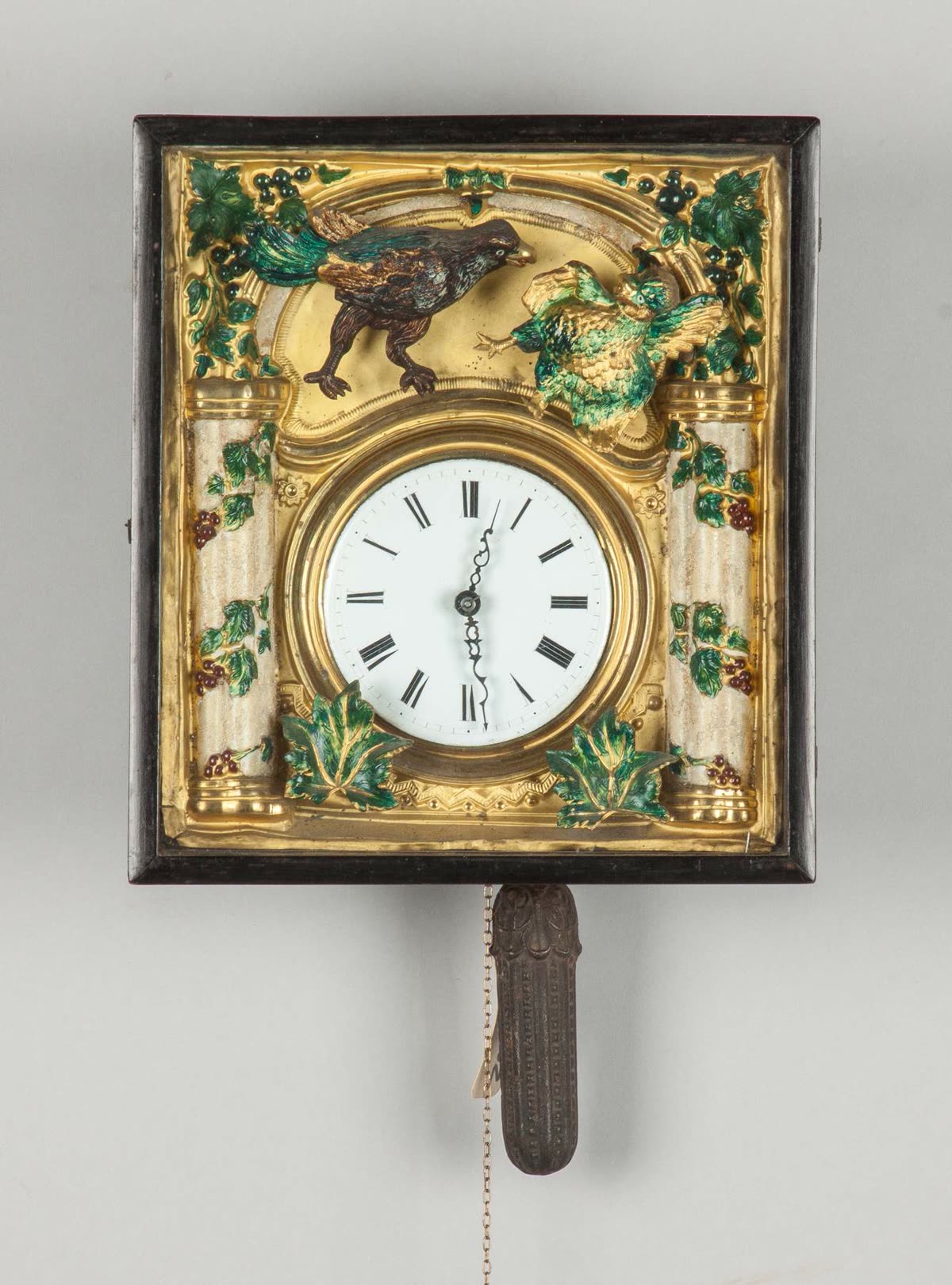
Photographs are illustrative examples of the type, not necessarily the exact object described. Verify details against the source file page.
Sources & references
- Bilderuhr, Wikipedia (German), retrieved 2026-10-28 (text CC BY-SA 4.0)
- General decorative clock literature; systematic historical study of this specific novelty category is limited.
Where sources disagree, the disagreement is stated rather than resolved silently.