
Clock type · Domestic
Mantel Clocks
VerifiedA broad category of small spring-driven clocks intended to sit on a mantelshelf or side table, spanning French pendules, American shelf clocks and later mass-produced work.
Background
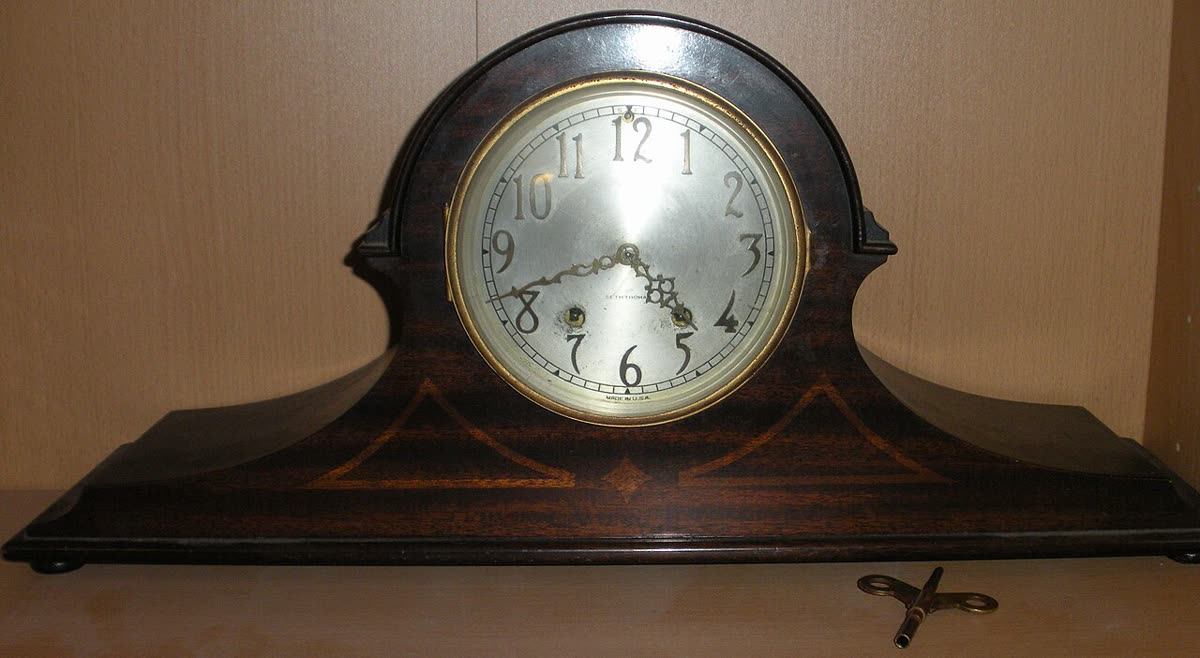
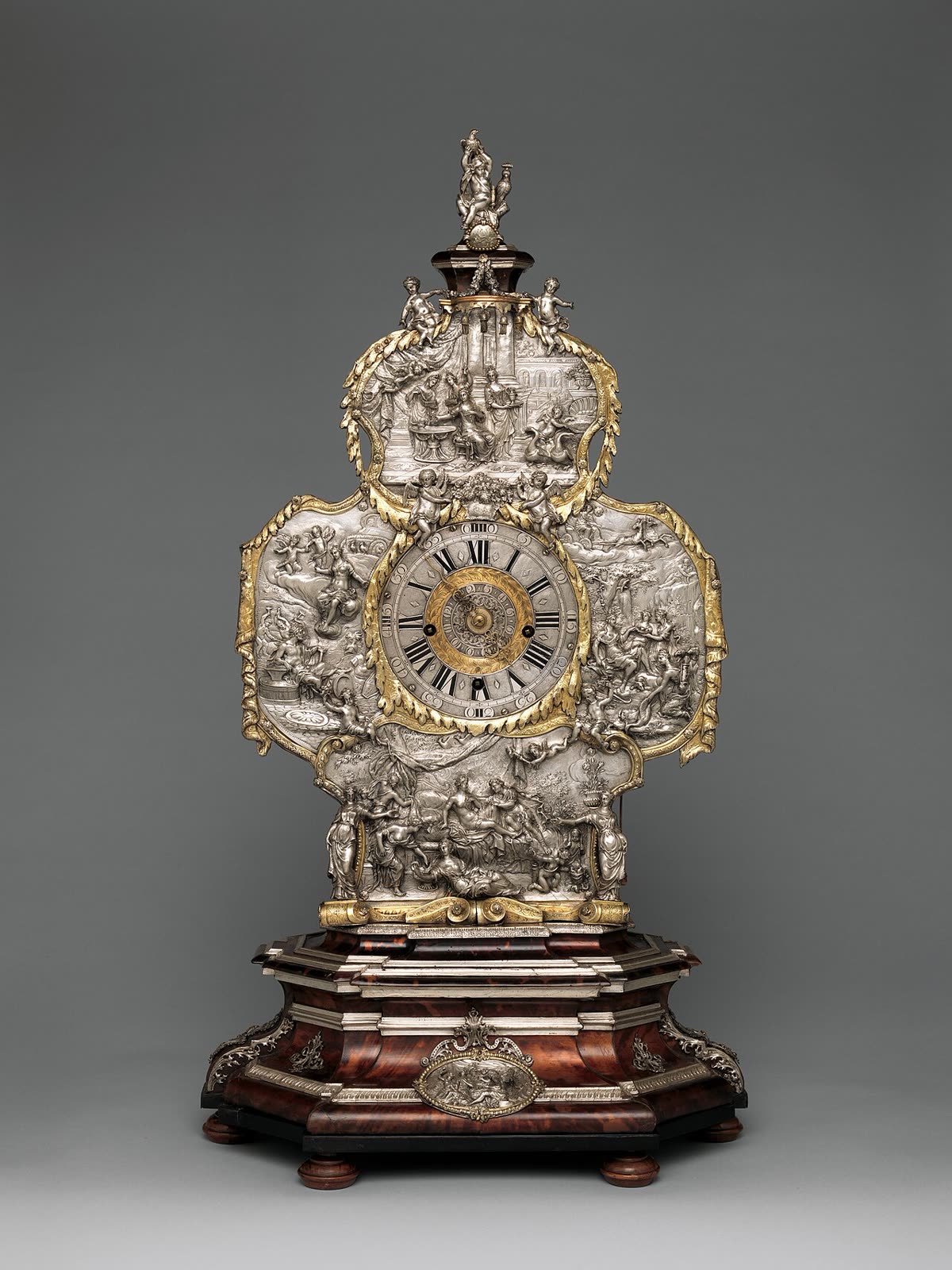
Mantel or shelf clocks are relatively small house clocks first developed in France in the 1750s, traditionally placed on a fireplace shelf. In the United States, Simon Willard began selling standardized shelf clocks in Boston during the 1790s, with production continuing until the 1830s.
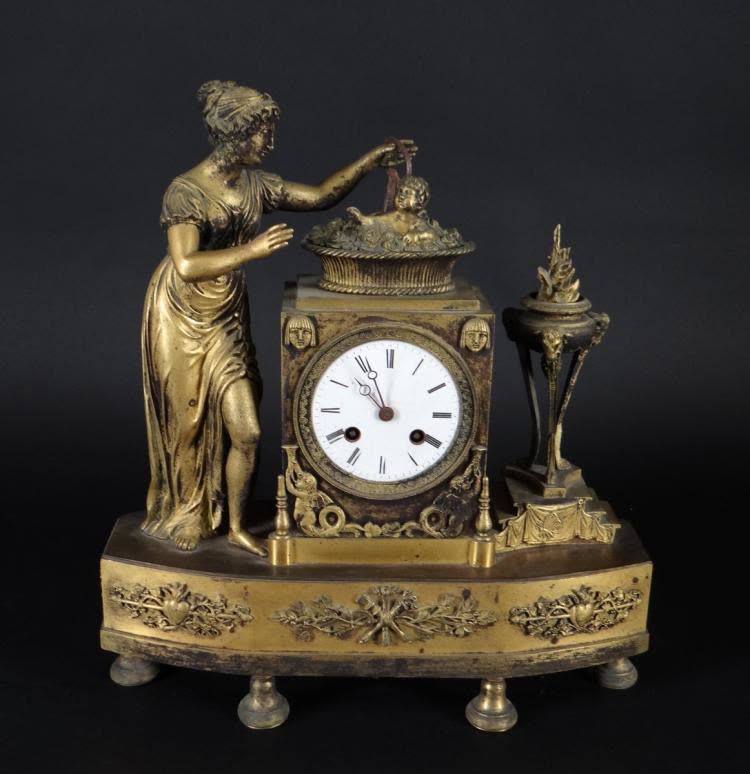
French Empire mantel clocks, produced between 1804 and 1830, were often crafted from bronze, marble, or wood and decorated with classical motifs. Movements for these clocks varied, with French 'Pendule de Paris' clocks utilizing an 8-day anchor escapement, while American shelf clocks might be weight-driven with a pinwheel escapement.
Written from the sources listed below; each statement was checked against the cited text.
Recognising one
- These clocks can be distinguished from earlier chamber clocks of similar size by their lack of carrying handles.
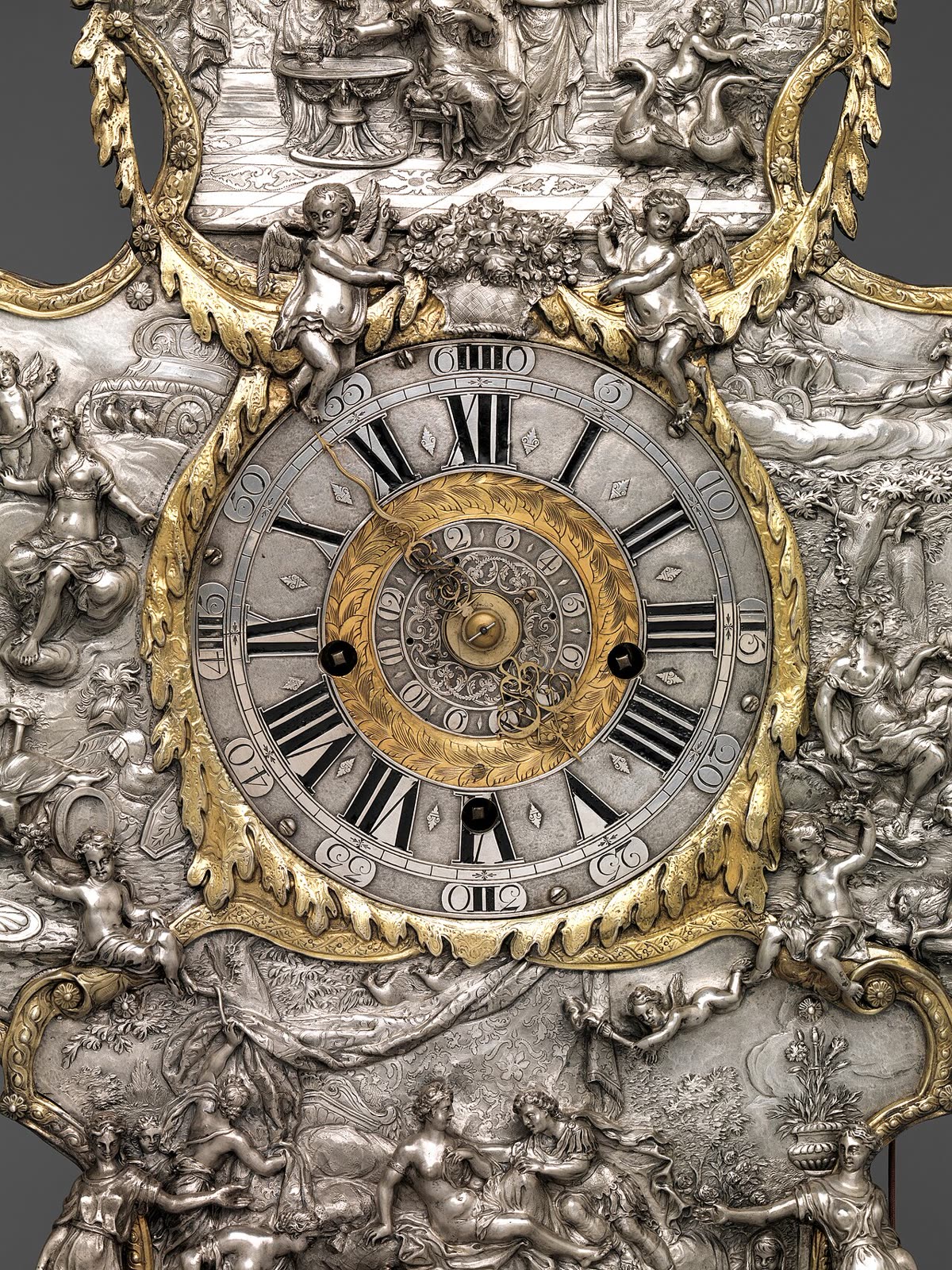
- French movements are often signed on the dial, although in many Empire pieces authorship remains anonymous.
- The pendulum of a Willard shelf clock could be adjusted through a hole in the clock face at the 12 o'clock position.
Condition and survival
- Simon Willard's clocks are recognized as American masterpieces and are avidly sought by both antiquarians and museums.
Movement & mechanism
- Spring-driven, usually with a going barrel rather than a fusee in later production
- Platform or pendulum regulation depending on grade and period
- French movements commonly use a short bob pendulum and count-wheel or rack strike on a bell or gong
- American shelf clocks (e.g. Connecticut factories) frequently used wooden or later brass movements with a 30-hour or 8-day duration
Identification
- French movements are usually round-plate with visible count wheel or rack strike and a distinctive drum-shaped barrel
- Backplate stamps or paper labels (American shelf clocks) can identify the factory and approximate date
- Case material — marble, gilt bronze, wood veneer, spelter — is a useful dating and regional clue
Terminology
- Pendule — French term for a mantel or portable clock
- Garniture — a matching mantel clock and pair of side ornaments (often candelabra)
- Drum movement — the flat, round French mantel movement form
Known variations
- French drum (portico/pendule de Paris) clocks
- American Connecticut shelf clocks
- German Black Forest mantel clocks
- English fusee mantel clocks
Collecting notes
French gilt-bronze mantel clocks with figural or architectural cases are a substantial collecting field in their own right; American shelf clocks are collected largely by factory and label. Condition of gilding and dial enamel materially affects value, though no specific figures are given here without a dated, sourced market reference.
Photographs
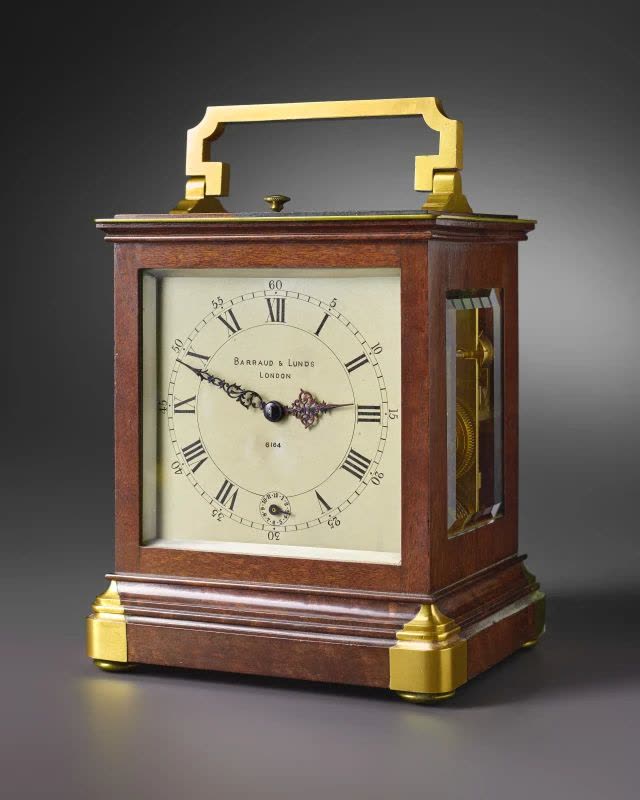
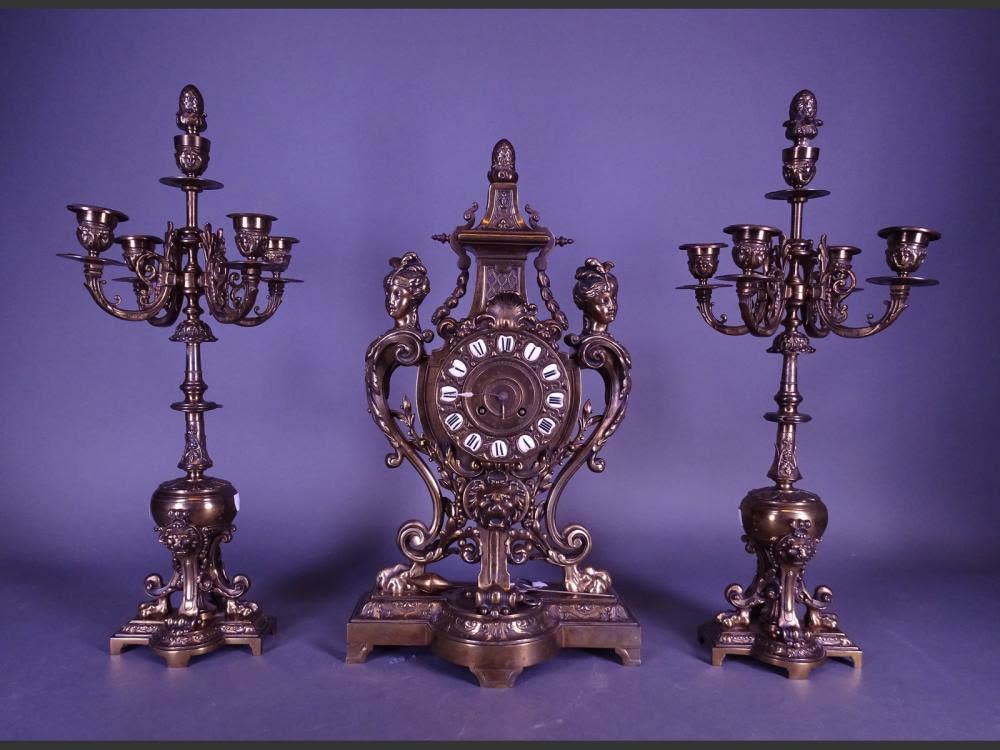
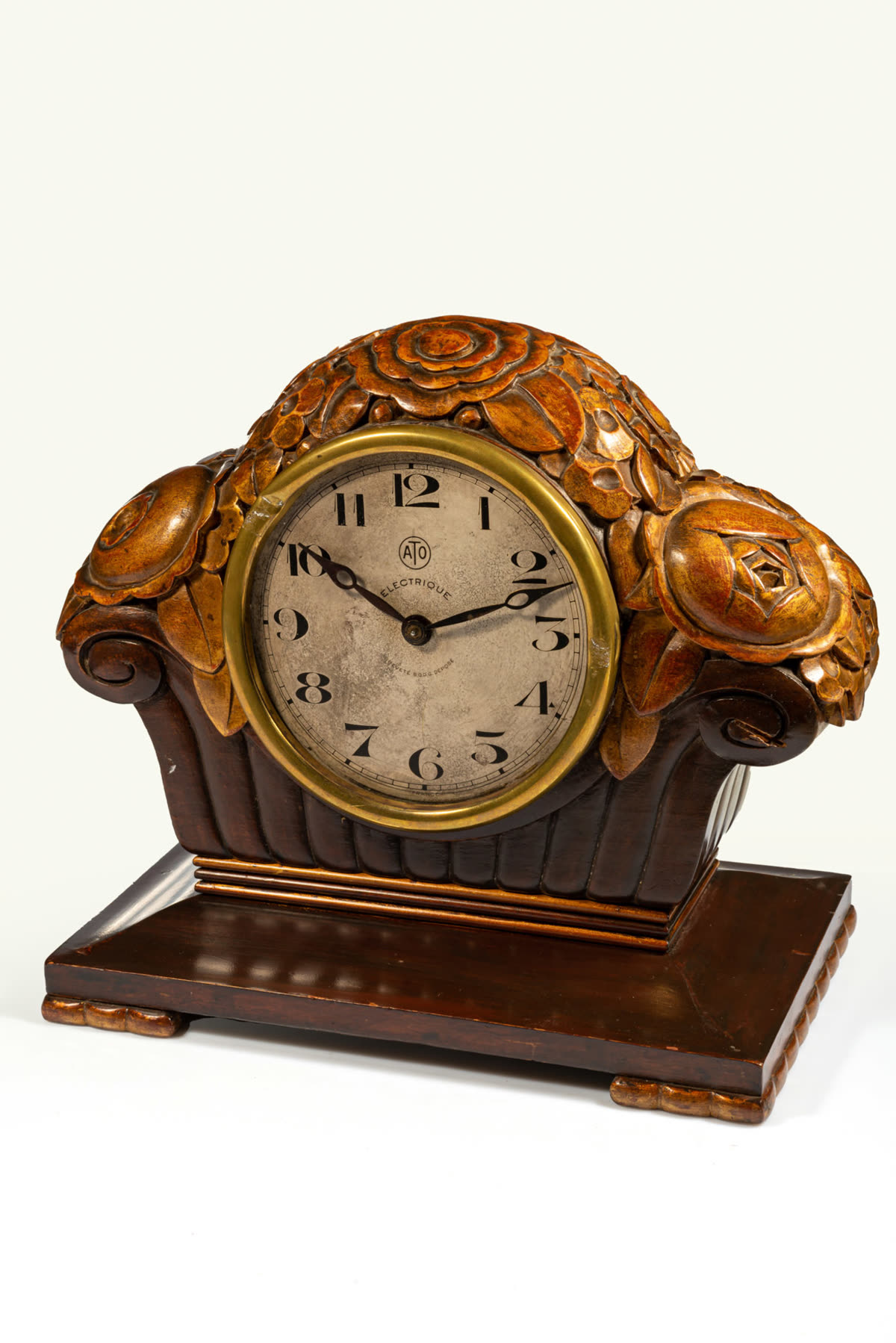
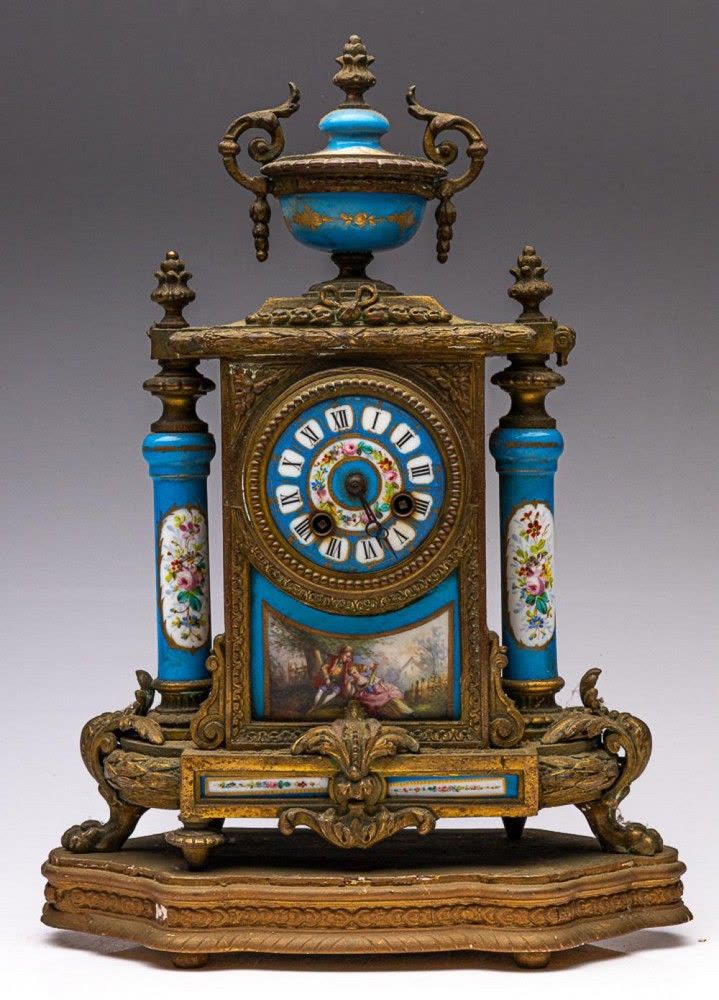
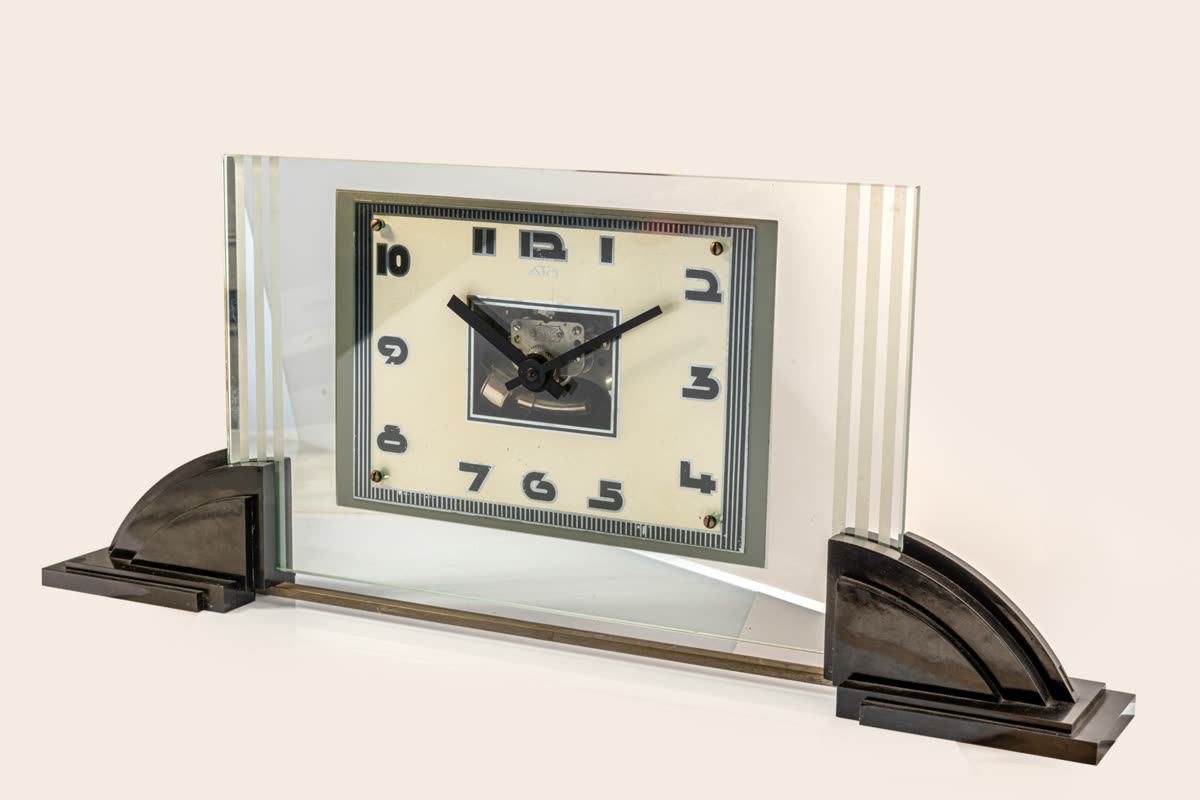
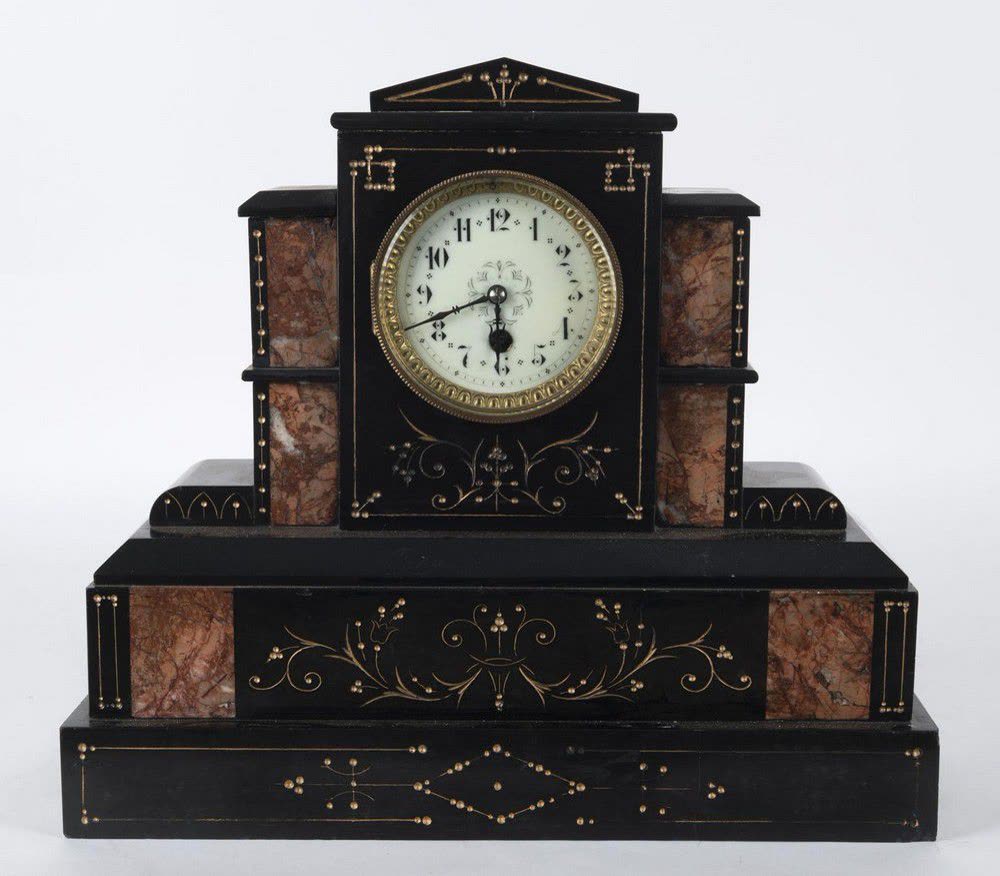
Photographs are illustrative examples of the type, not necessarily the exact object described. Verify details against the source file page.
Sources & references
- Mantel clock, Wikipedia (English), retrieved 2026-10-28 (text CC BY-SA 4.0)
- French Empire mantel clock, Wikipedia (English), retrieved 2026-10-28 (text CC BY-SA 4.0)
- Britten, F. J., Old Clocks and Watches and Their Makers
- Palmer, B., A Treasury of American Clocks
Where sources disagree, the disagreement is stated rather than resolved silently.