
Clock type · Domestic
Pendule de Paris (Drum Movements)
Partially verifiedThe standard round French movement used in thousands of different mantel clock cases.
Background
The Pendule de Paris originated in Paris around 1750 as a mantel clock regulated by a pendulum and featuring a round movement design. During the nineteenth century, clockwork manufactories in Franche-Comté and Saint-Nicolas-d'Aliermont produced unfinished movements known as blancs-roulants. These movements, featuring two pierced plates and a full gear train, were sent to Parisian finishers who added the escapement and pendulum to complete the mechanism for integration into a clock case.
Such clocks were typically powered by two springs housed in barrels, one for the time and one for the striking mechanism, wound from the front with a key. These timepieces were often displayed on mantelpieces as centerpieces of domestic decor and status, frequently housed in cases made of gilt-bronze, marble, or alabaster.
Written from the sources listed below; each statement was checked against the cited text.
Recognising one
- The movement is characterized by two circular plates rather than rectangular ones.
- Earlier examples utilize a silk thread suspension for the pendulum, which was later replaced by adjustable spring systems around the 1840s.
- The mechanism includes an eight-day movement with an anchor escapement and a count wheel that strikes on a bell every hour and half-hour.
- The pendulum regulating the mechanism typically measures twenty-five centimeters in length.
Condition and survival
- While 18th-century clocks were usually signed by the maker, many 19th-century Empire examples remain anonymous due to the common practice of workshops selling pieces to one another.
- Modern-era reproductions or re-adaptations of Empire-style cases were made during the second half of the 19th century and early 20th century.
Movement & mechanism
- Round plates (approx. 90-100mm diameter)
- Count-wheel or rack striking on a bell
- Pendulum regulated, often with silk suspension in earlier examples
Identification
- Round brass plates
- Drum-shaped movement housing
- Winding holes usually at 4 and 8 o'clock on the dial
Terminology
- Drum movement
- Round movement
- Count-wheel strike
Known variations
- Silk-thread and spring-suspension versions
Collecting notes
Condition and originality are paramount. For technical clocks like regulators or atmospheric clocks, the completeness of the original mechanism is more important than case condition. For decorative clocks (Boulle, Empire), the quality of the case craft is central.
Photographs
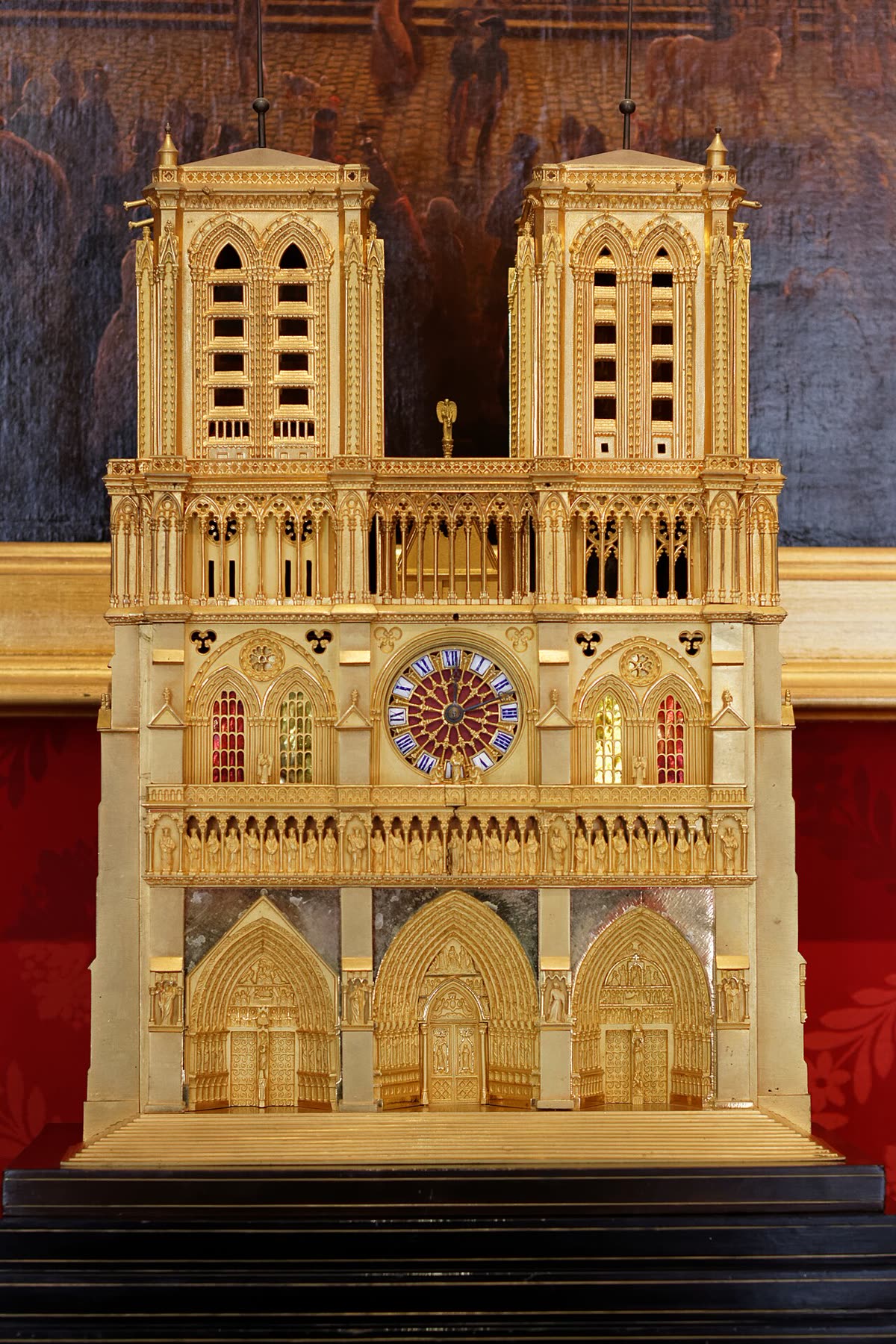
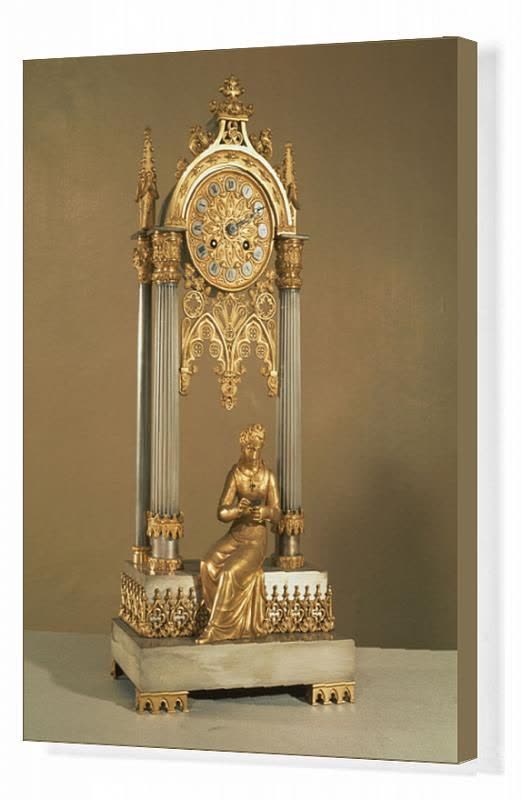
Photographs are illustrative examples of the type, not necessarily the exact object described. Verify details against the source file page.
Sources & references
- Pendule de cheminée, Wikipedia (French), retrieved 2026-10-28 (text CC BY-SA 4.0)
- French Empire mantel clock, Wikipedia (English), retrieved 2026-10-28 (text CC BY-SA 4.0)
- Britten, F. J., Old Clocks and Watches and Their Makers
- Museum catalogue records
Where sources disagree, the disagreement is stated rather than resolved silently.