
Clock type · Domestic
Dutch Staartklok and Friesland Clocks
Partially verifiedDutch wall clocks with a painted dial, a short tail housing the pendulum and richly decorated case work.
Background
The Friese staartklok was primarily manufactured in the province of Friesland, with production extending from 1770 until approximately 1890. These clocks evolved from the earlier Friese stoelklok, with makers adopting the anchor escapement technique after 1770 to replace the earlier verge escapement.
The cases were typically crafted from oak or elm to protect the pendulum from environmental influences like drafts, and they were often finished in a dark stain or a distinctive madder-red color. The clocks are characterized by painted dials frequently featuring the four seasons in the corners, and more advanced models may include moon phase indicators, date displays, or specialized striking mechanisms such as a roll-spring gong.
Written from the sources listed below; each statement was checked against the cited text.
Recognising one
- The case includes a viewing window, decorated with lead or brass ornamentation depicting figures like Father Time, which allows the pendulum to be seen.
- Many clocks feature an Atlas figure atop the case who is flanked by two representations of Fame, portrayed as winged female figures holding trumpets.
Condition and survival
- The traditional craft of producing the staartklok on a small scale still continues in Friesland today.
Where sources differ
- Period. This guide records: “c. 1750 – 1900”. Evidence states that the production of these clocks in Friesland began in 1770 and continued until 1890.
Movement & mechanism
- Weight-driven movements with anchor escapements
- Striking on a bell, frequently with a repeat of the previous hour
- Lead weights on pulleys within the tail
Identification
- Painted arched dial with moving scenes in some examples
- Short tail below the dial housing the pendulum
- Decorated lead or brass mounts typical of the region
Terminology
- Staartklok
- Stoelklok
- Friesland
Known variations
- Stoelklok, staartklok and Amsterdam variants
Collecting notes
Originality decides value and interest: check that movement, dial and case belong together, and prefer honest wear over refinishing. Movement work belongs with a clockmaker; cleaning a dial or case yourself commonly destroys the evidence that dates the clock.
Photographs
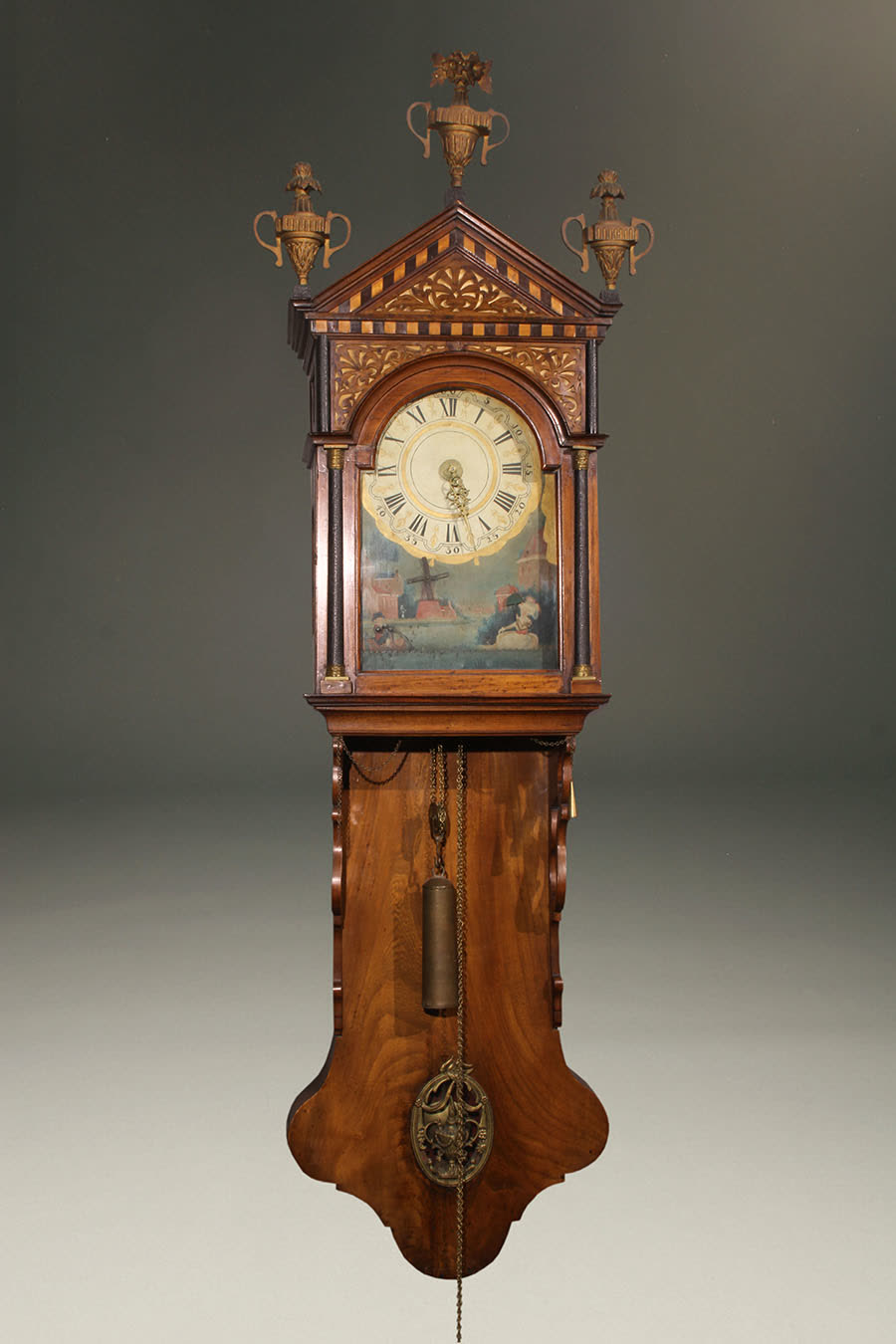
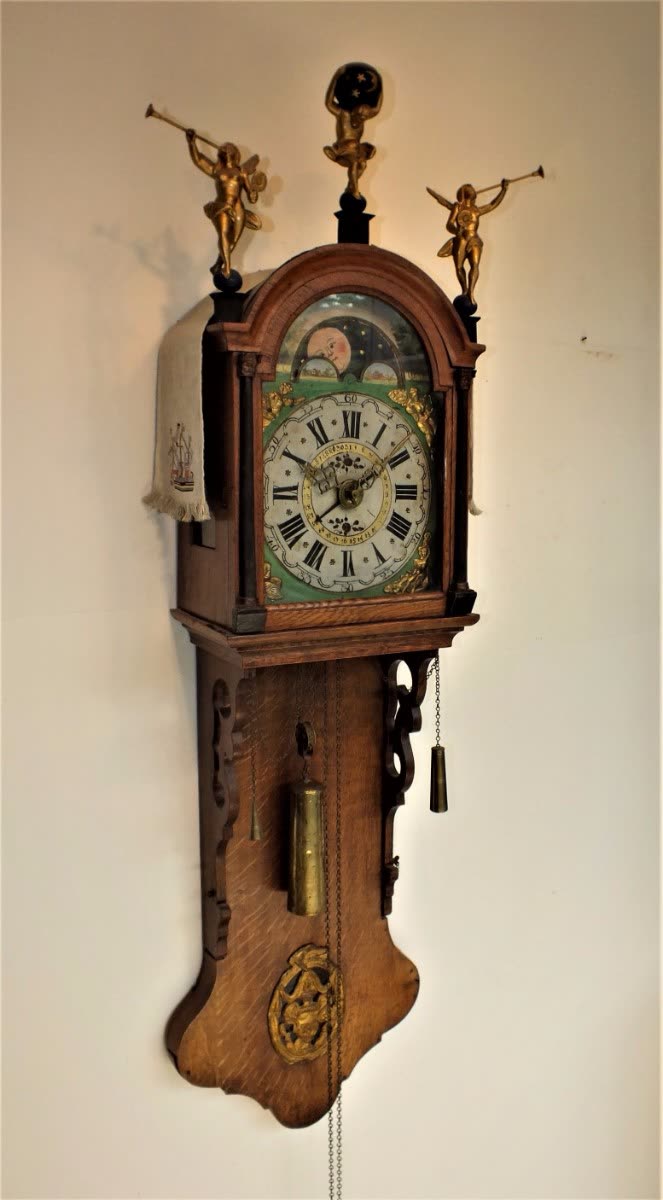
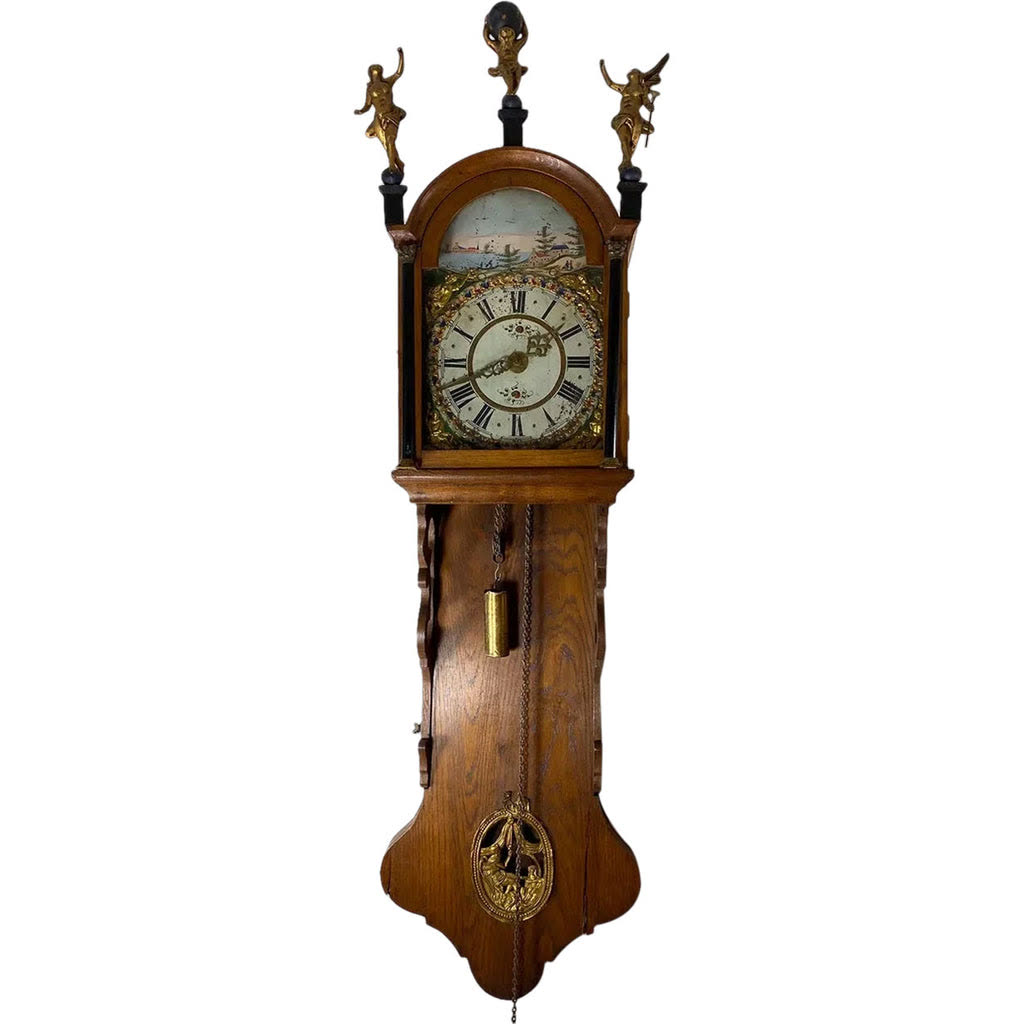
Photographs are illustrative examples of the type, not necessarily the exact object described. Verify details against the source file page.
Sources & references
- Friese staartklok, Wikipedia (Dutch), retrieved 2026-10-28 (text CC BY-SA 4.0)
- Stoelklok, Wikipedia (Dutch), retrieved 2026-10-28 (text CC BY-SA 4.0)
- Britten, F. J., Old Clocks and Watches and Their Makers
- Museum catalogue descriptions of comparable examples
Where sources disagree, the disagreement is stated rather than resolved silently.