
Skip to content
The Encyclopedia of Horology

Clock · Tower clock dial

Tower clock dial with gold-leaf plated hands

Partially verified

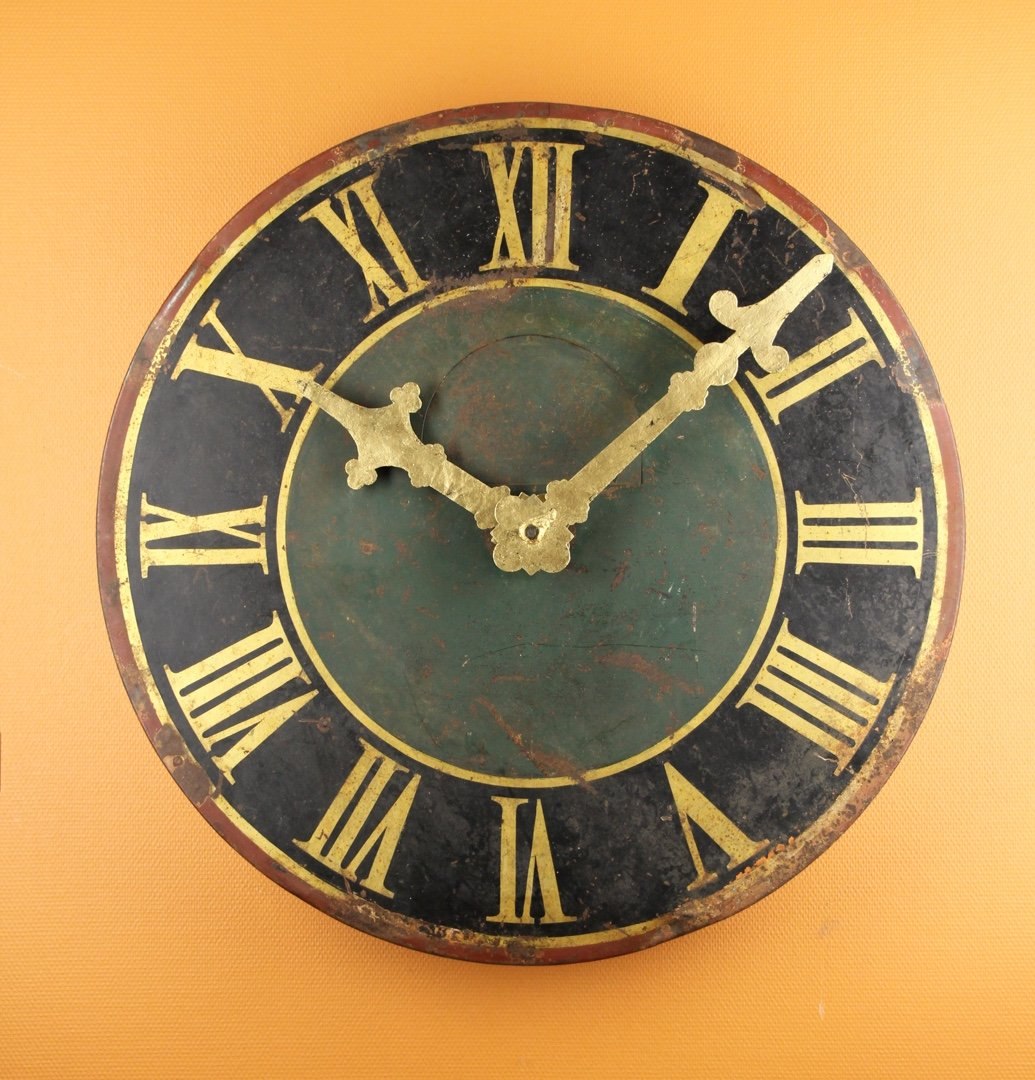
This object is a 19th-century painted wrought iron tower clock dial measuring approximately 100 cm in diameter and 12 cm in depth. Catalogued in the Louis Philippe / Charles X style, the source reports it is an antique painted dial featuring gold-plated Roman numerals set around a green central disc. The clock retains decorative gilt hands and has been fitted with an adapted mechanism powered by a synchronous motor operating at 230V/50Hz. The dealer notes that it is supplied with a specially designed wall hanging system.

Front view of the painted tower clock dial with ornamental gilt hands
Front view of the painted tower clock dial with ornamental gilt hands — Kerkhof Antiques. Rights pending — permission not yet requested. Original source

Catalogue identity

Source
www.proantic.com
Category
Clock · Tower clock dial
Maker / attribution
Not established
Reference
1227302
Catalogue / lot identifier
Source URL identifies the listing
Source-reported date
19th century
Country
Not established

Source-reported attribution and specifications are not independent authentication. A listing does not establish present ownership, current display, availability or permission to reproduce.

Object description

Dial Composition and Visual Evidence

The object consists of a painted wrought iron dial catalogued with a diameter of 100 cm (approximately 100 cm in the listing text) and a depth of 12 cm. Direct observation confirms a dark green central roundel framed by a gold-painted ring and an outer dark chapter ring, displaying gold-toned Roman numerals including IIII for 4, and centered with pierced, shaped ornamental gilt hands.

Surface wear is visibly evident on the face. Direct observations document circular painted wrought iron with surface abrasions, flaking paint, and oxidation around the rim, though the source does not detail whether this wear stems from specific exterior architectural exposure or subsequent handling.

Evidence for this section
  • “Material: Wrought iron”
  • “Diameter: 100 cm”
  • “Depth: 12 cm”
  • “Circular painted wrought iron dial with surface abrasions, flaking paint, and oxidation around the rim.”
  • “Dark green central roundel framed by a gold-painted ring and outer dark chapter ring.”
  • “Gold-toned Roman numerals including IIII for 4.”

Reported Movement and Mounting Adaptation

The dealer catalogue states that the piece possesses an "antique original painted dial" featuring "gold-plated Roman numerals and hands" accompanied by an "antique adapted clock mechanism that has been made to work." The source reports that the clock "now runs with a synchronous motor at 230V/50Hz."

The listing further notes that the clock is "supplied with specially designed hanging system." Because only the frontal photograph is provided, the synchronous motor, rear mechanical adaptations, and hanging system cannot be verified through visual observation.

Evidence for this section
  • “Antique original painted dial of a tower clock with gold-plated Roman numerals and hands and with an antique adapted clock mechanism that has been made to work.”
  • “The clock now runs with a synchronous motor at 230V/50Hz.”
  • “Supplied with specially designed hanging system.”

Stylistic Classification and Source Limitations

The source classifies the piece under the style category "Louis Philippe, Charles 10th" and dates it broadly to the "19th century." The listing designates the condition category as "Condition of use."

No manufacturer, clockmaker, foundry mark, or original architectural location is recorded in this source. Additionally, independent documentation confirming the date of conversion or original installation provenance is absent from the listing.

Evidence for this section
  • “Period: 19th century”
  • “Style: Louis Philippe, Charles 10th”
  • “Condition: Condition of use”

Open research questions

  • What specific motion work or gearing connects the original hands to the modern 230V synchronous motor behind the dial?
  • Are there any maker's stamps, inscriptions, or foundry marks visible on the reverse of the wrought iron plate indicating its original building or manufacturer?

Source evidence

Recorded claims and source quotations for Tower clock dial with gold-leaf plated hands
FieldSource-reported valueSource quotation
MaterialWrought iron“Material: Wrought iron”
Diameter100 cm“Diameter: 100 cm”
Depth12 cm“Depth: 12 cm”
Period19th century“Period: 19th century”
Motor specificationSynchronous motor at 230V/50Hz“The clock now runs with a synchronous motor at 230V/50Hz.”
Reference ID1227302“Reference (ID): 1227302”
Style categorizationLouis Philippe, Charles 10th“Style: Louis Philippe, Charles 10th”
Reported condition classificationCondition of use“Condition: Condition of use”
Source description of numerals and handsGold-plated Roman numerals and hands“gold-plated Roman numerals and hands”

Visible details

  • Circular painted wrought iron dial with surface abrasions, flaking paint, and oxidation around the rim.
  • Dark green central roundel framed by a gold-painted ring and outer dark chapter ring.
  • Gold-toned Roman numerals including IIII for 4.
  • Pierced, shaped ornamental gilt hands centered on the dial.

Research qualifications

  • The adapted synchronous motor and hanging system are rear-mounted and not visible in the front photograph.
  • The original tower clock movement is not present; operation is converted to electric drive.

Photograph identity and source facts were screened before import; rights clearance remains pending.

Consulted source

Proantic: Antique Working Tower Clock Dial With Gold Leaf Plated Hands

Reviewed 2026-10-21 · Record 51d57c08f1

Terms in this record

Glossary explanations for terms named in this object’s record.