
Skip to content
The Encyclopedia of Horology

Clock · Mantel clock

Sitzendorf Porcelain Figural Mantel Clock

Partially verified

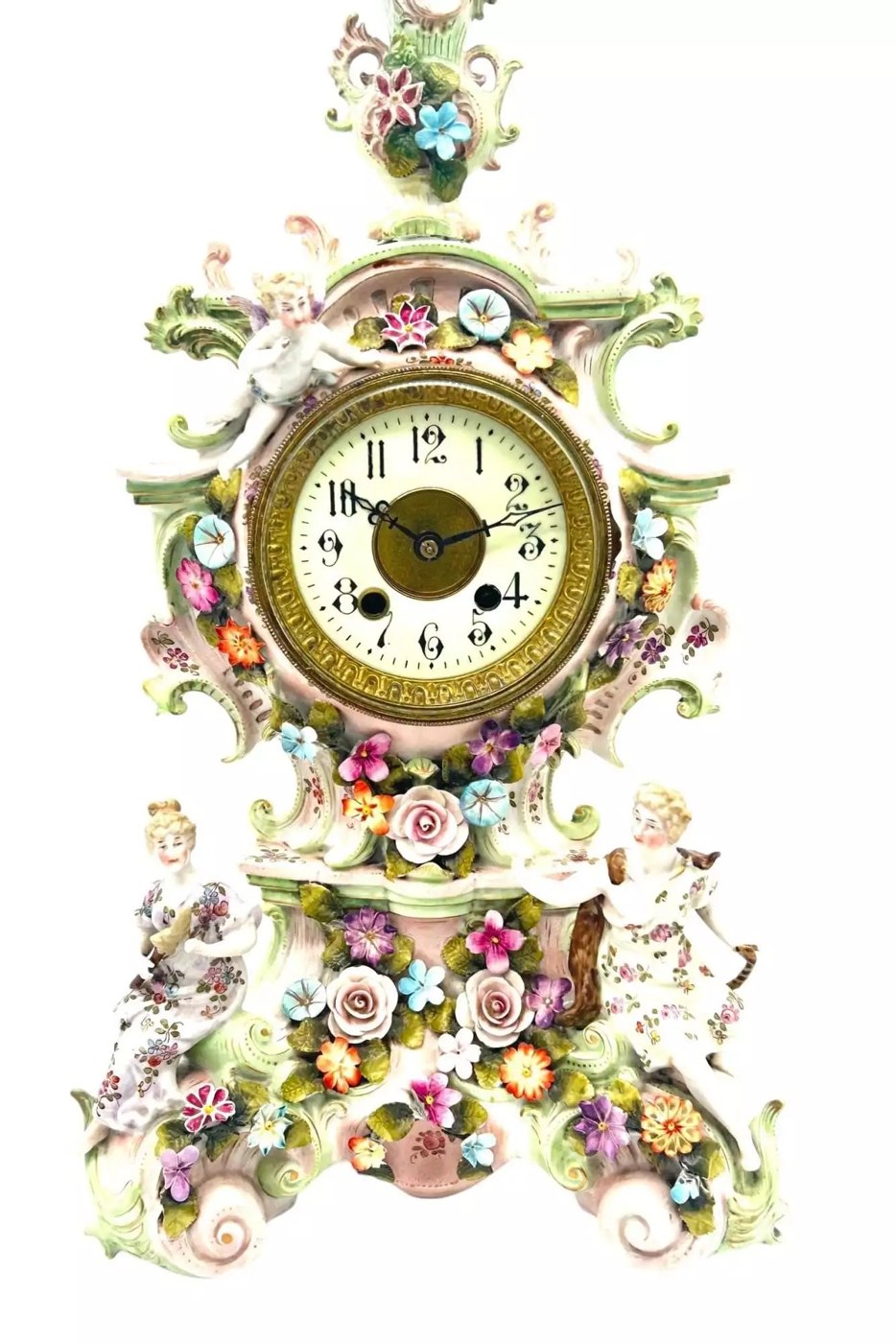
This mantel clock is attributed to the Sitzendorf porcelain factory and dates to approximately 1890. The timepiece is housed in a hand-painted, figural porcelain case characterized by high-relief decoration, including floral motifs, scrolling forms, and individual figures. The front features two female figures seated on either side of the base, with a cherub (putto) placed at the top of the clock housing. A decorative urn with applied floral work surmounts the structure. The dial is equipped with black Arabic numerals and a brass bezel, featuring two winding apertures. Internally, the clock operates via an eight-day French mechanical movement, which includes a bell-striking mechanism. Access to the movement and pendulum is provided through a hinged, perforated metal cover on the rear of the clock. According to the seller, the movement has been serviced and is in operational condition, while the porcelain case remains in good condition consistent with age.

Front view of the Sitzendorf figural porcelain mantel clock featuring seated figures, a putto, and ornate floral applied decoration.
Front view of the Sitzendorf figural porcelain mantel clock featuring seated figures, a putto, and ornate floral applied decoration. — Vintage Clocks UK. Rights pending — permission not yet requested. Original source

Catalogue identity

Source
zamanito.com
Category
Clock · Mantel clock
Maker / attribution
Sitzendorf
Reference
Not recorded
Catalogue / lot identifier
Source URL identifies the listing
Source-reported date
circa 1890
Source-reported place
Germany

Source-reported attribution and specifications are not independent authentication. A listing does not establish present ownership, current display, availability or permission to reproduce.

Object description

Case and Decoration

The clock case is constructed of hand-painted porcelain featuring a high-relief figural design. The structural composition includes two seated female figures flanking the base and a small putto figure positioned at the apex. The porcelain surface is embellished with applied floral and foliate motifs in various colors.

A decorative porcelain urn with floral detailing sits atop the main housing.

Evidence for this section
  • “بدنه ساعت از جنس پرسلین دست‌ساز و دست‌نقاش است که با فرم‌های تندیس‌گون و موتیف‌های ظریف دوره‌محور جلوه‌ای برجسته دارد.”
  • “در دو سوی پایه، تندیس دو بانوی نشسته با لباس‌های پرنقش‌ونگار و همچنین تندیس یک فرشته کوچک (پوتو) در بخش فوقانی به چشم می‌خورد.”

Movement and Dial

The timekeeping mechanism is an eight-day mechanical movement of French origin. The dial is designed with a brass bezel and black Arabic numerals. Two winding holes are visible on the dial, indicating the presence of a striking train.

The rear of the clock features a hinged metal cover with a perforated pattern, which allows for access to the internal components, including the pendulum and the striking system. The source reports that the movement is equipped for bell striking and has undergone recent servicing.

Evidence for this section
  • “ساعت به یک موتور مکانیکی فرانسوی با دوره کارکرد ۸ روزه مجهز است که طبق اعلام منبع دارای زنگوله ضربه‌زن (Bell striking) می‌باشد.”
  • “پشت بدنه با درپوش مشبک فلزی بازشو پوشانده شده و امکان دسترسی به سیستم آونگ و مکانیزم را فراهم می‌کند.”

Condition and Maintenance

According to the auction description, the clock is in good condition relative to its age, displaying natural signs of wear. The porcelain elements, particularly the delicate floral and leaf appliques, are highlighted as areas for detailed inspection by collectors.

The seller states that the movement has been recently serviced and is currently functional.

Evidence for this section
  • “وضعیت ظاهری ساعت با توجه به قدمت آن خوب ارزیابی شده و تنها نشانه‌های اندک و طبیعی گذر زمان و کهنگی در آن مشاهده می‌شود.”
  • “موتور ساعت اخیراً سرویس شده و در حال حاضر به خوبی کار می‌کند.”

Open research questions

  • Is there an official Sitzendorf maker's mark present on the base?
  • Does the French movement bear any specific maker's stamp or serial number?
  • Are there any signs of non-original restoration on the delicate porcelain floral clusters?

Source evidence

Recorded claims and source quotations for Sitzendorf Porcelain Figural Mantel Clock
FieldSource-reported valueSource quotation
MakerSitzendorf“اثر کارگاه‌های پرسلین Sitzendorf”
Datingcirca 1890“متعلق به حدود سال ۱۸۹۰ میلادی”
Movement originFrance“موتور مکانیکی فرانسوی”
Striking mechanismBell striking“دارای زنگوله ضربه‌زن (Bell striking)”
Case materialHand-painted porcelain“بدنه ساعت از جنس پرسلین دست‌ساز و دست‌نقاش است”

Visible details

  • Case features two seated female figures and a putto
  • Dial has two winding holes and a brass bezel
  • Rear of clock has a hinged perforated metal access cover

Research qualifications

  • Verification of the movement's authenticity and its original association with the case is recommended
  • Potential for hairline cracks or undocumented repairs to delicate porcelain floral elements

Photograph identity and source facts were screened before import; rights clearance remains pending.

Consulted source

Fabulous Sitzendorf Porcelain Figural Mantel clock – ca1890

Reviewed 2026-11-02 · Record 1b60c9c104

Terms in this record

Glossary explanations for terms named in this object’s record.