
Skip to content
The Encyclopedia of Horology

Pocket watch · Form watch

Shell-shaped watch by Guillaume Nourrisson

Partially verified

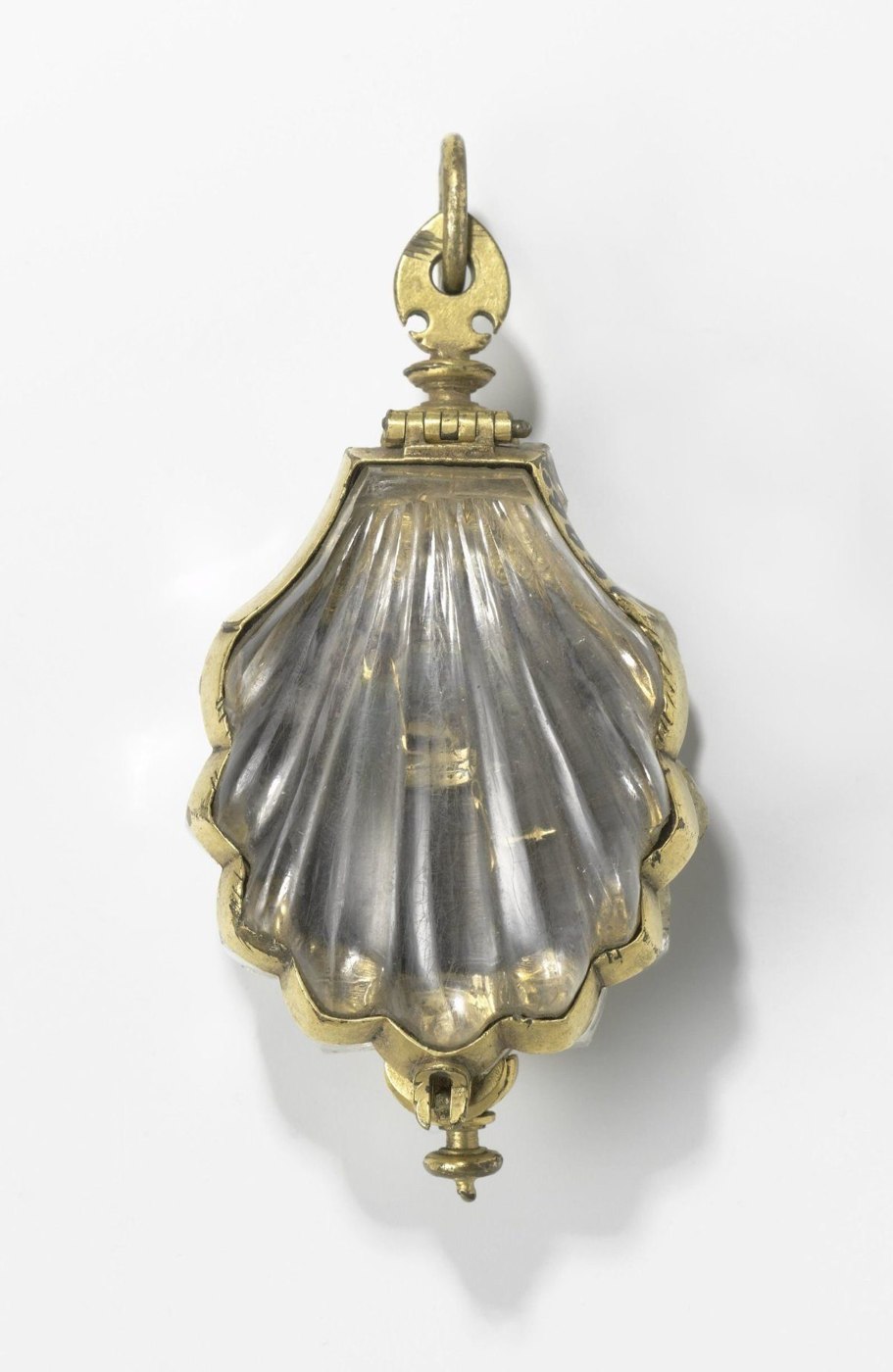
This shell-shaped pocket watch, catalogued as object BK-15062, is an example of a form watch dating to approximately 1650–1660. The horological mechanism is attributed to the Lyon-based clockmaker Guillaume Nourrisson. The watch is distinguished by its unconventional exterior, featuring a case constructed from rock crystal shaped like a scallop shell. The metal elements of the casing are crafted from silver that has been partially gilded. The timepiece features a silver dial equipped with inlaid Roman numerals. The object is currently held within the Rijksmuseum collection, having entered the institution in 1937 as part of a bequest from the Maurits Elzas collection in Arnhem. The provenance of the piece includes a 1925 sale in Berlin involving a South German noble family. The object represents a category of horological works where functional timekeeping is integrated with naturalistic decorative sculpture.

Shell-shaped watch with rock crystal case and gilt-silver mounts.
Shell-shaped watch with rock crystal case and gilt-silver mounts. — Rijksmuseum. Rights pending — permission not yet requested. Original source

Catalogue identity

Source
www.rijksmuseum.nl
Category
Pocket watch · Form watch
Maker / attribution
Guillaume Nourrisson
Reference
Not recorded
Catalogue / lot identifier
BK-15062
Source-reported date
ca. 1650 - ca. 1660
Source-reported place
France

Source-reported attribution and specifications are not independent authentication. A listing does not establish present ownership, current display, availability or permission to reproduce.

Object description

Case Construction and Materiality

The watch is housed in an unconventional case designed in the form of a naturalistic shell. The primary material used for the main body of the case is rock crystal, carved to resemble the fluted ridges of a scallop shell. This translucent shell is framed by metal components, which are documented as silver that has undergone partial gilding.

The functional metal elements, including the suspension loop and the hinge connecting the two halves of the shell-shaped case, are integrated with the crystal structure. The dial is made of silver and features Roman numerals that have been inlaid into the surface. The design emphasizes the sculptural qualities of the casing, departing from traditional circular watch cases of the mid-17th century.

Evidence for this section
  • “Horloge in schelpvormige kast van bergkristal.”
  • “zilver, deels verguld, en bergkristal”
  • “De zilveren wijzerplaat heeft ingelegde, Romeinse cijfers.”

Attribution and Dating

The horological movement is attributed to the watchmaker Guillaume Nourrisson, who was active in Lyon during the mid-17th century. The dating of the object is assigned to the period between 1650 and 1660. While the watchmaker is identified, the origin of the goldsmith work remains less certain.

The documentation suggests that the metal casing might be of French origin, though this attribution remains speculative.

Evidence for this section
  • “uurwerkmaker: Guillaume Nourrisson, Lyon”
  • “edelsmid: anoniem, Frankrijk (mogelijk)”
  • “ca. 1650 - ca. 1660”

Provenance and Collection History

The watch was previously held in the collection of a South German noble family. It appeared at a sale in Berlin, conducted by Cassirer & Helbing on 27 March 1925, where it was sold as lot number 26. Following this sale, the watch was acquired by Maurits Elzas of Arnhem.

The watch eventually became part of the Maurits Elzas collection, which comprised a total of 107 watches. This collection was bequeathed to the Rijksmuseum in 1937, where the watch remains under the accession number BK-15062. The object is currently categorized as a piece of jewelry and a watch.

Evidence for this section
  • “collection of a South German noble family, 1925”
  • “their sale, Berlin (Cassirer & Helbing), 27 March 1925, no. 26”
  • “legaat 1937”

Open research questions

  • What is the configuration of the internal movement hidden within the rock crystal shell?
  • Are there visible maker's marks on the gilt-silver mounts that could help verify the goldsmith's region of origin?

Source evidence

Recorded claims and source quotations for Shell-shaped watch by Guillaume Nourrisson
FieldSource-reported valueSource quotation
MakerGuillaume Nourrisson“uurwerkmaker: Guillaume Nourrisson, Lyon”
Datecirca 1650-1660“ca. 1650 - ca. 1660”
MaterialsSilver, gilt metal, and rock crystal“zilver, deels verguld, en bergkristal”
Object numberBK-15062“BK-15062”
ProvenanceMaurits Elzas Collection“legaat 1937”
Case constructionRock crystal shell form“Horloge in schelpvormige kast van bergkristal”

Visible details

  • Case is shaped as a scallop shell
  • Utilizes rock crystal as a primary construction material
  • Features a gilt-metal suspension loop at the top
  • Visible hinge mechanism connects the shell halves

Research qualifications

  • The exact role and involvement of the goldsmith remain unverified, with France only suggested as a possible location for the metalwork
  • The date is expressed as a range, reflecting the inherent ambiguity of the production period

Photograph identity and source facts were screened before import; rights clearance remains pending.

Consulted source

Shell-shaped Watch

Reviewed 2026-11-02 · Record 036bfd5b85

Terms in this record

Glossary explanations for terms named in this object’s record.