
Skip to content
The Encyclopedia of Horology

Tool · Planispheric astrolabe

Planispheric Astrolabe

Partially verified

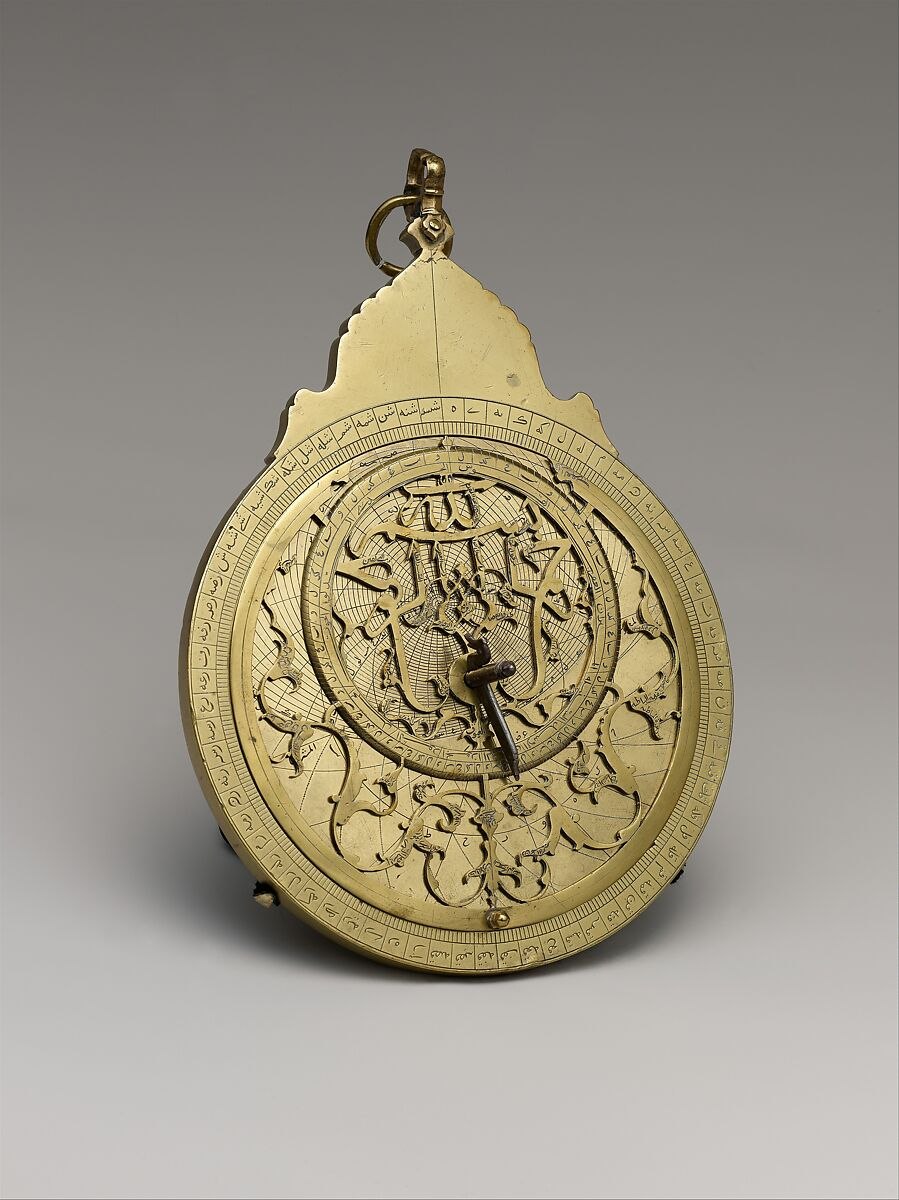
This planispheric astrolabe is attributed by the source to Mashhad, Iran, and was produced by Muhammad Zaman al-Munajjim al-Asturlabi, bearing a date of 1065 AH (1654–55 CE). Fabricated from cast, hammered, pierced, and engraved brass and steel, the instrument measures 8 1/2 inches in height. According to the source, astrolabes of this size served for telling time and determining astrological house positions rather than precise observational astronomy. The pierced brass rete features calligraphic script that the source translates as 'In the name of God, the Merciful, the Compassionate.'

Oblique front view showing the assembled brass planispheric astrolabe with pierced rete, throne, and suspension ring
Oblique front view showing the assembled brass planispheric astrolabe with pierced rete, throne, and suspension ring — The Metropolitan Museum of Art. Rights pending — permission not yet requested. Original source

Catalogue identity

Source
www.metmuseum.org
Category
Tool · Planispheric astrolabe
Maker / attribution
Muhammad Zaman al-Munajjim al-Asturlabi
Reference
63.166a–j
Catalogue / lot identifier
Source URL identifies the listing
Source-reported date
dated 1065 AH/1654–55 CE
Country
Iran

Source-reported attribution and specifications are not independent authentication. A listing does not establish present ownership, current display, availability or permission to reproduce.

Object description

Construction and Morphology

This planispheric astrolabe is composed of brass and steel, fabricated using casting, hammering, piercing, and engraving techniques. The instrument consists of a circular mater containing an engraved plate and a pierced rete.

The assembly includes a central steel pin and wedge. The upper portion of the instrument features a pointed, multi-lobed suspension throne, which is equipped with a shackle and suspension ring.

Evidence for this section
  • “Brass and steel; cast and hammered, pierced and engraved”
  • “Pierced calligraphic rete mounted over the engraved plate within the circular mater.”
  • “Pointed, multi-lobed suspension throne topped by a shackle and suspension ring.”
  • “Central steel pin and wedge fastening the front components.”

Decorative and Functional Elements

The rete includes calligraphic script that reads, "In the name of God, the Merciful, the Compassionate" (bismallah al-Rahman al-Rahim). The faceplate is noted as being typical of Safavid-period astrolabes.

Regarding its utility, the source states that astrolabes of this size were not intended for precise astronomical observation, but were used for timekeeping and by astrologers to determine the positions of planets relative to astrological houses.

Evidence for this section
  • “The intricate calligraphic faceplate of this example is typical of Safavid‑period astrolabes; it reads: "In the name of God, the Merciful, the Compassionate"”
  • “Astrolabes of this size were not precise enough for astronomical observations, but served well for telling time, and astrologers could use them to determine the position of a planet relative to the different astrological houses.”

Attribution and Dating

The instrument is attributed to the maker Muhammad Zaman al-Munajjim al-Asturlabi, who was active from 1643 to 1689. The piece bears a date of 1065 AH (1654–55 CE).

The geographic origin is attributed to Mashhad, Iran.

Evidence for this section
  • “Maker: Muhammad Zaman al-Munajjim al-Asturlabi (Iranian, active 1643–1689)”
  • “Date: dated 1065 AH/1654–55 CE”
  • “Geography: Attributed to Iran, Mashhad”

Open research questions

  • What specific geographic or astronomical data are engraved on the plates housed within the mater?
  • What is the condition of the steel pin and wedge mechanism?
  • Are there additional inscriptions beyond the calligraphic script on the rete?

Source evidence

Recorded claims and source quotations for Planispheric Astrolabe
FieldSource-reported valueSource quotation
MakerMuhammad Zaman al-Munajjim al-Asturlabi“Maker: Muhammad Zaman al-Munajjim al-Asturlabi (Iranian, active 1643–1689)”
Datedated 1065 AH/1654–55 CE“Date: dated 1065 AH/1654–55 CE”
GeographyAttributed to Iran, Mashhad“Geography: Attributed to Iran, Mashhad”
MediumBrass and steel; cast and hammered, pierced and engraved“Medium: Brass and steel; cast and hammered, pierced and engraved”
DimensionsH. 8 1/2 in. (21.6 cm) W. 6 3/4 in. (17.1 cm) D. 2 1/4 in. (5.7 cm)“Dimensions: H. 8 1/2 in. (21.6 cm) W. 6 3/4 in. (17.1 cm) D. 2 1/4 in. (5.7 cm)”
Object Number63.166a–j“Object Number: 63.166a–j”
Accession Number63.166a–j“Object Number: 63.166a–j”
DimensionsH. 8 1/2 in. (21.6 cm) W. 6 3/4 in. (17.1 cm) D. 2 1/4 in. (5.7 cm)“Dimensions: H. 8 1/2 in. (21.6 cm) W. 6 3/4 in. (17.1 cm) D. 2 1/4 in. (5.7 cm)”

Visible details

  • Pierced calligraphic rete mounted over the engraved plate within the circular mater.
  • Pointed, multi-lobed suspension throne topped by a shackle and suspension ring.
  • Central steel pin and wedge fastening the front components.

Research qualifications

  • The source records the geographic origin as attributed to Mashhad, Iran, rather than definitive.

Photograph identity and source facts were screened before import; rights clearance remains pending.

Terms in this record

Glossary explanations for terms named in this object’s record.

Other planispheric astrolabe records