
Skip to content
The Encyclopedia of Horology

Wristwatch · Military issue wristwatch

Omega RAF 53 Thin Arrow Wristwatch

Partially verified

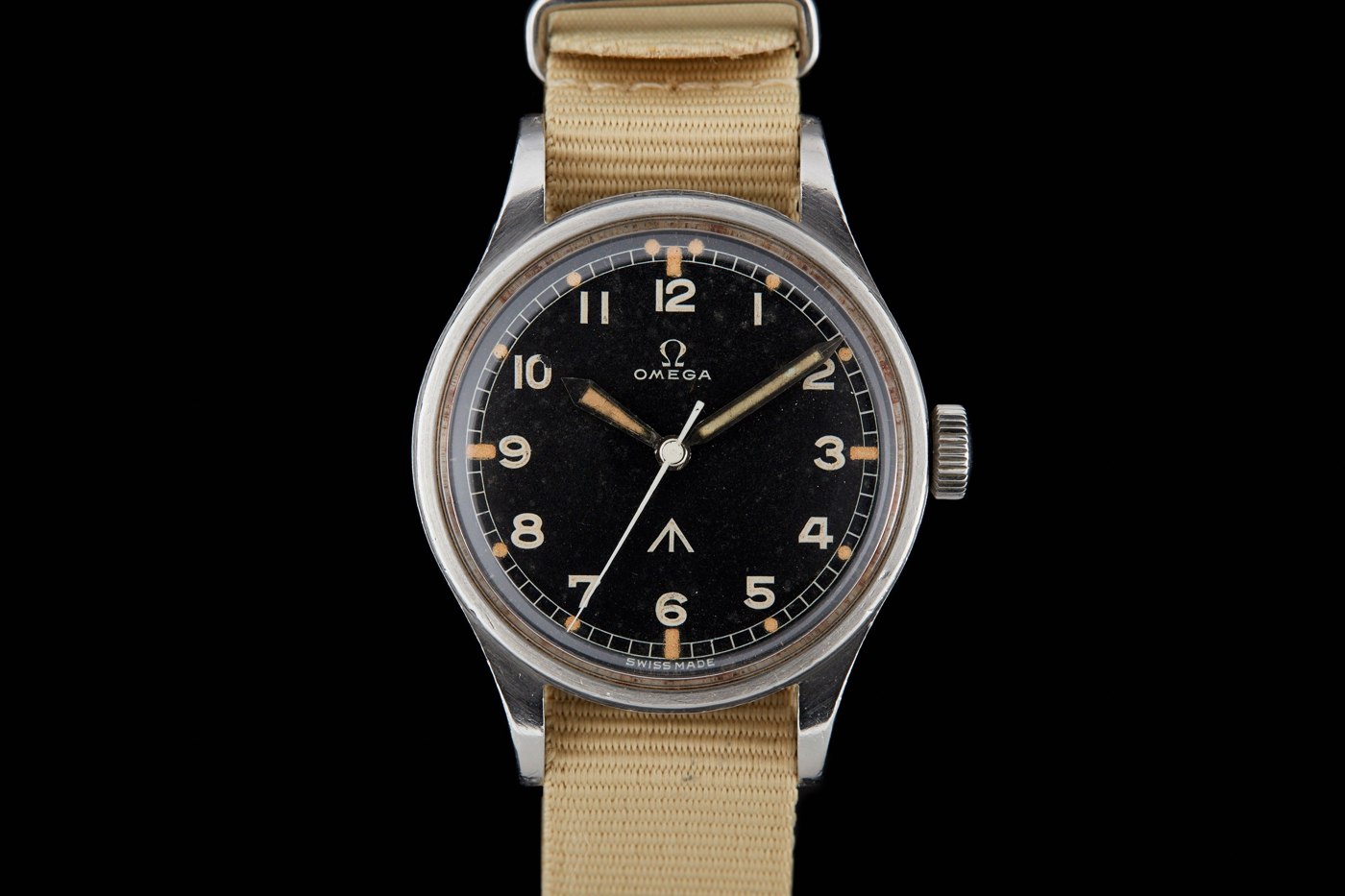
This Omega military wristwatch, reference 2777-1 and NATO number 6B/542, was manufactured in 1953 to British Ministry of Defence (MOD) specifications. The watch features a black dial with white Arabic numerals, skeletonized hour and minute hands filled with luminescent material, and a white seconds hand. It is characterized by its "Thin Arrow" dial, which distinguishes it from the later "Fat Arrow" variants that were modified in the 1960s with tritium-replaced dials. , retaining the radium-based luminescent material and the original narrow broad arrow symbol. The case is designed to meet strict military guidelines, including protection from magnetic fields via an inner dust cover.

Front view of the Omega RAF 53 Thin Arrow wristwatch featuring a black dial and original lume.
Front view of the Omega RAF 53 Thin Arrow wristwatch featuring a black dial and original lume. — Analog Shift. Rights pending — permission not yet requested. Original source

Catalogue identity

Source
shop.analogshift.com
Category
Wristwatch · Military issue wristwatch
Maker / attribution
Omega
Reference
2777-1
Catalogue / lot identifier
Source URL identifies the listing
Source-reported date
1953
Source-reported place
Switzerland

Source-reported attribution and specifications are not independent authentication. A listing does not establish present ownership, current display, availability or permission to reproduce.

Object description

Design and Military Specifications

The Omega 2777-1 was produced to meet stringent guidelines issued by the British Ministry of Defence in 1953. These specifications were comprehensive, covering the internal movement architecture and external visual elements to ensure the watch was suitable for military field use.

Central to the design is the case, which was engineered to avoid highly polished surfaces and required specific magnetic protection via an integrated inner dust cover. The dial, conforming to standard military requirements, presents a black background with legible white Arabic numerals and skeletonized hands to accommodate luminescent infill for visibility in low-light conditions.

Evidence for this section
  • “In 1953, Omega built timepieces under guidelines issued by British Ministry of Defense.”
  • “the case could not have any highly polished parts, and the movement had to be protected from magnetic fields by an inner dust cover.”
  • “the standard required that they be black with white numerals, and have skeletonized hour and minute hands filled with luminescent material”

The Thin Arrow Configuration

While many of these watches were returned to the manufacturer in the 1960s for dial replacement—where the radium was substituted for tritium and the broad arrow was repainted in a thicker style known as the "Fat Arrow"—this particular watch retains its original thin arrow.

, which shows visible degradation, notably near the 10 o'clock marker. The presence of the thin arrow indicates that this specific piece did not undergo the mandated conversion process that altered the majority of the Omega military contract supply from that period.

Evidence for this section
  • “When these watches left the factory, the luminescent material that adorned the indices and hands was Radium.”
  • “sometime in the 1960s, the watches were returned to the manufacturer and the Radium dials were exchanged for tritium. When the dial was changed, the pheon was repainted, this time thicker”
  • “some examples exist with—not a fat arrow—but the thin arrow that was on the watches when they left the Omega factory.”

Condition and Authenticity

The condition of the watch is presented as untouched, with the dial exhibiting significant character due to historical patina. , though some loss of material is documented in the auction description, specifically at the 10 o'clock index.

The status of the piece as a surviving "Thin Arrow" variant is attributed to either accidental oversight or a possible early service replacement that occurred prior to the general decree regarding radium removal. Without definitive service records, its history remains partially speculative.

Evidence for this section
  • “The dial on this particular Thin Arrow certainly has a lot of character, lent to it by a delicious patina.”
  • “As is so common with Radium dials, some of the Radium has fallen away, particularly at 10 o’clock.”
  • “We can’t say how or why this particular watch escaped what was supposed to be an order obeyed by all”

Open research questions

  • Does the inner movement serial number corroborate a 1953 production date?
  • Are there any markings on the case back that indicate the specific unit or branch of the British Ministry of Defence to which this watch was issued?

Source evidence

Recorded claims and source quotations for Omega RAF 53 Thin Arrow Wristwatch
FieldSource-reported valueSource quotation
MakerOmega“Vendor: Omega”
Reference2777-1“Omega reference number of 2777-1”
Date1953“produced by Omega in that single year of 1953”
NATO number6B/542“a NATO number of 6B/542”
Dial markingBroad arrow“The broad arrow, or pheon, has its roots in heraldry”
Luminescent materialRadium“luminescent material that adorned the indices and hands was Radium”
Case featureInner dust cover“movement had to be protected from magnetic fields by an inner dust cover”

Visible details

  • Black dial with white Arabic numerals
  • Skeletonized hour and minute hands with luminescent material
  • Thin broad arrow symbol above the 6 o'clock position
  • Luminescent material loss at 10 o'clock marker

Research qualifications

  • The exact reason this specific example escaped the 1960s dial replacement program remains unknown
  • The possibility that the current dial is an early service replacement cannot be entirely excluded

Photograph identity and source facts were screened before import; rights clearance remains pending.

Consulted source

ساعت مچی نظامی Omega مدل RAF 53 Thin Arrow رفرنس 2777-1

Reviewed 2026-11-02 · Record 418e190afa

Terms in this record

Glossary explanations for terms named in this object’s record.