
Skip to content
The Encyclopedia of Horology

Clock · Longcase clock

Josiah Emery Small Mahogany Longcase Clock

Partially verified

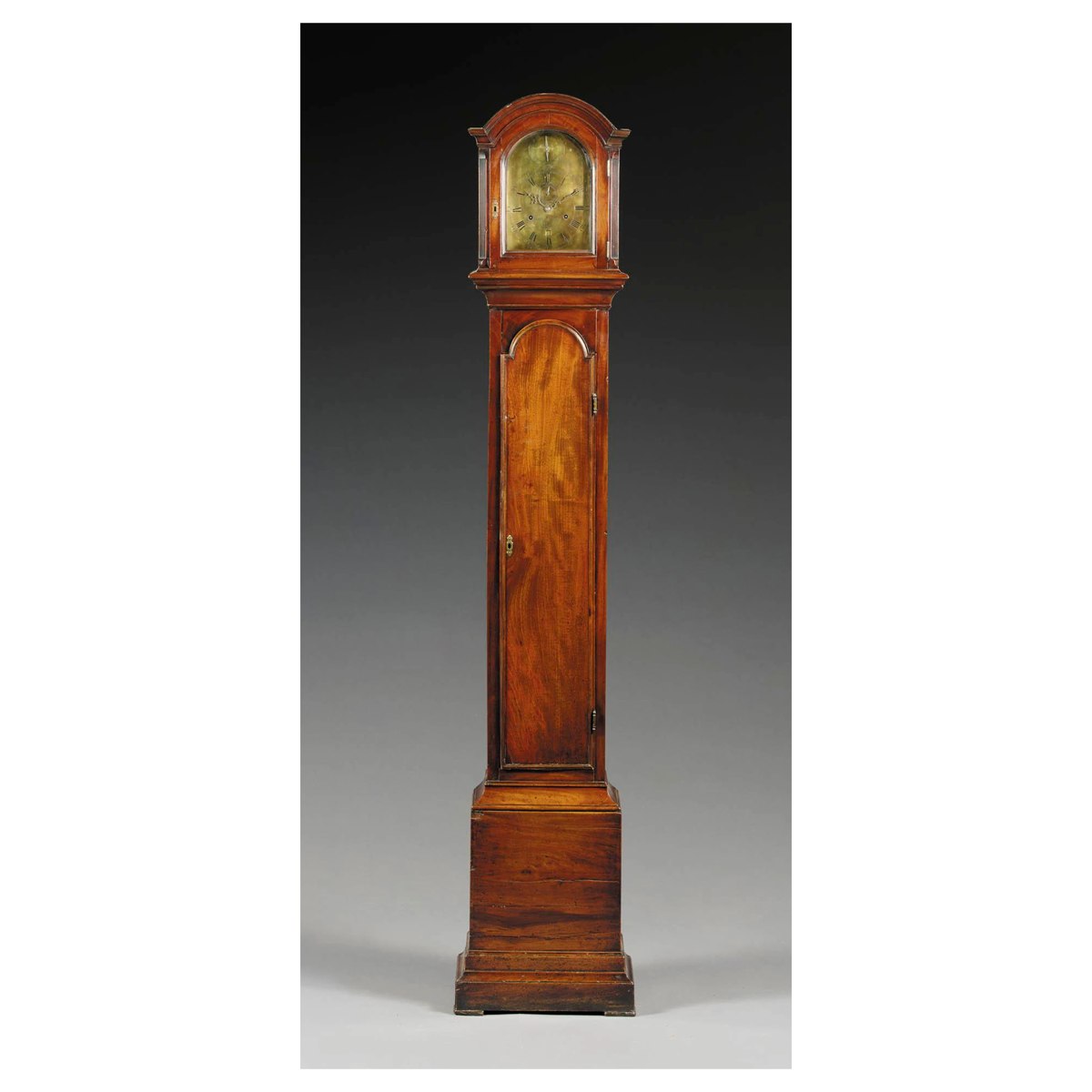
According to the auction cataloguer, this timepiece is a small mahogany longcase clock attributed to London clockmaker Josiah Emery, dating to circa 1785. Measuring approximately 192.5 centimetres in height, the clock features a 7-inch arched dial signed Josiah Emery, London, fitted with a seconds dial, calendar aperture, and an arch strike/silent indicator. The movement utilizes rack and bell striking. The mahogany case is described as having a broken-arch moulded hood top with fluted canted corners, a broken-arch trunk door, and a rectangular plinth resting on a stepped moulded base.

Josiah Emery small mahogany longcase clock, circa 1785
Josiah Emery small mahogany longcase clock, circa 1785 — Sotheby's. Rights pending — permission not yet requested. Original source

Catalogue identity

Source
www.sothebys.com
Category
Clock · Longcase clock
Maker / attribution
Josiah Emery
Reference
Not recorded
Catalogue / lot identifier
157
Source-reported date
circa 1785
Country
United Kingdom

Source-reported attribution and specifications are not independent authentication. A listing does not establish present ownership, current display, availability or permission to reproduce.

Object description

Case Form and External Structure

The clock is built in a mahogany case standing at an auction-recorded height of 192.5 cm (6 ft 3¾ in). The cataloguer describes the cabinetwork as having a broken-arch moulded top, fluted canted hood corners, a broken-arch trunk door, and a rectangular plinth resting on a stepped moulded base.

Visual observation of the exterior confirms a full-length slender configuration featuring an arched glazed front door on the hood flanked by canted corner profiles. The trunk door is fitted with external hinges positioned on the right and an escutcheon on the left.

Evidence for this section
  • “192.5cm. 6ft.3¾in. high”
  • “broken-arch moulded top fluted canted hood corners, broken-arch trunk door and rectangular plinth with stepped moulded base”
  • “The hood features an arched glazed front door flanked by canted corner profiles.”
  • “The trunk door features external hinges on the right and an escutcheon on the left.”

Dial and Indicated Mechanism

According to the auction catalogue, the clock is fitted with a 7-inch arched dial signed 'Josiah Emery, London'. The dial features an auxiliary seconds dial, a calendar aperture, and a strike/silent dial located in the arch.

The movement is described in the source as a rack and bell striking movement. However, the movement plates, wheelwork, weights, and pendulum are entirely enclosed within the case and cannot be directly inspected or verified from the primary cataloguing photograph.

Evidence for this section
  • “7-inch arched dial with seconds dial and calendar aperture, signed Josiah Emery, London , strike/silent dial in the arch”
  • “rack and bell striking movement”

Attribution and Documentation Limitations

The clock is catalogued to circa 1785 and attributed to Josiah Emery. The catalogue note records that Emery was born in Switzerland, worked from premises at 33 Cockspur Street, Charing Cross, London, and was made an honorary Freeman of the Clockmakers' Company in 1781. He died in 1797 and was succeeded by Recordon & Dupont.

The circa 1785 date represents a cataloguer's estimate rather than a date established by serial numbers or workshop records in the source. Furthermore, the dial signatures and auxiliary dial inscriptions cannot be independently verified from the photograph due to image resolution and glazing reflection.

Evidence for this section
  • “Josiah Emery, London, circa 1785”
  • “Josiah Emery, an eminent maker, was born in Switzerland and came to London where he worked from premises at 33 Cockspur Street, Charing Cross; he was made an honorary Freeman of the Clockmakers' Company in 1781. He died in 1797 and was succeeded by Recordon & Dupont.”

Open research questions

  • What specific escapement and pendulum suspension are fitted to the movement behind the 7-inch dial?
  • Does the movement pillar layout or seatboard show evidence of alterations or association with this specific small case?
  • Are there any internal signatures, repair marks, or numbered stamps on the movement plates or inside the trunk door?

Source evidence

Recorded claims and source quotations for Josiah Emery Small Mahogany Longcase Clock
FieldSource-reported valueSource quotation
Height192.5 cm (6 ft 3¾ in)“192.5cm. 6ft.3¾in. high”
Dial specification7-inch arched dial with seconds dial and calendar aperture“7-inch arched dial with seconds dial and calendar aperture”
Dial signatureJosiah Emery, London“signed Josiah Emery, London”
MechanismRack and bell striking movement“rack and bell striking movement”
Case constructionBroken-arch moulded top, fluted canted hood corners, broken-arch trunk door, rectangular plinth with stepped moulded base“broken-arch moulded top fluted canted hood corners, broken-arch trunk door and rectangular plinth with stepped moulded base”
Maker's workshop location33 Cockspur Street, Charing Cross, London“worked from premises at 33 Cockspur Street, Charing Cross”
Arch indicationStrike/silent dial“strike/silent dial in the arch”

Visible details

  • Full-length front view of the slender mahogany longcase clock showing the hooded dial, arched trunk door, and rectangular base.
  • The hood features an arched glazed front door flanked by canted corner profiles.
  • The trunk door features external hinges on the right and an escutcheon on the left.

Research qualifications

  • The internal movement, weights, pendulum, and striking mechanism are not visible in the photograph.
  • Dial signatures and fine auxiliary dial details are partially obscured due to image resolution and glazing reflection.

Photograph identity and source facts were screened before import; rights clearance remains pending.

Consulted source

(#157) A very rare small mahogany longcase clock, Josiah Emery, London, circa 1785

Reviewed 2026-10-21 · Record d7335ebc47

Terms in this record

Glossary explanations for terms named in this object’s record.