
Skip to content
The Encyclopedia of Horology

Tool · Astrolabe template

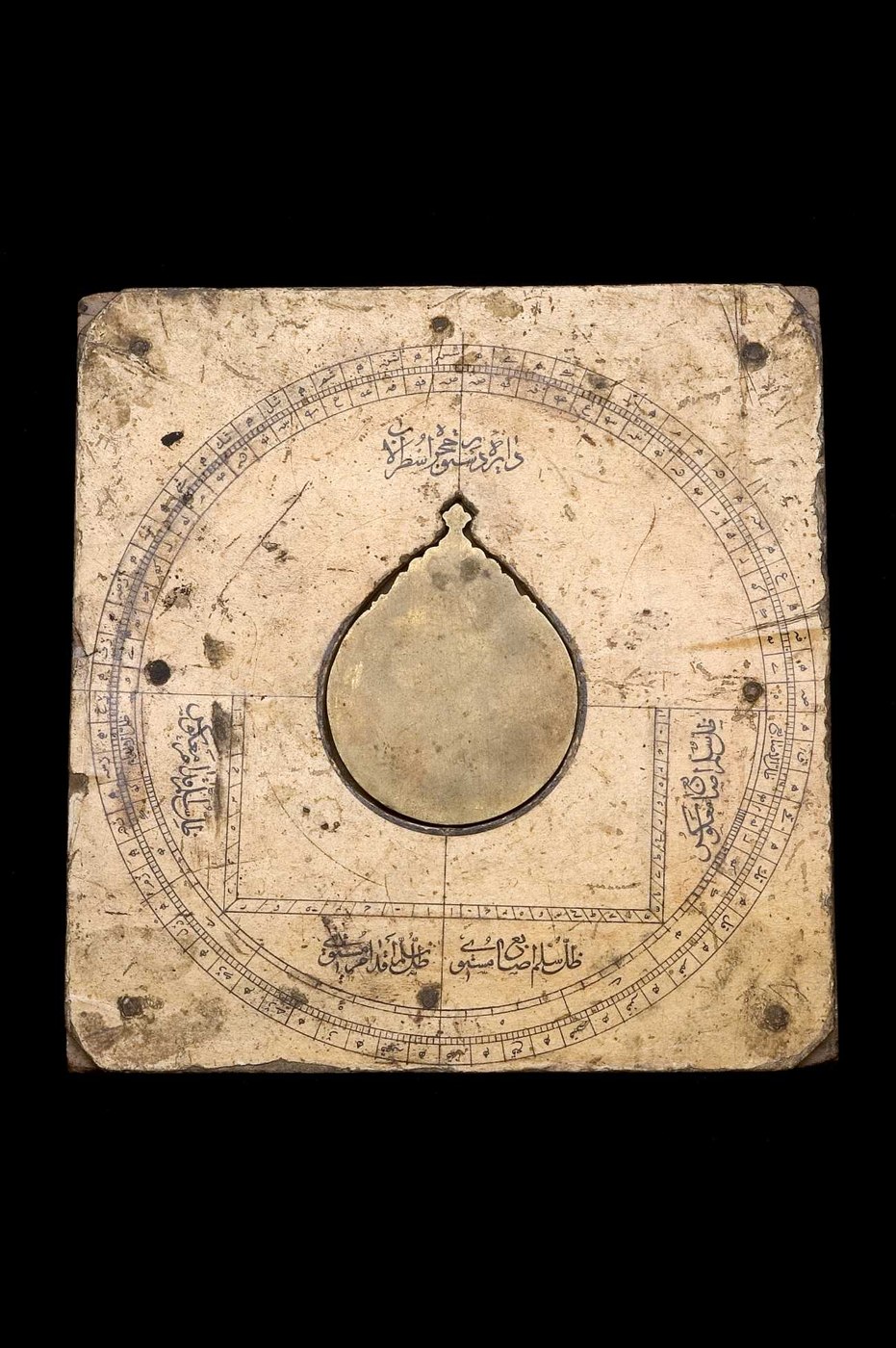
Astrolabe template and brass blank

Partially verified

This object is a wooden astrolabe template, known as a dastūr, which serves as a specialized tool for an instrument maker. It features a central recess containing an unfinished brass blank intended for an astrolabe. The object is part of a larger ensemble of 18th and 19th-century Persian instruments and workshop equipment acquired by the museum in 1969-70 from the dealer Alain Brieux. The template is designed to guide the construction of astrolabes and related astronomical devices. The mater and limb are present in an unfinished state, and the back remains blank, documenting the intermediate stage of the instrument-making process.

Wooden astrolabe template (dastūr) with brass blank, 18th century, Persia.
Wooden astrolabe template (dastūr) with brass blank, 18th century, Persia. — History of Science Museum, University of Oxford. Rights pending — permission not yet requested. Original source

Catalogue identity

Source
www.mhs.ox.ac.uk
Category
Tool · Astrolabe template
Maker / attribution
Not established
Reference
Not recorded
Catalogue / lot identifier
52332
Source-reported date
18th century (?)
Source-reported place
Persia

Source-reported attribution and specifications are not independent authentication. A listing does not establish present ownership, current display, availability or permission to reproduce.

Object description

Construction and Function

The object functions as a template, or dastūr, specifically used by an astrolabe maker to maintain consistent dimensions and proportions during fabrication. It consists of a wooden base featuring a central circular recess. Within this recess, a plain, circular brass blank is housed, waiting for subsequent stages of manufacture such as engraving and the addition of scales.

The instrument is categorized as a specialized workshop tool rather than a finished timekeeping or astronomical device. The surface of the template exhibits preliminary layout lines, which assisted the maker in positioning the components of an astrolabe. It demonstrates the preparatory requirements for metalworking in 18th-century Persian instrument production.

Evidence for this section
  • “This wooden dastūr or astrolabe template, with a brass blank for an astrolabe waiting in its recess”
  • “The tools used by a mathematical or astronomical instrument maker included not only the familiar engraving, dividing, and metalworking tools but more specialized templates and 'sciagraphic' devices.”

Provenance and Context

The template was acquired by the History of Science Museum, University of Oxford, between 1969 and 1970. It was purchased from the Paris-based dealer and collector Alain Brieux. The object was documented as part of an ensemble of tools and instruments that had been brought to Europe from Iran.

This group of items is interpreted as the contents of a maker's workshop. In addition to the template, the collection includes a brass blank for a secondary instrument such as a sundial or qibla indicator, a rectangular quadrant, a set square, a gnomon, and a large wooden quadrant. The presence of these varied components suggests a collective assemblage of equipment used for the production of multiple types of astronomical and navigational instruments.

Evidence for this section
  • “This template and blank are part of an ensemble of instruments and tools, obviously forming part of an astrolabe maker's equipment, which had recently been brought to Europe from Iran.”
  • “Purchased from Alain Brieux in 1969-70”

State of Preservation

The object is recorded in an incomplete, unfinished state consistent with its role as a template. The mater, limb, and womb components are described as blank, indicating that the engraving of scales and other functional details was never performed on this specific assembly. This lack of detail is the intended state for a template used to guide the formation of future instruments.

The wooden base shows signs of use, including marks from the construction processes. The materials, specifically the brass and wood, are consistent with the period of manufacture attributed to the ensemble, though the exact dating remains subject to historical estimation.

Evidence for this section
  • “The limb, as with the rest of this mater, is blank.”
  • “The womb is blank.”
  • “Date 18th century (?)”

Open research questions

  • What specific geometric layout techniques were facilitated by the markings on the wooden base?
  • Does the brass blank show evidence of metallurgical composition typical of Persian astrolabes of the same period?

Source evidence

Recorded claims and source quotations for Astrolabe template and brass blank
FieldSource-reported valueSource quotation
Inventory number52332“Inventory no. 52332”
MaterialBrass and wood“This wooden dastūr or astrolabe template, with a brass blank for an astrolabe waiting in its recess”
OriginPersia“Of Persian origin”
Acquisition date1969-70“Purchased from Alain Brieux in 1969-70”
StatusUnfinished“The limb, as with the rest of this mater, is blank..”
EnsemblePart of a larger toolkit“part of an ensemble of instruments and tools which the Museum acquired in 1969”

Visible details

  • Wooden template board with recessed central circular space
  • Plain brass disc blank set within the central recess
  • Visible surface markings and construction lines on the wooden base

Research qualifications

  • Dating remains uncertain with a question mark in the source
  • Exact provenance of individual maker unknown
  • Workshop attribution is based on the ensemble's collective nature

Photograph identity and source facts were screened before import; rights clearance remains pending.

Consulted source

Astrolabe, inventory 52332 (Persia, 18th century (?))

Reviewed 2026-10-26 · Record ade512fd9f

Terms in this record

Glossary explanations for terms named in this object’s record.