
Skip to content
The Encyclopedia of Horology

Tool · Shadow clock

Ancient Egyptian Altitude Sundial

Partially verified

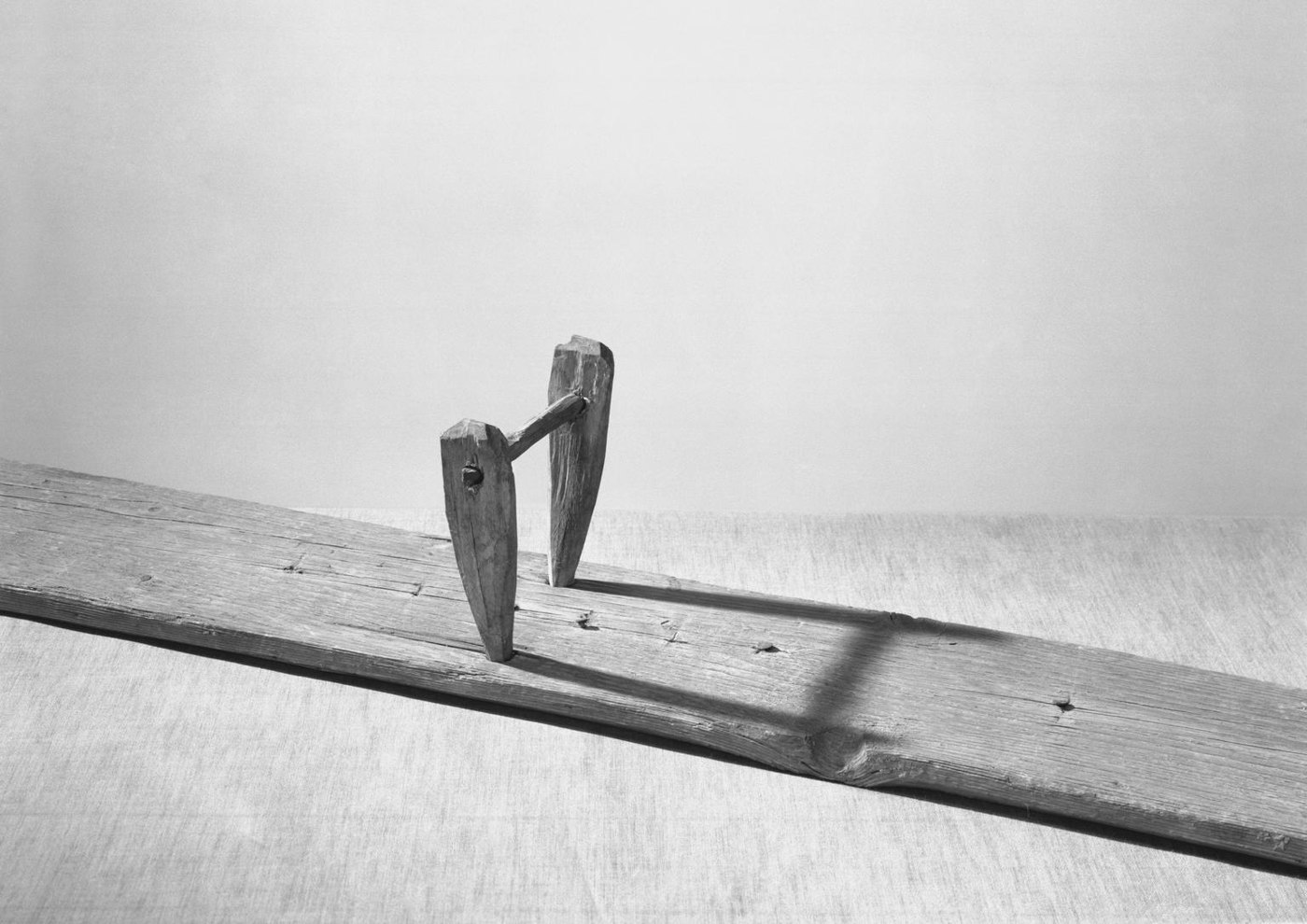
This object is an ancient Egyptian altitude sundial, also known as a shadow clock, crafted from pine wood. It consists of a long horizontal wooden base board featuring surface markings intended to indicate units of time, and a raised horizontal gnomon supported by two uprights. The device functions by orienting the horizontal bar toward the sun, which casts a shadow across the base board to measure time. This mechanism was used to time various tasks, including the activities of labourers or the regulation of water flow in irrigation systems. The object is attributed to an unknown maker and dated to the period between 1000 and 800 BCE. Its design reflects a method of timekeeping documented as still being utilized in Egypt during the early 20th century.

An ancient Egyptian wooden shadow clock with a base board and elevated gnomon.
An ancient Egyptian wooden shadow clock with a base board and elevated gnomon. — Science Museum Group. Rights pending — permission not yet requested. Original source

Catalogue identity

Source
collection.sciencemuseumgroup.org.uk
Category
Tool · Shadow clock
Maker / attribution
Unknown maker
Reference
Not recorded
Catalogue / lot identifier
1926-992
Source-reported date
1000-800 BCE
Source-reported place
Egypt

Source-reported attribution and specifications are not independent authentication. A listing does not establish present ownership, current display, availability or permission to reproduce.

Object description

Physical Construction

The sundial is constructed primarily from pine wood and features an elongated base measuring 1190 mm in length. The board is roughly 120 mm deep and supports a gnomon assembly centrally located along its length.

The shadow-casting mechanism comprises two vertical uprights that hold a raised horizontal wooden bar. This horizontal member is designed to face the sun to cast a shadow onto the base board, which is inscribed with markings to denote intervals of time.

Evidence for this section
  • “Time measuring device consisting of wooden board with markings to indicate units of time and a raised horizontal wooden gnomon”
  • “overall: height = 125 mm x width = 1190 mm x depth = 120 mm”

Function and Operation

The device functions as an altitude sundial, using the shadow cast by the elevated crossbar onto the calibrated base to determine the time. The user would align the horizontal component toward the sun's position.

Historically, this configuration of shadow clock was used to manage human activity and resource distribution, specifically for timing the work of labourers or managing irrigation water flow. The mechanism is identified as a type that remained in service in Egypt as recently as the early 20th century.

Evidence for this section
  • “The horizontal bar on top of the two uprights is turned to face the sun so that it casts a shadow on the base”
  • “It was used to time various tasks such as the work of labourers or the flow of water in irrigation.”

Provenance and Documentation

This object is held in the museum collection under accession number 1926-992. The object is attributed to an unknown maker in Egypt, dated to between 1000 and 800 BCE.

The credit for the object is recorded to Mr. W. M. Hayes. The museum description clarifies that while the piece is ancient, the operating principle behind the design has historical continuity with instruments used much later in the region.

Evidence for this section
  • “Made in Egypt by an unknown maker, 1000-800 BCE.”
  • “Credit: Mr. W. M. Hayes”
  • “This altitude sundial is of a type which was still in use in Egypt during the first quarter of the 20th century”

Open research questions

  • What specific type of markings are present on the base board to denote time units?
  • Does the wood show signs of wear consistent with the 1000-800 BCE dating or evidence of later refurbishment?

Source evidence

Recorded claims and source quotations for Ancient Egyptian Altitude Sundial
FieldSource-reported valueSource quotation
Accession Number1926-992“Accession number: 1926-992”
MakerUnknown“Maker: Unknown maker”
MaterialPine wood“Ancient Egyptian Altitude Sundial, or Shadow Clock, in pine (wood)”
Date1000-800 BCE“Date: 1000-800 BCE”
Height125 mm“height = 125 mm”
Width1190 mm“width = 1190 mm”
Depth120 mm“depth = 120 mm”

Visible details

  • Constructed of plain pine wood with visible grain texture.
  • Features a horizontal gnomon beam mounted between two vertical supports.
  • Longitudinal base board contains faint indentations or markings.

Research qualifications

  • The dating to 1000-800 BCE remains an attribution without specific archaeological context provided.
  • The functional use of this specific piece for irrigation is reported as general historical context for the type.

Photograph identity and source facts were screened before import; rights clearance remains pending.

Consulted source

Ancient Egyptian Altitude Sundial, or Shadow Clock, in pine (wood)

Reviewed 2026-10-26 · Record a438dbe1dd

Terms in this record

Glossary explanations for terms named in this object’s record.