
Skip to content
The Encyclopedia of Horology

Clock · Electric wall clock

100 Objects Mirrors of Silent Time clock

Partially verified

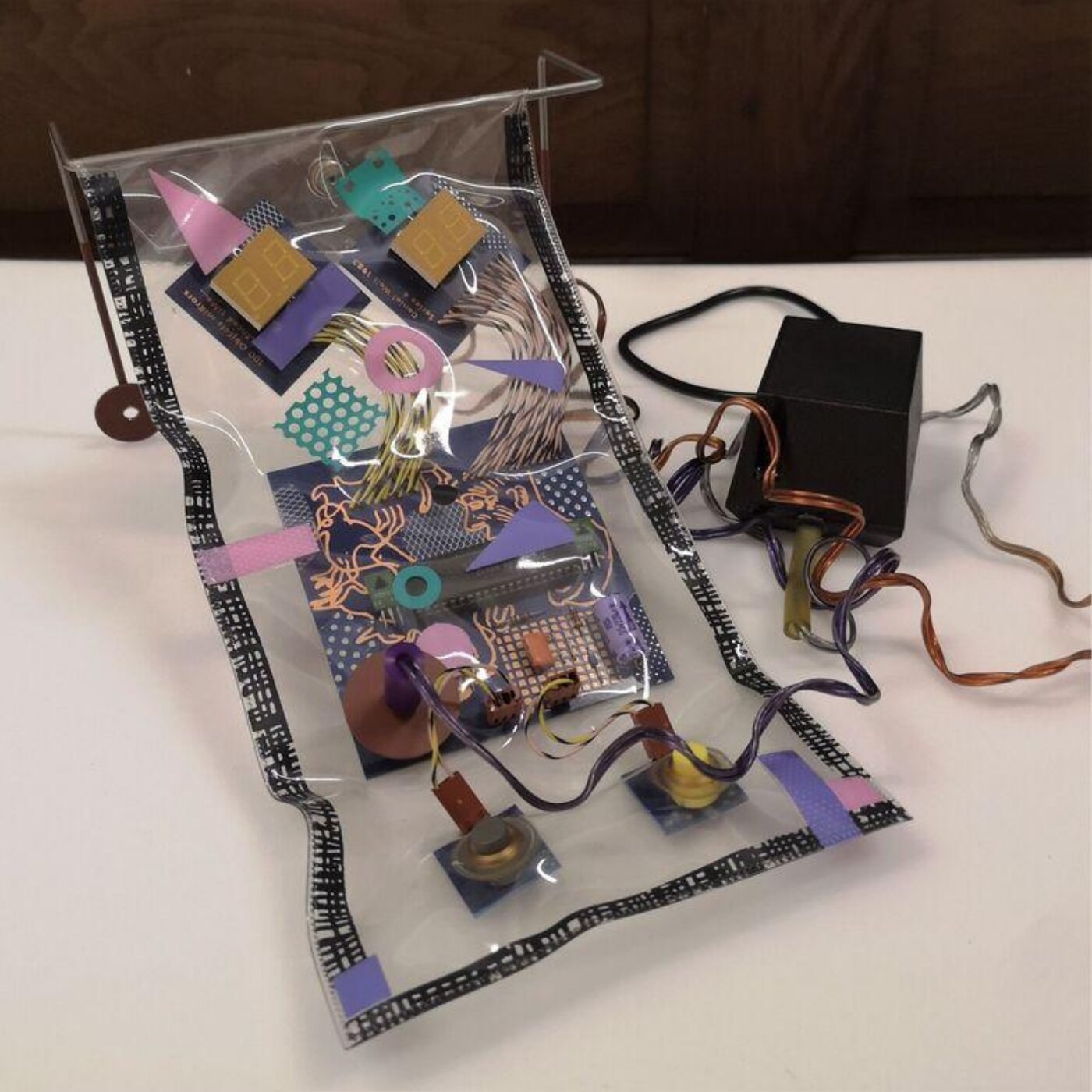
The '100 Objects Mirrors of Silent Time' clock is an electric timekeeping device designed by Daniel Weil and produced by Parenthesis Ltd. The clock consists of electrical and circuit components housed within a transparent PVC bag, which is intended to be suspended from a metal wall bracket. The internal circuit board is printed with various drawings, shapes, and patterns, while multi-coloured plastic-coated wires protrude from the face of the bag. The exterior of the PVC enclosure is also printed with colourful shapes and patterns. It was commissioned for Guiseppe Melzi, an Italian lawyer, to be distributed as a Christmas gift to his clients.

The clock displayed in its transparent PVC housing with visible circuit board, internal wires, and metal mounting bracket.
The clock displayed in its transparent PVC housing with visible circuit board, internal wires, and metal mounting bracket. — V&A Museum. Rights pending — permission not yet requested. Original source

Catalogue identity

Source
collections.vam.ac.uk
Category
Clock · Electric wall clock
Maker / attribution
Daniel Weil (designer); Parenthesis Ltd (maker)
Reference
Not recorded
Catalogue / lot identifier
W.662-2001
Source-reported date
1983; 1985
Source-reported place
United Kingdom

Source-reported attribution and specifications are not independent authentication. A listing does not establish present ownership, current display, availability or permission to reproduce.

Object description

Construction and Design

The clock is constructed from an assembly of electrical and circuit components contained within a transparent, flexible PVC bag. This bag serves as the primary housing for the internal mechanisms, which are designed to be visible. The structure includes a metal fixture that allows the bag to be suspended from a wall.

The aesthetic of the object relies on the presentation of its internal parts. Multi-coloured wires coated in plastic extend from the face of the bag, while the circuit board itself is decorated with printed patterns, drawings, and various geometric shapes. The exterior PVC surface features additional multi-coloured patterns, creating a layered visual effect. The object was donated to the collection by the designer himself.

Evidence for this section
  • “The electrical components of the clock are contained within a see-through PVC bag which hangs from a metal wall fixing.”
  • “Wires coated in multi-coloured plastic protrude from the front of the bag.”
  • “The circuit board is also printed with a drawing and various shapes and patters, again multi-coloured.”

Historical Context and Function

Designed by Daniel Weil, the clock was produced in an edition of 100. The title of the object relates to the size of the edition and the operational nature of the clock. As an electric device, it does not produce the ticking sound associated with mechanical clocks. This object was produced in an edition of 100 units. The clock was produced in an edition of 100.

The item was commissioned by an Italian lawyer named Guiseppe Melzi. It served as a Christmas gift for his clients.

Evidence for this section
  • “The title - '100 Objects Mirrors of Silent Time' refers to a) the fact that this is one of an edition of 100 clocks and b) that it is electric and therefore doesn't tick like a mechanical clock.”
  • “It was designed for an Italian lawyer called Guiseppe Melzi who sent them to clients as a Christmas gift.”

Provenance and Documentation

This specific example is held by the V&A Museum with the accession number W.662-2001.

The documentation attributes the manufacture to Parenthesis Ltd, based in London. The dates provided by the museum are 1983 and 1985, identifying the work within the context of Weil’s 1980s output.

Evidence for this section
  • “Accession number: W.662-2001”
  • “Place of origin: London (made)”
  • “Credit line: Given by the designer”

Open research questions

  • What are the technical specifications of the power source required to operate the electric movement?
  • How does the printed circuit board maintain timekeeping functionality while serving as a decorative surface?

Source evidence

Recorded claims and source quotations for 100 Objects Mirrors of Silent Time clock
FieldSource-reported valueSource quotation
MakerDaniel Weil (designer); Parenthesis Ltd (maker)“Weil, Daniel (designer); Parenthesis Ltd (maker)”
Accession numberW.662-2001“W.662-2001”
Date1983; 1985“1983; 1985”
MaterialsPVC, plastic and metal components“PVC, plastic and metal components”
Place of originLondon“London (made)”
EditionEdition of 100“the fact that this is one of an edition of 100 clocks”
Original intentCommissioned for Guiseppe Melzi“It was designed for an Italian lawyer called Guiseppe Melzi who sent them to clients as a Christmas gift.”

Visible details

  • Electrical circuit board visible inside the transparent bag.
  • Metal mounting hardware for wall suspension.
  • Multi-coloured plastic-coated wiring extending from the internal components.
  • Digit-style display segments mounted on the circuit board.

Research qualifications

  • Functional status of the electrical components is not explicitly stated in the source.
  • The source provides dual dates (1983; 1985) without clarifying the specific production date of this accessioned example.

Photograph identity and source facts were screened before import; rights clearance remains pending.

Consulted source

100 Objects Mirrors of Silent Time

Reviewed 2026-10-26 · Record df71099ecc

Terms in this record

Glossary explanations for terms named in this object’s record.