
London, England · 17th century
William Clement
Partially verifiedClocks
Life & work
Inventor of anchor escapement.
William Clement was a British clockmaker who was born in 1638 and resided in London. Before his career as a clockmaker, he worked as a blacksmith. He served as a member of the Clockmakers Company beginning in 1677 and held the position of Master from 1694 until 1699.
Clement is credited with inventing the anchor escapement and improving Huygens' pendulum by replacing the suspension cord with a flexible spring. His development of the anchor escapement around 1670 proved crucial for the advancement of the long pendulum. William Clement passed away in 1704, and his son, who shared his name, also practiced as a clockmaker.
The fuller biography summarises the open references listed under Sources; each statement was checked against the cited passage. Confirm key dates in period documents before relying on them.
Timeline
William Clement's recorded dates, dated events from this profile and its sources, and dated pieces and sales from the object catalogue. Dates are as each record gives them.
1638 · Career
William Clement was a British clockmaker who was born in 1638 and resided in London.
1670 · Career
His development of the anchor escapement around 1670 proved crucial for the advancement of the long pendulum.
1677 · Career
He served as a member of the Clockmakers Company beginning in 1677 and held the position of Master from 1694 until 1699.
1704 · Career
William Clement passed away in 1704, and his son, who shared his name, also practiced as a clockmaker.
Training, contributions & innovations
- Anchor escapement
- Clement is recognized as one of the originators of the anchor escapement, a mechanism that gradually replaced the verge escapement in pendulum clocks.
- He pioneered the use of a flexible spring for pendulum suspension, a significant improvement over the previously utilized suspension cord.
Inventions & patents
- N/A
Signatures & markings on surviving work
- Signed work
Collecting significance
Signatures on historic work were applied by retailers and by later hands; attribution should rest on the movement's construction and provenance.
Firms, key models & movements
Famous objects
Photographs
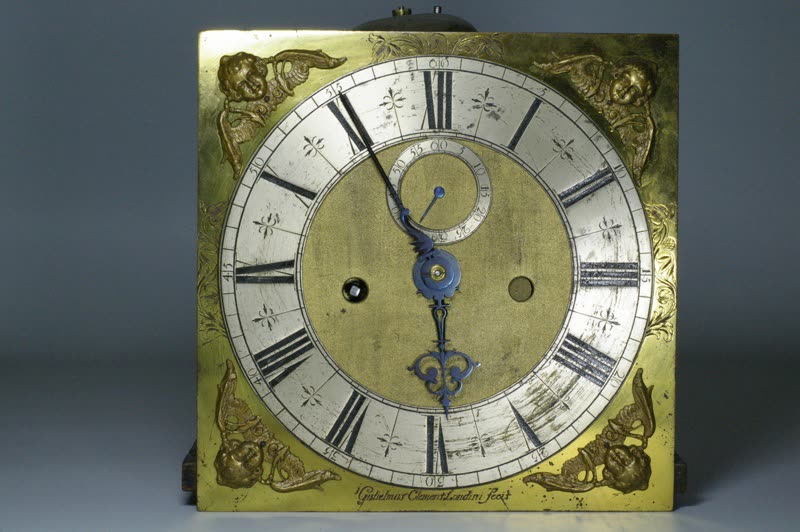
Photographs are illustrative examples of the type, not necessarily the exact object described. Verify details against the source file page.
Sources & references
- Clement, William, Watch-Wiki, retrieved 2026-10-27
- Britten, F. J., Old Clocks and Watches and Their Makers
- Loomes, B., reference works on British and European clockmakers
Where sources disagree, the disagreement is stated rather than resolved silently.