
St. Maurice, Switzerland · 1711 – 1772
Pierre de Rivaz
Partially verifiedEscapements
Life & work
Early work on escapements.
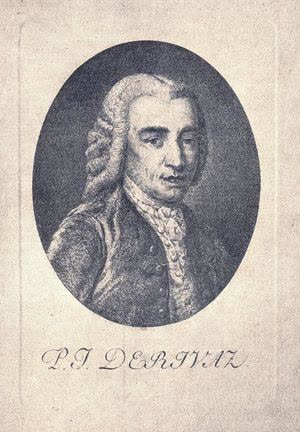
Pierre Joseph de Rivaz was a clockmaker and inventor born in 1711 in Saint-Gingolph, a town located between the Valais republic and the duchy of Savoy. He developed a passion for mechanics while attending college in Chambéry before pursuing professional work in horology in Saint-Maurice and later Paris. In 1740, he successfully built a clock powered by variations in air temperature and atmospheric pressure, a precursor to the Atmos clock.
His innovative work included a 1749 spring-driven clock featuring a striking mechanism that could run for one year on a single winding. During his time in Paris, he developed a new escapement designed to minimize friction, which led to a royal privilege for selling his clocks. De Rivaz passed away on August 6, 1772, in Moûtiers in the province of the Kingdom of Sardinia.
The fuller biography summarises the open references listed under Sources; each statement was checked against the cited passage. Confirm key dates in period documents before relying on them.
Timeline
Pierre de Rivaz's recorded dates, dated events from this profile and its sources, and dated pieces and sales from the object catalogue. Dates are as each record gives them.
1711 · Career
Born
1711 · Career
Pierre Joseph de Rivaz was a clockmaker and inventor born in 1711 in Saint-Gingolph, a town located between the Valais republic and the duchy of Savoy.
1740 · Career
In 1740, he successfully built a clock powered by variations in air temperature and atmospheric pressure, a precursor to the Atmos clock.
1749 · Career
His innovative work included a 1749 spring-driven clock featuring a striking mechanism that could run for one year on a single winding.
1750 · Career
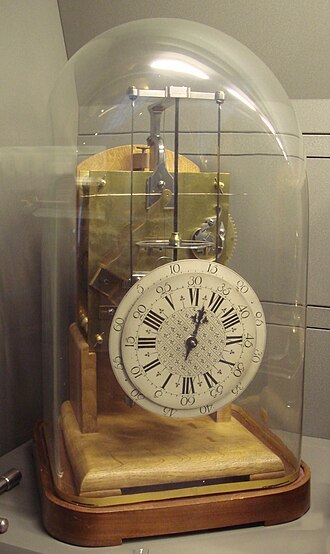
A marine clock attributed to Pierre Joseph de Rivaz, dating from circa 1750, is held in the collection of the Musée des Arts et Métiers.
1751 · Career
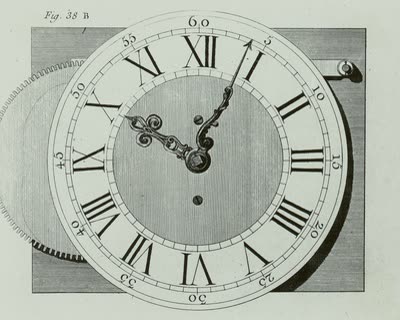
His technical drawings of equation clocks were published in the Diderot and d'Alembert encyclopedia in 1751.
1772 · Career
Died
1772 · Career
De Rivaz passed away on August 6, 1772, in Moûtiers in the province of the Kingdom of Sardinia.
Training, contributions & innovations
- Clock escapements
- He engineered a clock capable of running for one year, classified as a Jahresuhr or annual clock.
- He developed a specialized escapement mechanism that significantly reduced friction to improve the precision of his pendulums.
- His technical drawings of equation clocks were published in the Diderot and d'Alembert encyclopedia in 1751.
Inventions & patents
- N/A
Signatures & markings on surviving work
- Signed work
Documented works
- A marine clock attributed to Pierre Joseph de Rivaz, dating from circa 1750, is held in the collection of the Musée des Arts et Métiers.
Collecting significance
Signatures on historic work were applied by retailers and by later hands; attribution should rest on the movement's construction and provenance.
Firms, key models & movements
No firm, model or movement in this encyclopedia is yet recorded under this maker's name.
Photographs
Photographs are illustrative examples of the type, not necessarily the exact object described. Verify details against the source file page.
Sources & references
- Pierre Joseph de Rivaz, Wikipedia (French), retrieved 2026-10-27 (text CC BY-SA 4.0)
- Rivaz, Pierre Joseph de, Watch-Wiki, retrieved 2026-10-27
- Britten, F. J., Old Clocks and Watches and Their Makers
- Loomes, B., reference works on British and European clockmakers
Where sources disagree, the disagreement is stated rather than resolved silently.