
Waltham, United States · 1821 – 1888
Charles Vander Woerd
Partially verifiedWatch factory engineering
Life & work
Mechanical superintendent at Waltham; designed the first automatic screw machine.
Born in 1821 in Leyden, Netherlands, Charles Vander Woerd emigrated to the United States in 1846 and later became a prominent mechanical engineer. He served as a mechanic at the Nashua Watch Company before joining the American Watch Company in Waltham, Massachusetts. During his tenure, he was promoted to general superintendent and led efforts in movement design and production mechanization. His work in automating watch production included the development of an automatic screw machine in 1871.
The fuller biography summarises the open references listed under Sources; each statement was checked against the cited passage. Confirm key dates in period documents before relying on them.
Timeline
Charles Vander Woerd's recorded dates, dated events from this profile and its sources, and dated pieces and sales from the object catalogue. Dates are as each record gives them.
1821 · Career
Born
1821 · Career
Born in 1821 in Leyden, Netherlands, Charles Vander Woerd emigrated to the United States in 1846 and later became a prominent mechanical engineer.
1871 · Career
His work in automating watch production included the development of an automatic screw machine in 1871.
1871 · Career
He invented an automatic screw machine in 1871 that allowed a single operator to produce up to 60,000 watch screws daily.
1871 · Career
His 1871 automatic screw-making machine is preserved in historical collections, including the Charles River Museum of Industry and Innovation.
1888 · Career
Died
Training, contributions & innovations
- Automated the production of watch screws and pinions
- He invented an automatic screw machine in 1871 that allowed a single operator to produce up to 60,000 watch screws daily.
- Vander Woerd developed specialized machinery for the schablonenmäßigen or standardized manufacturing of individual watch components.
- His technical expertise at the Nashua Watch Company influenced the development of collet gauges used for watch manufacturing standards.
- He held numerous patents, including thirteen specific to watch mechanisms and a dozen relating to machines for producing watch parts.
Inventions & patents
- Patents for watchmaking machinery
Signatures & markings on surviving work
- Waltham
Documented works
- His 1871 automatic screw-making machine is preserved in historical collections, including the Charles River Museum of Industry and Innovation.
Collecting significance
Authenticity depends on signatures and movement quality. For 19th-century makers, serial numbers often allow for precise dating. For modern independents, documentation from the maker is key.
Firms, key models & movements
No firm, model or movement in this encyclopedia is yet recorded under this maker's name.
Photographs




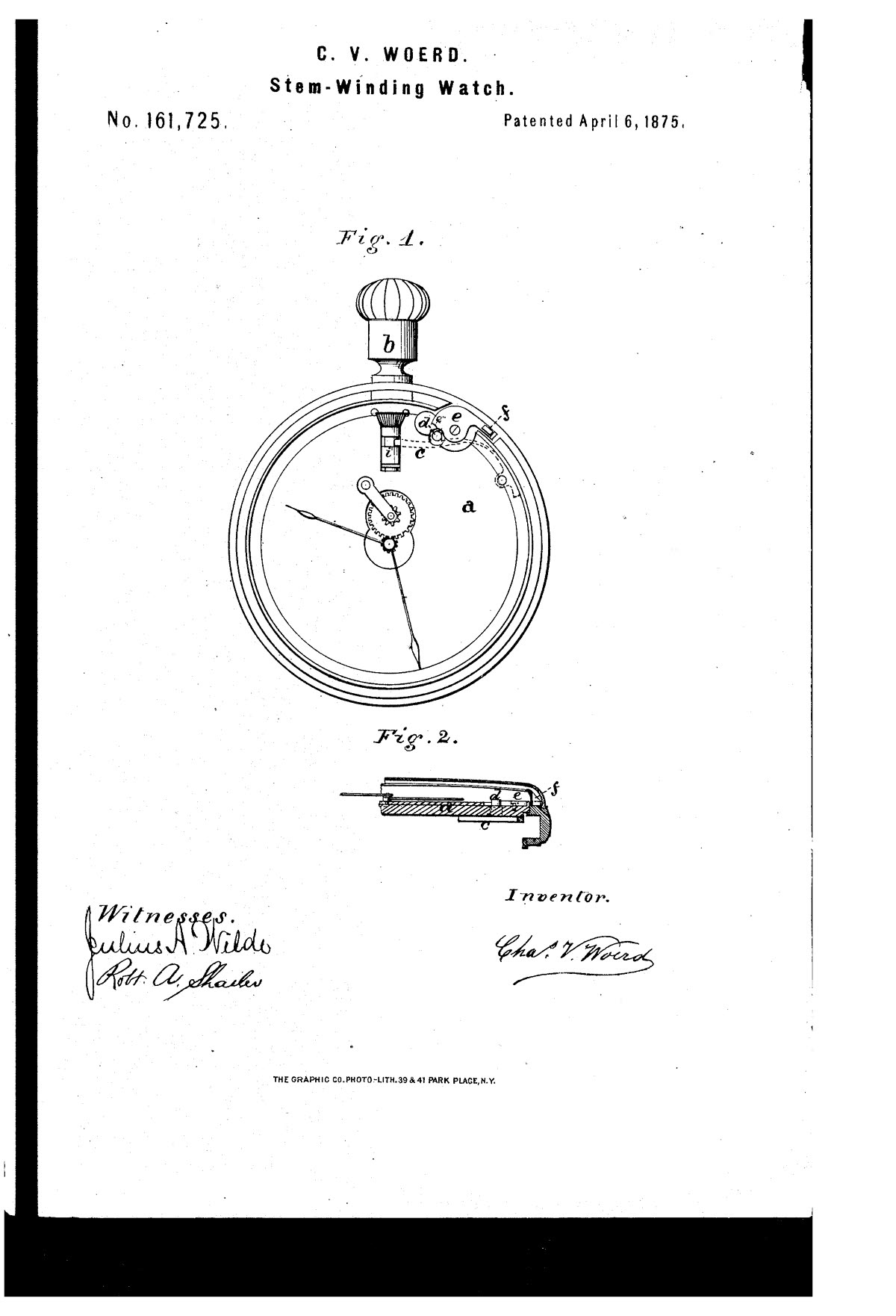
Photographs are illustrative examples of the type, not necessarily the exact object described. Verify details against the source file page.
Sources & references
- Automatic Screw Making Machine, americanhistory.si.edu, retrieved 2026-11-04 (paraphrased; text © the publisher)
- Woerd, Charles van der - Watch-Wiki - Das Uhrenlexikon, Watch-Wiki, retrieved 2026-11-04 (paraphrased; text © the publisher)
- CRMII MA250 Project, charlesrivermuseum.org, retrieved 2026-11-04 (paraphrased; text © the publisher)
- The Nashua Watch Company, awco.org, retrieved 2026-11-04 (paraphrased; text © the publisher)
- Automatic Lathe, 1871 - American Precision Museum, americanprecision.org, retrieved 2026-11-04 (paraphrased; text © the publisher)
- Britten, F. J., Old Clocks and Watches and Their Makers
- Loomes, B., The Early Clockmakers of Great Britain
- Ehrhardt, R., American Pocket Watch Identification and Price Guide
- Museum catalogue records
Where sources disagree, the disagreement is stated rather than resolved silently.