
Watch family · Complication
Tool Chronographs
Partially verifiedChronograph wristwatches built plainly and robustly for a specific professional or technical timing task — motor racing, aviation, engineering or medical timing — as distinct from a dress or fashion chronograph, generally identified by function-specific scales printed on the dial.
Movement & mechanism
- Standard chronograph movement (see chronograph-watches) housed in a robust case with a legible, high-contrast dial
- Function-specific scales printed on the dial, such as a tachymeter for speed, a telemeter for distance by sound, or a pulsations scale for pulse rate
- Often larger pushers and a simplified two- or three-register layout prioritising quick reading under working conditions
Identification
- Plain, functional dial with a named calculation scale (tachymeter, telemeter, pulsations) rather than purely decorative sub-dials
- Robust case construction and large, glove-friendly pushers on aviation and racing examples
- Often supplied to a professional body or trade rather than sold as a general fashion accessory
Terminology
- Tachymeter scale — converts elapsed time over a fixed distance into speed
- Telemeter scale — converts elapsed time between seeing and hearing an event into distance
- Tool watch — a watch designed primarily for a specific working function rather than for appearance
Known variations
- Tachymeter racing chronograph
- Telemeter chronograph
- Pulsations (doctor's) chronograph
Pocket-watch ancestry
Function-specific dial scales such as the tachymeter and telemeter were developed on pocket chronographs before the First World War; the tool chronograph wristwatch inherits these calculation scales directly, transferring an already-established pocket-chronograph practice to the wrist once chronograph movements were successfully miniaturised.
Collecting notes
Collected for genuine period use and association with a specific trade or profession (motor racing, aviation, medicine); dial scale type and originality, and evidence of the watch's documented professional use where available, weigh heavily against purely decorative later reissues carrying the same scales.
Background
Heuer's mid-20th-century chronographs are a leading example, developed for professionals such as racers, navigators and pilots. Design priorities focused on extreme legibility, featuring high-contrast dials and large registers to allow for quick and reliable timing under demanding conditions. Stout stainless-steel cases were employed to provide the durability required for motorsport and aviation environments. Rotating bezels were integrated into these designs to expand the watch's utility for measuring elapsed time, calculating speed over distance, or tracking time in a second time zone.
Written from the sources listed under Sources (makers, museums, auction houses and specialist publications are paraphrased, not reproduced); each statement was checked against the cited text, and claims a maker makes about its own work are attributed to it.
Defining features
- Dials often incorporated calculation scales such as tachymeters to allow wearers to determine speed or other data.
Later development
- Models like the three-register Autavia worn by Jochen Rindt and the two-register version worn by Mario Andretti exemplify their professional adoption by racing legends.
Photographs
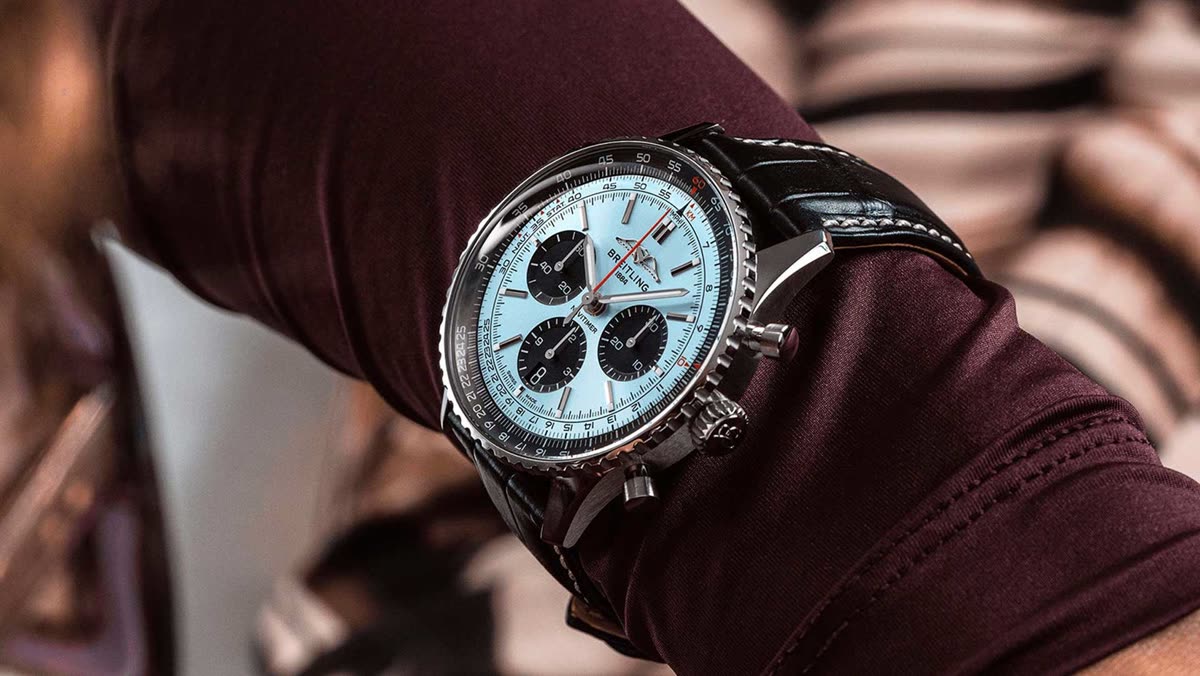
Photographs are illustrative examples of the type, not necessarily the exact object described. Verify details against the source file page.
Sources & references
- Heuer's motor way: an overview of the early Autavias, 1962 to 1969, Revolution, retrieved 2026-10-30 (paraphrased; text © the publisher)
- 1958 to 1969: the golden age, TAG Heuer, retrieved 2026-10-30 (paraphrased; text © the publisher)
- Cutmore, M., Watches 1850–1980
- General literature on tool chronographs; comprehensive maker-by-maker documentation of professional issue is limited.
Where sources disagree, the disagreement is stated rather than resolved silently.