
Watch family · Complication
Moon Phase Watches
VerifiedWatches displaying the current phase of the moon on a rotating disc, typically visible through an aperture and depicting the moon waxing and waning against a starry background.
How the mechanism works
The mechanism behind these watches — how it is built, how it developed and its variants — is explained on the Moon phase page. This page covers what is particular to the watches themselves: identification, terminology and collecting.
Movement & mechanism
- A wheel with 59 teeth advanced by one tooth every 24 hours, completing a revolution in 59 days to approximate two lunar (synodic) months
- The synodic month is actually about 29.53 days, so the simple 59-tooth mechanism drifts from the true moon phase by about one day every two and a half years unless corrected
- More advanced 'astronomical' moon-phase mechanisms use additional gearing for much closer accuracy
Identification
- Aperture, usually at 6 or 12 o'clock, showing a disc with two moon images against a starry sky
- Correction typically via a recessed pusher
Terminology
- Synodic month — the roughly 29.53-day cycle of lunar phases as seen from Earth
- 59-tooth wheel — the standard simple moon-phase mechanism
Known variations
- Standard (59-tooth) moon phase
- Astronomical precision moon phase
Pocket-watch ancestry
Moon-phase indications appeared on pocket watches and clocks well before wristwatches existed; the 59-tooth mechanism is an old solution carried over essentially unchanged into wristwatch calendar complications.
Collecting notes
A popular complication valued as much for its dial aesthetics as its mechanism; 'astronomical' high-precision moon-phase watches are a smaller specialist sub-category.
Photographs
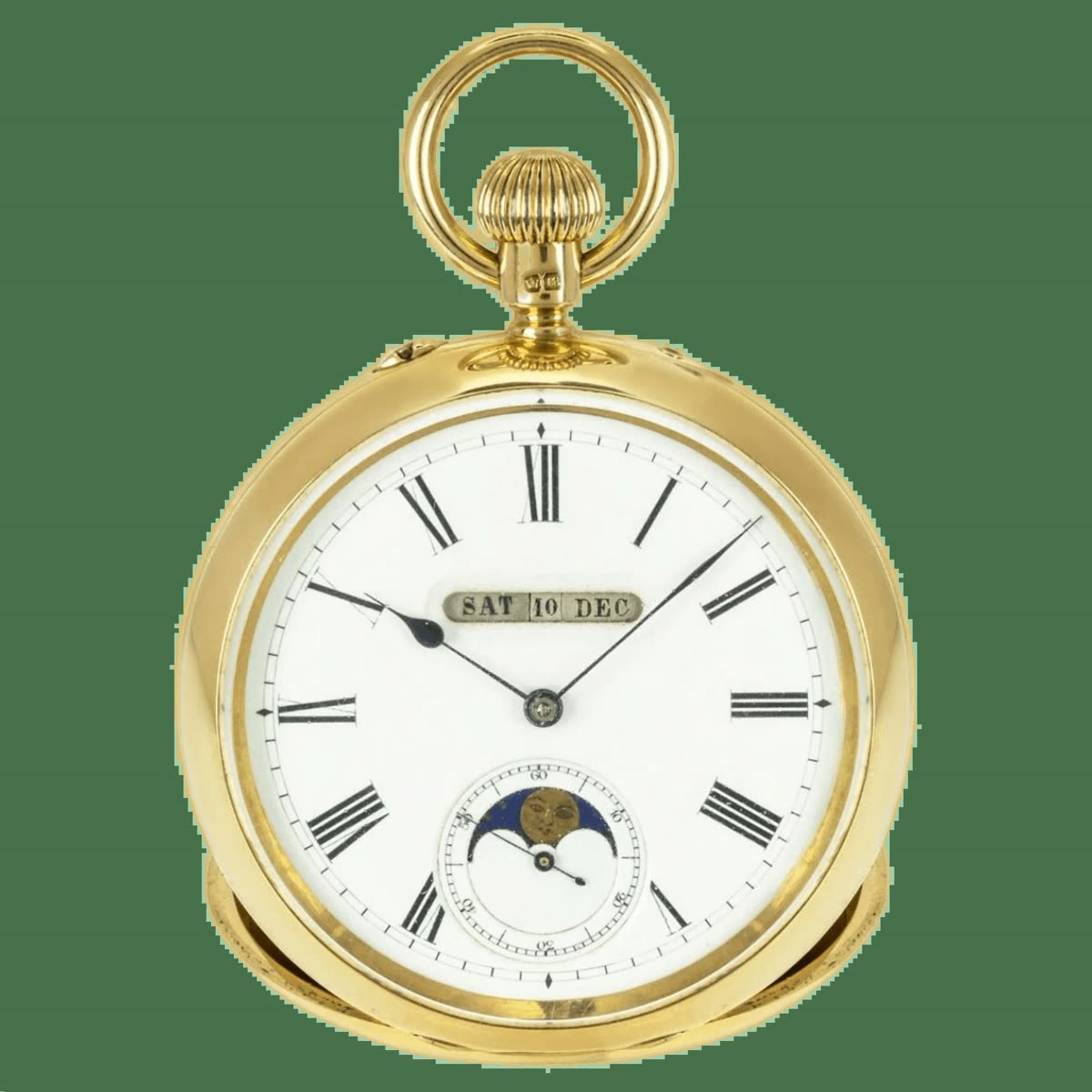
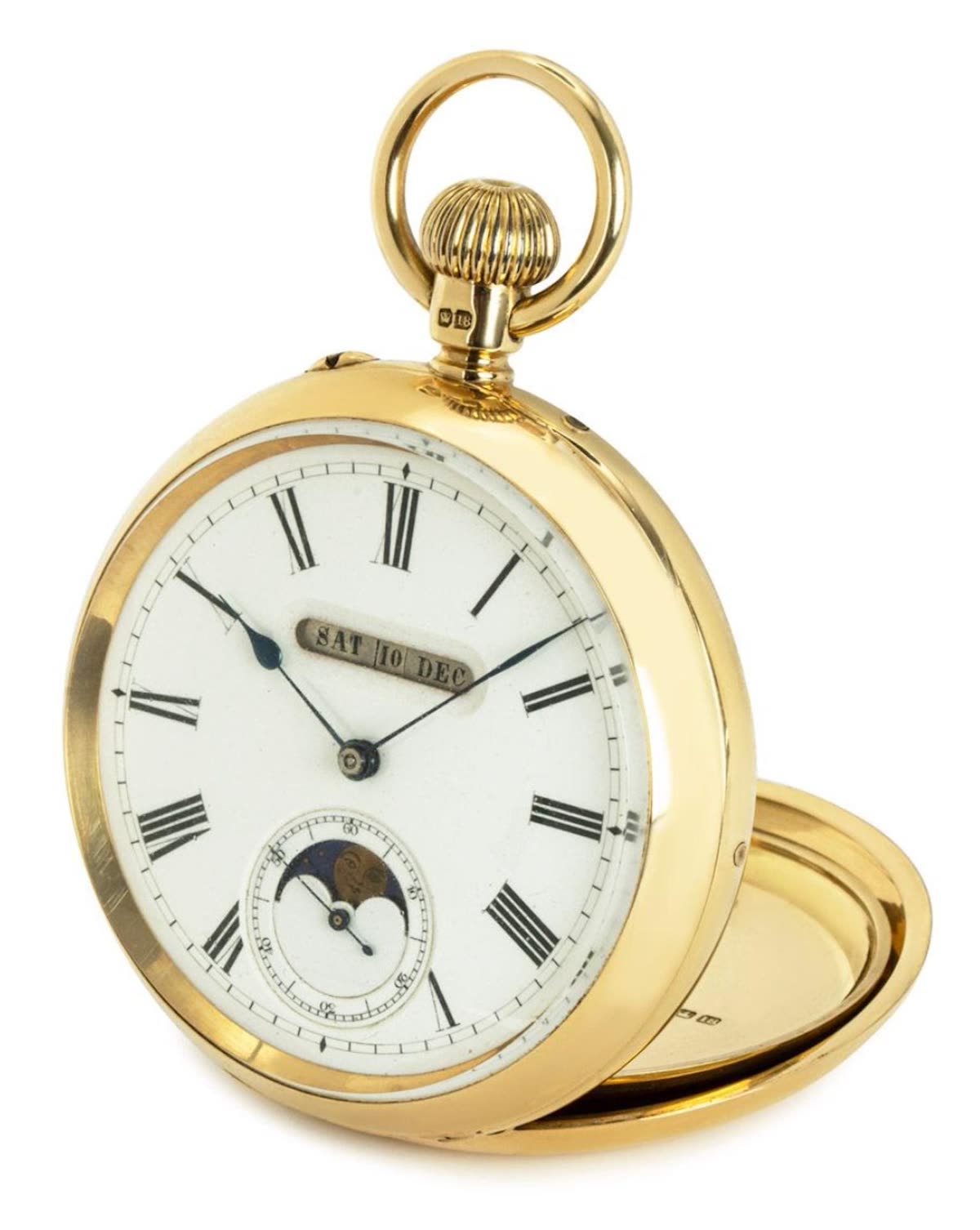
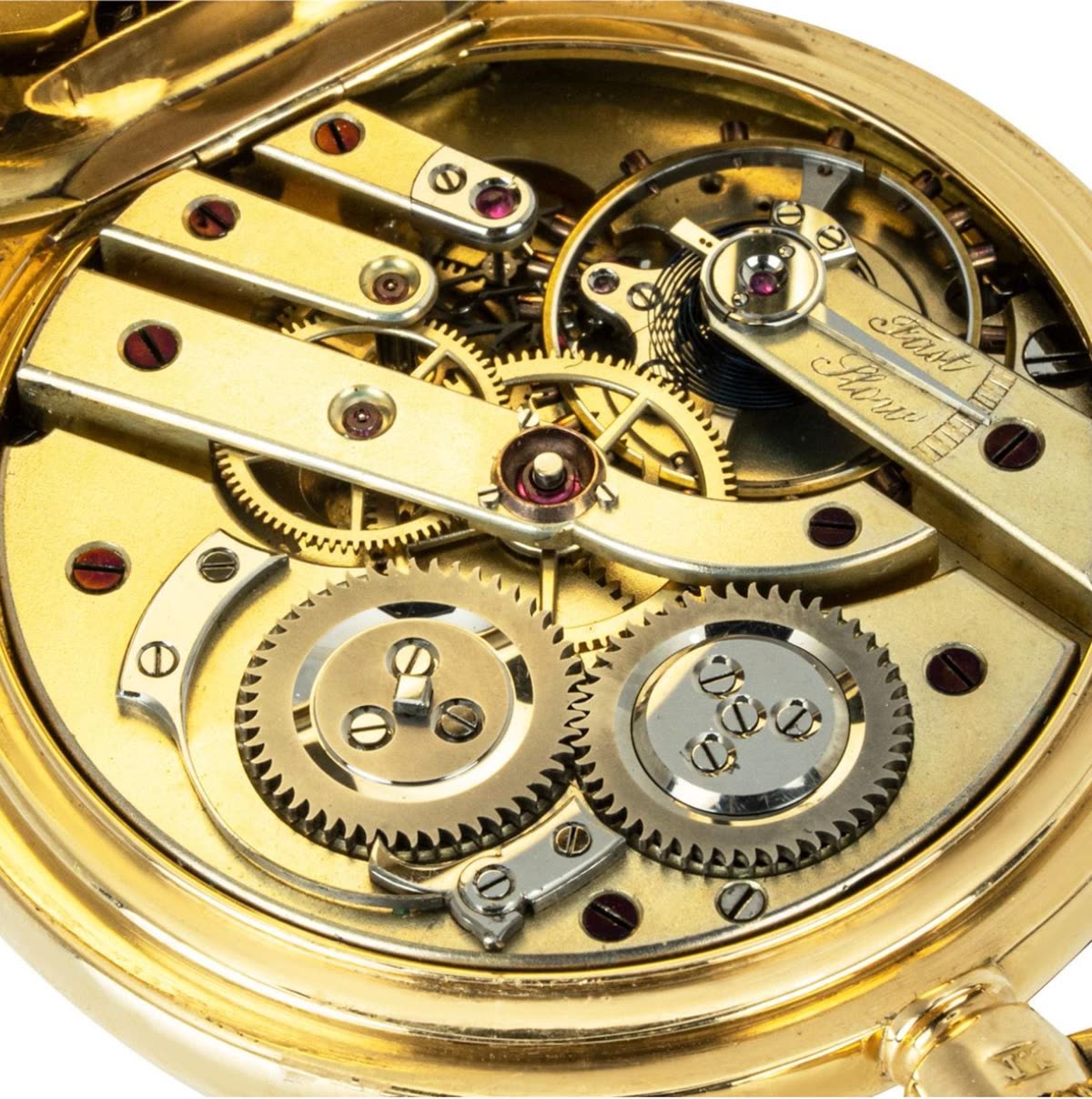

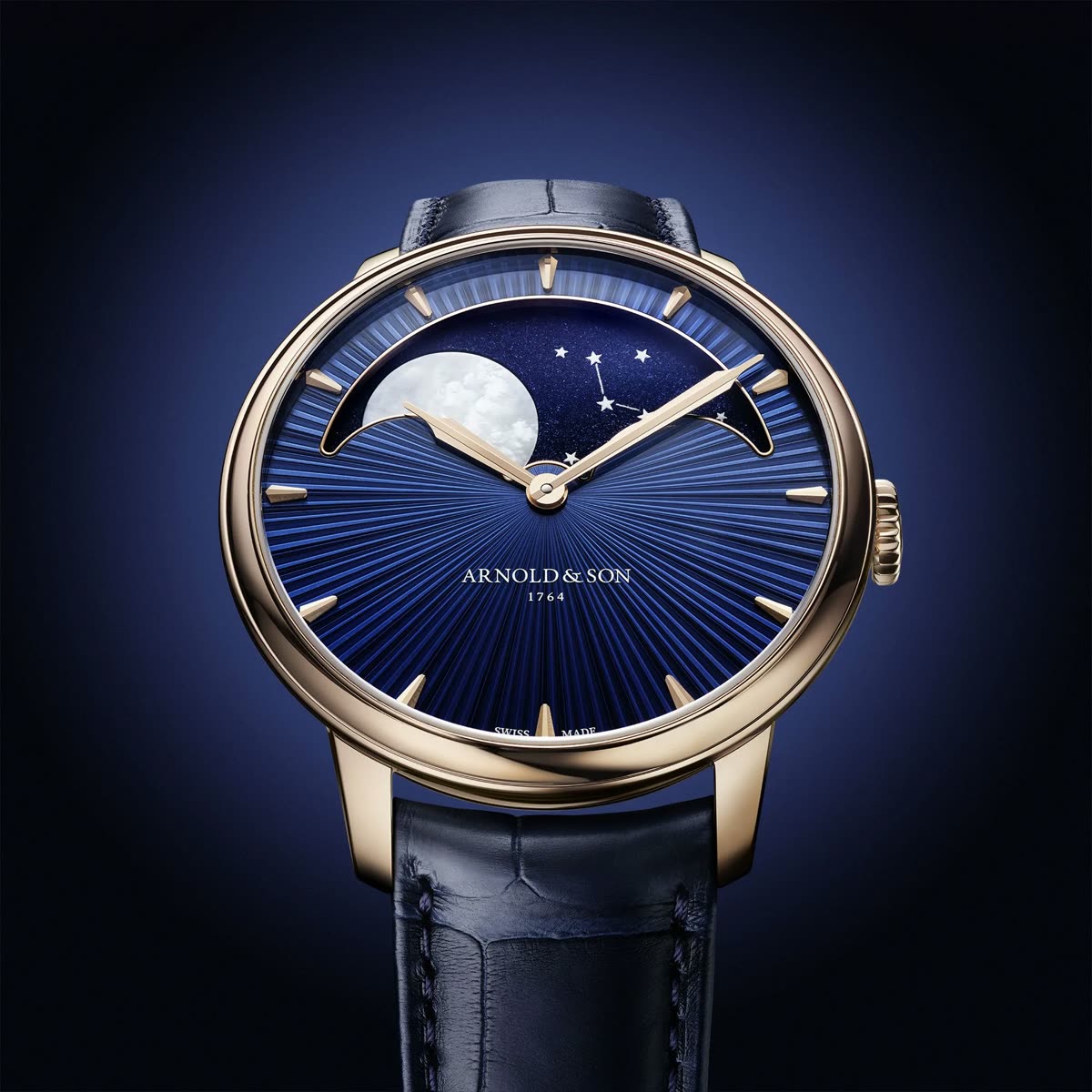
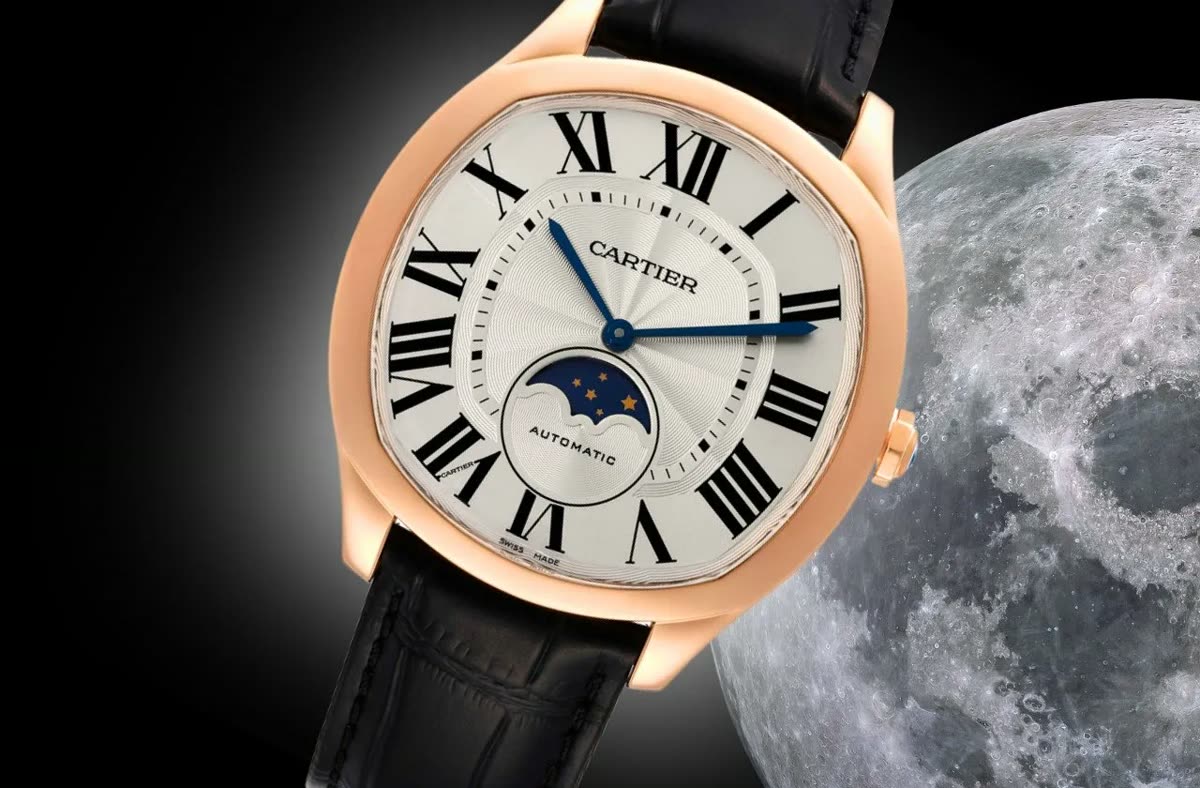
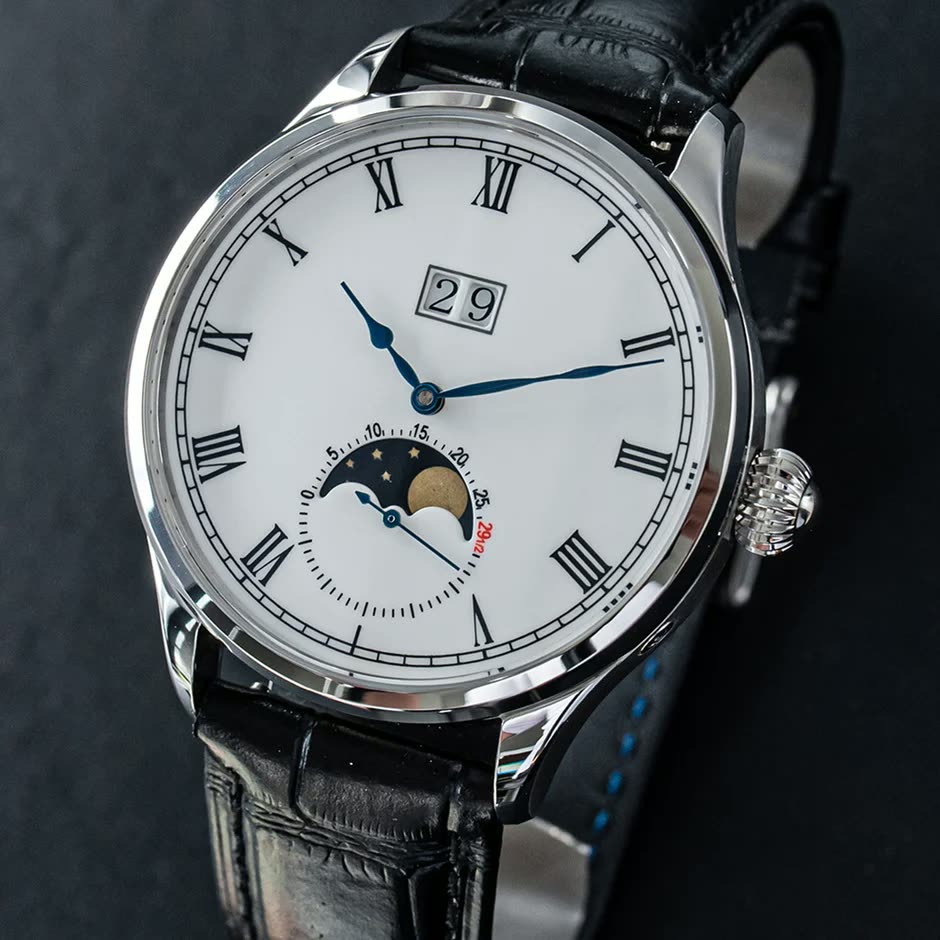
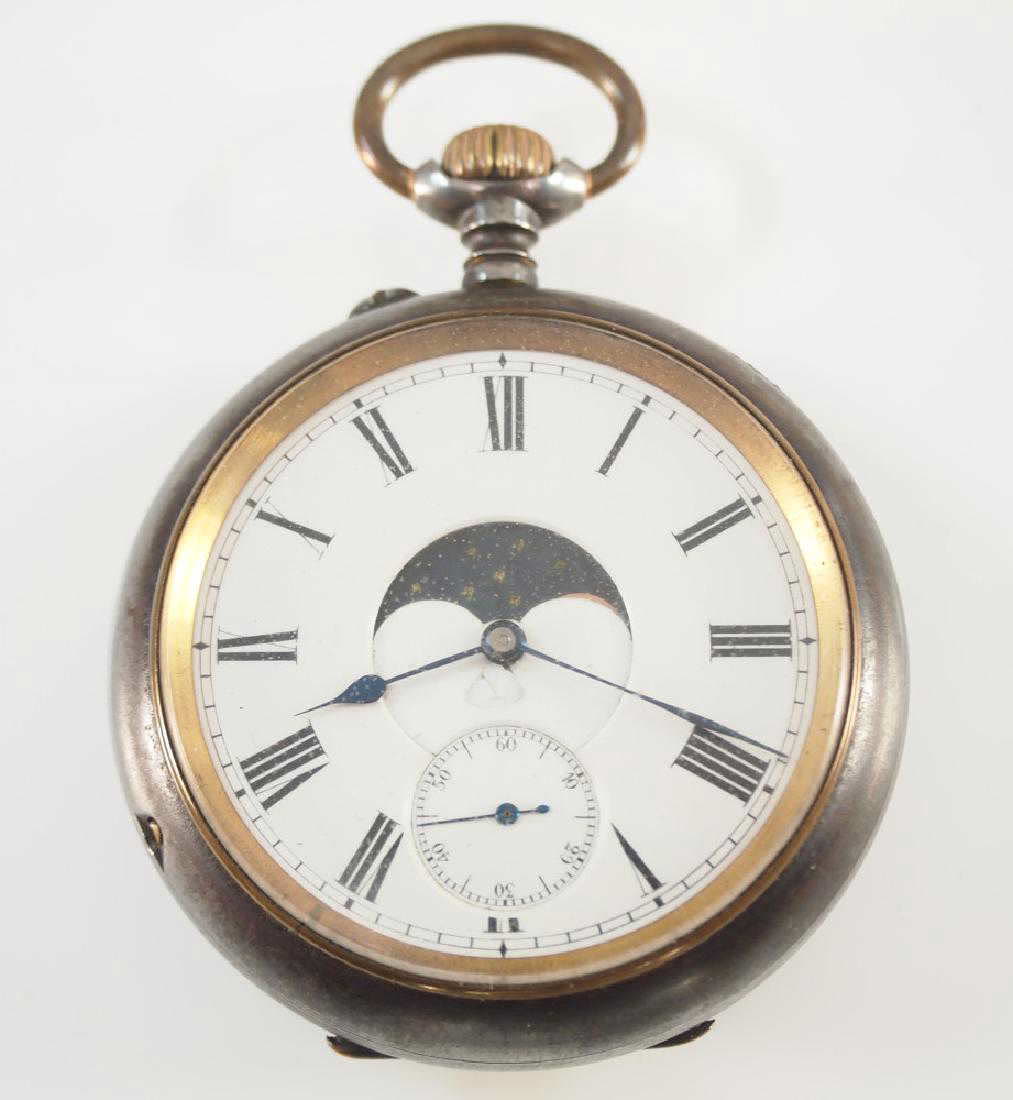
Photographs are illustrative examples of the type, not necessarily the exact object described. Verify details against the source file page.
Sources & references
- Daniels, G., Watchmaking
Where sources disagree, the disagreement is stated rather than resolved silently.