
England · c. 1721–1726
Mercury Compensated Pendulum
Partially verifiedBecame the standard compensation for precision regulators until invar rods displaced it.
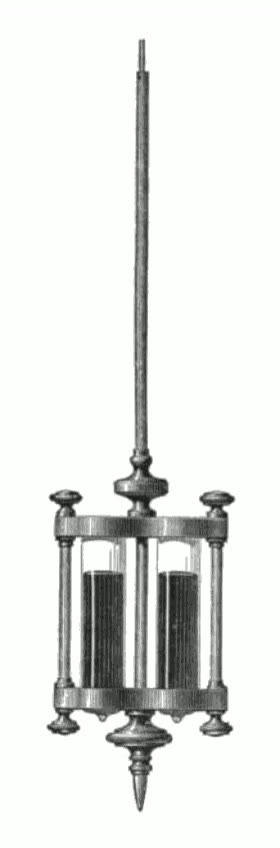
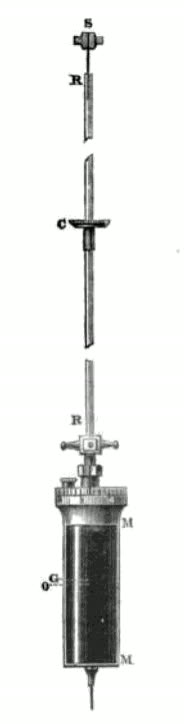
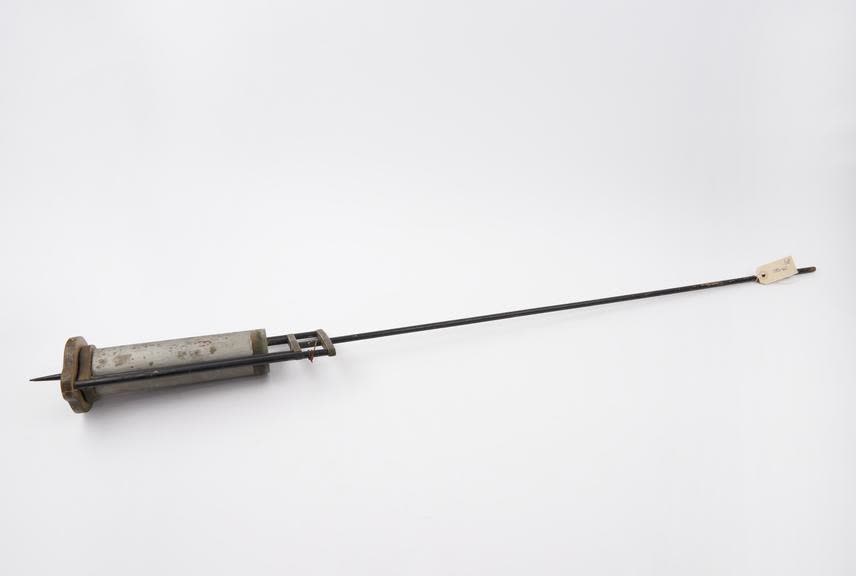
A jar of mercury forms the pendulum bob; as the rod lengthens with heat, the mercury expands upward, keeping the centre of oscillation roughly constant.
Background
During the 18th and 19th century, the role of the pendulum clock as the most accurate timekeeper motivated research into addressing errors caused by the expansion and contraction of the pendulum rod due to temperature changes. George Graham invented the first temperature compensated device, the mercury pendulum, in 1721 to mitigate these thermal errors. The mechanism utilizes the thermal expansion properties of liquid mercury contained within the pendulum bob to maintain a stable period.
As ambient temperatures rise and cause the pendulum rod to lengthen, the mercury also expands, raising its surface level in the container. This upward expansion of the mercury moves the centre of mass closer to the pendulum pivot, effectively counteracting the lengthening of the rod. This process leaves the centre of mass and the period of oscillation unchanged despite fluctuations in ambient temperature.
Written from the encyclopedia entries listed under Sources; each statement was checked against the cited text.
How it works
- The pendulum bob consists of a container holding liquid mercury that compensates for the rod's thermal expansion.
- Several thin metal containers were sometimes used to improve how quickly the mercury reached the ambient temperature.
Later history
- Mercury pendulums remained a standard component in precision regulator clocks into the 20th century.
- The mercury pendulum was preferred for the highest precision clocks because gridiron alternatives suffered from friction and material creep.
How to verify this yourself
Described in Graham's Philosophical Transactions paper; no patent was taken.
Manufacturers known to have used it
- Precision regulator makers in Britain, Germany and America
Photographs
Photographs are illustrative examples of the type, not necessarily the exact object described. Verify details against the source file page.
Sources & references
- Pendulum, Wikipedia (English), retrieved 2026-10-28 (text CC BY-SA 4.0)
- Philosophical Transactions of the Royal Society (Graham, 1726)
- Rawlings, A. L., The Science of Clocks and Watches
Where sources disagree, the disagreement is stated rather than resolved silently.