
England · c. 1670 (predates patent system)
The Anchor (Recoil) Escapement
Historical attributionMade the seconds-beating longcase clock practical and dominated domestic clockmaking for two centuries.
The anchor escapement allowed long pendulums with small arcs, greatly improving longcase clock timekeeping.
Attribution is contested between Hooke and Clement; some historians also point to Joseph Knibb's early use. No patent exists.
Background
The anchor escapement was invented by clockmaker William Clement, who popularized the design in his invention of the longcase clock around 1680. Attribution of the invention remains contested, as some suggest it was an improvement on Robert Hooke's earlier constant force escapement of 1671. The oldest known example is the Wadham College Clock, which was likely constructed by Joseph Knibb in 1670.
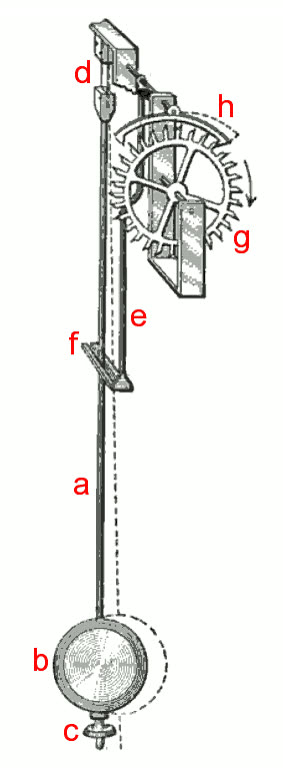
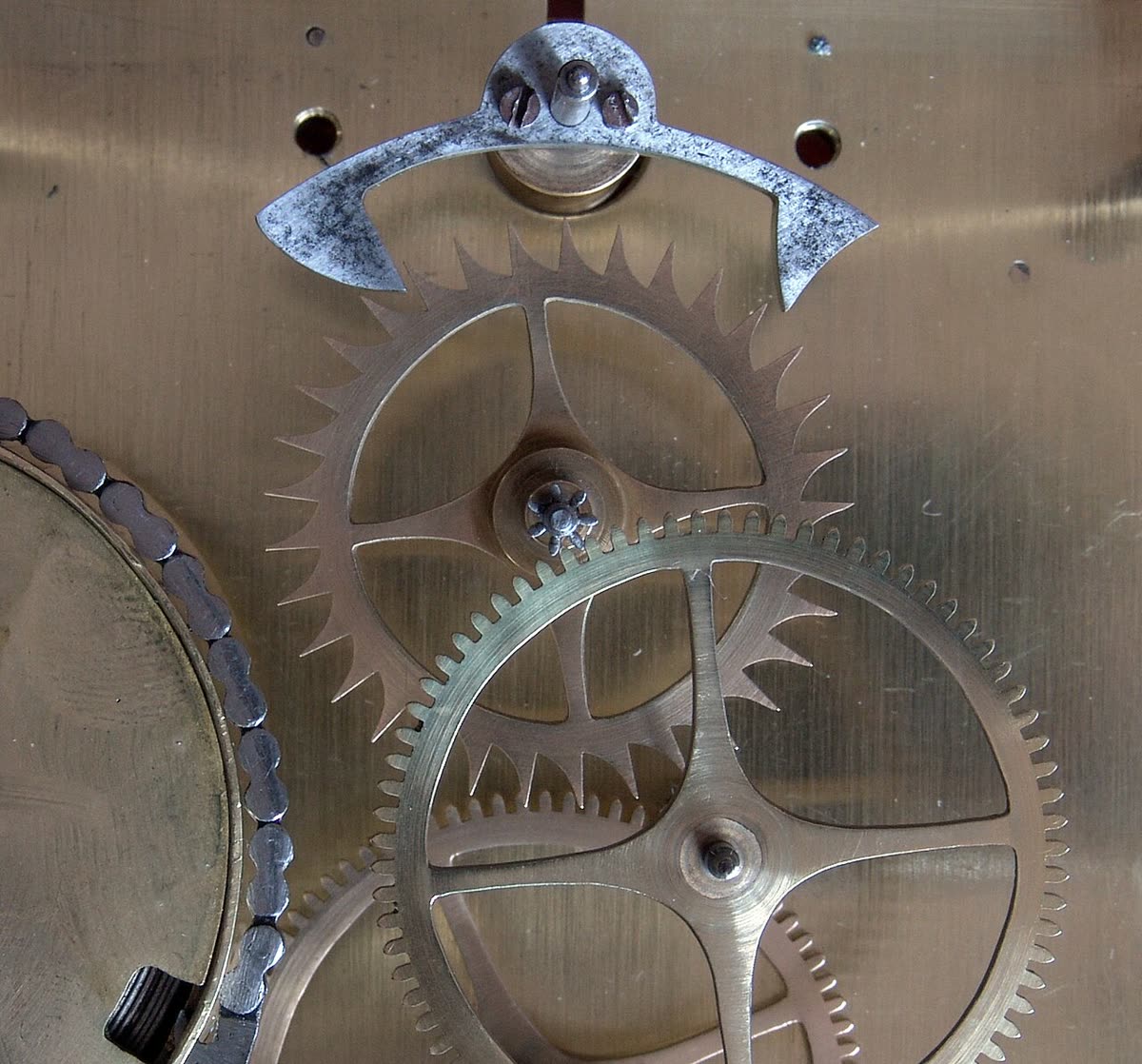
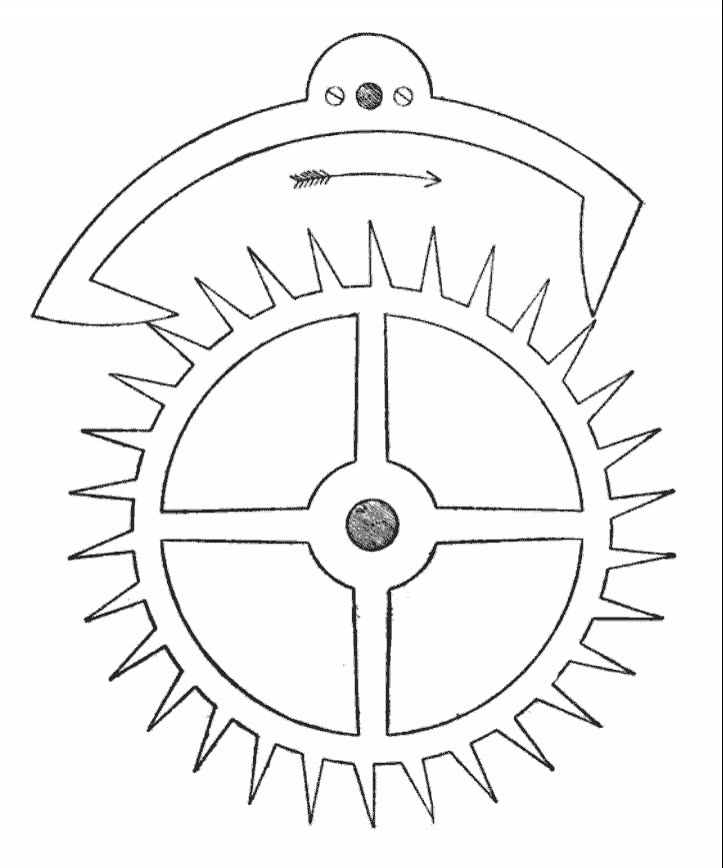
The mechanism addresses inaccuracies inherent in the older verge escapement by allowing for much smaller pendulum swings, typically between 4 and 6 degrees. It functions through an escape wheel with pointed teeth that interact with two pallets on an anchor-shaped frame, which swings back and forth in connection with the pendulum. This design maintains the pendulum's motion by providing consistent impulses while simultaneously regulating the advance of the clock's gear train.
Written from the encyclopedia entries listed under Sources; each statement was checked against the cited text.
How it works
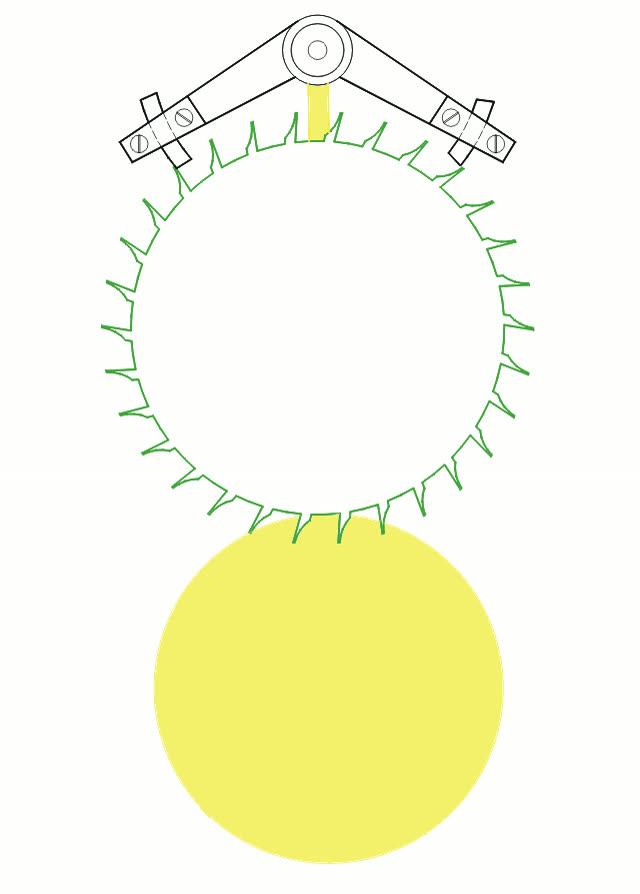
- The escapement includes two pallets that alternately catch and release the teeth of the escape wheel during each cycle.
- A shaft called the crutch attaches the anchor to the pendulum to transmit transverse impulses.
- The escape wheel teeth are slanted backward to serve as a safety measure against damage if the pendulum is moved improperly.
- The mechanism is characterized by recoil, where the momentum of the pendulum pushes the escape wheel backward during part of the cycle.
How to verify this yourself
No patent to verify; compare attribution arguments in standard histories and dated surviving clocks.
Manufacturers known to have used it
- English longcase and bracket clockmakers from c. 1670
Photographs

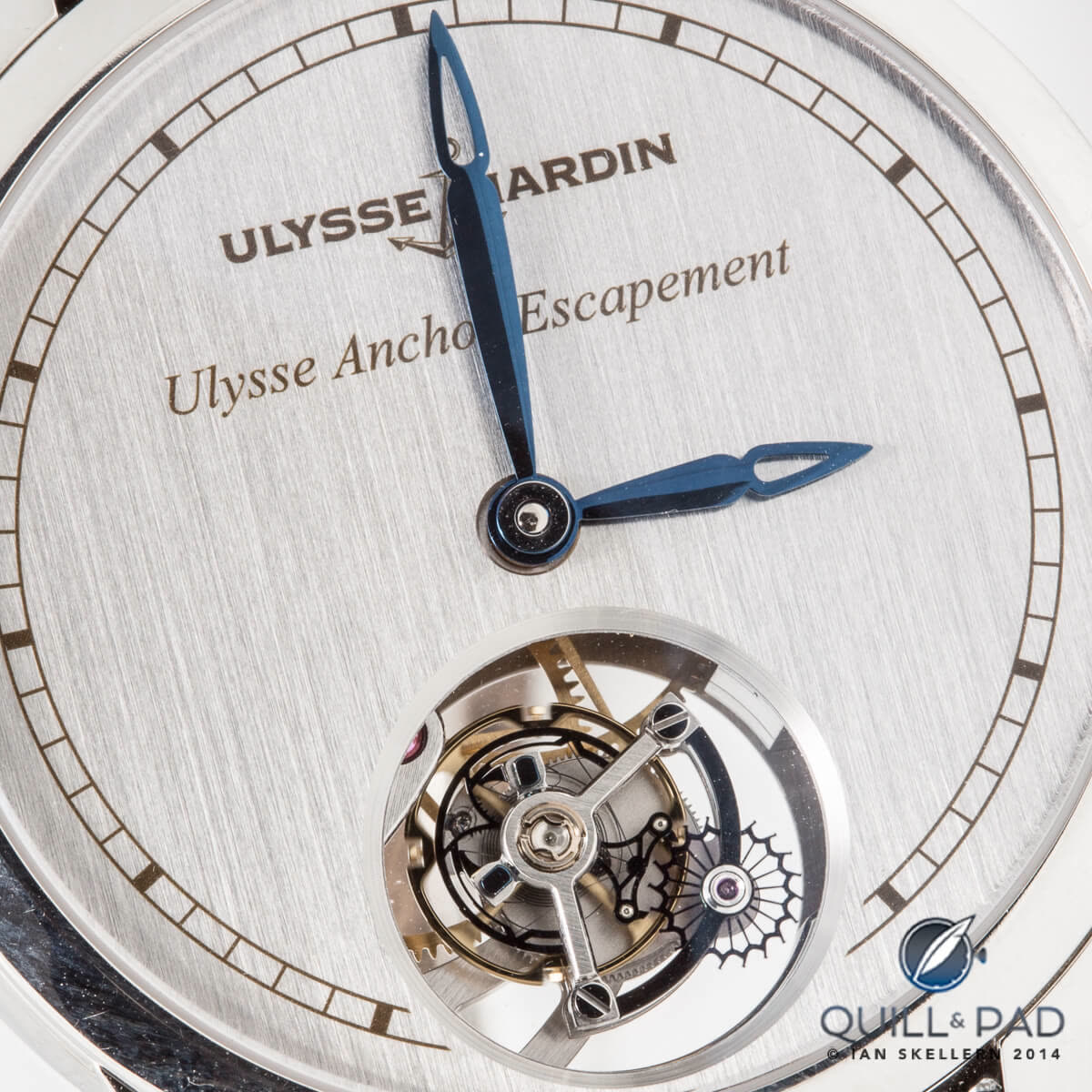
Photographs are illustrative examples of the type, not necessarily the exact object described. Verify details against the source file page.
Sources & references
- Anchor escapement, Wikipedia (English), retrieved 2026-10-28 (text CC BY-SA 4.0)
- Britten, F. J., Old Clocks and Watches and Their Makers
- Symonds, R. W., Thomas Tompion: His Life and Work
Where sources disagree, the disagreement is stated rather than resolved silently.