
Museum · Utrecht, Netherlands
Museum Speelklok
Musical clocks and mechanical self-playing instruments.
Institution photographs
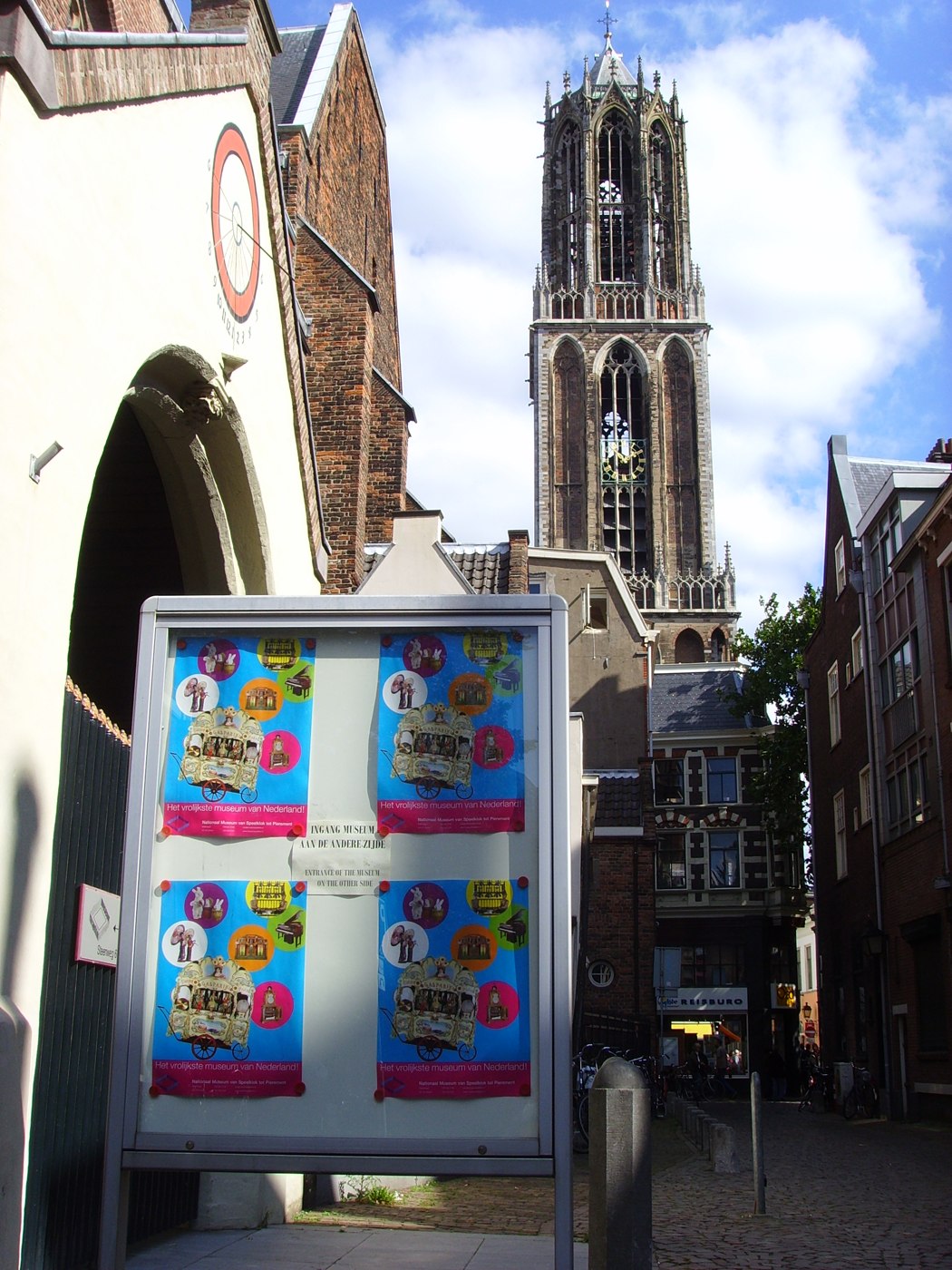
The caption identifies the institution shown; follow the source record for attribution and context.
Overview
Museum Speelklok in Utrecht studies instruments that play music mechanically. Its horological relevance lies especially in clocks with bell, organ, string or comb-playing mechanisms. The official musical-clock introduction notes that much of this collection comes from the Low Countries while also describing examples made in England and Switzerland. The museum's location therefore should not be used as the origin of every instrument.
Bell-playing clocks use tuned bells and a programmed mechanism, often a pinned cylinder; organ clocks sound pipes instead. The collection's examples demonstrate how a timekeeping train can be combined with a separate musical function. A turret clock with carillon, dated approximately 1550–1600 on the museum page, connects public time signalling with music. A table organ clock with automata dated around 1770 brings sound and animation into a domestic-sized object.
The collection also includes string-playing or dulcimer clocks and later musical-comb mechanisms. These sound sources are mechanically different and should not all be described as music boxes. The official page discusses how strings can be sensitive to temperature and how a toothed comb allowed more notes in a small space. A live musical tour offers a different type of evidence from a silent object photograph; current performance of a particular instrument must be confirmed separately.
Collection focus
- Bell-playing and carillon clocks
- Organ clocks combining timekeeping, music and automata
- String-playing clocks and musical-comb mechanisms
Key pieces
- Turret Clock with Carillon, c. 1550–1600
- Named and approximately dated on the official musical-clock page; it illustrates the relationship between a melody and public hour signalling. Museum reference
- Table Organ Clock with automata, c. 1770
- The museum's named example combines an organ-playing mechanism with animated features. Collection membership is not a promise of a demonstration on a particular visit. Museum reference
Collection highlights are not a guarantee of current display; confirm with the institution before travelling.
Using it for research
- Identify the sound source, music programme and timekeeping mechanism separately.
- The official enquiry service asks for a description and photograph and states that it does not handle valuation requests or non-mechanical instrument enquiries.
- Request an individual object reference before attributing a mechanism to a named maker.
Before you visit
- The official address is Steenweg 6, Utrecht; its practical-information page gives directions from Utrecht Central Station.
- Consult the current practical-information page for musical-tour schedules, holiday changes and accessibility, rather than relying on an old performance time.
- A public tour is not independent workshop access. Send collection questions through the museum's enquiry channel before arranging specialist research.