
Movement record · Switzerland
Jaeger-LeCoultre Calibre 920
Partially verifiedAn extremely thin automatic movement using a 22-carat gold peripheral micro-rotor rather than a full rotor, allowing exceptional slimness; supplied by Jaeger-LeCoultre to several prestige houses and adapted as the basis for celebrated in-house calibres elsewhere.
Technical specifications
- Diameter
- Approx. 28 mm
- Height
- Approx. 2.45 mm
- Jewels
- Approx. 28
- Frequency
- 19,800 vph
- Power reserve
- Approx. 40 hours
- Winding
- Self-winding with a peripheral micro-rotor
- Setting
- Pull-out crown
- Escapement
- Swiss lever
- Balance
- Conventional balance with flat hairspring
- Complications
- Date on some applications
Identification features
- Micro-rotor construction visible from the case-back
- Exceptional thinness for an automatic movement of its date
- Full rotor running on a peripheral rail rather than a central bearing
- Height about 3.05 mm with date
Known variants
- Manufacturer-specific finishing and branding of the shared base architecture
- Audemars Piguet 2120 / 2121
- Vacheron Constantin 1120
- Patek Philippe 28-255 C
Servicing notes
Specialist high-end servicing recommended given the movement's thinness and the finishing standards expected of its applications.
General guidance only. Antique movements should be serviced by a qualified watchmaker.
Historical significance
Ultra-thin full-rotor automatic of 1967, supplied to Audemars Piguet, Patek Philippe and Vacheron Constantin and famous as the movement of the first Royal Oak, Nautilus and Overseas-generation sports watches.
Photographs
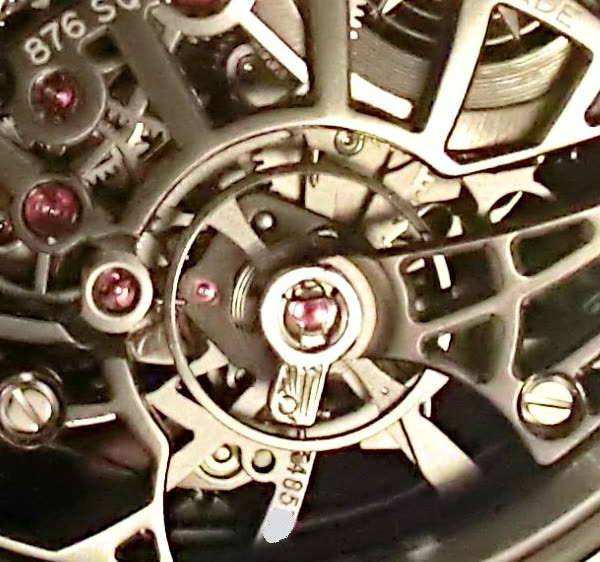
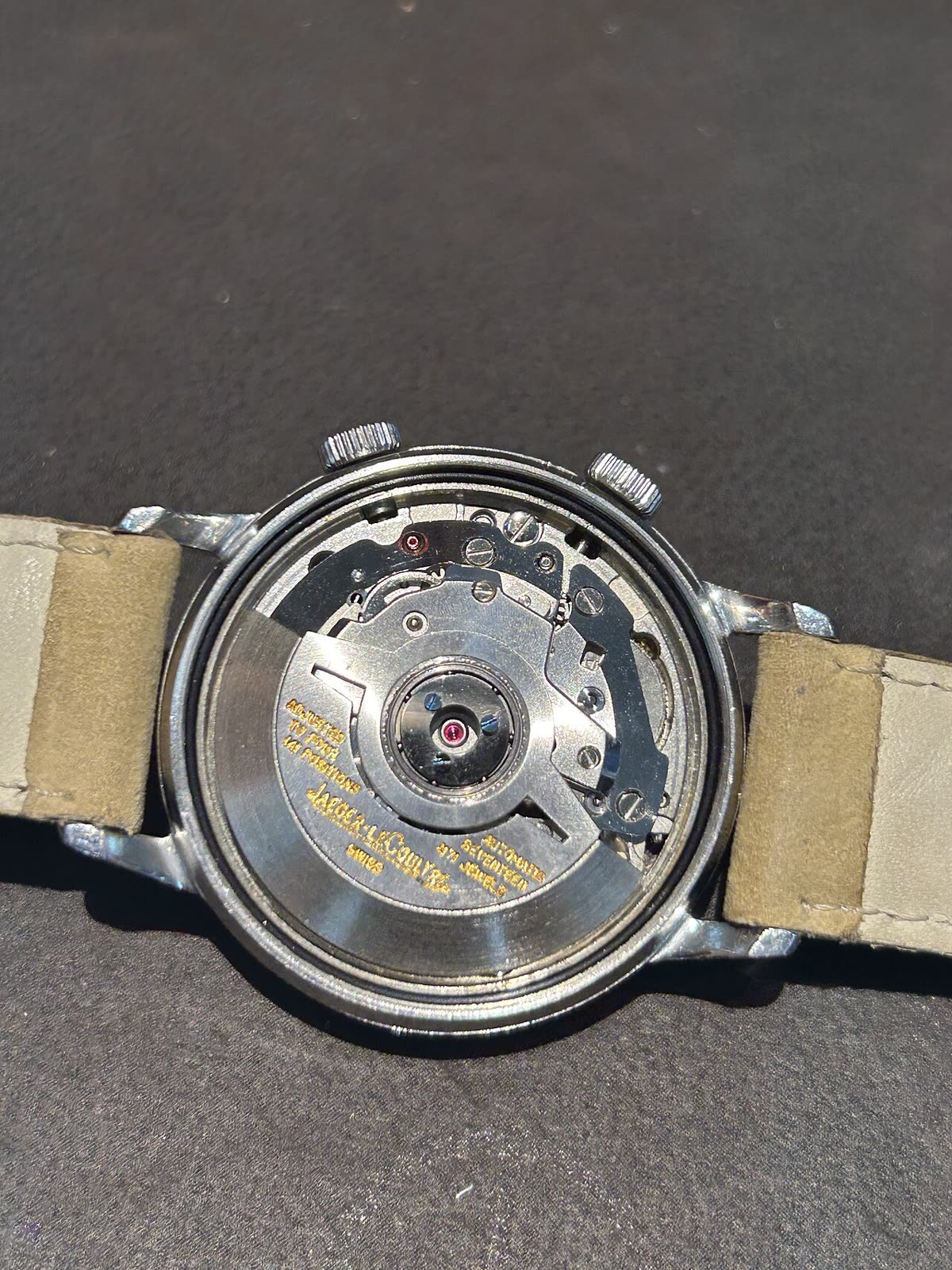

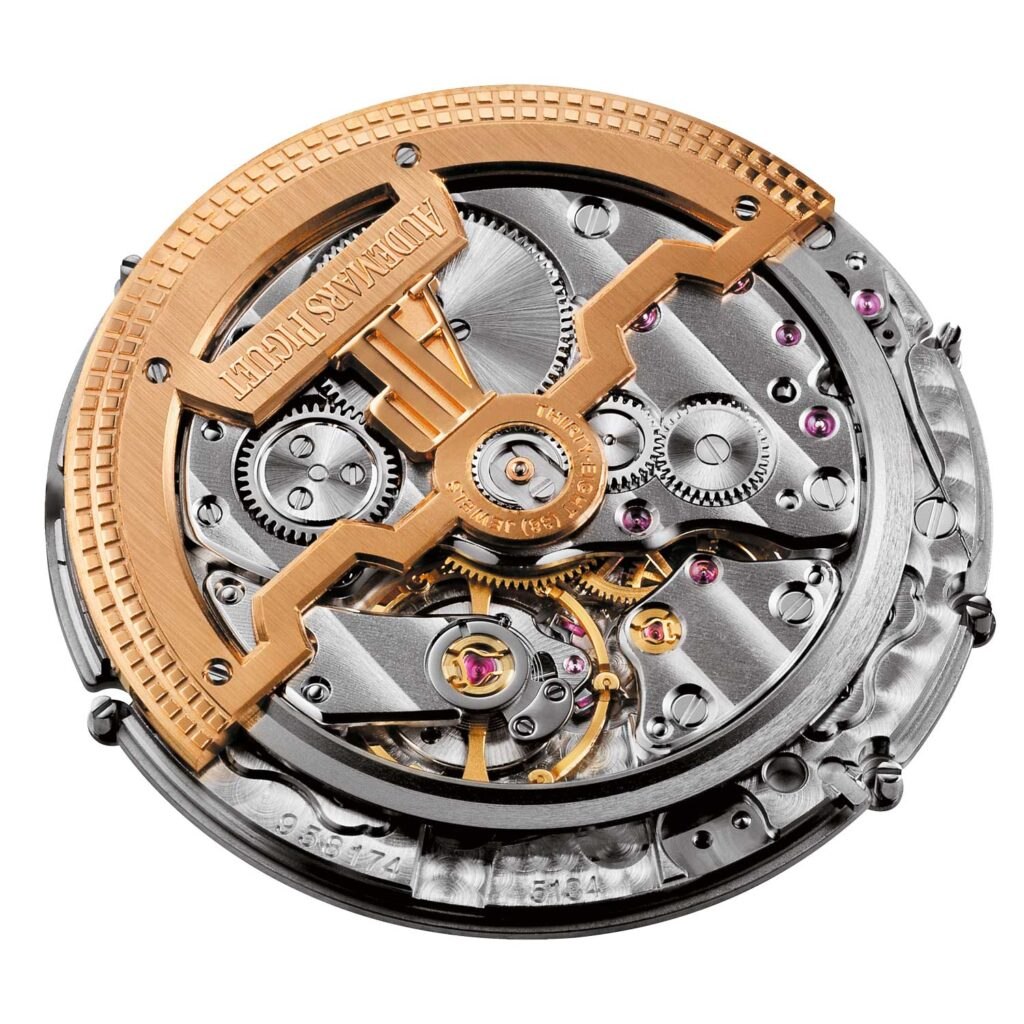
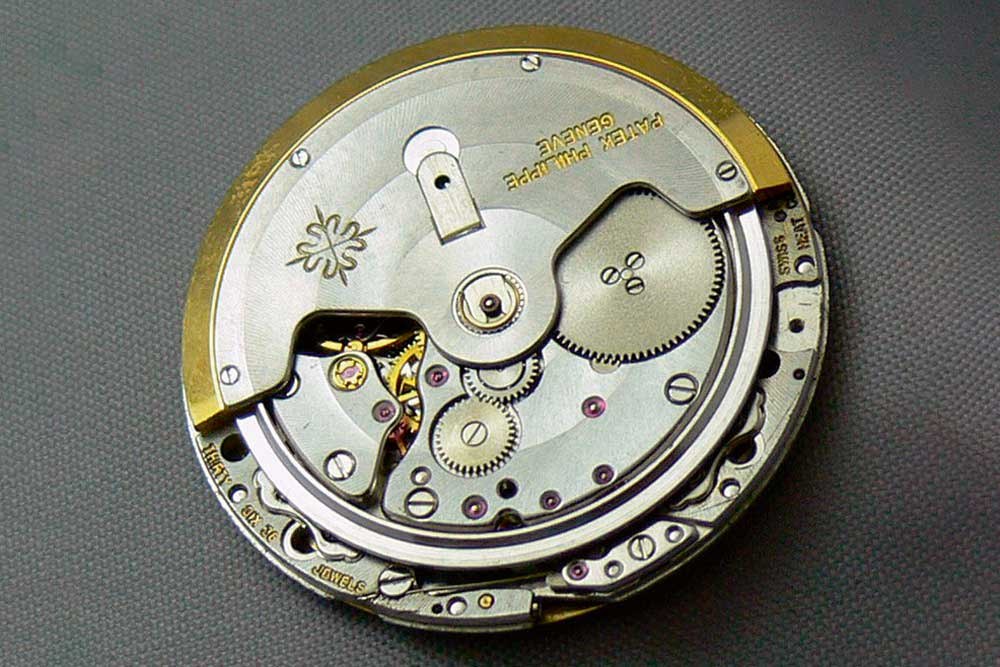
Photographs are illustrative examples of the type, not necessarily the exact object described. Verify details against the source file page.
Sources & references
- Jaeger-LeCoultre and licensee historical literature
- Independent watch-industry technical histories
- de Carle, D., Watch and Clock Encyclopedia
- Period trade material catalogues and calibre reference compilations (edition-dependent)
- Published manufacturer technical documentation where available
Where sources disagree, the disagreement is stated rather than resolved silently.