
London, Britain
John Harrison
Partially verifiedMarine chronometers
History
Inventor of the H-series marine timekeepers.
Born in Foulby, Yorkshire, in 1693, John Harrison was an English joiner and clockmaker who became a self-taught master of timekeeping technology. He moved to Barrow upon Humber around 1700 and later relocated to London in 1737 to pursue his work on sea timekeepers. Over the course of his career, Harrison produced several revolutionary designs for marine chronometers intended to solve the challenge of calculating longitude at sea. Following years of testing and support from the Longitude Board, he received recognition and a reward from Parliament shortly before his death in 1776.
The extended history summarises the open references listed under Sources; each statement was checked against the cited passage. Confirm key dates in period documents before relying on them.
Timeline
John Harrison's recorded dates, dated events from this profile and its sources, and dated pieces and sales from the object catalogue. Dates are as each record gives them.
1693 · Career
Born in Foulby, Yorkshire, in 1693, John Harrison was an English joiner and clockmaker who became a self-taught master of timekeeping technology.
1700 · Career
He moved to Barrow upon Humber around 1700 and later relocated to London in 1737 to pursue his work on sea timekeepers.
1720s · Career
Founded (London)
1776 · Career
Following years of testing and support from the Longitude Board, he received recognition and a reward from Parliament shortly before his death in 1776.
Key models
- H1
- Harrison's first sea chronometer was completed in 1735 and featured bimetallic temperature compensation.
- H4
- The H4, which was significantly smaller than previous designs, achieved a breakthrough by maintaining high accuracy during an 81-day voyage to Jamaica.
- H5
- Harrison developed the H5 with the assistance of his son William after the commission required him to create a new model without his original plans.
Major innovations
- Harrison developed the gridiron pendulum to compensate for thermal expansion and contraction.
- He created the grasshopper escapement, a frictionless control device that required no lubrication.
- The H4 marine timekeeper proved successful by maintaining exceptional accuracy on a sea voyage to Jamaica.
Known markings
- Some of his early wooden clocks are marked with his name, such as the 1717 example signed "John Harrison Barrow".
Serial numbers
This archive holds no verified serial-number table for this maker. Do not date a piece from its serial number alone; use case hallmarks, movement construction, trade directories and documented comparison examples.
Collecting significance
Originality of dial, hands, case and movement is the main consideration. Confirm that the movement belongs to the case and that the dial has not been refinished, and record what is verified separately from what is inferred.
Identification and dating notes
- Harrison's work is characterized by the use of wooden movements, specifically oak and lignum vitae, in his earlier longcase and turret clocks.
- The numbered series of H-clocks, ranging from H1 to H5, represents the evolution of his designs for marine timekeeping.
Photographs
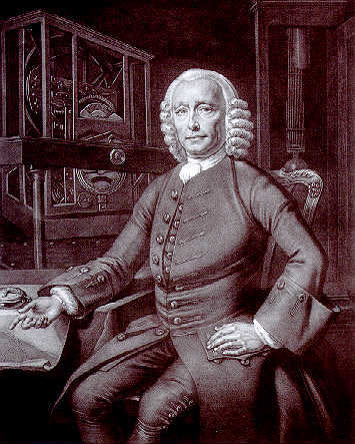
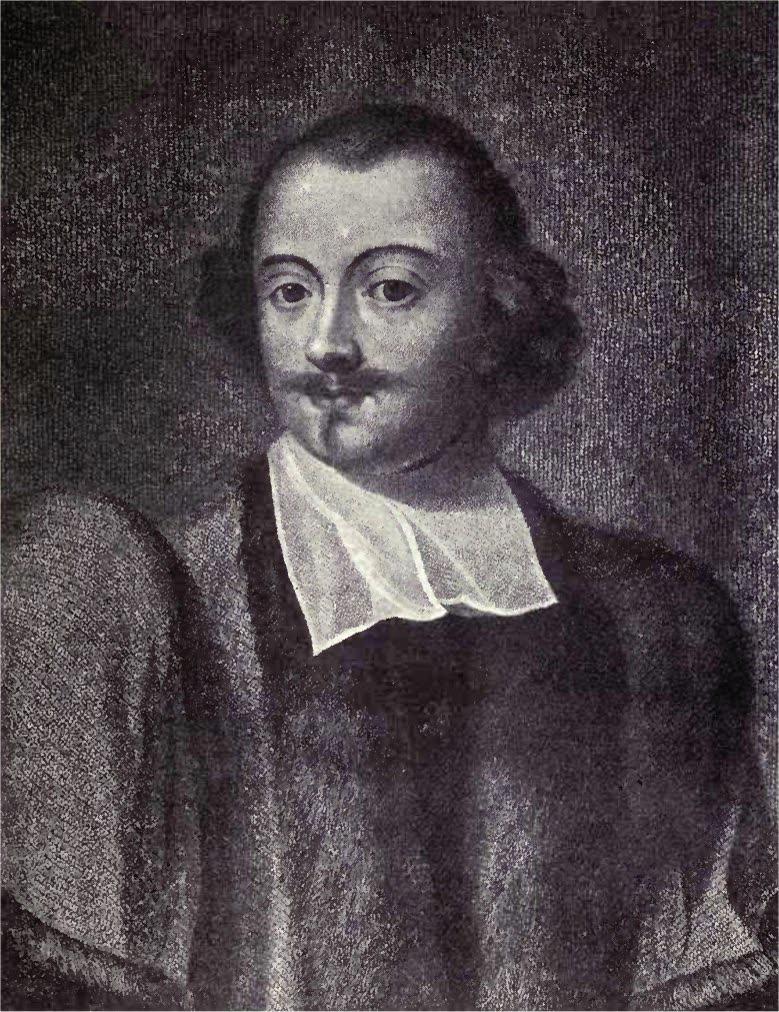
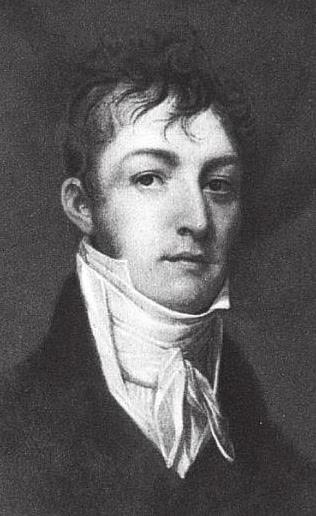
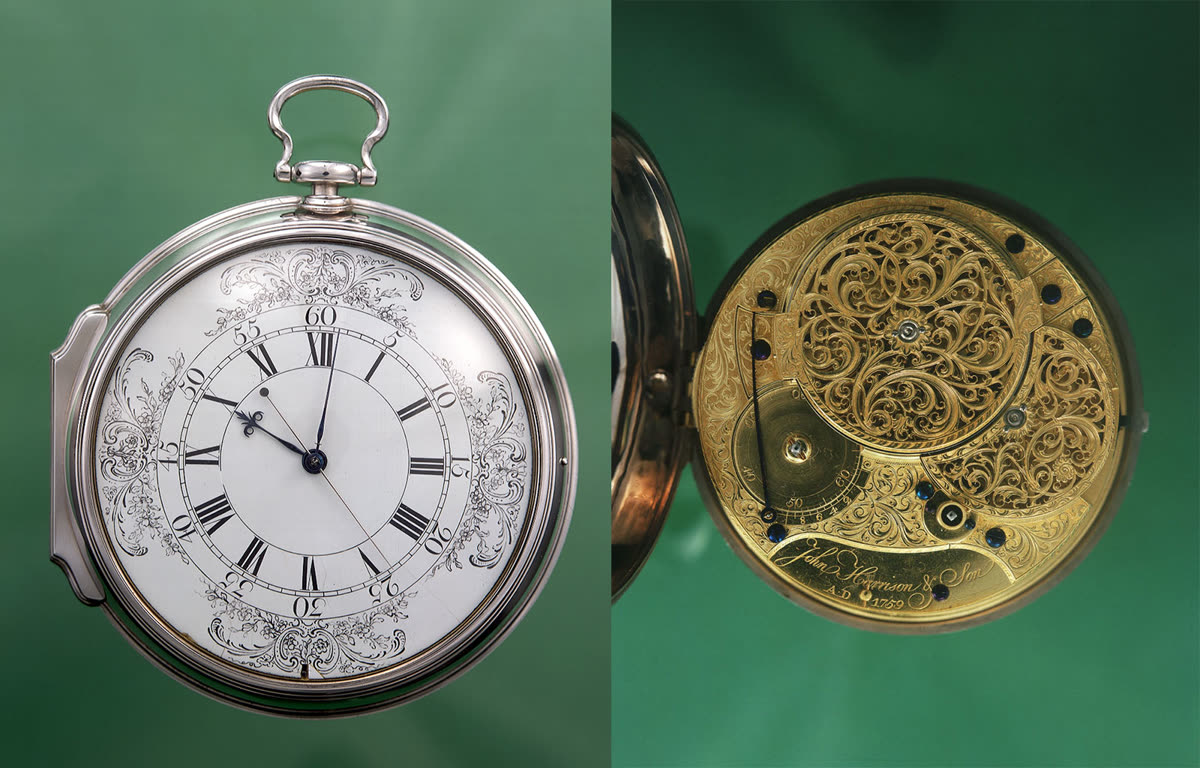
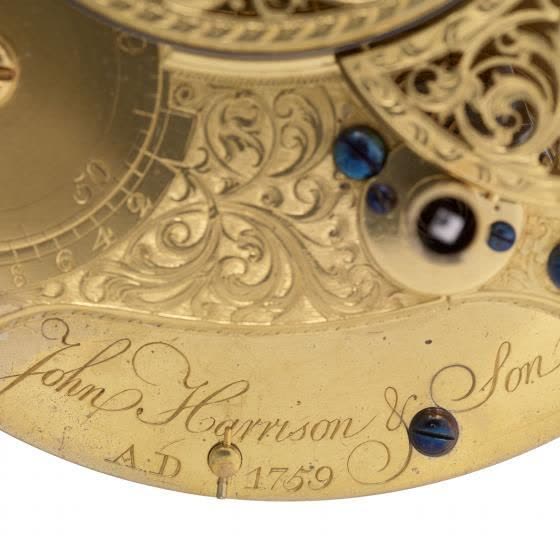
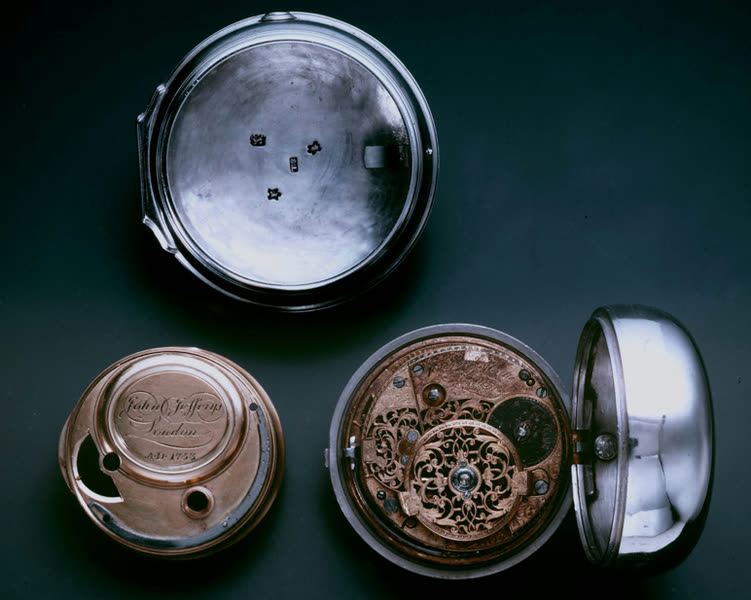
Photographs are illustrative examples of the type, not necessarily the exact object described. Verify details against the source file page.
Sources & references
- John Harrison, Wikipedia (English), retrieved 2026-10-27 (text CC BY-SA 4.0)
- Harrison, John, Watch-Wiki, retrieved 2026-10-27
- Brian Loomes, Watchmakers and Clockmakers of the World
- Mikrolisk trademark and maker index
- Published trade directories and period material catalogues
Where sources disagree, the disagreement is stated rather than resolved silently.