
Schwenningen, Germany
Hanhart
Partially verifiedStopwatches
History
Famous for German military chronographs.
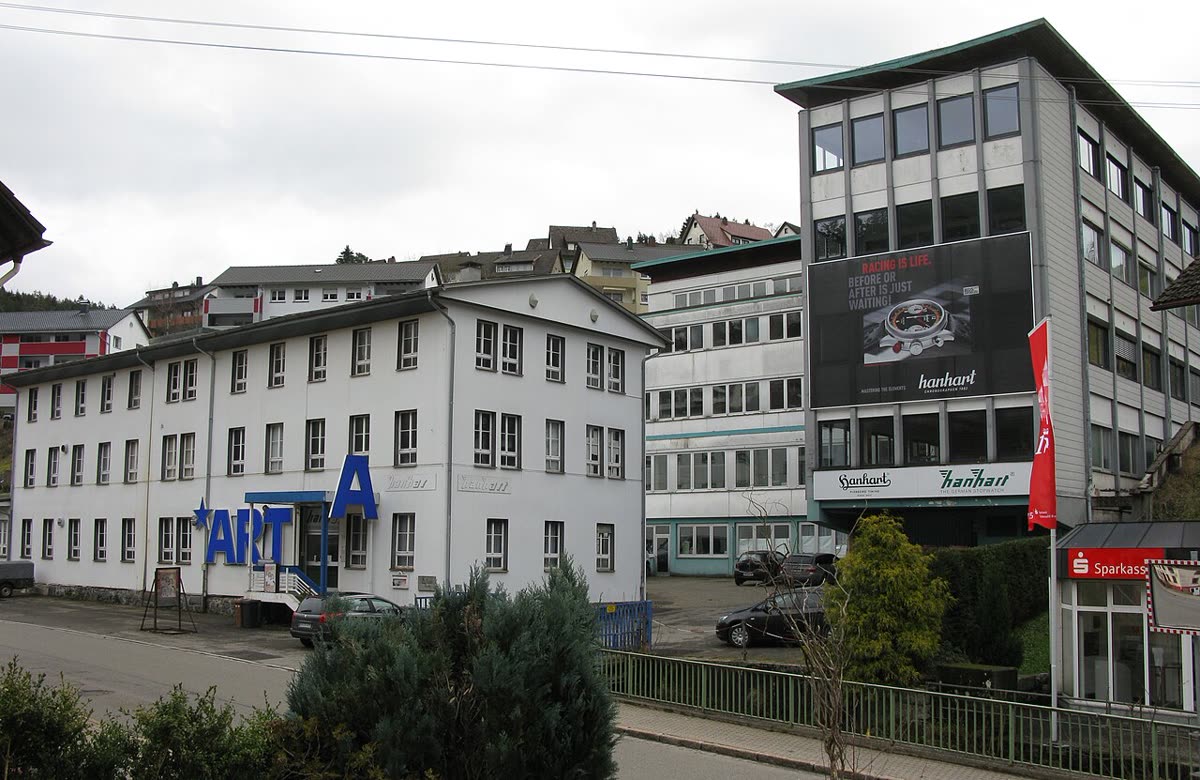
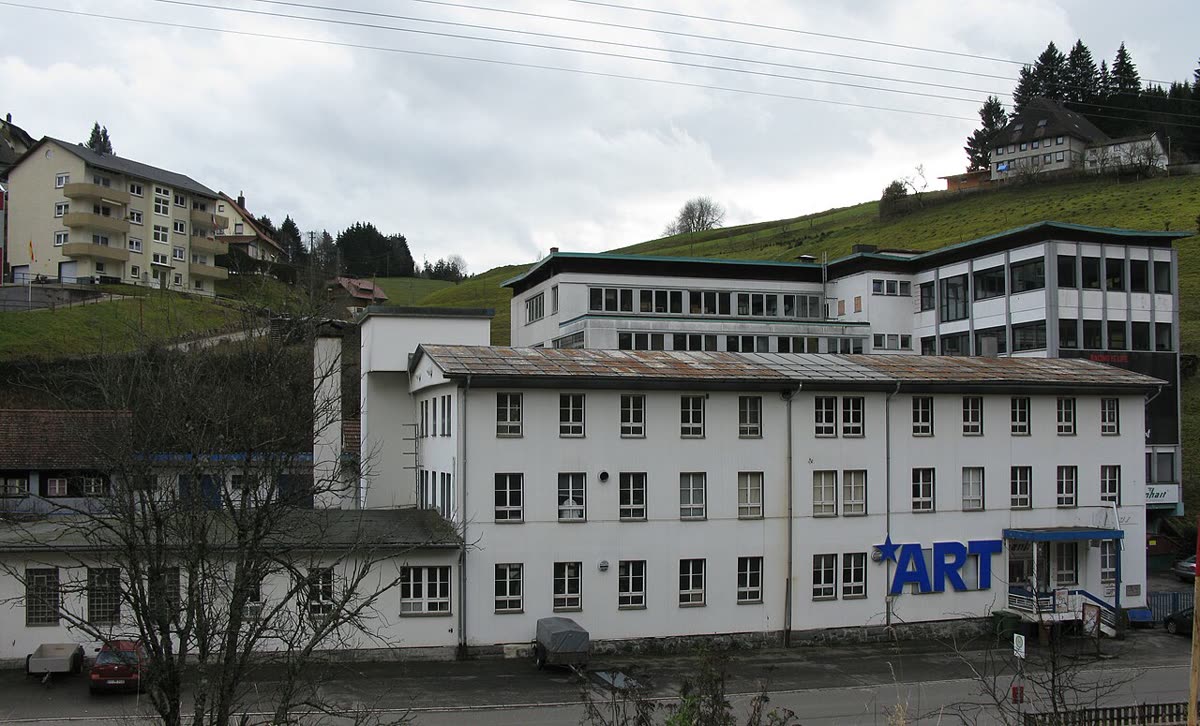
The watchmaker Johann A. Hanhart established his business in Diessenhofen, Switzerland, on July 1, 1882. Seeking to address a local shortage of watchmakers, the business relocated to Schwenningen, Germany, in 1902. Following the founder's death in 1932, his son Wilhelm Julius Hanhart took charge and successfully transitioned the company toward manufacturing raw movements and chronographs.
The company became a significant supplier of pilot's chronographs to the German Luftwaffe and Bundeswehr, later refocusing on stopwatches in the 1960s. After a period of economic difficulty leading to its sale in 1992, the firm was revitalized under Klaus Eble to return to its core business of producing high-quality mechanical timepieces.
The extended history summarises the open references listed under Sources; each statement was checked against the cited passage. Confirm key dates in period documents before relying on them.
Timeline
Hanhart's recorded dates, dated events from this profile and its sources, and dated pieces and sales from the object catalogue. Dates are as each record gives them.
1882 · Career
Founded (Schwenningen)
1882 · Career
Hanhart established his business in Diessenhofen, Switzerland, on July 1, 1882.
1902 · Career
Seeking to address a local shortage of watchmakers, the business relocated to Schwenningen, Germany, in 1902.
1932 · Career
Following the founder's death in 1932, his son Wilhelm Julius Hanhart took charge and successfully transitioned the company toward manufacturing raw movements and chronographs.
1938 · Career
In 1938, Hanhart launched the Calibre 40, which was the company's first single-button chronograph.
1939 · Career
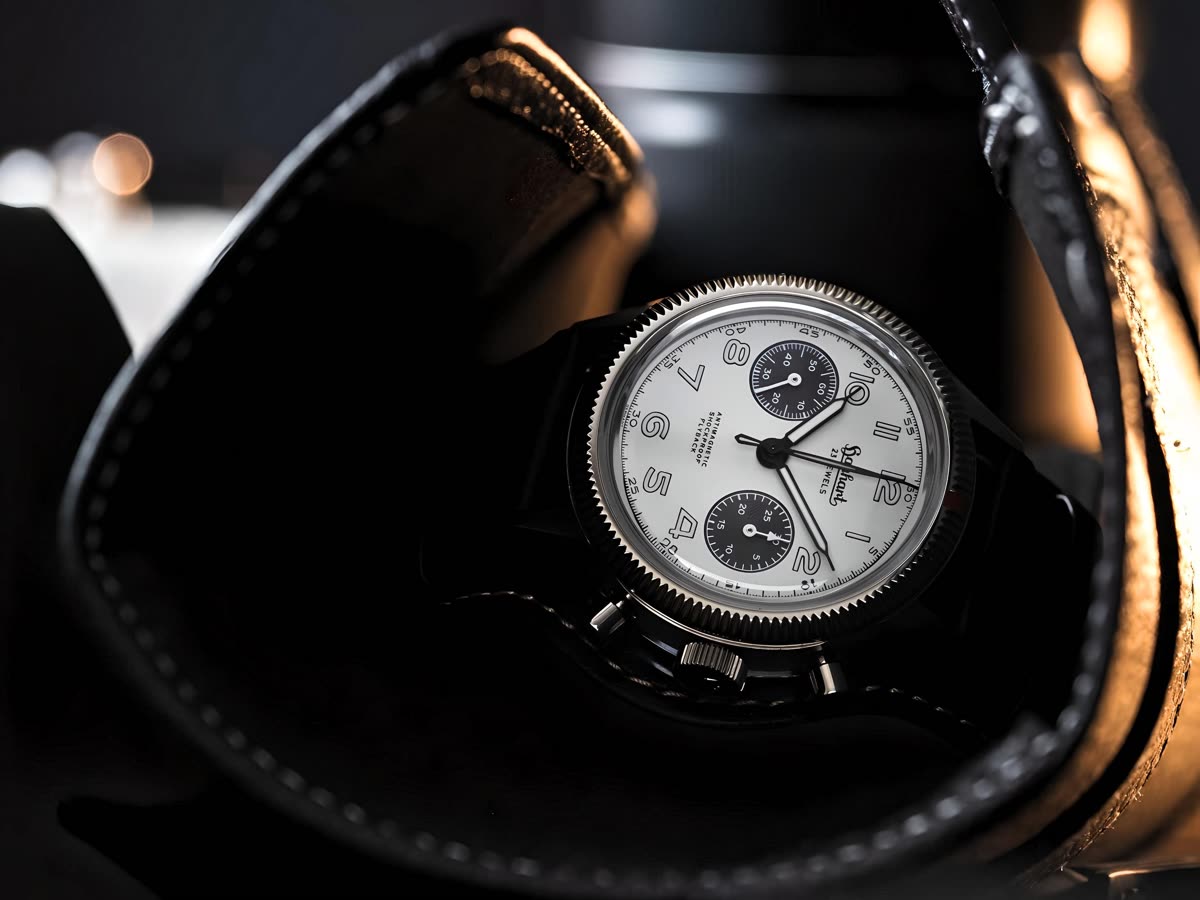
The company developed the Calibre 41 in 1939, a two-pusher flyback chronograph designed for pilot use.
1992 · Career
After a period of economic difficulty leading to its sale in 1992, the firm was revitalized under Klaus Eble to return to its core business of producing high-quality mechanical timepieces.
2008 · Career
The company’s registered offices are located in Diessenhofen, Switzerland, where the Hanhart AG entity was re-established in 2008.
Current watchmaking & later fate
- Today, Hanhart continues to operate with its production workshops located in Gütenbach, Germany.
- The company’s registered offices are located in Diessenhofen, Switzerland, where the Hanhart AG entity was re-established in 2008.
- Its current mechanical range includes the Pioneer collection, the Primus series, and the Aquasphere dive watches.
- The company remains one of the few manufacturers still producing high-quality mechanical and electronic stopwatches.
As stated in the references listed under Sources, retrieved 2026-10-27. Ownership and collections change; check the maker's own announcements for the latest position.
Key models
- Calibre 40
- Introduced in 1938, this was Hanhart's first single-button chronograph, which is now recreated as the Pioneer Mk I.
- 417
- Introduced in 1954, the 417 was a flyback pilot's chronograph designed for the German Bundeswehr.
- Calibre 41
- Released in 1939, this two-pusher flyback chronograph was issued primarily to the Luftwaffe during the Second World War.
Major innovations
- In 1938, Hanhart launched the Calibre 40, which was the company's first single-button chronograph.
- The company developed the Calibre 41 in 1939, a two-pusher flyback chronograph designed for pilot use.
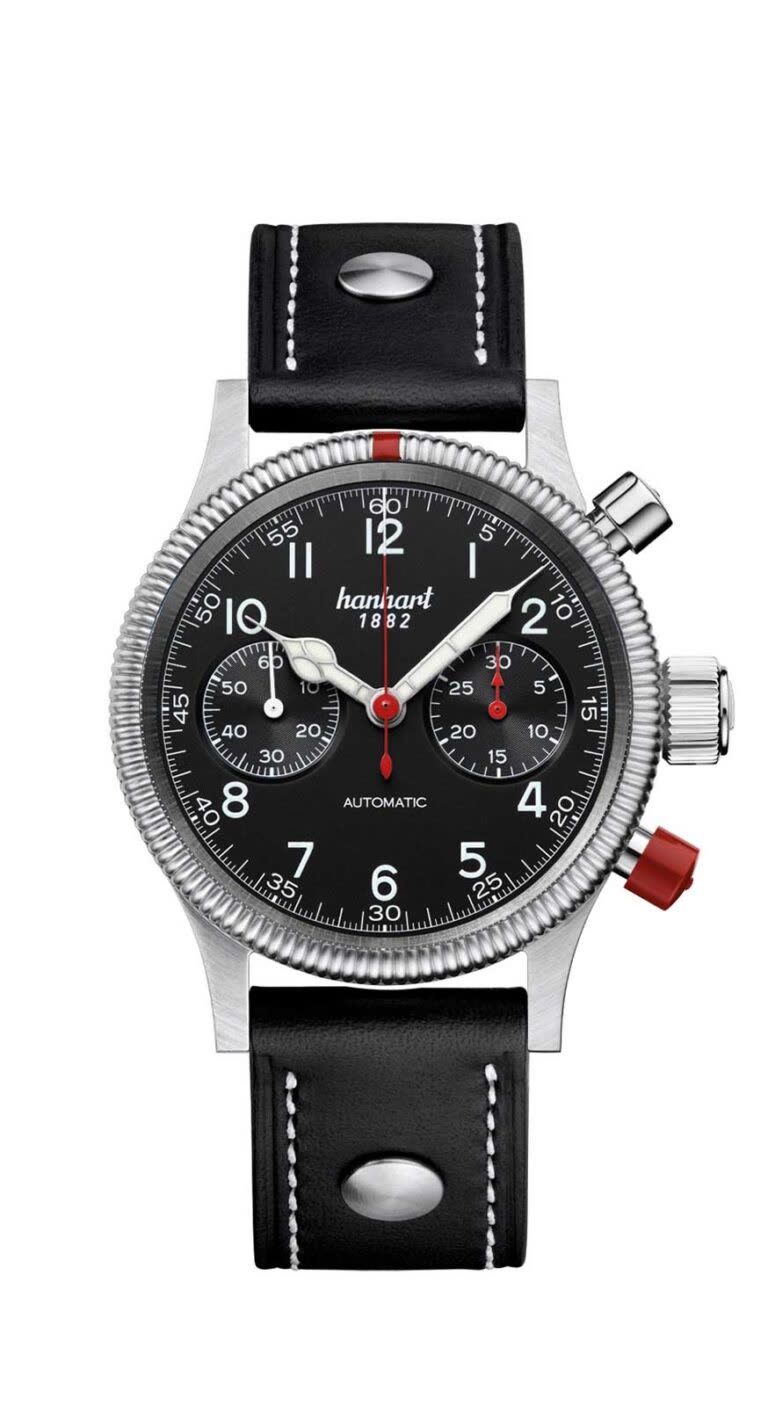
- Many Hanhart chronographs feature a distinct red pusher, which was originally introduced as a safety measure to prevent pilots from accidentally resetting elapsed time.
Known markings
- The Pioneer collection represents the brand's line based on historical designs from the 1930s.
Serial numbers
This archive holds no verified serial-number table for this maker. Do not date a piece from its serial number alone; use case hallmarks, movement construction, trade directories and documented comparison examples.
Collecting significance
Originality of dial, hands, case and movement is the main consideration. Confirm that the movement belongs to the case and that the dial has not been refinished, and record what is verified separately from what is inferred.
Identification and dating notes
- The red pusher serves as a visual signature found on many Hanhart chronographs, including modern reissues.
- Original 417 chronographs from the 1950s, which were issued to the German armed forces, are sought-after collectors' items due to their small production numbers.
In the object catalogue
2 catalogued objects are recorded under Hanhart. Attributions are as given by each source and are not independent authentication.
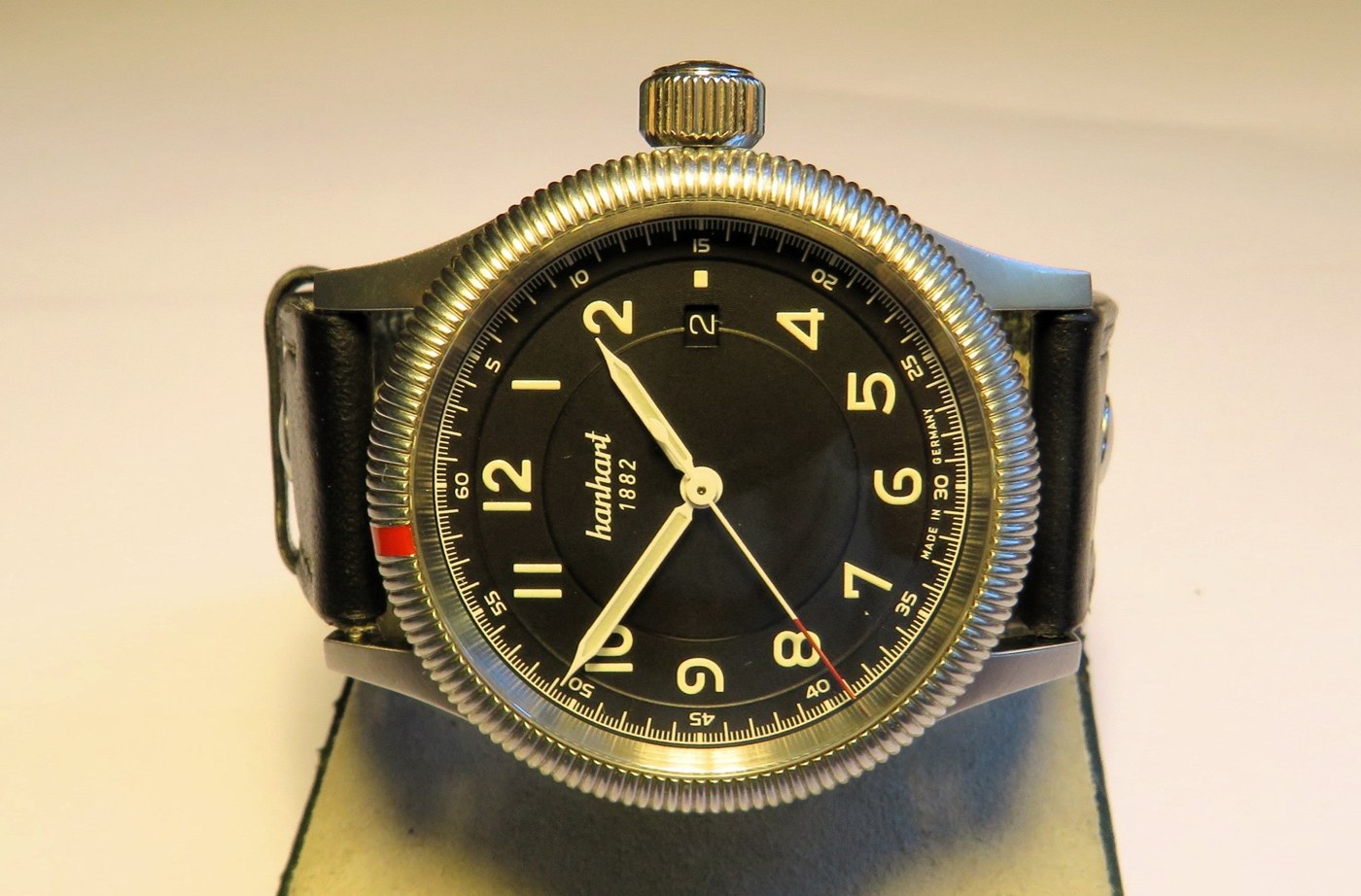
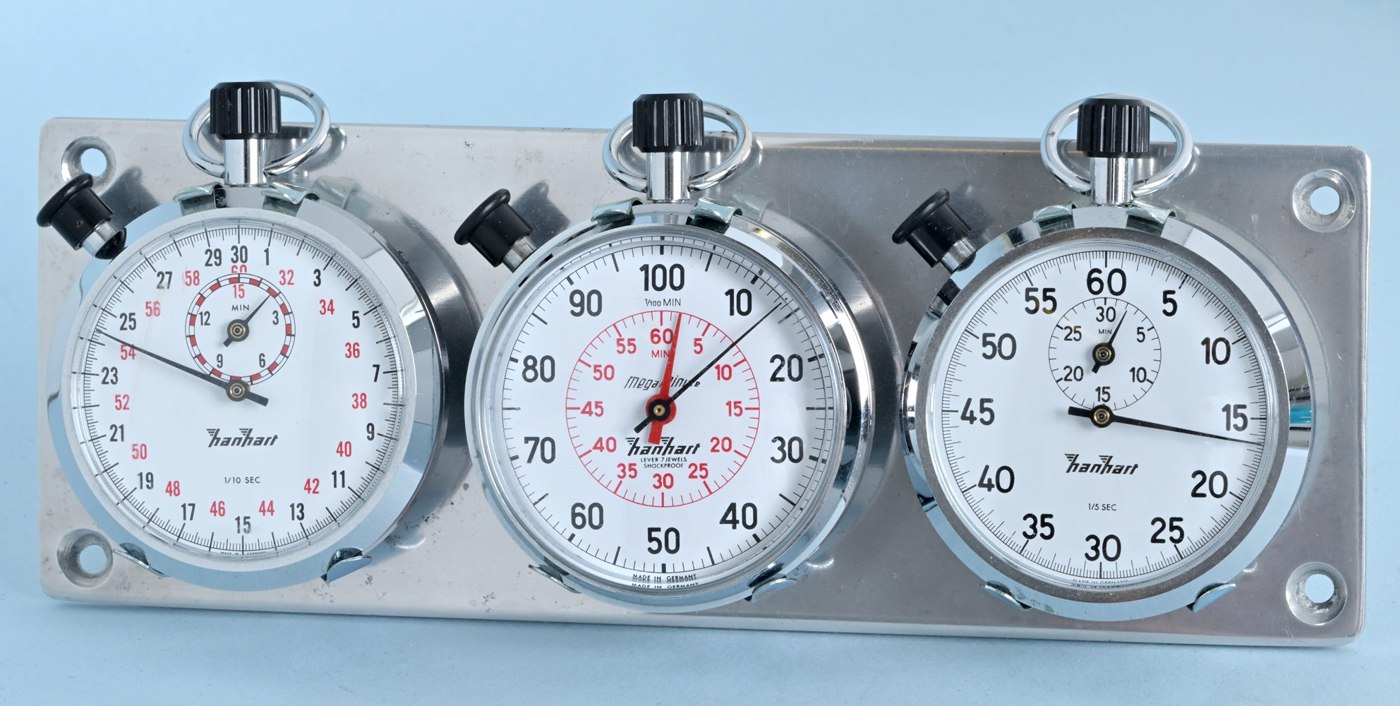
- Hanhart Dashboard Timing Chronograph SetTravel & alarm clock
- Hanhart Pioneer One Automatic FliegeruhrPilot's watch · Modern
Provenance
Where the 2 catalogued pieces by Hanhart were recorded, with the collectors, owners and sales their records name.
Provenance map
Each piece is linked to the museum, auction house or dealer whose record it comes from, and to any other house or collection its own provenance names. Select a name to see its pieces.
Dealers & other listings · 2 pieces
Pieces of Time
Dealer · 1 piece
Hanhart Dashboard Timing Chronograph SetTravel & alarm clock · Record source
The record names no sale, lot or earlier owner.
Each line is copied from the object's source record and is not independently verified. Holders are as recorded when the piece was catalogued: museum objects may not be on display, and sold lots have since changed hands.
Photographs
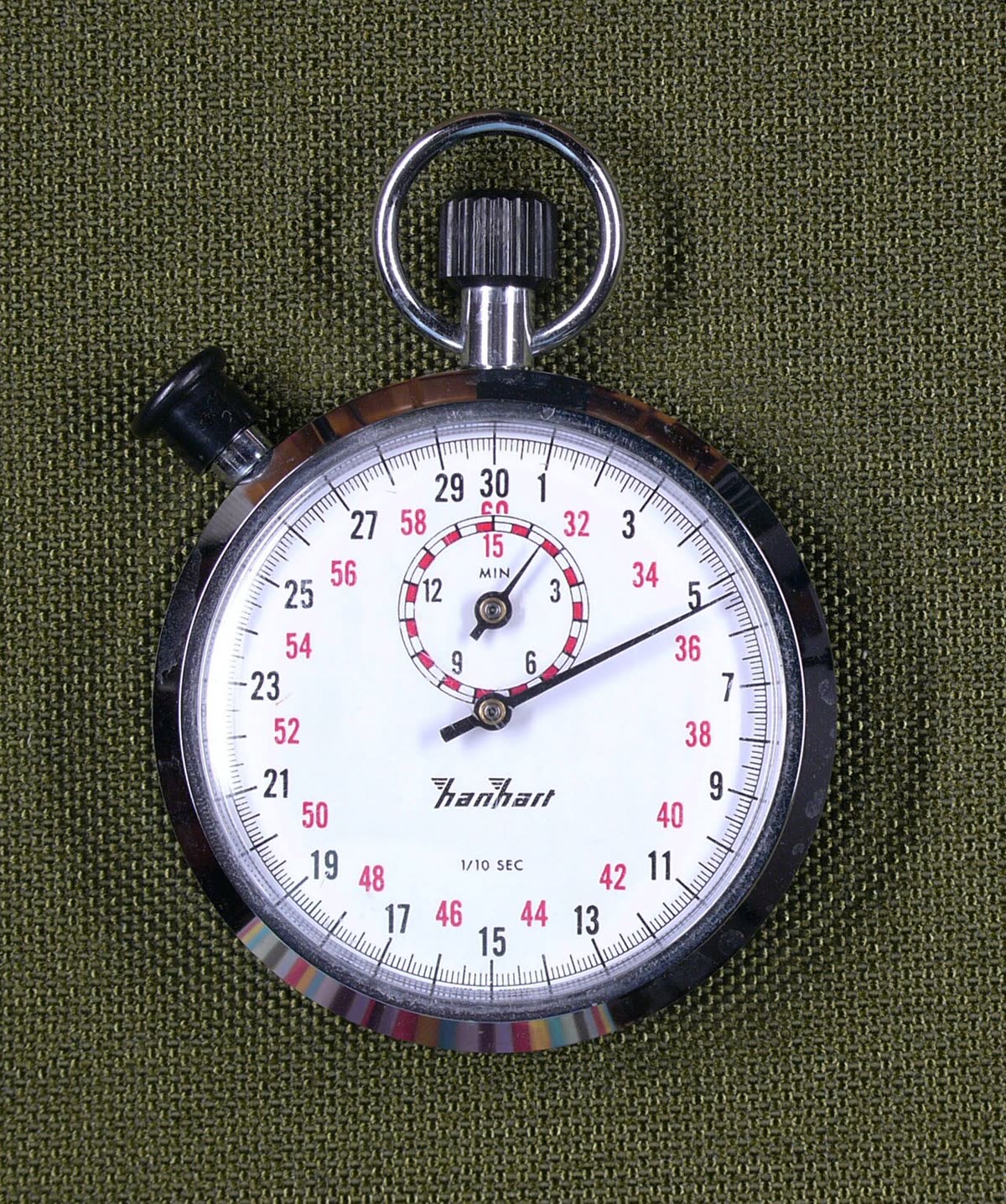
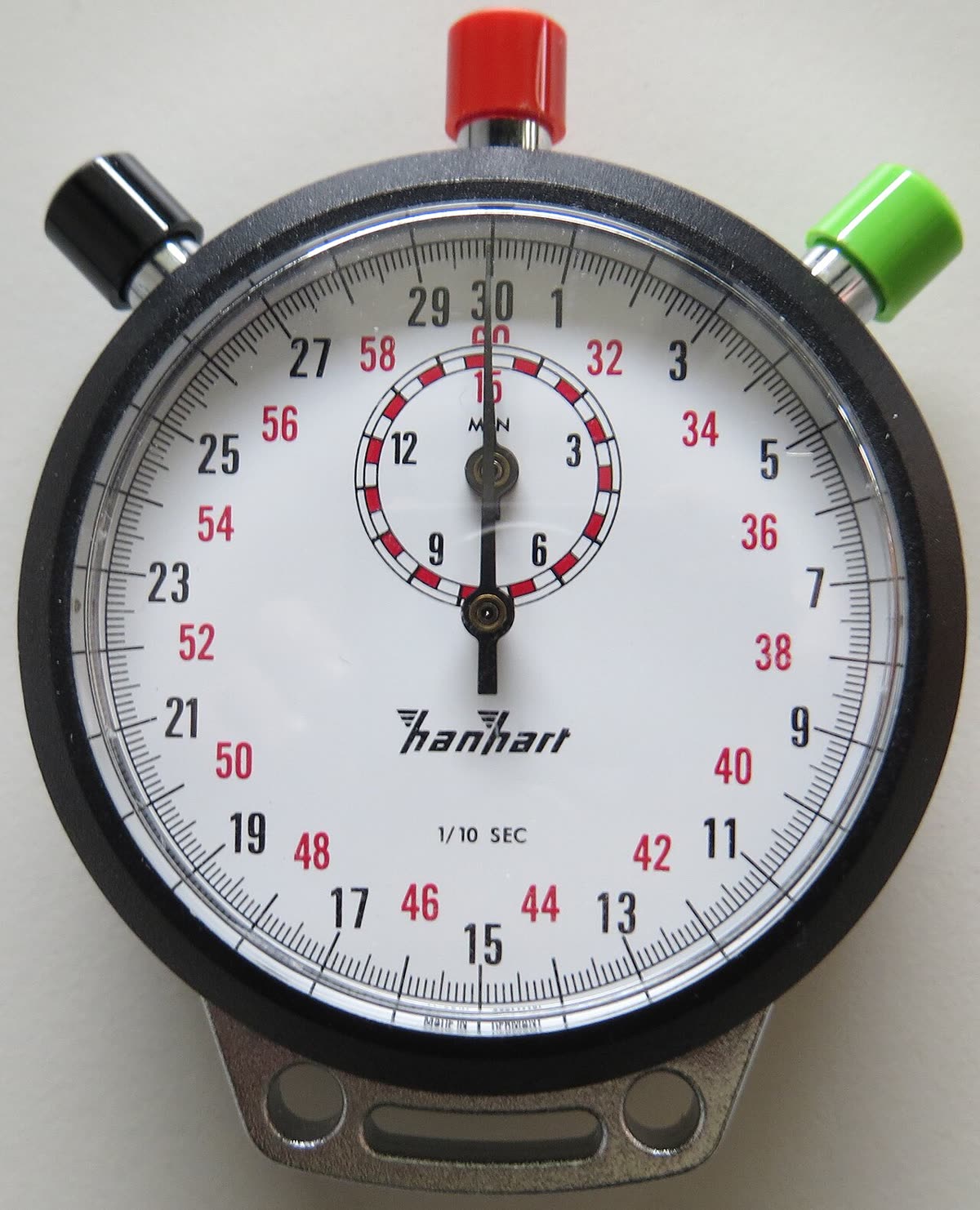
Photographs are illustrative examples of the type, not necessarily the exact object described. Verify details against the source file page.
Sources & references
- Hanhart, Wikipedia (English), retrieved 2026-10-27 (text CC BY-SA 4.0)
- Hanhart, Wikipedia (German), retrieved 2026-10-27 (text CC BY-SA 4.0)
- Brian Loomes, Watchmakers and Clockmakers of the World
- Mikrolisk trademark and maker index
- Published trade directories and period material catalogues
Where sources disagree, the disagreement is stated rather than resolved silently.