
Paris, France
Farcot
Partially verifiedSwinging figure clocks
History
Known for mystery clocks with swinging figures.
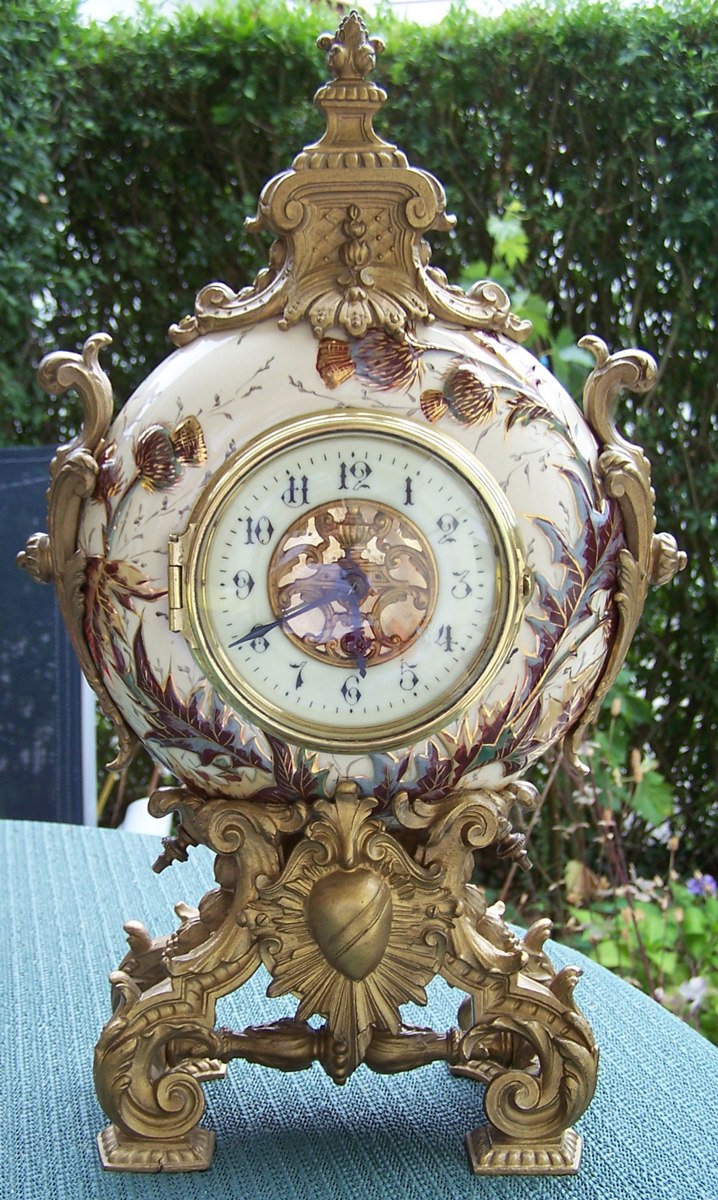
Eugène Farcot established his clockmaking manufacture in 1853, initially operating in Paris at Rue Vieille du Temple before moving to Rue des Trois-Bornes in 1855. The company underwent several name changes, becoming Farcot et Cie between 1855 and 1856, and later Farcot et Wandenberg in 1887. Farcot specialized in mystery clocks featuring conical pendulums and swinging figures, products that gained significant recognition at various international expositions.
Following Eugène Farcot's retirement in the late 1880s, his son-in-law Henri Wandenberg assumed ownership of the enterprise in 1890. The firm continued production under Paul Grenon following Wandenberg's tenure, remaining active until 1914.
The extended history summarises the open references listed under Sources; each statement was checked against the cited passage. Confirm key dates in period documents before relying on them.
Timeline
Farcot's recorded dates, dated events from this profile and its sources, and dated pieces and sales from the object catalogue. Dates are as each record gives them.
1853 · Career
Eugène Farcot established his clockmaking manufacture in 1853, initially operating in Paris at Rue Vieille du Temple before moving to Rue des Trois-Bornes in 1855.
1855 · Career
The company underwent several name changes, becoming Farcot et Cie between 1855 and 1856, and later Farcot et Wandenberg in 1887.
1890 · Career
Following Eugène Farcot's retirement in the late 1880s, his son-in-law Henri Wandenberg assumed ownership of the enterprise in 1890.
1914 · Career
The firm continued production under Paul Grenon following Wandenberg's tenure, remaining active until 1914.
1914 · Career
The clockmaking firm established by Eugène Farcot ceased operations in 1914 after being managed by his son-in-law Henri-Charles Wandenberg and later by Paul Grenon.
Current watchmaking & later fate
- The clockmaking firm established by Eugène Farcot ceased operations in 1914 after being managed by his son-in-law Henri-Charles Wandenberg and later by Paul Grenon.
As stated in the references listed under Sources, retrieved 2026-10-27. Ownership and collections change; check the maker's own announcements for the latest position.
Key models
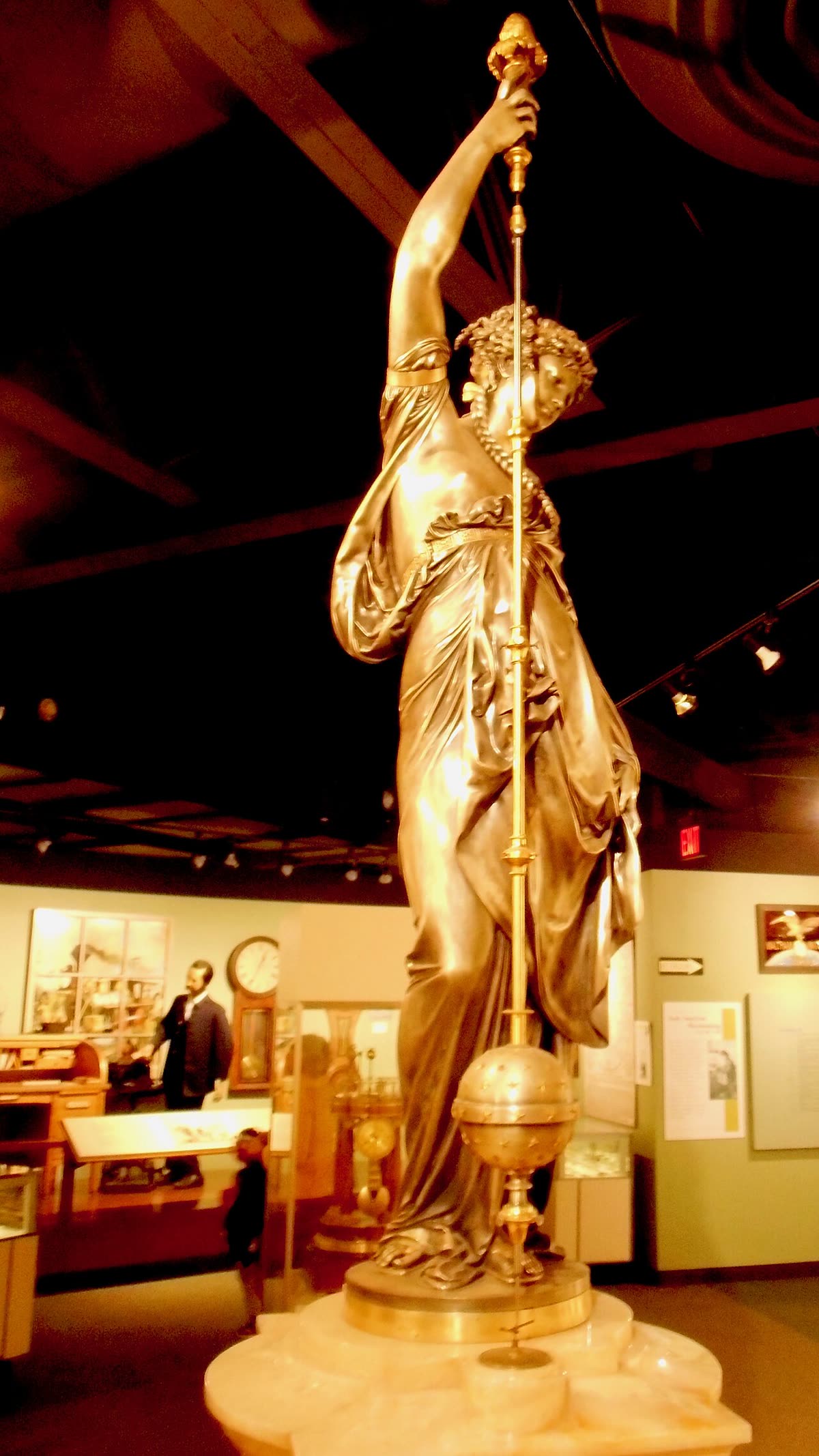
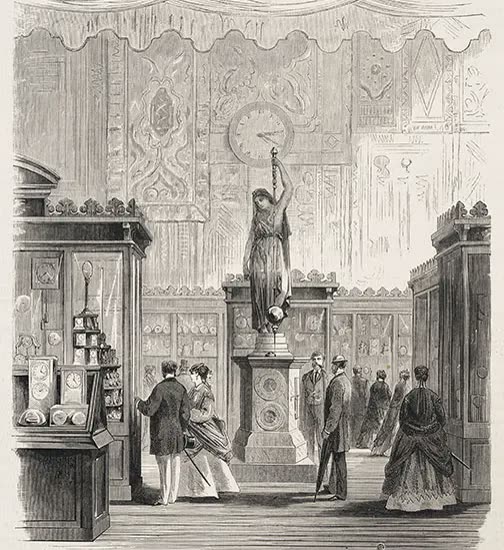
- Monumental conical pendulum clock
- Introduced in 1862, this series of timepieces is noted for the slow, noiseless circular motion of the pendulum rather than a traditional side-to-side swing.
- Pendule courtoise
- This model of fancy clock was introduced by the company, appearing on a list of patents filed in June 1886.
- Réveil horizontal
- The manufacturer created this horizontal alarm clock featuring silent, rotary motion, which was patented in March 1870.
- Pendule à l'escarpolette
- This clock model was patented by the firm in March 1862.
- Pendule à phonographe
- Presented at the 1900 Paris exhibition, this talking clock became a primary item for the firm under the leadership of Paul Grenon.
Major innovations
- Farcot developed a specialized series of monumental clocks utilizing a conical pendulum application to statuary.
- The company patented various horological inventions including a rotatory horizontal alarm clock.
Known markings
- 'Farcot'
- Clocks produced by the manufacture were signed with the Farcot name.
Serial numbers
This archive holds no verified serial-number table for this maker. Do not date a piece from its serial number alone; use case hallmarks, movement construction, trade directories and documented comparison examples.
Collecting significance
Originality of dial, hands, case and movement is the main consideration. Confirm that the movement belongs to the case and that the dial has not been refinished, and record what is verified separately from what is inferred.
Identification and dating notes
- Items marked 'Farcot et Cie' indicate production between 1855 and 1856.
- Clocks bearing the 'Farcot et Wandenberg' name were manufactured after 1887.
In the object catalogue
1 catalogued object is recorded under Farcot. Attributions are as given by each source and are not independent authentication.
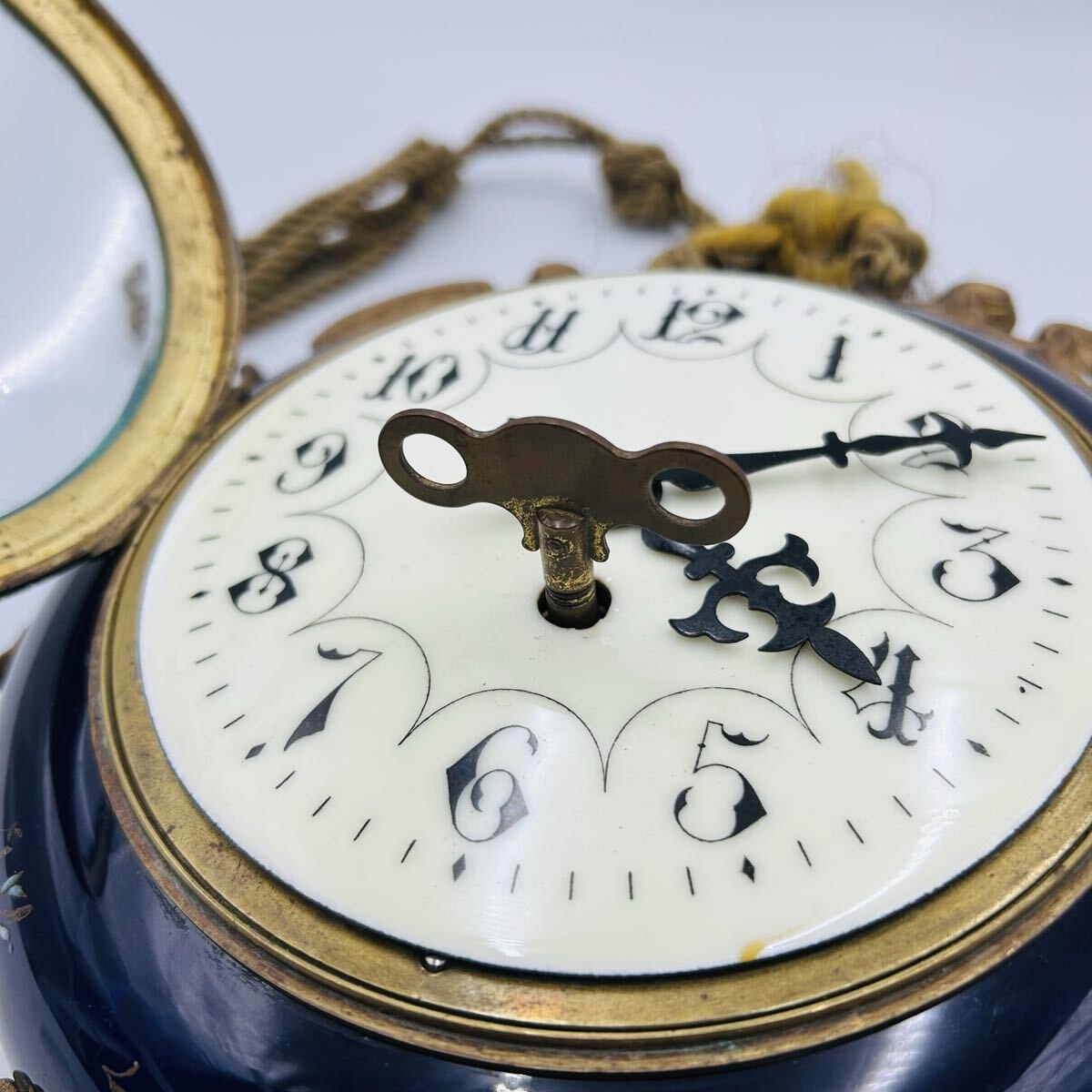
- Double-sided hanging clock attributed to Eugène FarcotWall clock · 19th century
Provenance
Where the 1 catalogued piece by Farcot was recorded, with the collectors, owners and sales their records name.
Provenance map
Each piece is linked to the museum, auction house or dealer whose record it comes from, and to any other house or collection its own provenance names. Select a name to see its pieces.
Auction houses · 1 piece
Yahoo! Auctions Japan
Auction house · 1 piece
Double-sided hanging clock attributed to Eugène FarcotWall clock · 19th century · Record source
Yahoo! Auctions Japan: lot r1222333124
Auction history
| House | Sale & lot | Object |
|---|---|---|
| Yahoo! Auctions Japan | lot r1222333124 | Double-sided hanging clock attributed to Eugène Farcot |
Each line is copied from the object's source record and is not independently verified. Holders are as recorded when the piece was catalogued: museum objects may not be on display, and sold lots have since changed hands.
Photographs
Photographs are illustrative examples of the type, not necessarily the exact object described. Verify details against the source file page.
Sources & references
- Eugène Farcot, Wikipedia (English), retrieved 2026-10-27 (text CC BY-SA 4.0)
- Eugène Farcot, Wikipedia (French), retrieved 2026-10-27 (text CC BY-SA 4.0)
- Farcot, Henry Eugène Adrien, Watch-Wiki, retrieved 2026-10-27
- Farcot, Wikipedia (English), retrieved 2026-10-27 (text CC BY-SA 4.0)
- École d'horlogerie de Cluses, Wikipedia (French), retrieved 2026-10-27 (text CC BY-SA 4.0)
- Brian Loomes, Watchmakers and Clockmakers of the World
- Mikrolisk trademark and maker index
- Published trade directories and period material catalogues
Where sources disagree, the disagreement is stated rather than resolved silently.