
Magazine · Clocks
Daylight Saving Time: A History of Changing the Clocks
Daylight saving time remains one of the most debated adjustments in modern timekeeping, impacting everything from global commerce to the precision of a horological collection. This guide explores the origins of the practice, its relationship with [Standard time](L1), and how to manage your timepieces during these transitions.
November 23, 2026 · 5 min read
AI-drafted from search research. Not yet editorially reviewed — check important facts against the cited sources.
Key takeaways
- DST was popularized in the 20th century to conserve energy and increase evening light.
- The transition between standard time and DST highlights our historical reliance on Standard time zones established by railroads.
- Mechanical watches require careful handling during time changes to avoid damaging calendar mechanisms.
- Permanent DST is a topic of ongoing legislative discussion, though no global consensus exists.
Why do we change the clocks?
The practice of changing the clocks originates from a desire to align human activity with the longer daylight hours of the summer season. By shifting the clock one hour forward in the spring, the period of 'daylight' in the evening is effectively extended, which historically aimed to reduce the need for artificial lighting. This adjustment creates a divergence from Standard time, which is the base timekeeping system that typically aligns with a region's geographic longitude. The evolution of 1883 standard time zones in North America laid the groundwork for this, as the necessity for a unified time for railway travel became the standard for societal regulation.
Calendar Work Synchronization
Who invented daylight saving time?
While Benjamin Franklin is often jokingly cited for his 1784 essay on waking with the sun, the modern implementation of daylight saving time is largely attributed to George Hudson, an entomologist from New Zealand, and William Willett, a British builder. Hudson proposed a two-hour shift in 1895 to allow more time for his hobby of bug collecting. Later, Willett campaigned tirelessly in Britain for a 'summer time' to encourage outdoor activity. Their efforts preceded the first widespread adoption during World War I, when nations sought to maximize coal supplies by reducing evening electricity consumption.
Daylight saving time vs standard time: What is the difference?
Standard time is the local time in a country or region when daylight saving is not in use. It is often tied to the solar mean time of a specific meridian. When we shift to daylight saving time, we are artificially offsetting our clocks from this 'true' local time. For horologists, this distinction is vital. Many mechanical complications, such as a Day-date or perpetual calendar, are indexed to the gear train and do not inherently 'know' about daylight saving adjustments. Consequently, the user must manually intervene, ensuring they do not cycle through calendar changes during restricted hours.
How to care for your watch during a time change
The twice-yearly ritual of changing the time can pose risks to delicate horological mechanisms. If your timepiece features a calendar, avoid adjusting the date or time between 9:00 PM and 3:00 AM, as the movement may be engaging the date-change gear train. Forcing an adjustment during this period can lead to internal damage. Always rely on a professional Service history check if your watch has not been maintained in several years. If you are uncertain about the specific movement architecture of your timepiece, consult the Timepiece Database or a qualified watchmaker before manipulating the crown.
The daylight saving time bill and the future of the clock
Legislative bodies worldwide regularly debate the benefits of daylight saving time, with many districts considering a shift to 'permanent' daylight saving time. However, this is a complex issue involving agriculture, aviation, and energy consumption. While some advocate for the end of the biannual change, others point to the health benefits of maintaining a system closer to natural solar Mean time. As collectors of clocks and watches, we find ourselves at the center of this history, as our timepieces are the physical manifestations of the very Standard time systems that lawmakers seek to modify.
Daylight saving time 2026 and beyond
The dates for changing clocks continue to be set by regional governments, often following specific patterns like the second Sunday in March and the first Sunday in November in the United States. For 2026, those in participating jurisdictions will follow established local statutes. It is helpful to treat these dates as an opportunity to audit your collection. Ensure your Timegrapher readings are stable and that any antique clocks in your care are receiving proper Conservation Ethics for Clocks and Watches treatment to prevent degradation of the movement's components.
Horology is a field rooted in precision. When we discuss daylight saving, we are discussing the intersection of human social policy and the mechanical regularity of an escapement. Whether a clock is a simple pendulum model or a high-complication Tourbillon, the fundamental requirement remains the same: accuracy. By documenting the Service history of your watches, you provide future collectors with the context necessary to understand how these timepieces were adjusted over decades of changing time laws.
How to Verify Movement Synchronization After a Time Adjustment
Frequent time adjustments, whether due to seasonal shifts or travel, place specific mechanical demands on the gear train. Verification of a movement’s integrity after manual adjustment involves assessing the smoothness of the crown operation and the precise alignment of the motion works when the hour and minute hands are moved.
| Feature | What it suggests | What to check next |
|---|---|---|
| Crown resistance | Lubricant degradation or keyless work friction | Check for debris or dry gaskets |
| Hand stutter | Improper tension in the cannon pinion | Assess friction fit against the center wheel |
| Date jump delay | Engagement with the calendar driving wheel | Verify synchronization with the 24-hour cycle |
| Escapement stop | Insufficient mainspring power reserve | Monitor for full power before setting |
What to record
- Record the exact time offset required for the transition.
- Note the feel of the crown during the first full rotation after a period of dormancy.
- Photograph the date window position at the moment of transition to ensure alignment.
- Log the time taken for the balance wheel to resume full amplitude following a manual stop.
- Document any audible variance in the click mechanism during winding.
Frequently Asked Questions
Frequently asked questions
Why does the government change the time?
Governments implement daylight saving time primarily to shift daylight hours to later in the day, theoretically reducing energy consumption for lighting. This practice is a social construct rather than a scientific necessity, intended to optimize the use of daylight for active working and social hours during the summer.
Is there a global standard for daylight saving time?
No. Daylight saving time is observed sporadically across the globe. Many countries in the equatorial regions do not observe it because their daylight hours are relatively consistent year-round. Even within countries that do use it, adoption and specific dates vary significantly by legislative region.
Can I leave my watch running while I change the time?
Yes, but you must be careful. If your watch has a screw-down crown, ensure it is fully unscrewed. If you have a mechanical watch with a date complication, it is best practice to move the hands to the 6 o'clock position first to move the date-change mechanism away from the 'danger zone' before adjusting the time.
Will permanent daylight saving time happen?
While there have been legislative proposals in various countries to make daylight saving time permanent, the movement faces significant opposition from medical and scientific communities who argue that standard time is more aligned with human circadian rhythms. There is currently no unified timeline for a global shift.
How do I know if my watch is a world timer?
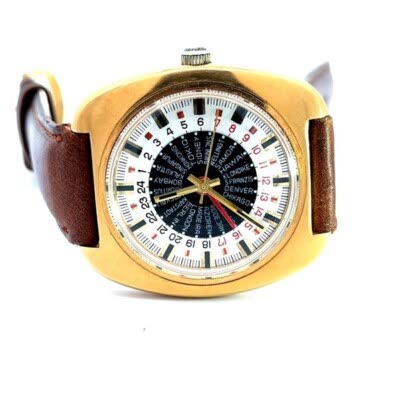
A World timer watch typically features a rotating bezel or a secondary dial marked with major international cities. It allows the user to read the time in multiple zones simultaneously. These watches require special care when DST changes occur, as not all cities listed on the watch may follow the same DST rules.
Is it safe to move the hands backward to 'fall back' an hour?
On many simple three-hand movements, moving the hands backward is generally safe. However, if your watch features complex complications—such as a perpetual calendar or specific astronomical displays—reversing the hands can cause severe internal damage. Always consult the manufacturer's manual to determine if your specific movement requires forward-only adjustment to maintain proper gear synchronization.
Does DST affect the accuracy of a pendulum clock?
Daylight saving time does not affect the inherent physics of a pendulum's oscillation. However, the manual intervention required to stop the pendulum, adjust the hands, and restart the clock can temporarily alter the timekeeping rate. It is recommended to perform this adjustment carefully to avoid disturbing the level of the clock case or the beat of the escapement.
Sources
- Landes, D., Revolution in Time (rev. ed. 2000)
- https://www.icon.org.uk/conservation-hub/caring-for-your-collections/clocks.html
- NAWCC publications on railroad time service and inspection
- NAWCC Bulletin, articles on railroad time inspection
- Icon, Caring for clocks — general handling and stability guidance
- de Carle, D., Practical Watch Repairing — inspection and faults