
Clock escapement
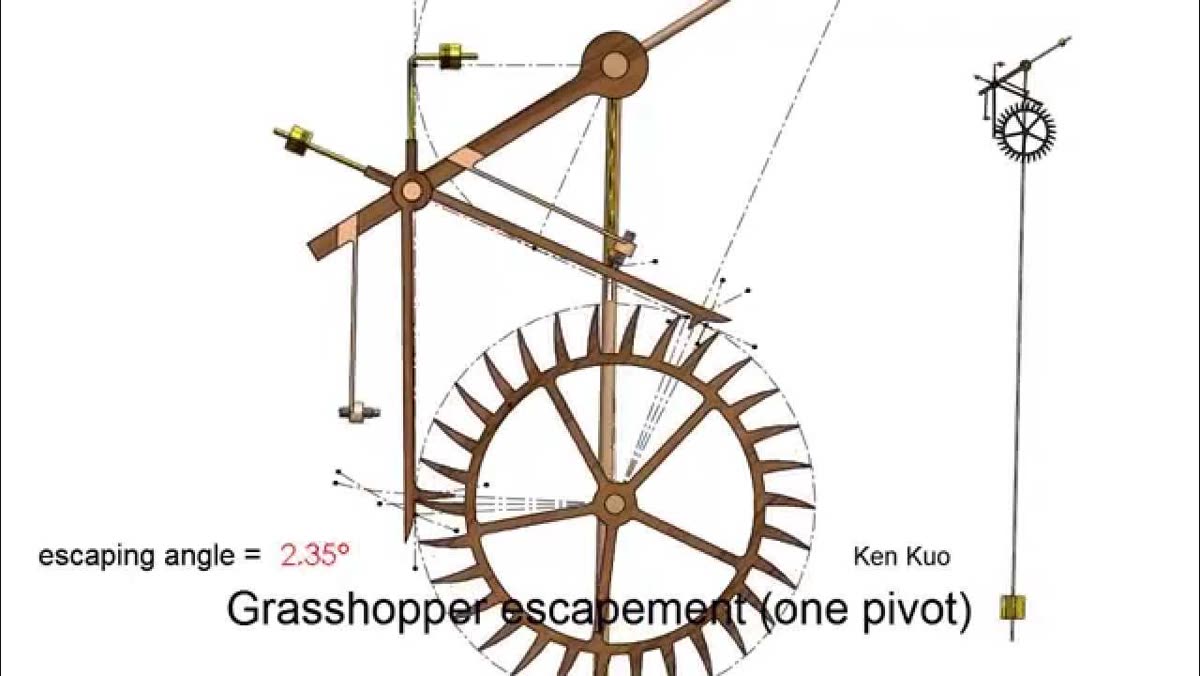
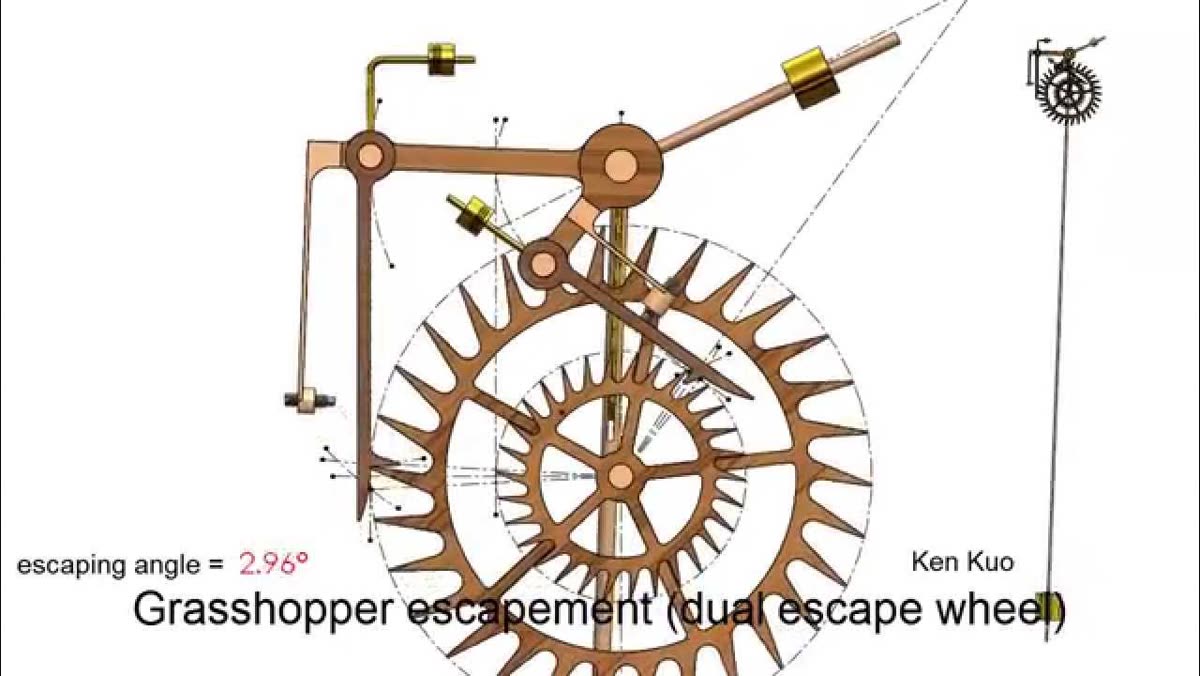
Grasshopper escapement
VerifiedA pair of pallets pivoted so that they swing almost clear of the escape wheel and of each other, giving impulse to the pendulum with very little frictional contact and, in Harrison's own view, no need for lubrication.
Schematic arrangement
How it is laid out
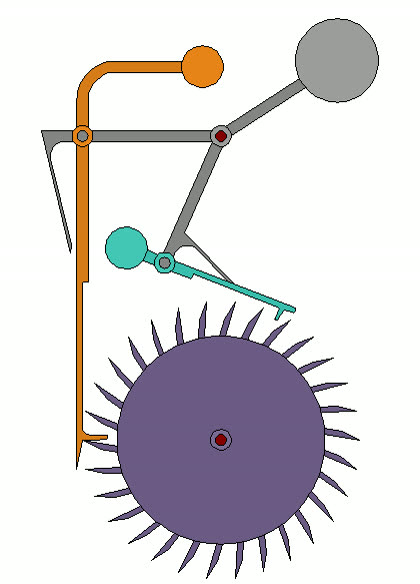
Outline schematic only, drawn to show the characteristic arrangement of wheel, locking member and oscillator. It is not a dimensioned working drawing and should not be used for setting up or repairing a movement.
Advantages
- Extremely low friction
- In principle needs little or no lubrication
- Excellent long-term rate stability when correctly made
Drawbacks
- Delicate and difficult to proportion correctly
- Rarely reproduced successfully outside specialist restoration work
Attribution and period
c. 1722, John Harrison
Horological firsts are frequently contested. Where an invention is attributed to a named maker, that attribution is recorded as such rather than treated as settled fact.
How to recognise it
- Two long, pivoted, crossing pallet arms that step clear of the escape wheel with a distinctive 'hopping' action.
- Little or no sliding contact anywhere in the escapement.
- Found on Harrison's regulators and on later replicas and reconstructions.
Servicing and conservation
Original Harrison work is of museum significance and should be conserved, documented and left mechanically alone except by conservators. Reconstructed grasshoppers need their arm lengths and pivot positions proportioned exactly; small errors stop the clock.
Work on an antique escapement by a qualified watchmaker or clockmaker. Conservation of original parts is preferred to replacement wherever the object will still run.
Bibliography
- Rawlings, A. L., The Science of Clocks and Watches
- Gazeley, W. J., Clock and Watch Escapements
Photographs
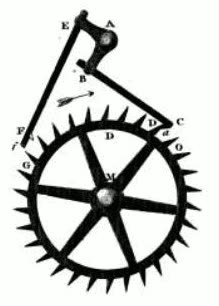
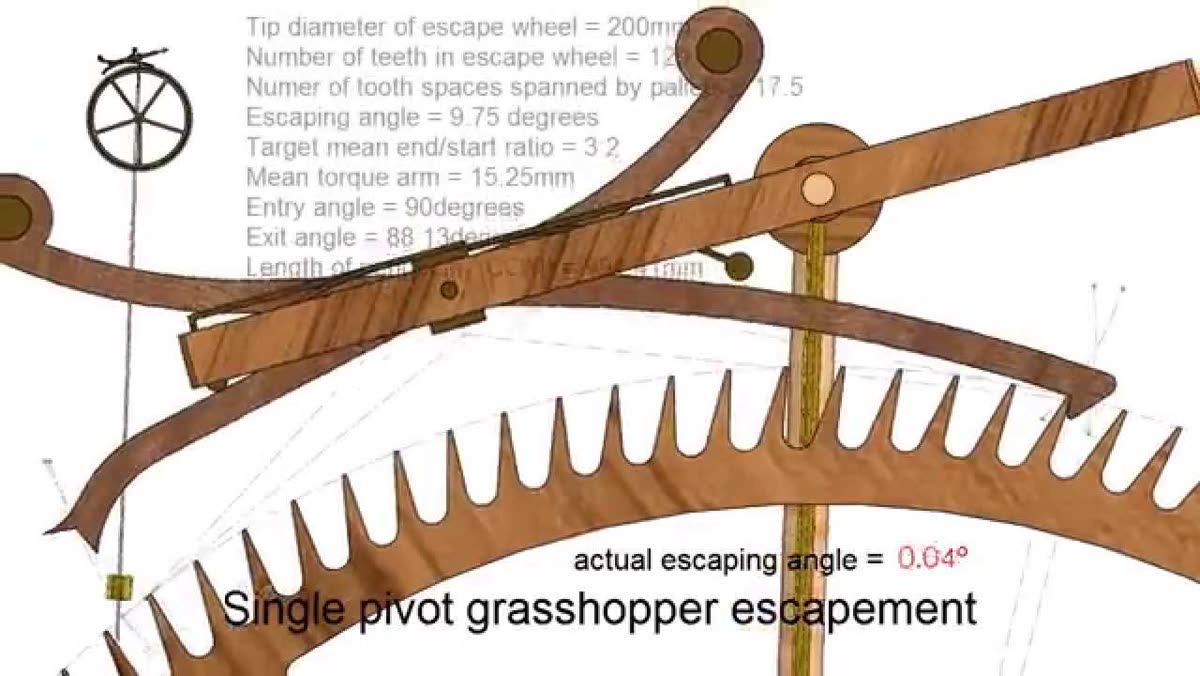
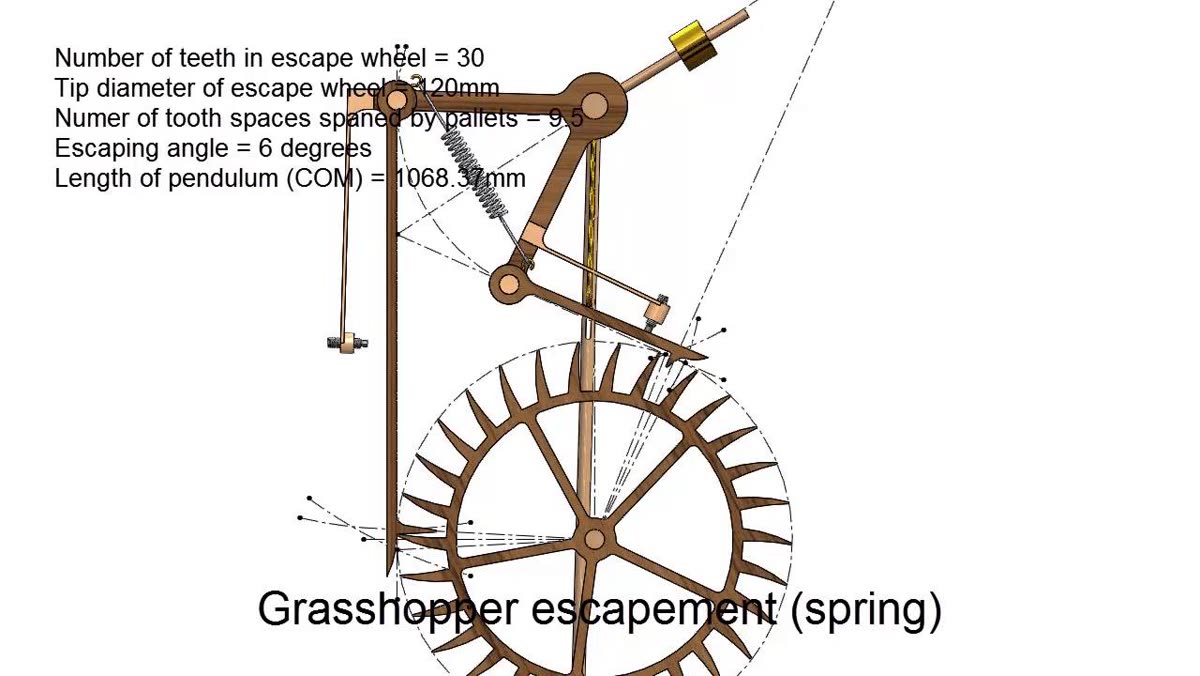

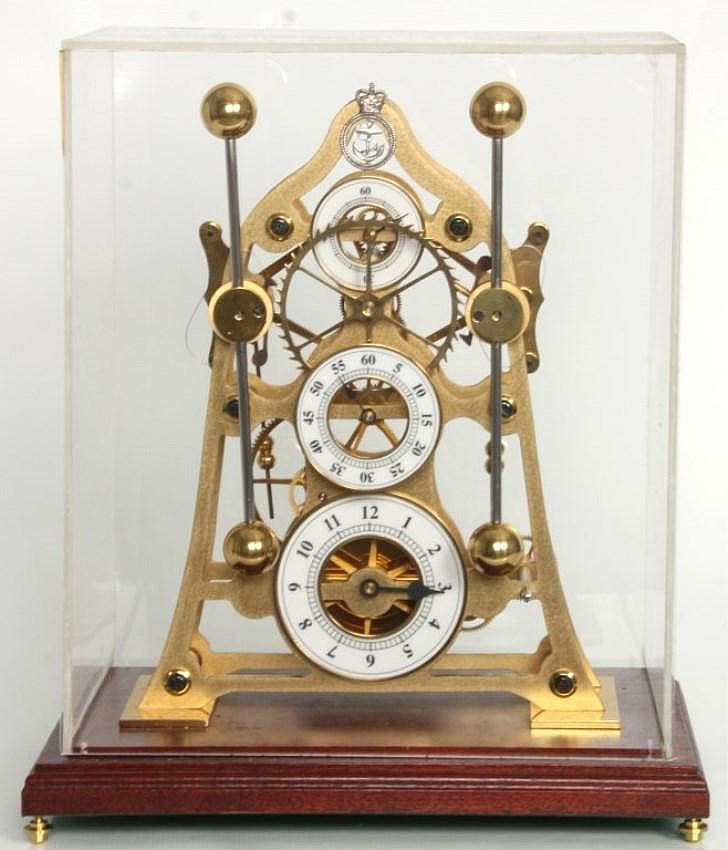
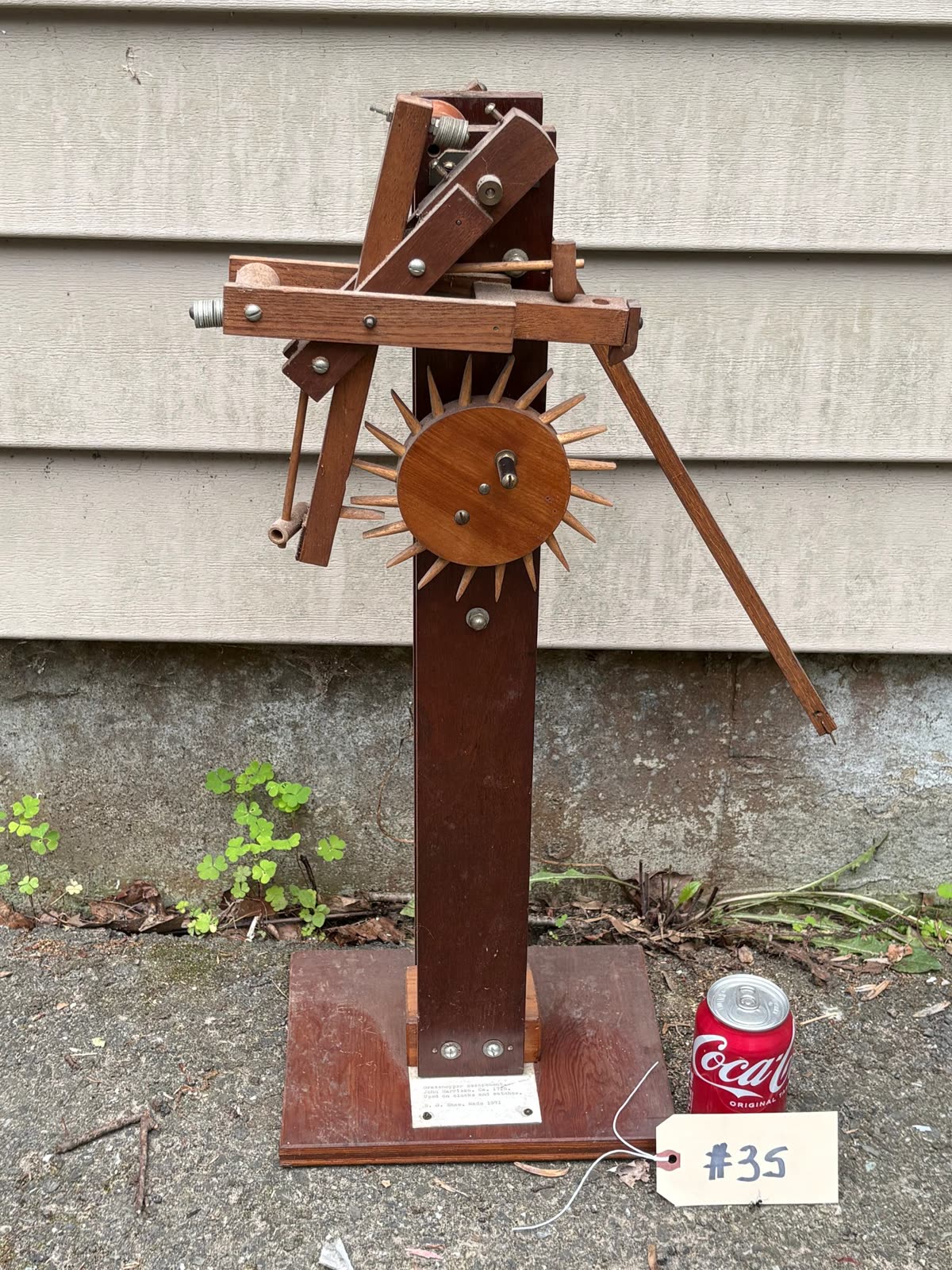


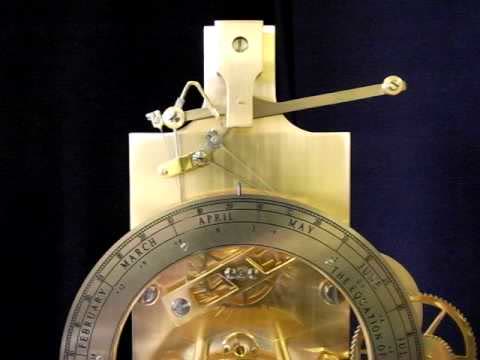
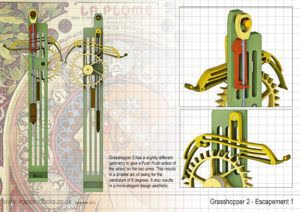
Photographs are matched automatically from freely licensed Wikimedia Commons material. Each caption states the actual subject of the image and credits its author; where a close match for this escapement does not exist, a related mechanism may be shown instead.