
Component record · Plates & finishing
Movement Pillar
Partially verifiedOne of the posts that hold the two plates of a full-plate watch or clock movement apart, with the wheels pivoted between them.
What it does
Fixes the distance and alignment between the plates so that every arbor runs square and with the correct end-shake.
How it works
Pillars are riveted into one plate and pass through the other, where they are secured by pins, screws or latches. Removing those fixings lets the top plate lift off to expose the train.
Their length sets the space available for the wheels, so pillars, plates and arbors are made as a matched set.
In bridge movements the bridges are screwed directly to the main plate and there are no pillars.
Evolution
Decorative pillar shapes in English watches changed with fashion and are used as broad dating evidence: tulip pillars are associated with the late seventeenth and early eighteenth centuries, square baluster and Egyptian pillars with the eighteenth century, and plain round pillars with later work. Clock pillars likewise moved from elaborately ring-turned forms to plainer ones.
Known variations
- Tulip, baluster and Egyptian pillars in early English watches
- Plain round pillars
- Latched pillars in early clocks
Identification for collectors
- Pillar form helps date a full-plate watch, but should be read alongside hallmarks, signatures and construction
- Extra or plugged holes near pillars can show that a movement has been altered
Common failure modes
- Loose rivets letting the plates move
- Lost taper pins
- Bent pillars after a fall
Photographs
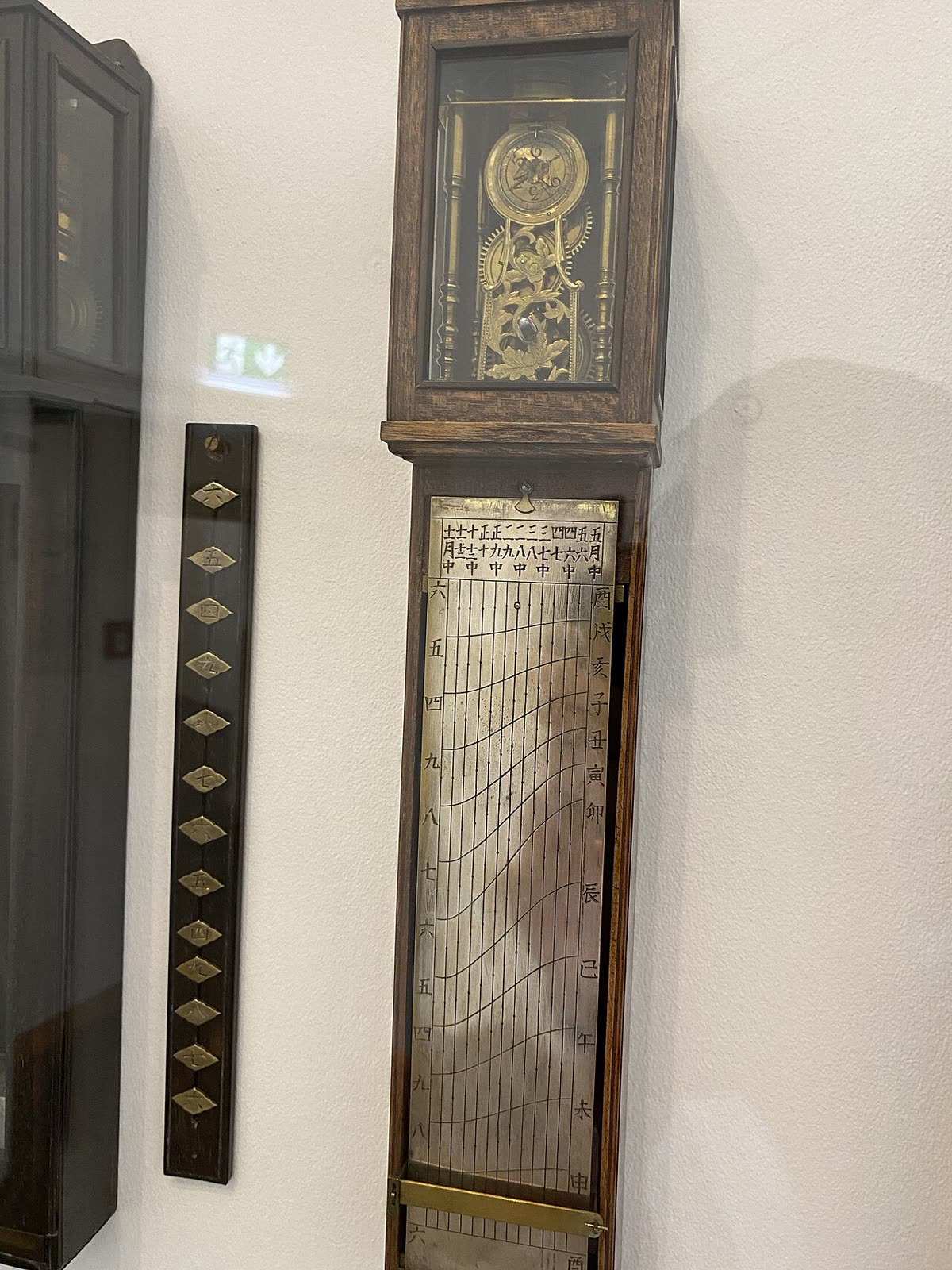
Photographs are illustrative examples of the type, not necessarily the exact object described. Verify details against the source file page.
Sources & references
- de Carle, D., Practical Watch Repairing
- de Carle, D., Watch and Clock Encyclopedia
- Fried, H. B., The Watch Repairer's Manual
- Daniels, G., Watchmaking
- Britten, F. J., Old Clocks and Watches and Their Makers
Where sources disagree, the disagreement is stated rather than resolved silently.