
Component record · Plates & finishing
Blued Screws
VerifiedSmall movement screws heat-treated to a deep blue colour, combining a hardened temper with a decorative, corrosion-resistant surface oxide layer.
What it does
Fasten movement components (bridges, springs, levers) while providing both increased hardness at the tempered stage and a hallmark of fine hand-finishing.
How it works
Polished steel screws are heated to a specific temperature (historically judged by eye from the resulting oxide colour, progressing from straw through purple to blue as temperature rises) which both tempers the steel to a durable hardness and forms a thin, corrosion-resistant blue oxide layer.
Because the colour is a direct visual indicator of temperature reached, consistently blued screws across a movement are taken as a sign of careful, skilled finishing, and remain a mark of quality in high-grade and haute horlogerie movements.
Evolution
A traditional hand-finishing technique from early fine watchmaking, still practised (and sometimes reproduced by chemical or plating means in lower-cost production) in contemporary high-grade watchmaking as a visual quality marker.
Known variations
- Traditionally heat-blued (temper-blued) screws
- Chemically or electrolytically blued screws (imitative, without the tempering benefit)
Identification for collectors
- Genuine heat-blued screws show a deep, slightly uneven blue with a visible temper colour gradient near the screw head; uniform, flat blue across mass-produced screws may indicate chemical bluing rather than heat treatment
Common failure modes
- Colour fading or patchiness from re-heating during careless repair
- Stripped slots from repeated servicing with incorrect screwdrivers
Photographs
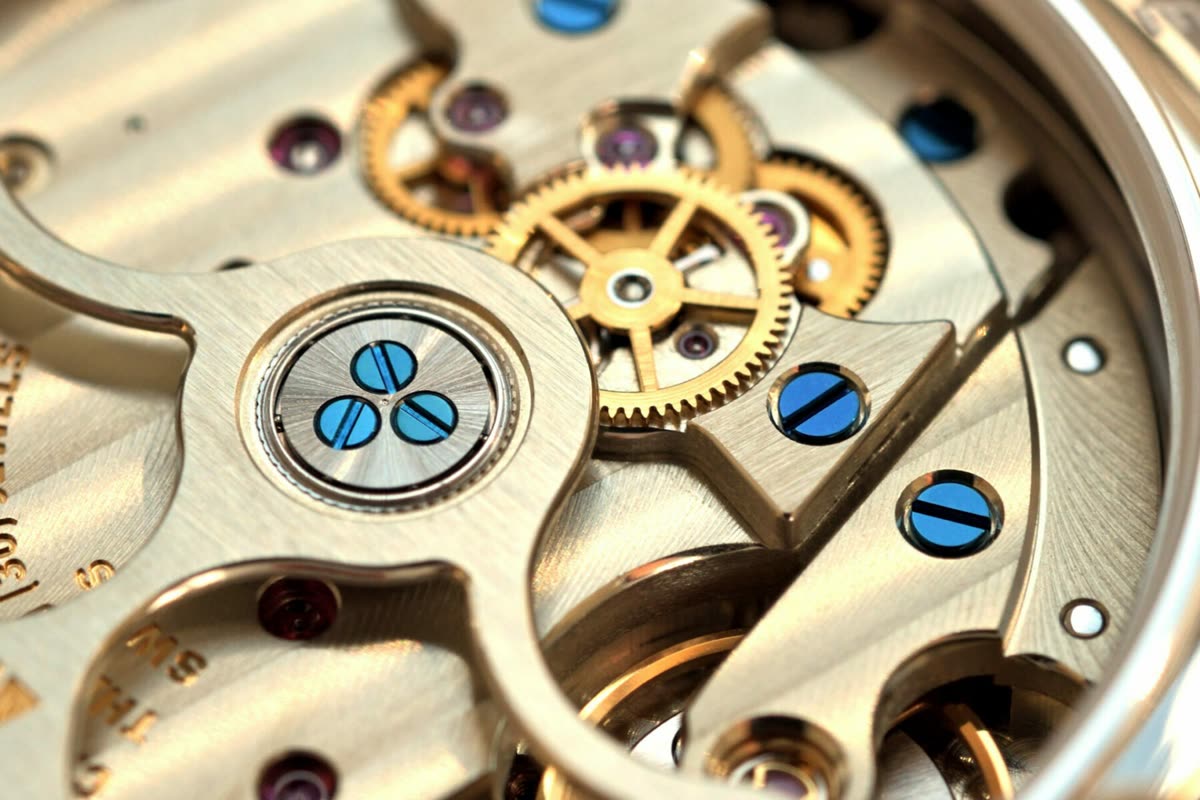
![Seiko] Heat Blued Screws on my SARB033 : r/Watches](/__l5e/assets-v1/84fa9173-5ce8-4177-b73e-9a93b7d54456/seiko-heat-blued-screws-on-my-sarb033-r-watches.jpg)
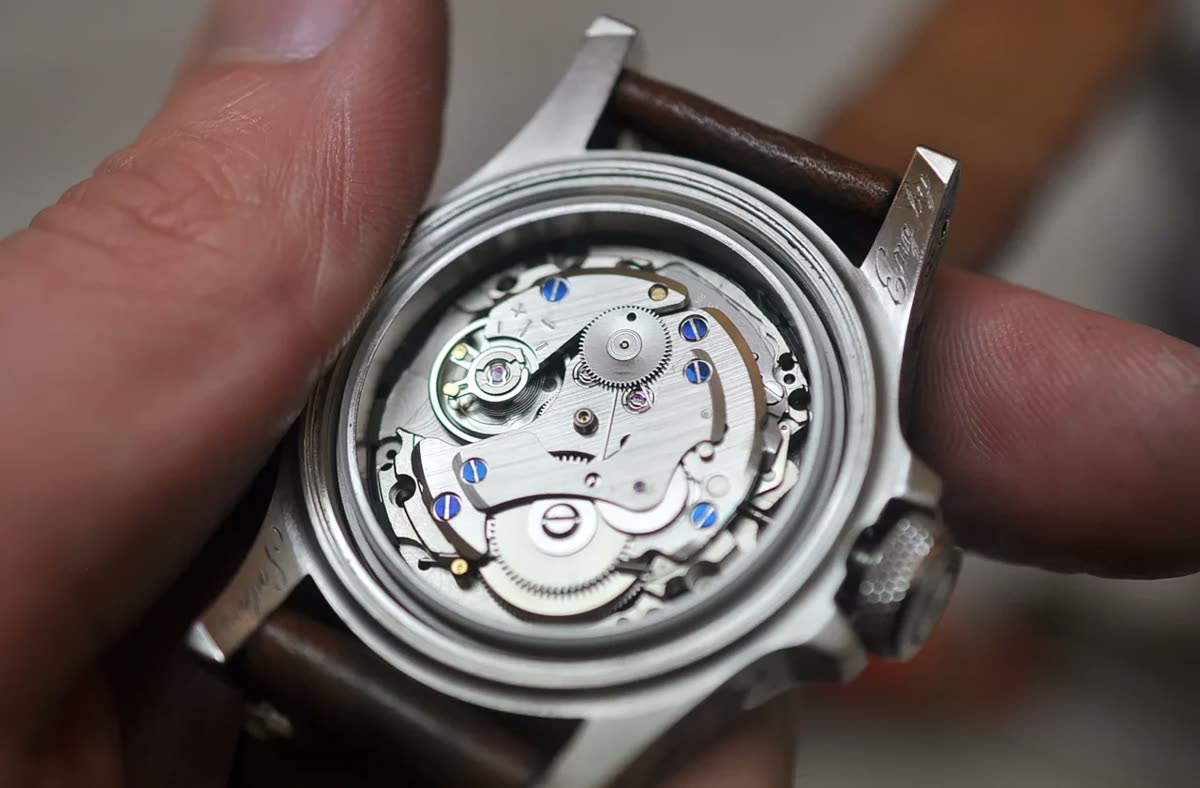
Photographs are illustrative examples of the type, not necessarily the exact object described. Verify details against the source file page.
Sources & references
- Daniels, G., Watchmaking
Where sources disagree, the disagreement is stated rather than resolved silently.