
Complication · Display
Winding State Indicator
Partially verifiedA simple indicator showing whether a watch is being wound or is in its running state.
Definition
A simple indicator showing whether a watch is being wound or is in its running state.
Historical origin
Common in early keyless works to show the position of the clutch.
How it works
A small window or hand changes color or position when the crown is pulled out to the setting position.
Pocket watch context
Found in some early keyless pocket watches (e.g., Audemars Piguet).
Wristwatch context
Found in modern watches from Richard Mille and Grönefeld.
Identification
- Indicator showing 'W' (Wind), 'S' (Set), and sometimes 'N' (Neutral)
Servicing notes
A mechanical interlock linked to the keyless works.
General guidance only. Complicated mechanisms should be assessed and serviced by a qualified watchmaker or clockmaker specialist, not adjusted at home.
Background
A winding-setting indicator shows on the dial which function the crown is engaged in. Richard Mille describes its function selector as a mechanism where a push-button makes it possible to select the winding, neutral and hand-setting functions with a simple push. According to Richard Mille, a hand displays the selected function as Winding, Neutral, or Hand Setting.
Grönefeld explains that its One Hertz model features a push-function crown to choose between winding or setting modes. According to Monochrome Watches, the One Hertz's setting-winding indicator means the crown no longer has to be unscrewed or pulled: pushing it chooses between winding and setting.
Written from the sources listed under Sources (makers, museums, auction houses and specialist publications are paraphrased, not reproduced); each statement was checked against the cited text, and claims a maker makes about its own work are attributed to it.
Construction and action
- The Richard Mille function selector utilizes a special gear system to ensure that forces placed upon the crown are minimized.
Where sources differ
- Mechanism. This record gives: “A small window or hand changes color or position when the crown is pulled out to the setting position”. In the Richard Mille and Grönefeld watches described by their makers, the function is chosen with a push-button or a push-function crown, not by pulling the crown out.
Photographs
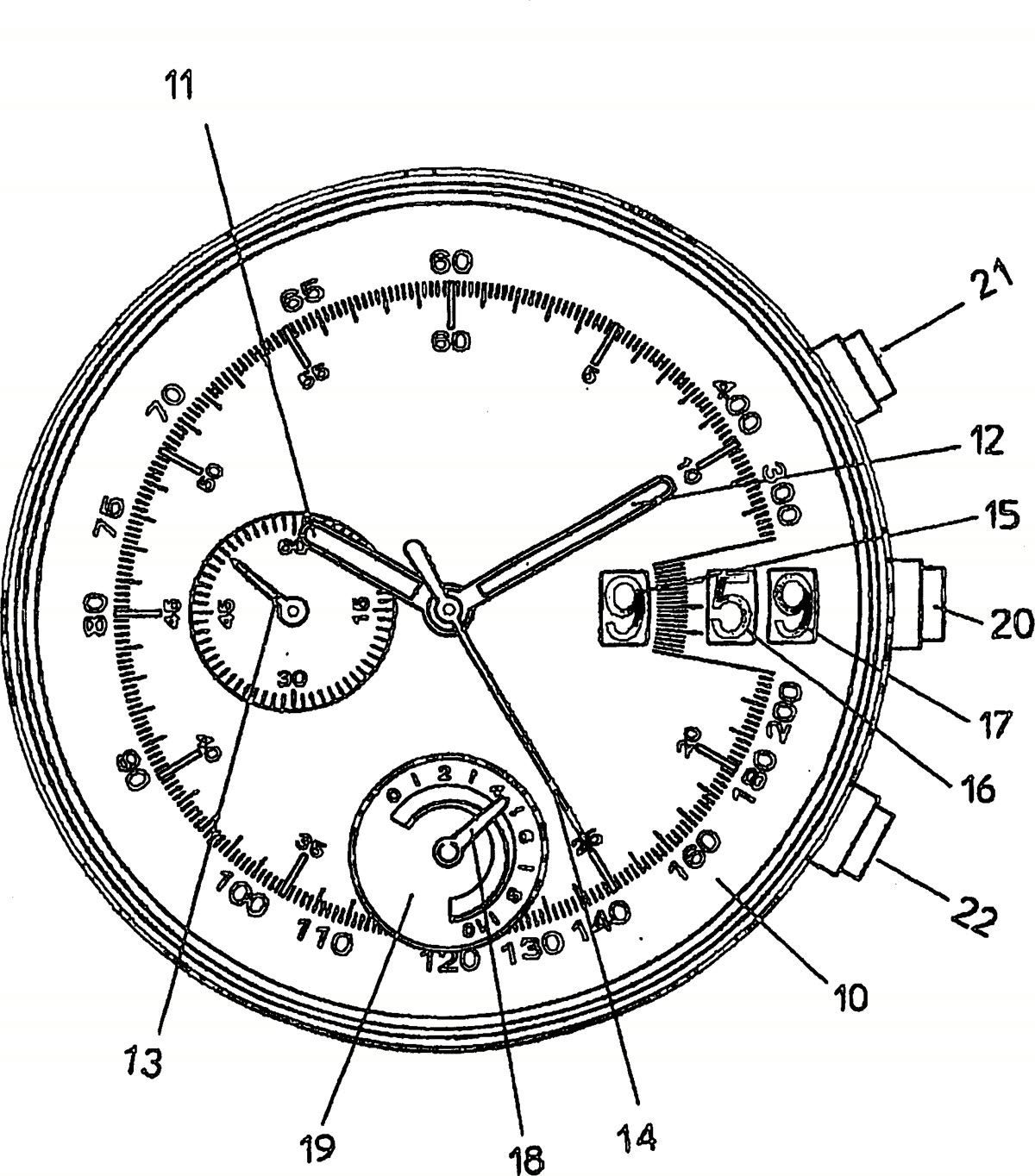
Photographs are illustrative examples of the type, not necessarily the exact object described. Verify details against the source file page.
Sources & references
- RM 037 Automatic, Richard Mille, retrieved 2026-10-30 (paraphrased; text © the publisher)
- 1896 One Hertz, Grönefeld, retrieved 2026-10-30 (paraphrased; text © the publisher)
- Grönefeld One Hertz Dune and 1912, Monochrome Watches, retrieved 2026-10-30 (paraphrased; text © the publisher)
- de Carle, D., Watch and Clock Encyclopedia
- Britten, F. J., Old Clocks and Watches and Their Makers
- Horological Journal (British Horological Institute), technical articles
Where sources disagree, the disagreement is stated rather than resolved silently.