
Clock type · Specialist
Rolling Ball (Congreve) Clocks
Partially verifiedClocks in the Congreve tradition whose train release is timed by a ball crossing a zigzag runway on a pivoted table.
Construction and interpretation
In the Congreve arrangement, a steel ball travels along a zigzag runway on a pivoted table. At the end of its journey it activates a lever that releases the clock train and lets the table tilt for the return journey. The ball times the release; it does not supply the stored energy needed to drive the hands and lift the table. Royal Museums Greenwich describes a single fusee movement on its accession ZAA0176, a useful documented example for separating the regulating action from the power train.
The Science Museum Group’s E. Dent & Co. example, L2015-3562, is dated about 1920 and explicitly described as spring-driven. Its account attributes the type’s design and patent to Congreve in 1808 while noting that similar clocks were recorded in late-seventeenth-century London. This distinction prevents the patent date from becoming an unsupported claim that no earlier rolling-ball experiments existed. The museum cautions that the system is not conducive to accurate timekeeping; no numerical rate or universal performance guarantee is inferred here.
ZAA0176 was made by Thwaites & Reed in about 1972 as a reproduction of Sir William Congreve’s clock. The museum associates it with a revival of interest in novel horological inventions during the early 1970s. Its date is the date of this specimen, not the invention date of the underlying idea. A reproduction can be an informative historical object in its own right without becoming an early nineteenth-century original. Maker plates, presentation inscriptions and recorded acquisition history help distinguish these claims.
The Greenwich clock has separate indications for hours, minutes and fifteen-second units. The museum records fifteen arches over the runway, with numerically indicated seconds, and says that this ball takes approximately fifteen seconds to cross the table. Those observations belong to ZAA0176; they are not a universal transit-time specification. The approximately timed crossing and the changing indication when the table tilts should also not be confused with a continuously sweeping seconds hand.
Four reeded Corinthian columns support the movement behind the dials, above the pivoted table. The architectural lacquered-brass case, gilt-brass plinth, mahogany base and adjustable feet are recorded features of this example. A frontal photograph can show the runway and overall structure but cannot establish every release linkage or the clock’s present rate. Record views of the ball, track, movement and signature together, keeping later replacements and unobserved internal parts explicit rather than assuming completeness from the case alone.
| Feature | What it means | Evidence to seek |
|---|---|---|
| Power train | Single fusee movement in ZAA0176 | Museum mechanism description |
| Ball and runway | Times the train release at the end of a crossing | Lever and pivoted-table record |
| Fifteen-second indication | Approximate transit interval of this specimen | Do not transfer to every rolling-ball clock |
| Date and maker | Thwaites & Reed reproduction, about 1972 | Presentation plaque and accession record |
Do not substitute a ball, alter table inclination or operate an unserviced release mechanism to fill a missing specification. Ball-return display clocks and other rolling-ball devices need separate mechanism identification.
Evidence to record
- Separate stored energy, regulating release and hand display.
- Retain the approximate crossing time and specimen date.
- Describe reproductions as reproductions, not original Congreve manufacture.
- Do not infer an internal fusee merely from a similar exterior.
Movement & mechanism
- The ball times a release; stored mechanical energy powers the train and table movement
- At the end of a crossing, the ball activates a lever that releases the train and lets the table tilt for the return journey
- Greenwich ZAA0176 has a single fusee movement and an approximately fifteen-second ball transit; other specimens need their own specifications
- The ball times the train release rather than supplying the clock's driving energy
- The train powers the table tilt after the end-of-track lever is activated
Identification
- Pivoted table with a zigzag runway
- Steel ball and end-of-track release linkage
- Separate hour, minute and fifteen-second indications on Greenwich ZAA0176
- Pivoted zigzag runway
- Steel ball and release linkage
Terminology
- Zigzag runway
- Pivoted table
- Train release
- Rolling ball
Known variations
- Historic Congreve-type clocks
- Documented twentieth-century reproductions, including Thwaites & Reed ZAA0176
- Historical examples and documented reproductions
Collecting notes
Condition and originality are paramount. For technical clocks like regulators or atmospheric clocks, the completeness of the original mechanism is more important than case condition. For decorative clocks (Boulle, Empire), the quality of the case craft is central.
Photographs
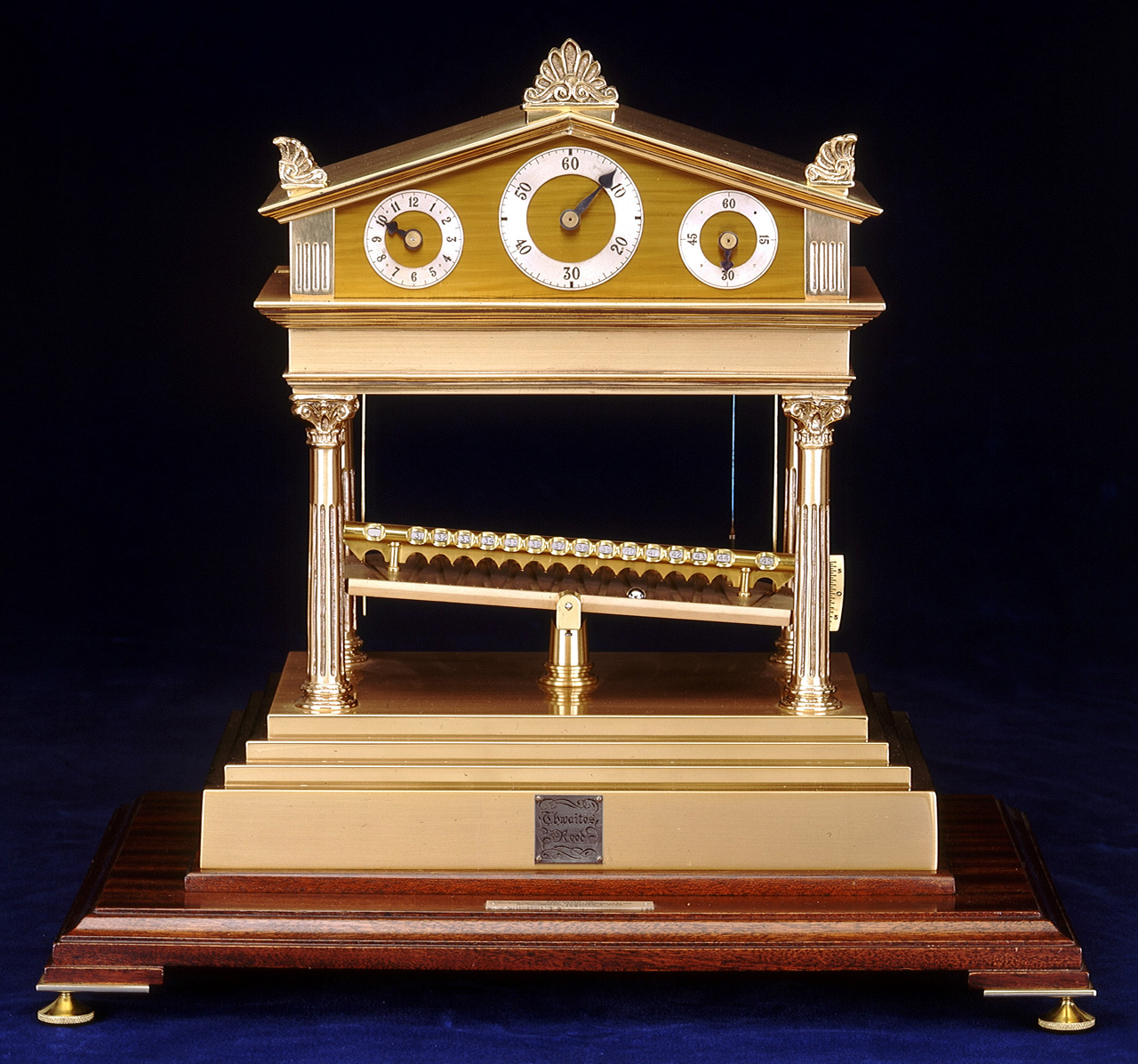
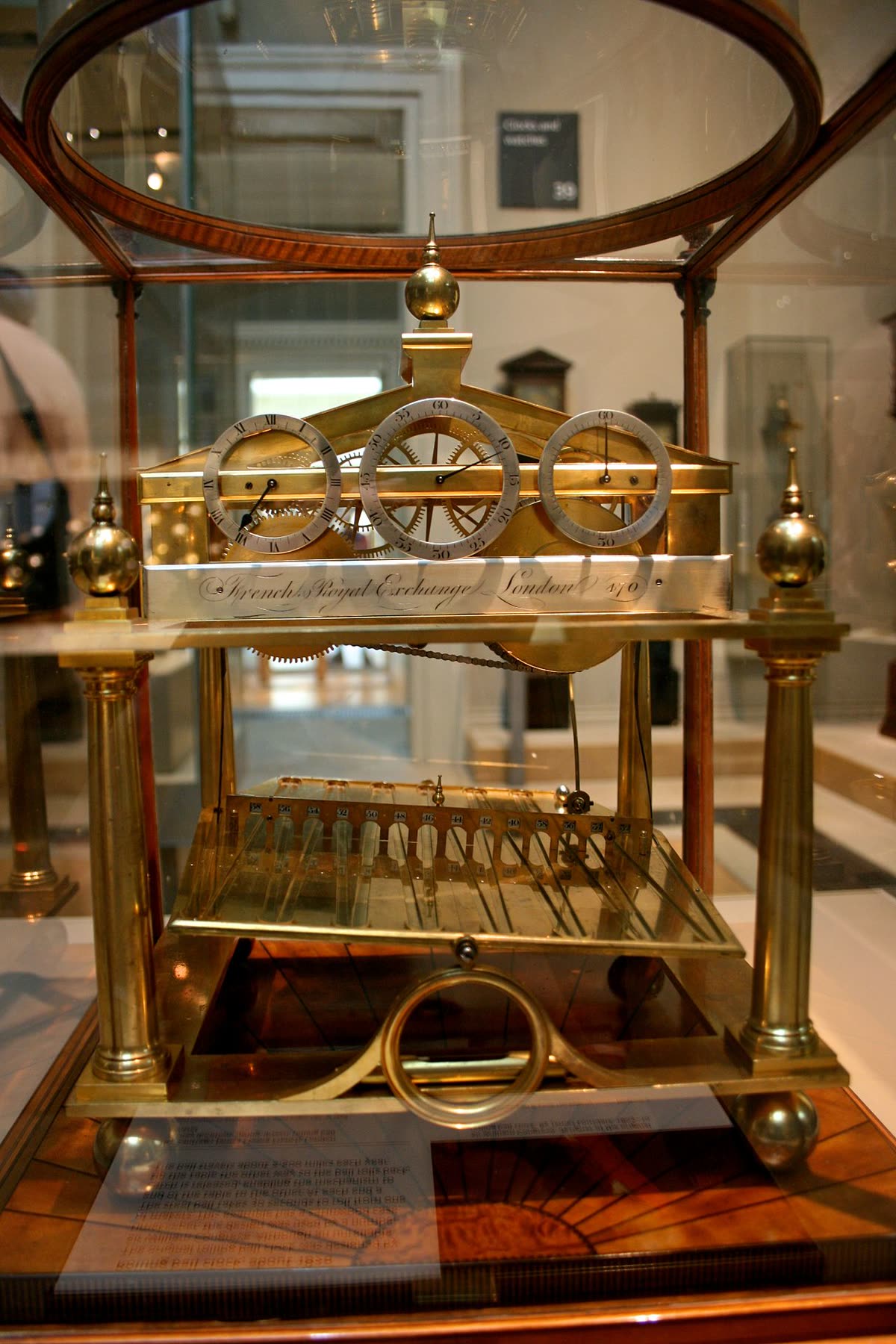
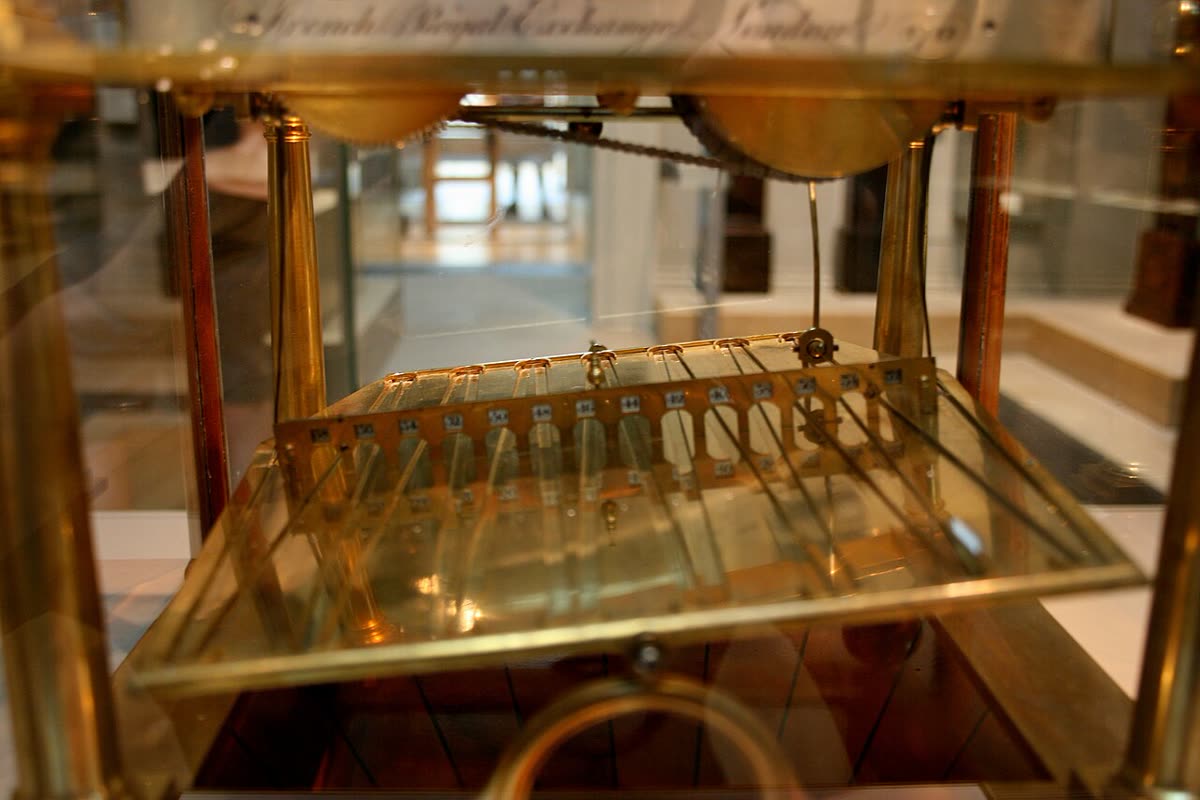
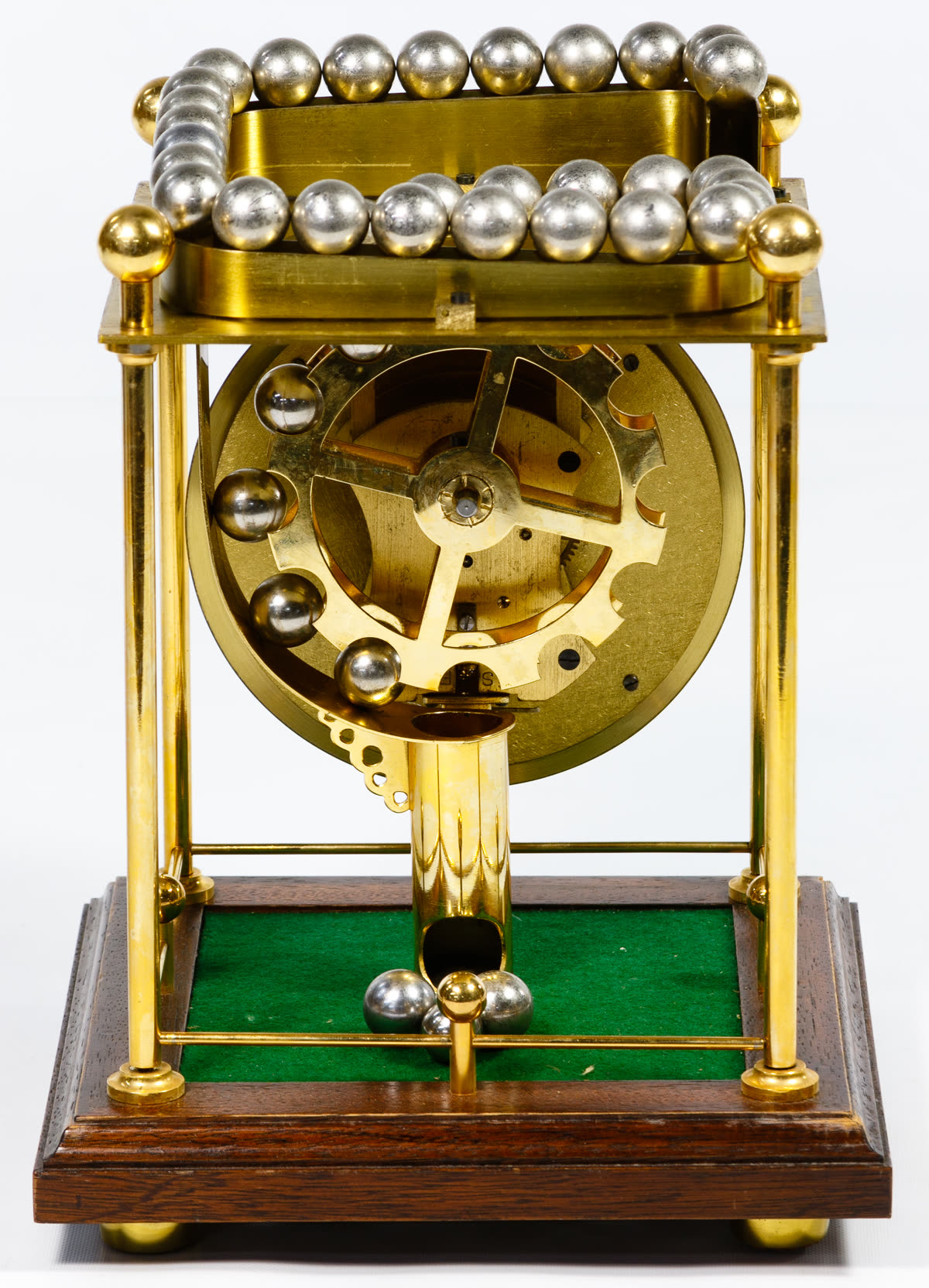
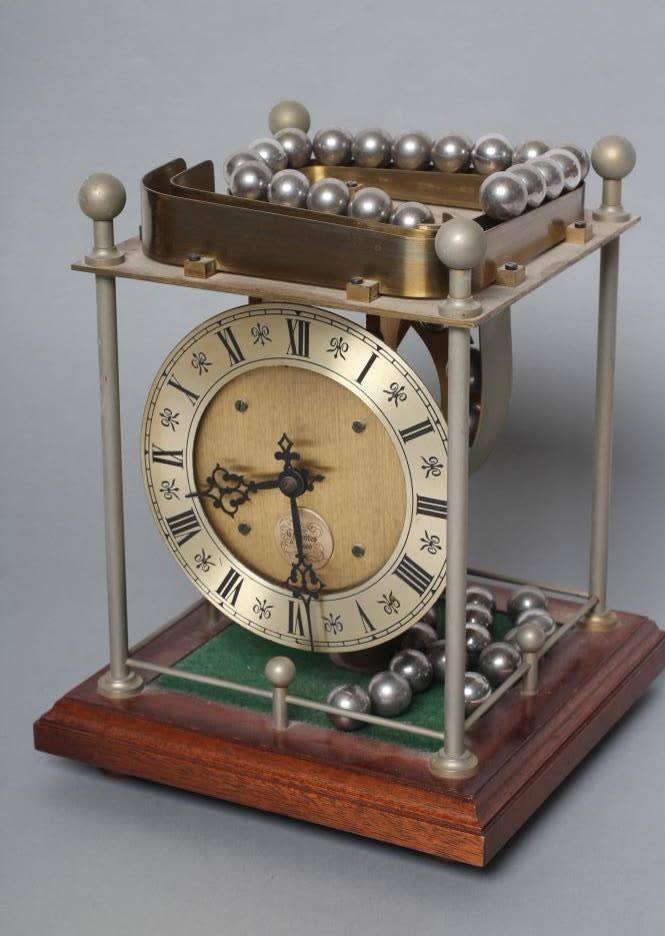
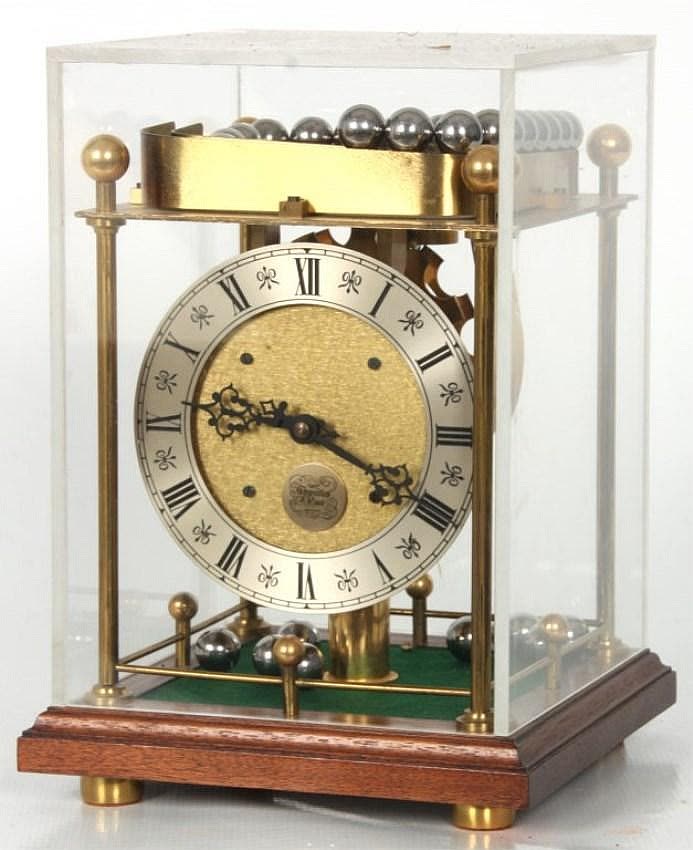
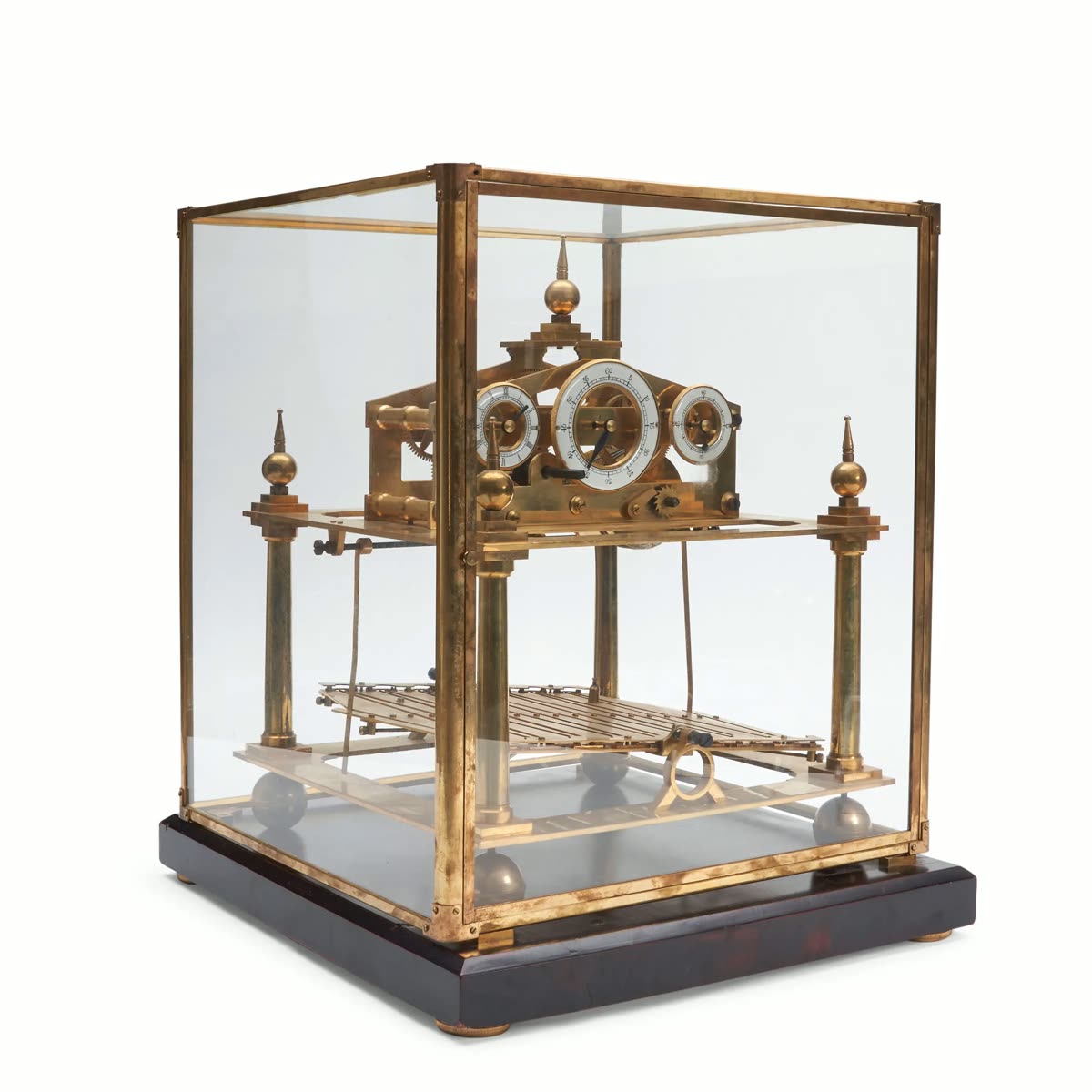
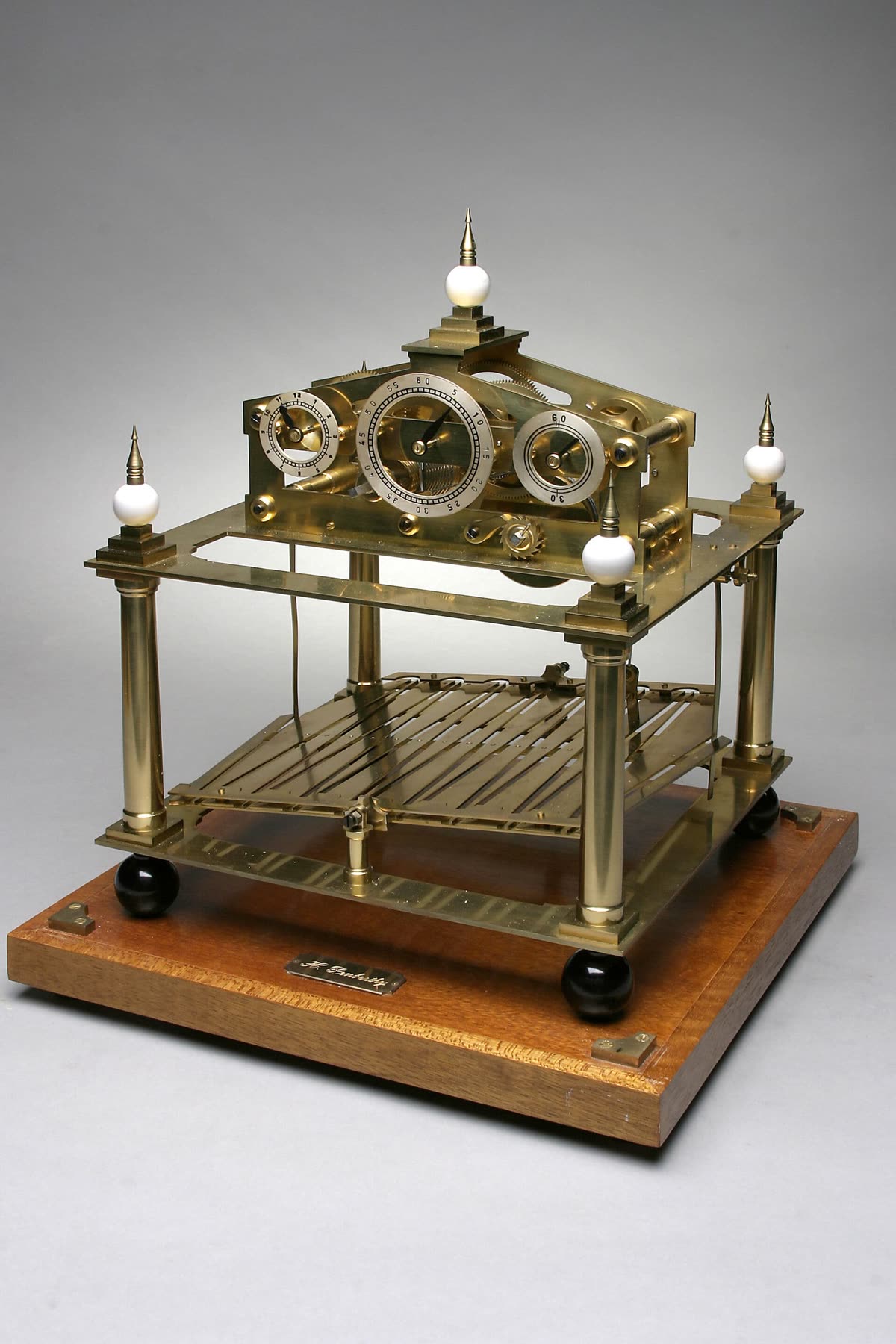
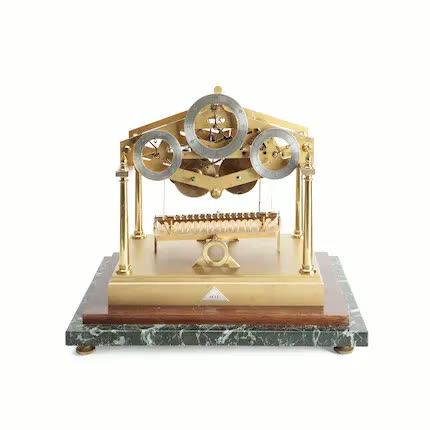
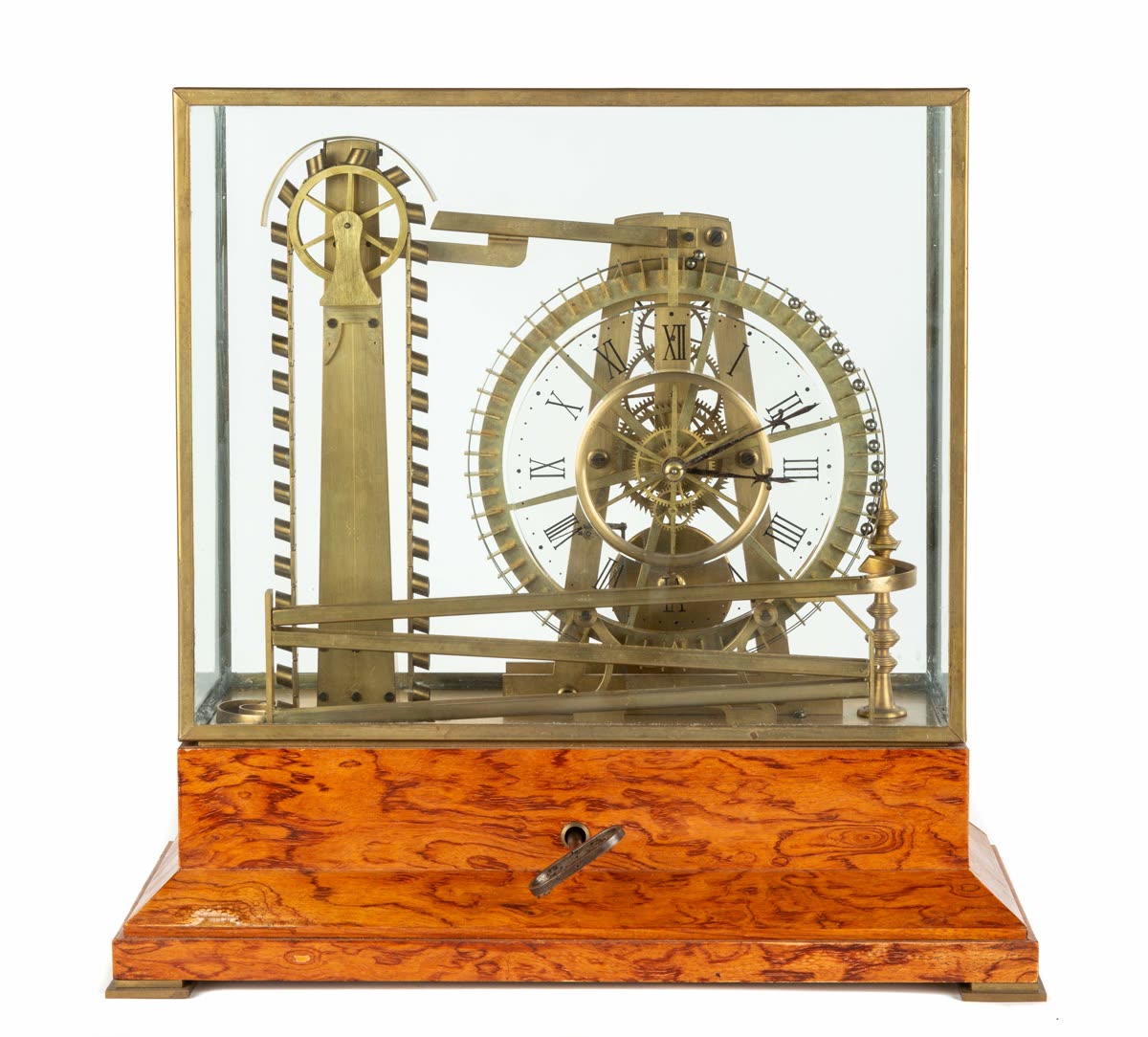
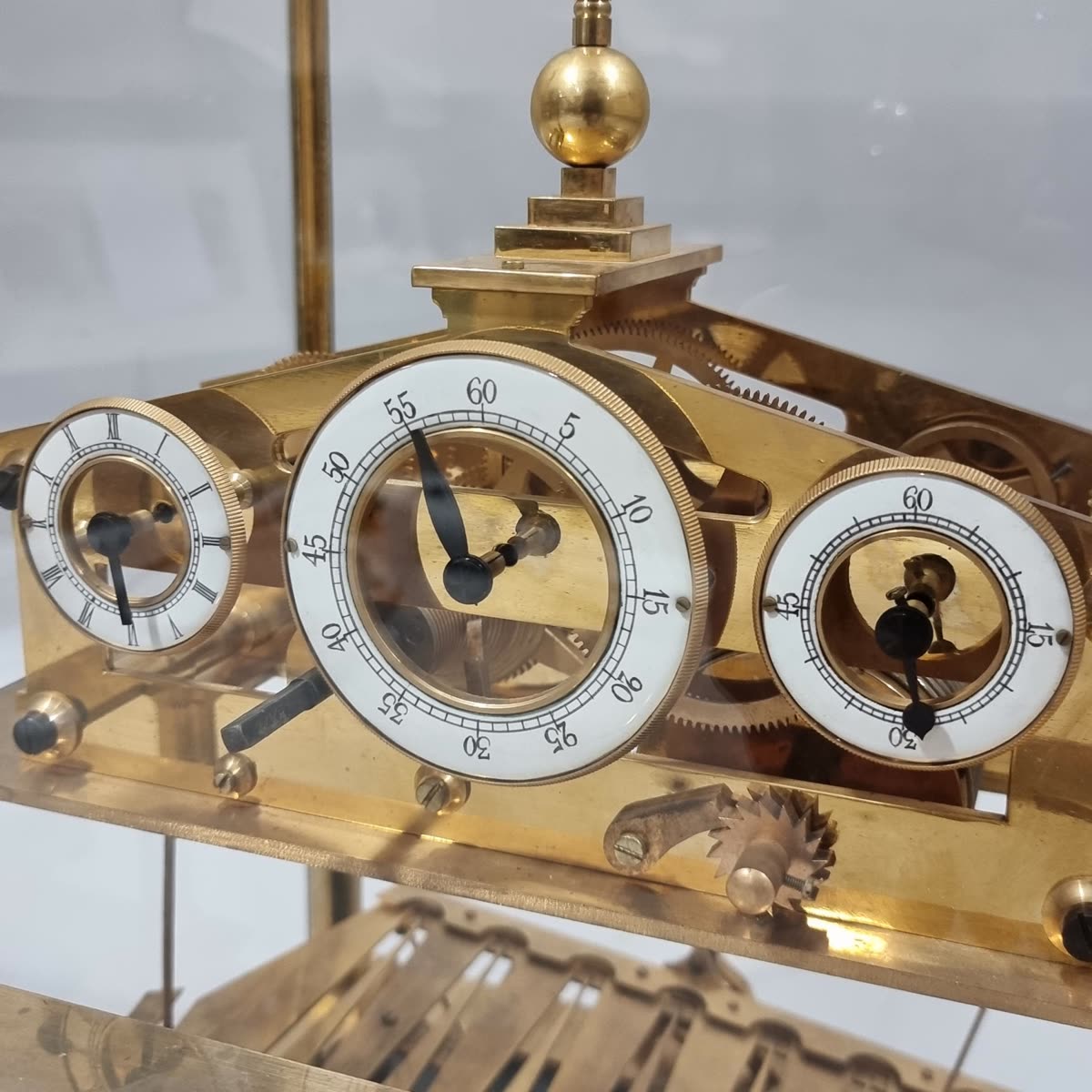
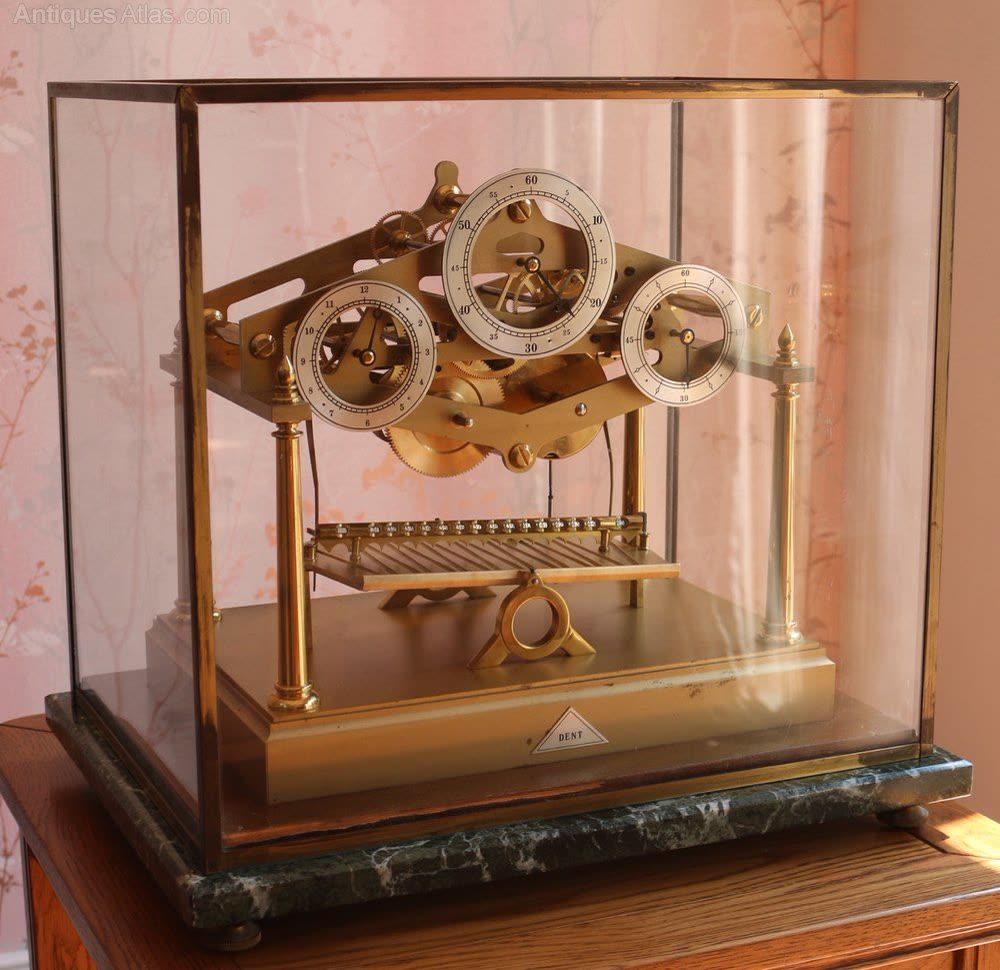
Photographs are illustrative examples of the type, not necessarily the exact object described. Verify details against the source file page.
Sources & references
- Britten, F. J., Old Clocks and Watches and Their Makers
- Loomes, B., The Early Clockmakers of Great Britain
- Museum catalogue records
- https://www.rmg.co.uk/collections/objects/rmgc-object-79281
- https://collection.sciencemuseumgroup.org.uk/objects/co8558099/rolling-ball-clock-by-e-dent-and-co
Where sources disagree, the disagreement is stated rather than resolved silently.