
Clock type · Domestic
Pillar and Scroll Shelf Clocks
Partially verifiedAmerican shelf clocks with slender pillars, a scrolled top and delicate feet, associated with early Connecticut production.
Background
The pillar and scroll clock originated in the workshop of American clockmaker Eli Terry as a mass-produced, shelf-mounted timepiece. Designed for accessibility, these clocks were constructed with interchangeable parts manufactured by water-powered machinery to ensure affordability for average consumers. The cases generally measured approximately thirty inches in height and six inches in depth, housing a clock face in the upper section.
The lower section of the case featured either a mirror or a picture that was back-painted on glass. Despite their compact size, the clocks were engineered with sufficient gearing to operate for thirty hours between windings.
Written from the sources listed below; each statement was checked against the cited text.
Recognising one
- The design features a removable verge as a standard feature.
Movement & mechanism
- Wooden thirty-hour weight-driven movements in most examples
- Painted wooden dials with a reverse-painted glass tablet below
- Weights descending inside the narrow case
Identification
- Scrolled cresting and slender turned pillars
- Wooden plates and wheels visible when the back is opened
- Reverse-painted glass tablet, frequently damaged or replaced
Terminology
- Reverse painting on glass
- Wooden movement
- Thirty-hour
Known variations
- Shelf and mantel-sized versions
- Later brass-movement imitations
Collecting notes
Originality decides value and interest: check that movement, dial and case belong together, and prefer honest wear over refinishing. Movement work belongs with a clockmaker; cleaning a dial or case yourself commonly destroys the evidence that dates the clock.
Photographs
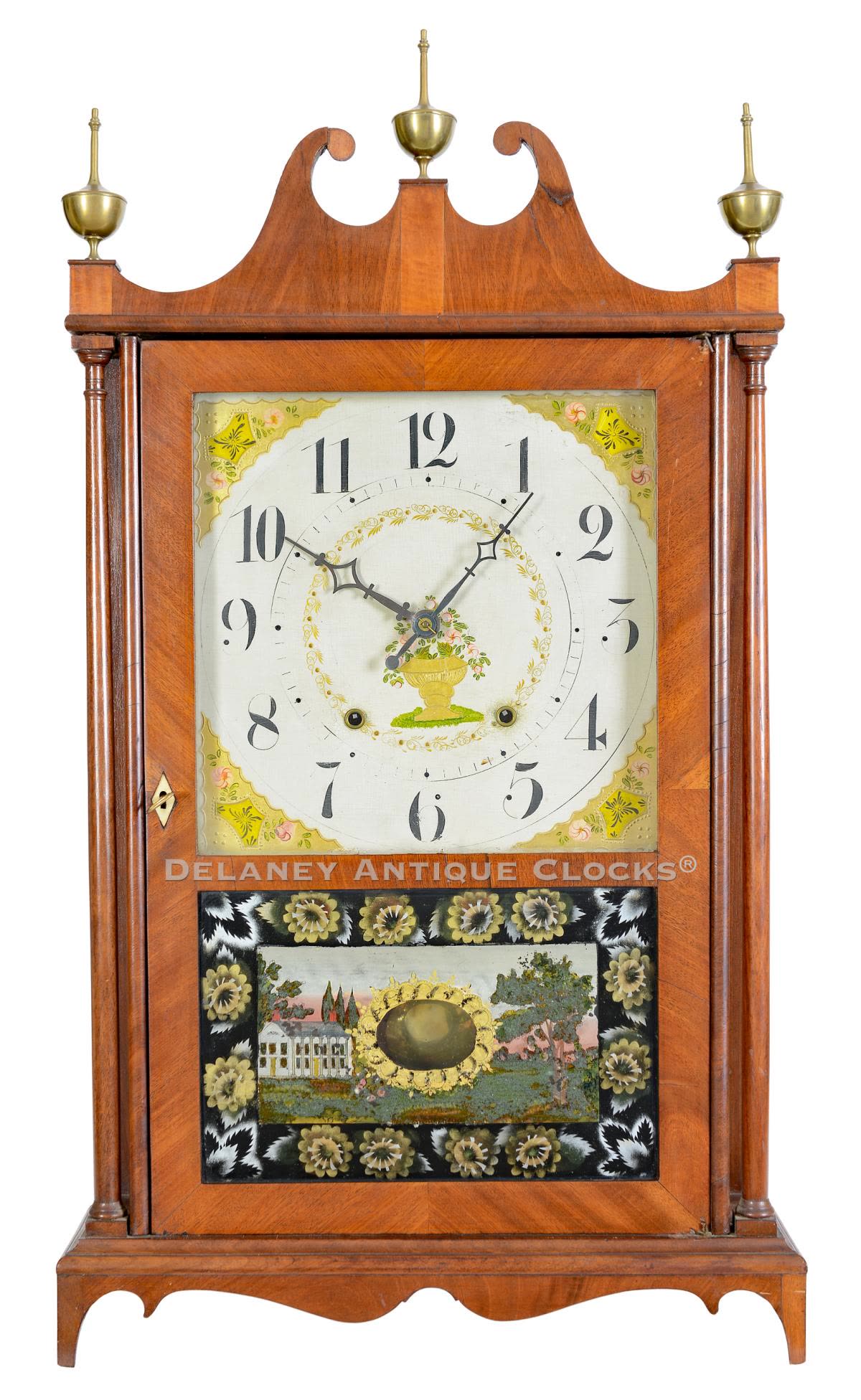
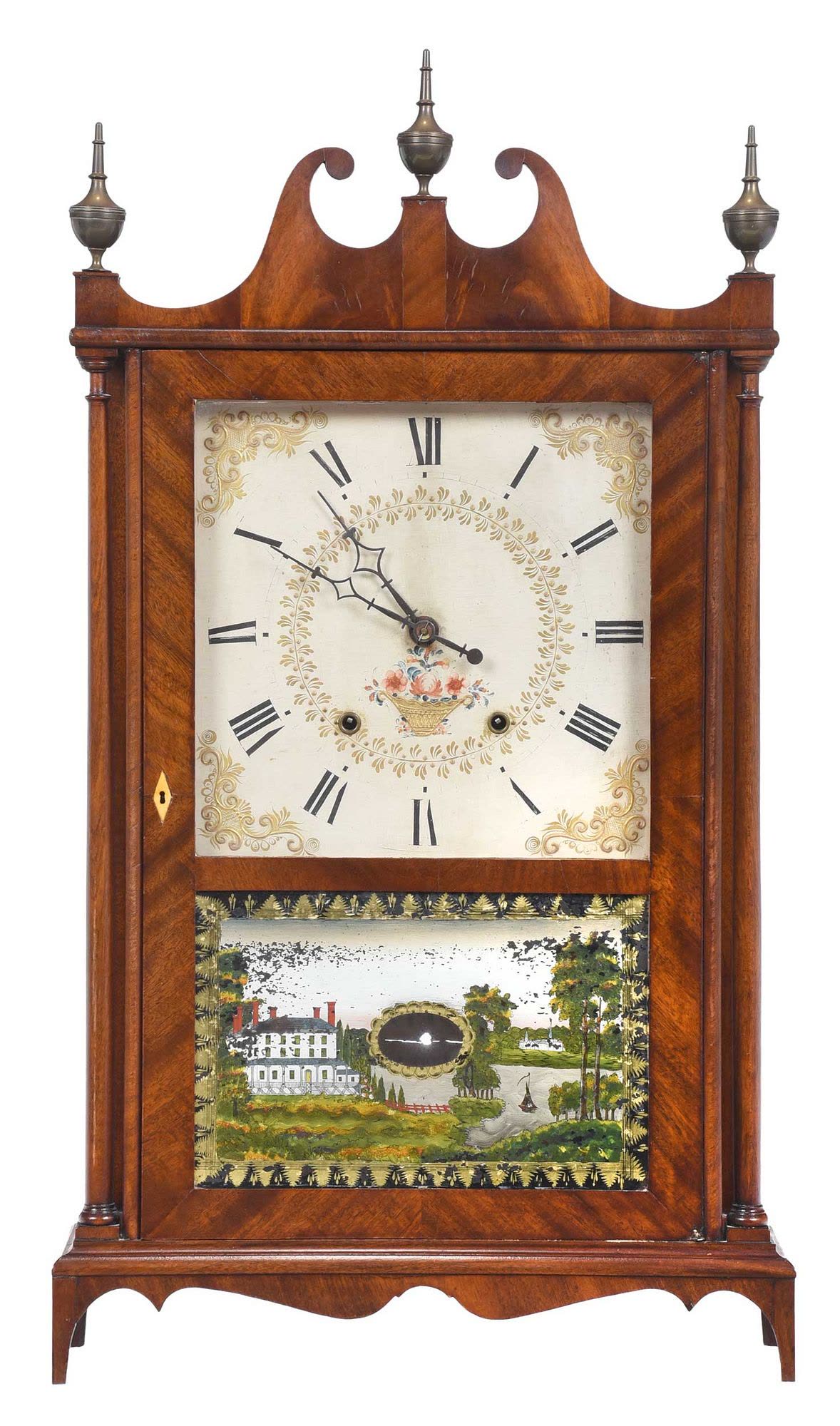
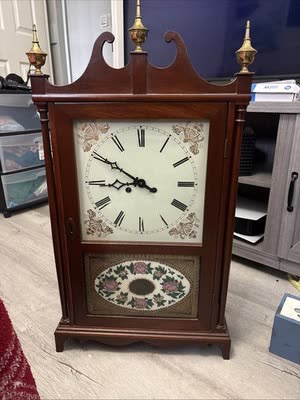
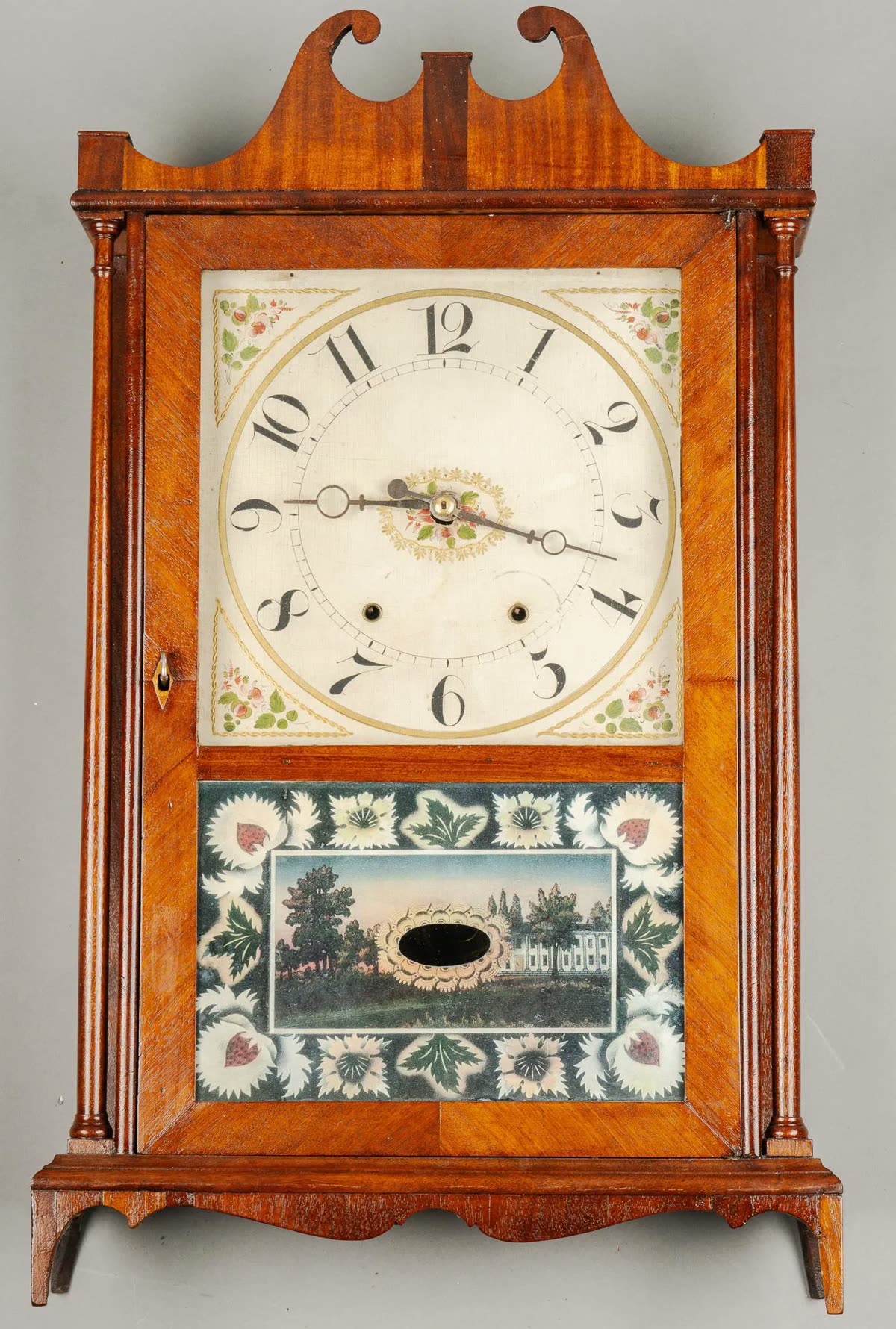
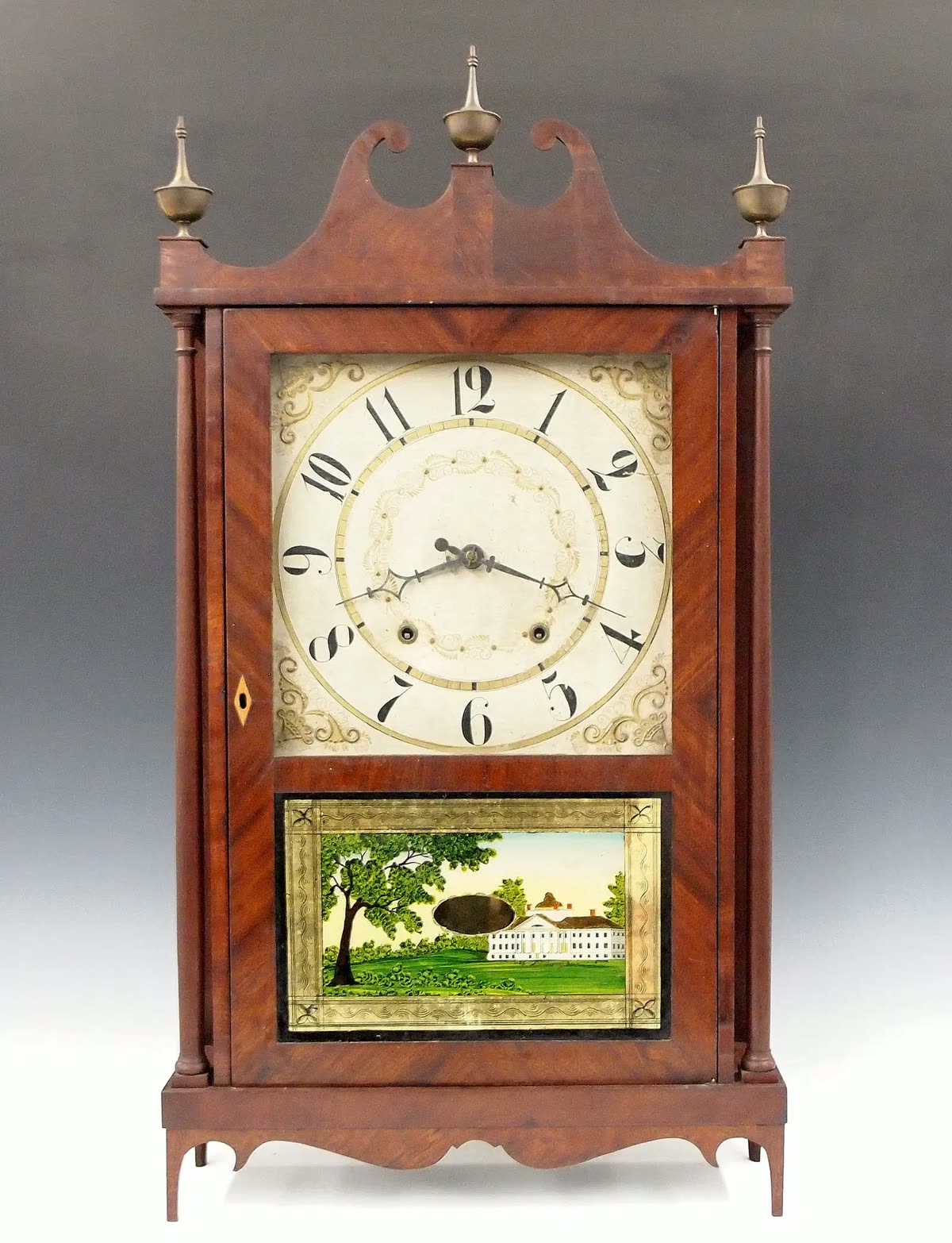
Photographs are illustrative examples of the type, not necessarily the exact object described. Verify details against the source file page.
Sources & references
- Eli Terry, Wikipedia (English), retrieved 2026-10-28 (text CC BY-SA 4.0)
- Britten, F. J., Old Clocks and Watches and Their Makers
- Museum catalogue descriptions of comparable examples
Where sources disagree, the disagreement is stated rather than resolved silently.