
Clock type · Specialist
Japanese Wadokei
Partially verifiedJapanese clocks built for the pre-Meiji system of seasonally variable hours.
Construction and interpretation
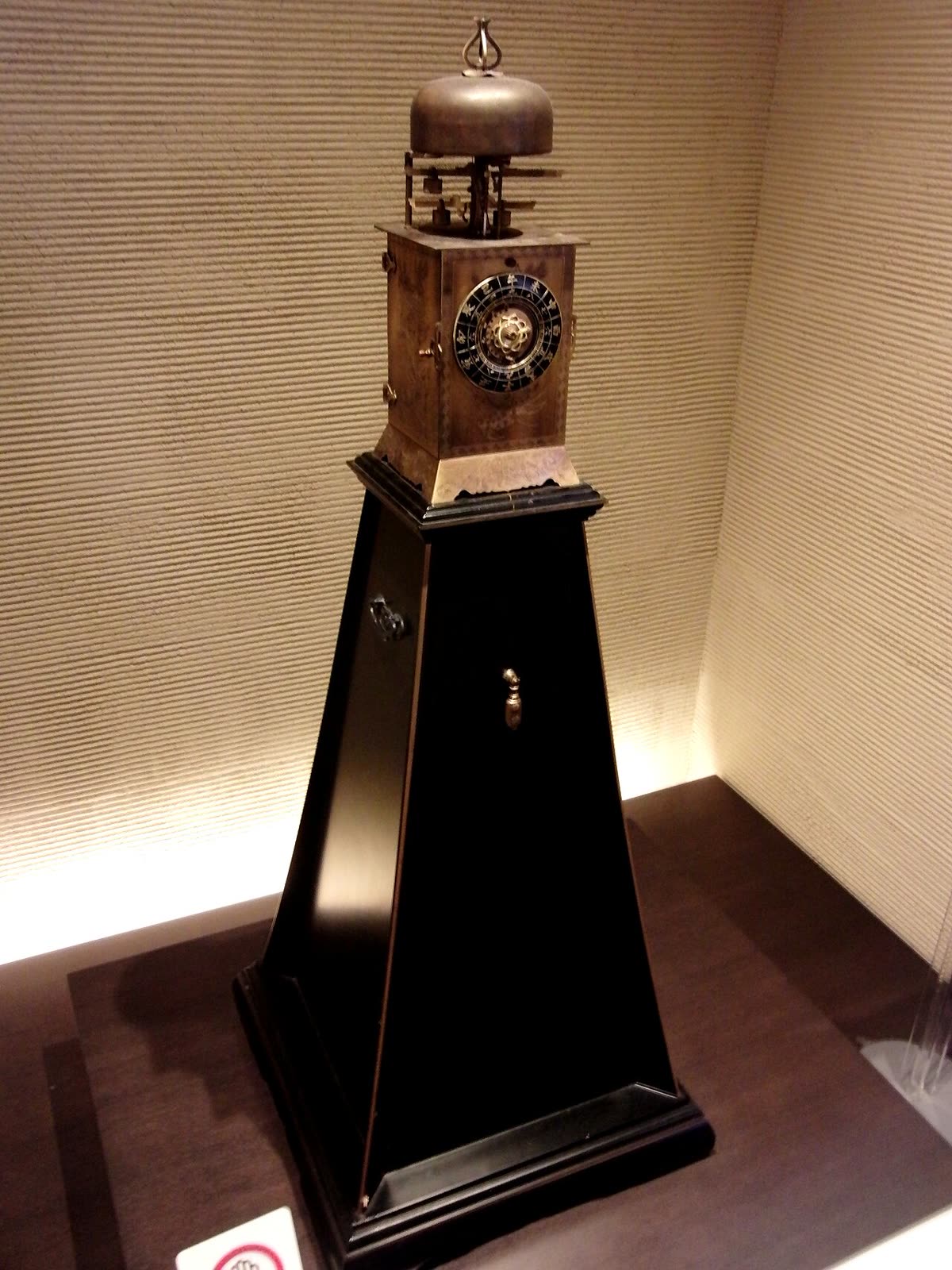
A wadokei is a mechanical clock built to tell traditional Japanese time, in which daylight and darkness are each divided into six periods whose lengths change with the season. The consulted source records that mechanical clocks reached Japan through Jesuit missionaries in the sixteenth century or Dutch merchants in the seventeenth — lantern-clock designs in brass or iron with verge-and-foliot escapement — and that the isolationist period beginning in 1641 cut Japanese clockmakers off from later Western developments such as the pendulum and balance spring. The wadokei is therefore an independent adaptation, not a delayed copy of European practice.
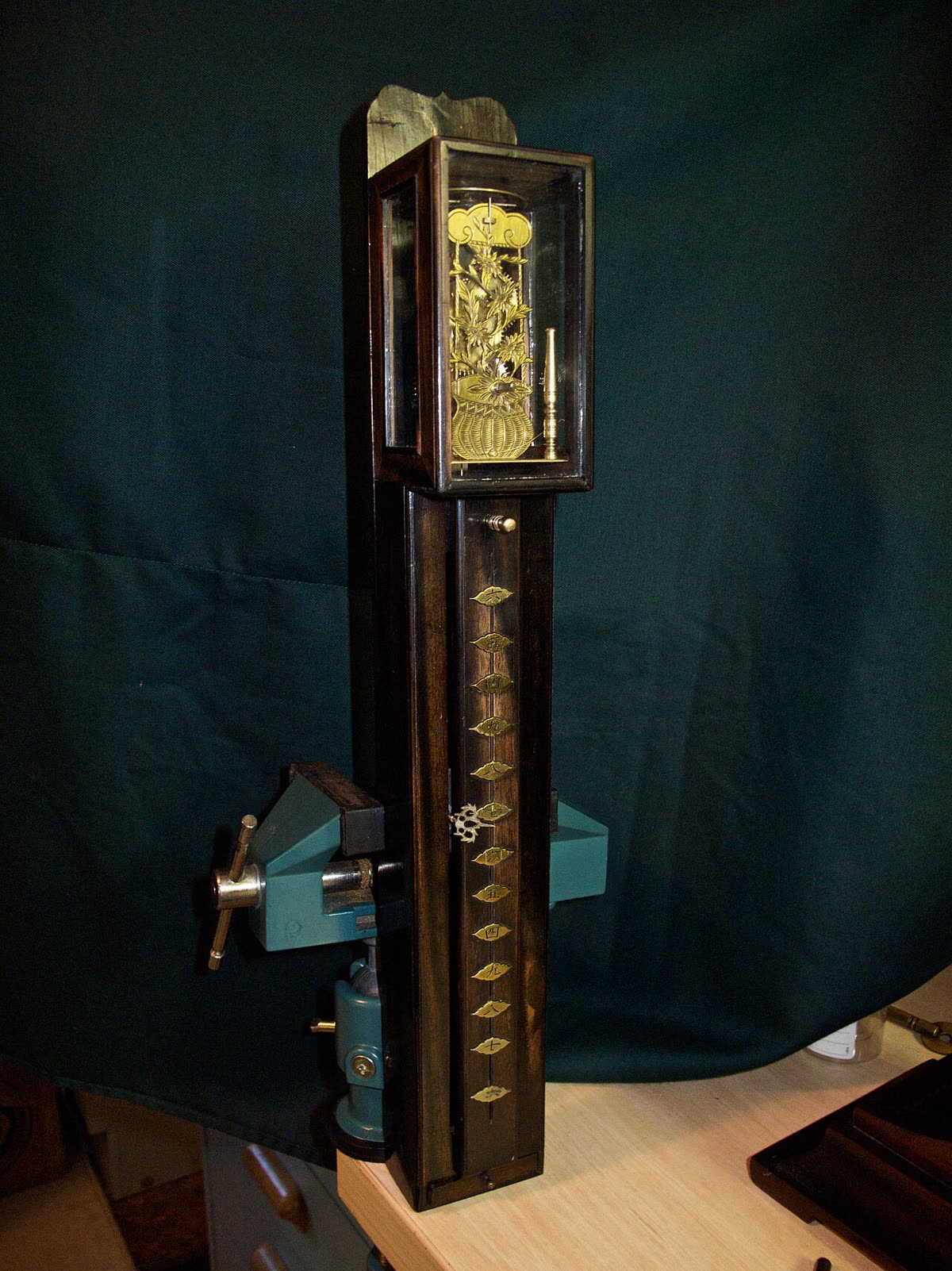
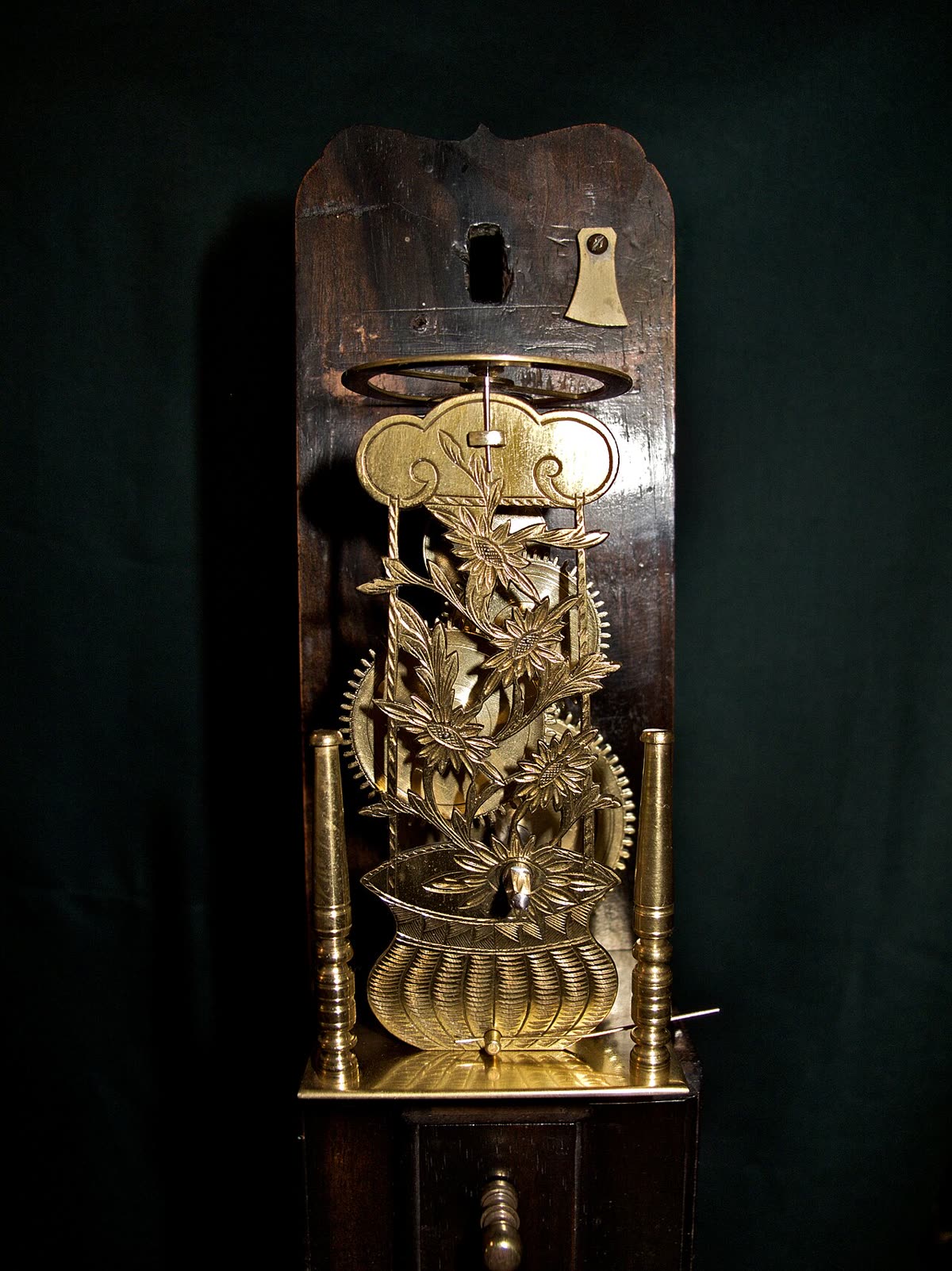
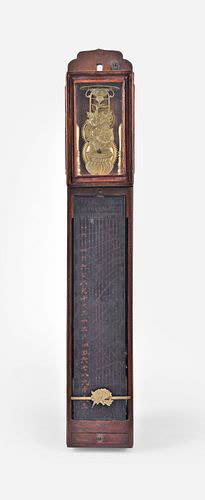
The temporal-hour problem was solved mechanically in several distinct ways, and the method used is the first thing to record. Foliots with several divisions let the user set different rates; some clocks carry two separate foliot balances so the clock can run at different speeds for day and night hours. The pillar clock took the most practical path: time is read from an indicator attached to the descending weight moving along a track with adjustable markers, rather than from a conventional dial. A fixed European-style dial on a Japanese-form case is a warning sign that the temporal-hour function may be absent or altered.
The system ended by decree, not by obsolescence: Japan adopted Western equal hours in 1873, and wadokei production ceased with the time system they served. Genuine examples are rare, hand-made and unstandardised, so construction and decoration should be assessed in Japanese rather than European idiom, and attribution belongs with a specialist. Later decorative clocks in Japanese style made for export are a separate category and should not be recorded as wadokei.
| Feature | What it means | Evidence to seek |
|---|---|---|
| Temporal hours | Six day and six night periods, varying seasonally | The futei jihō system the clock serves |
| Adjustable foliot | Divisions allow seasonal rate setting | Foliot construction and adjustment range |
| Double foliot | Separate day and night rates | Two-balance arrangement on inspection |
| Pillar-clock indication | Weight-borne pointer on an adjustable track | Scale and marker adjustment, not a dial |
Do not force a wadokei onto equal-hour display or judge it by European dial conventions; the seasonal adjustment is the mechanism, not a defect.
Evidence to record
- Identify the temporal-hour mechanism before describing the clock.
- Record whether markers or balances adjust, and how.
- Keep the 1873 system change as the end date of the type.
Movement & mechanism
- Weight- or spring-driven movements adapted to unequal hours
- Adjustable hour markers, or two balances of different rate for day and night
- Hand-made construction, since production was small and not standardised
Identification
- Movable hour plates on the dial, or a pillar clock with adjustable markers
- Construction and decoration in Japanese rather than European idiom
- Genuine examples are rare and should be assessed by a specialist
Terminology
- Wadokei
- Temporal hours
- Shakudokei (pillar clock)
Known variations
- Lantern, bracket and pillar clock forms
Collecting notes
Originality decides value and interest: check that movement, dial and case belong together, and prefer honest wear over refinishing. Movement work belongs with a clockmaker; cleaning a dial or case yourself commonly destroys the evidence that dates the clock.
Photographs
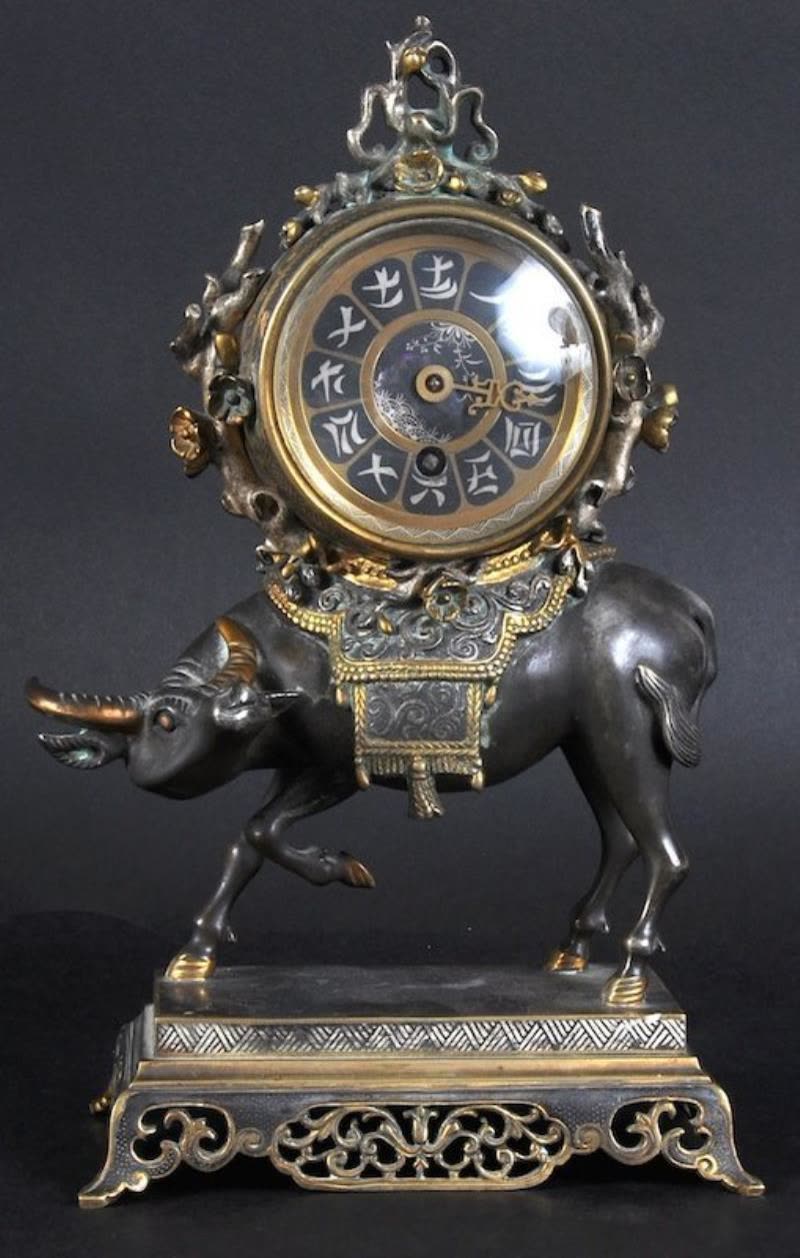
Photographs are illustrative examples of the type, not necessarily the exact object described. Verify details against the source file page.
Sources & references
- Britten, F. J., Old Clocks and Watches and Their Makers
- Museum catalogue descriptions of comparable examples
- https://en.wikipedia.org/wiki/Japanese_clock
Where sources disagree, the disagreement is stated rather than resolved silently.