
Clock type · Precision
Great Wheel Skeleton Clocks
Partially verifiedSkeleton clocks featuring an exceptionally large main wheel, often intended to run for a month or longer.
Background
Skeleton clocks are designed to display the inner workings of the mechanism by removing or modifying the parts that typically conceal them. The framework of these clocks is referred to as a frame rather than a plate. Construction manuals for these timepieces have been produced in the UK, including works by John Wilding specifically regarding large wheel skeleton clocks.
While motive power in skeleton clocks is typically provided by a spring, weight-driven models were also produced in these smaller sizes. These weight-driven clocks could achieve durations of up to a month by winding two weights around the same barrel.
Written from the sources listed below; each statement was checked against the cited text.
Recognising one
- A skeleton clock is characterized by the main components, such as the escapement or mainspring, being openly visible from the front and often the back.
- These clocks often lack a traditional dial, instead using a simple ring at the edge of the case to mount hour markers.
Movement & mechanism
- Huge main wheel (the 'great wheel') that dominates the movement architecture
- High-grade train with many leaves on the pinions to achieve long duration
- Often features a deadbeat escapement
Identification
- Main wheel nearly as large as the dial
- Very tall, slender frame
- Visible long duration train
Terminology
- Great wheel
- Month-going
- Skeletonized
Known variations
- Timepiece and striking versions
Collecting notes
Condition and originality are paramount. For technical clocks like regulators or atmospheric clocks, the completeness of the original mechanism is more important than case condition. For decorative clocks (Boulle, Empire), the quality of the case craft is central.
Photographs
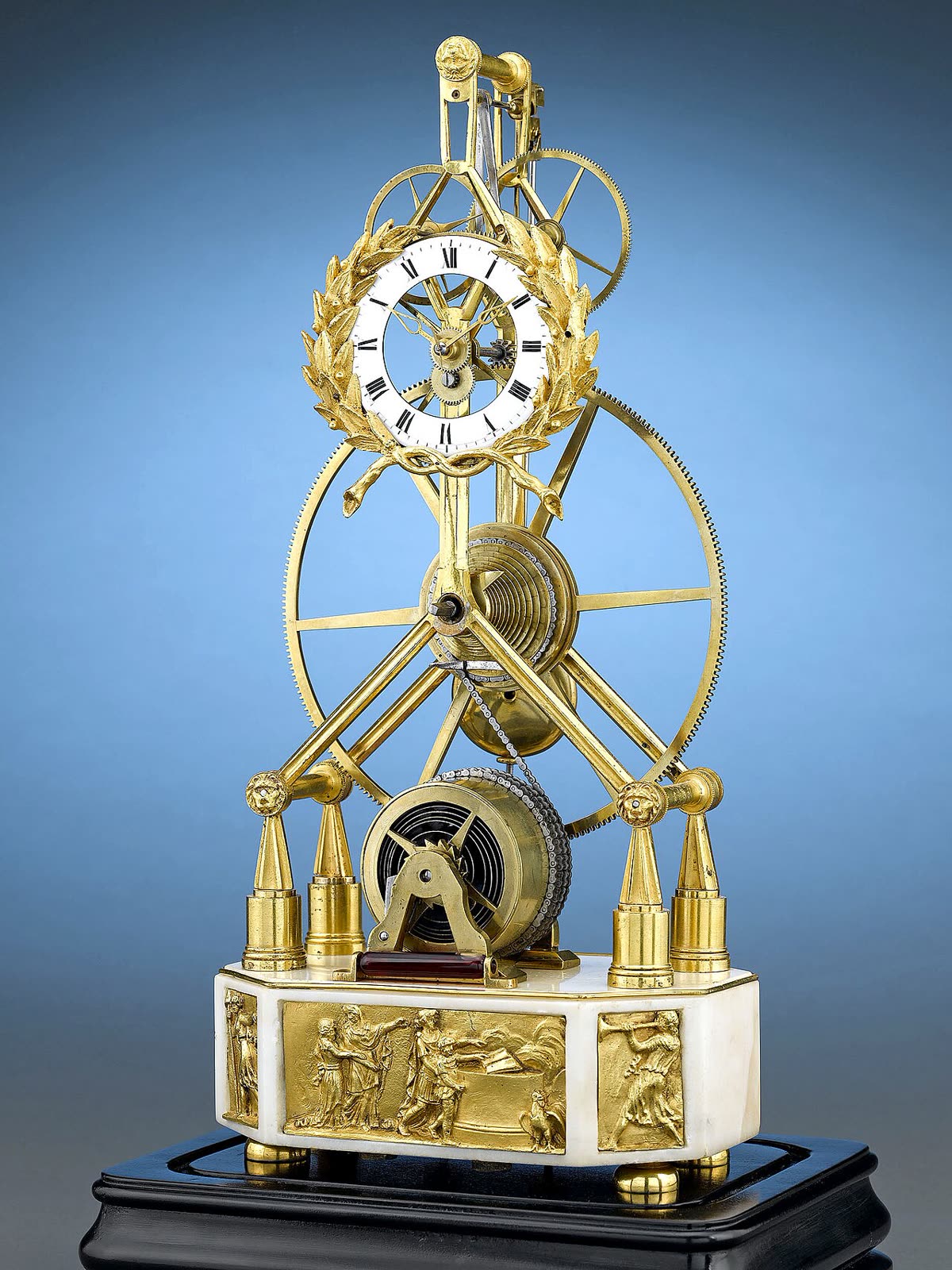
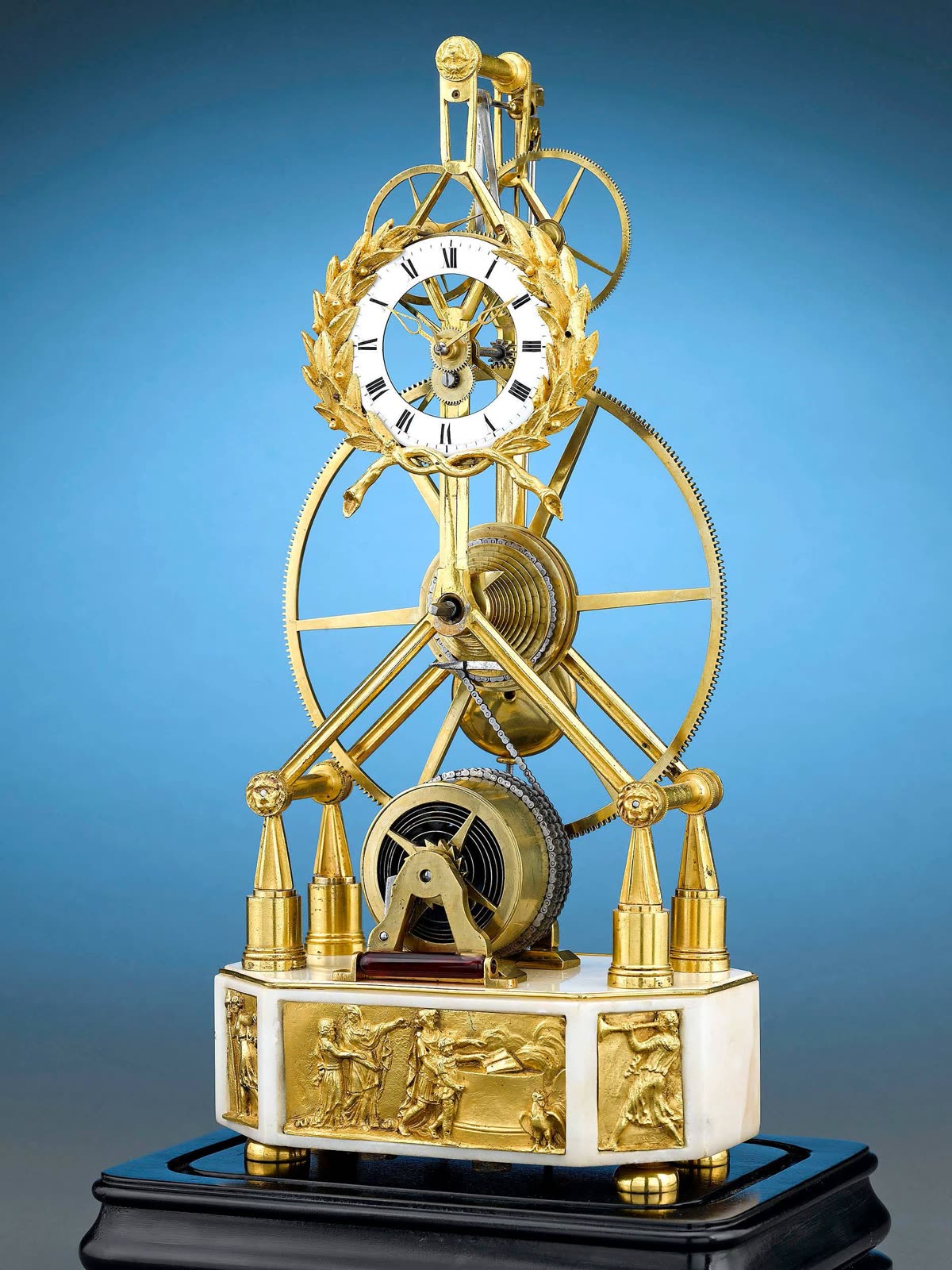
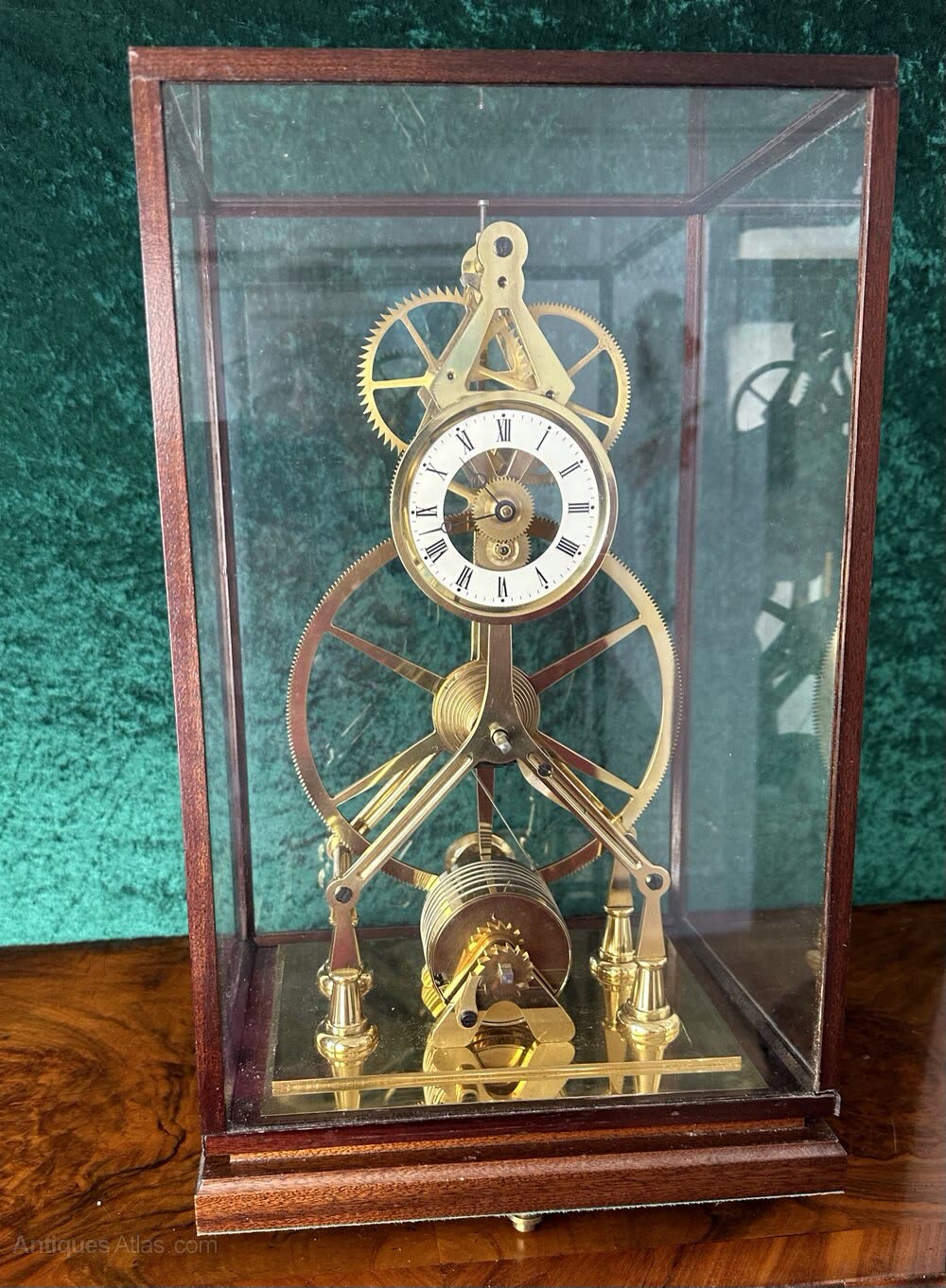
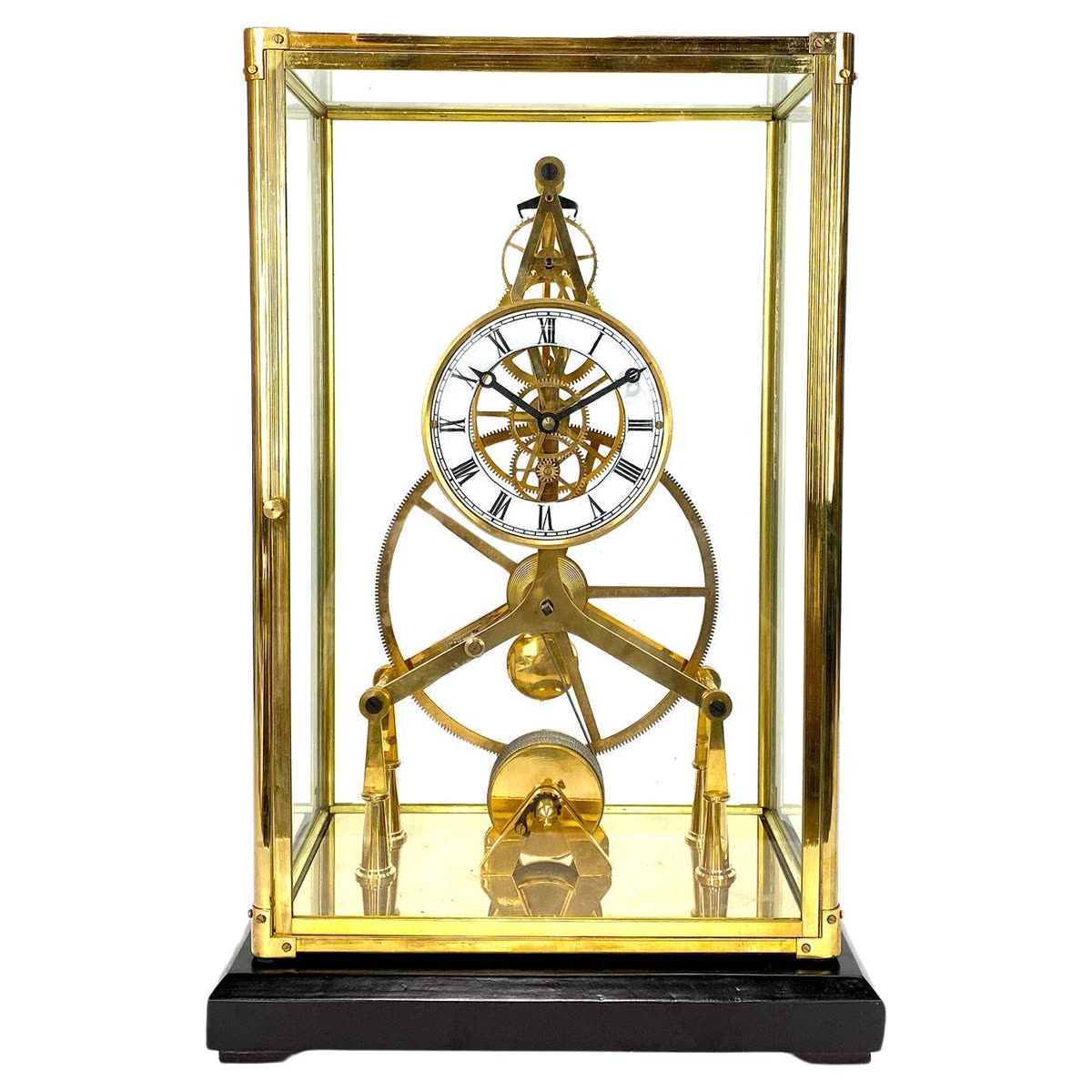
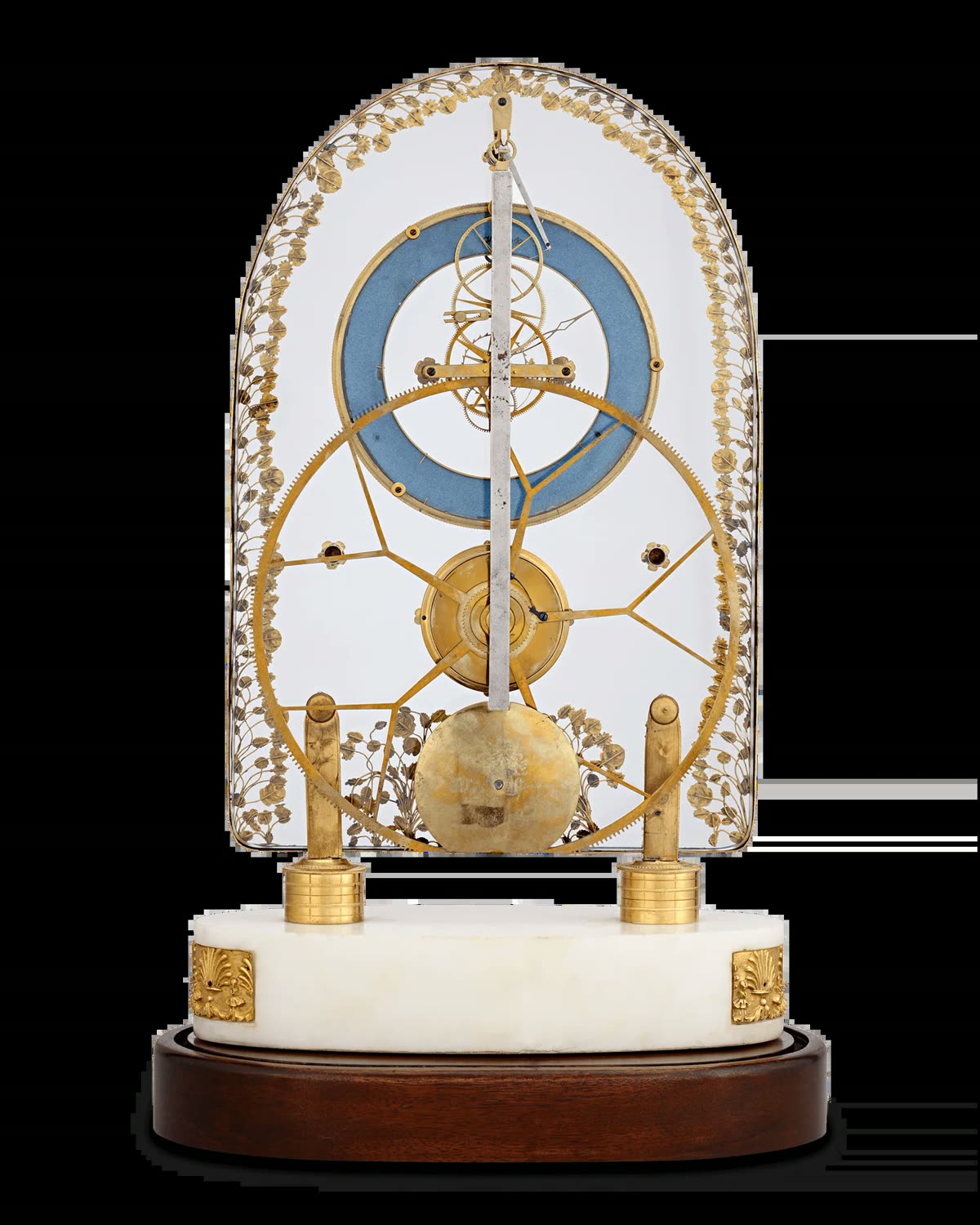
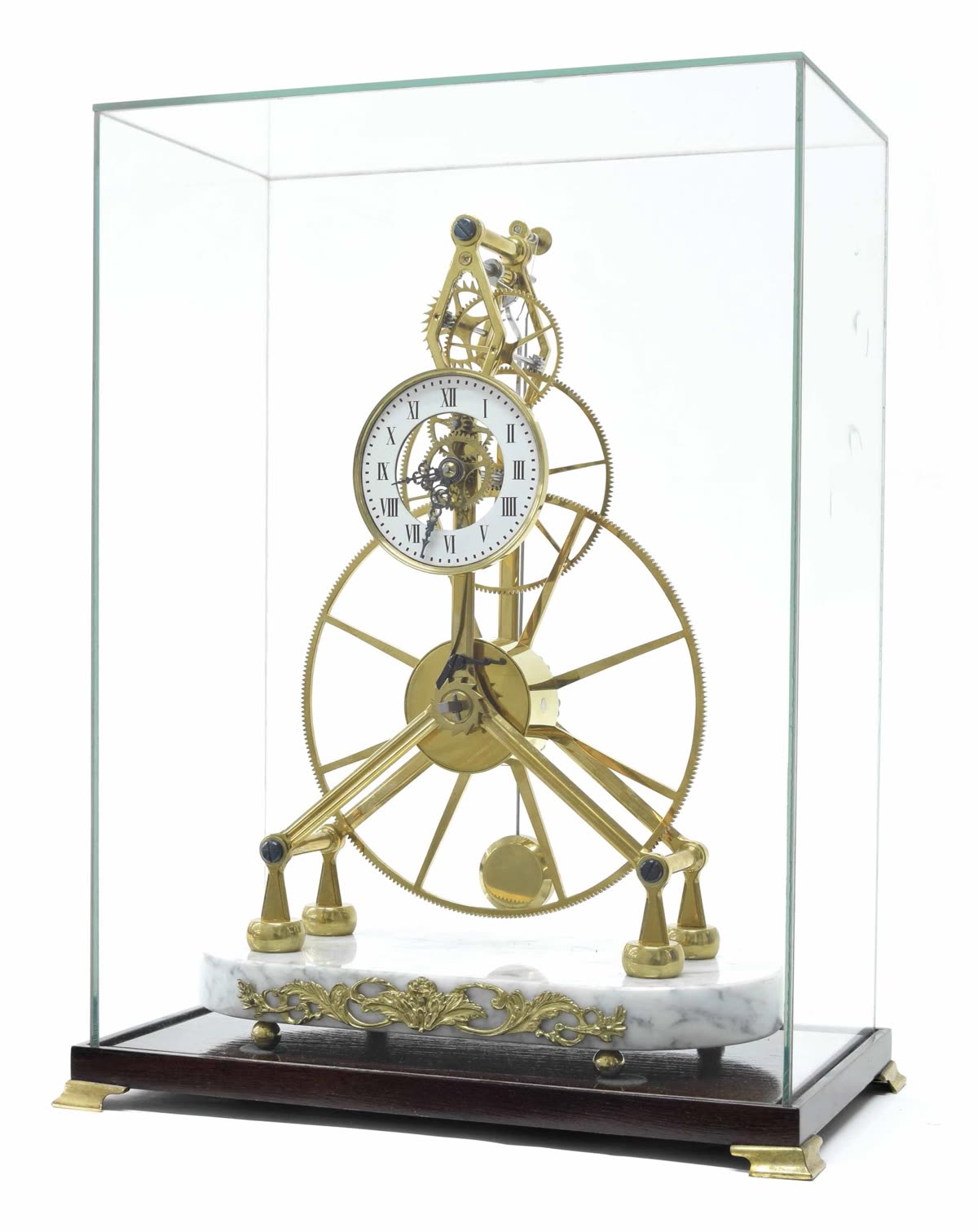
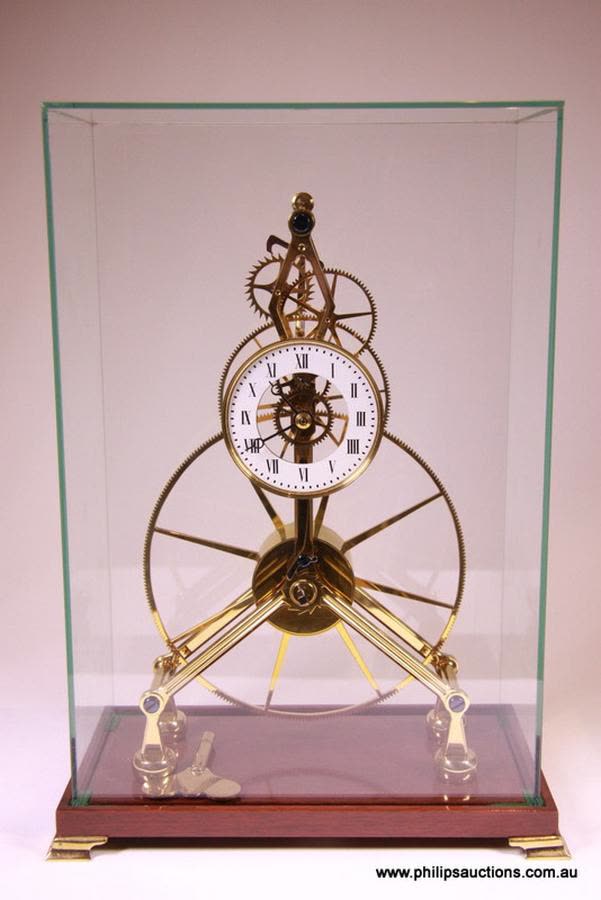
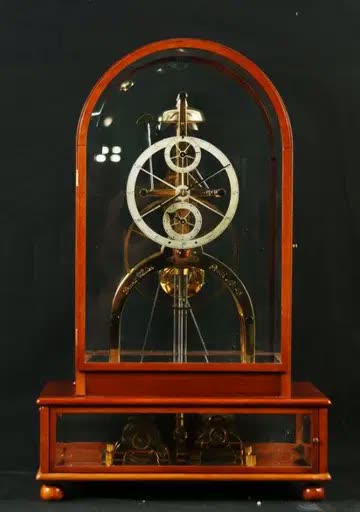
Photographs are illustrative examples of the type, not necessarily the exact object described. Verify details against the source file page.
Sources & references
- Skeleton clock, Wikipedia (English), retrieved 2026-10-28 (text CC BY-SA 4.0)
- Britten, F. J., Old Clocks and Watches and Their Makers
- Loomes, B., The Early Clockmakers of Great Britain
- Roberts, D., British Skeleton Clocks
- Museum catalogue records
Where sources disagree, the disagreement is stated rather than resolved silently.