
Clock type · Precision
Equation Clocks
Partially verifiedClocks showing the difference between solar and mean time, or displaying both.
Background
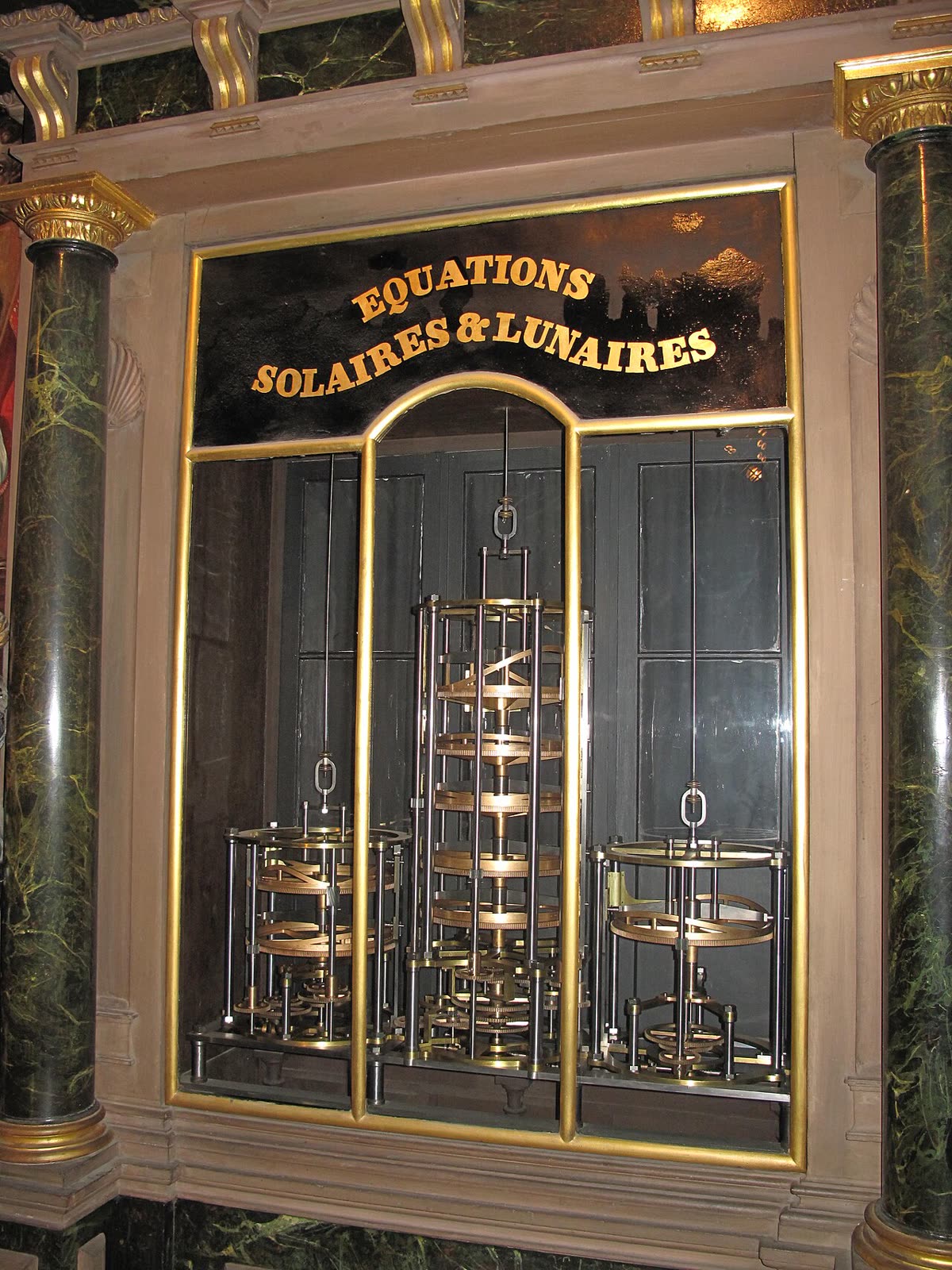
Equation clocks were invented to bridge the gap between traditional sundial time and the accurate, pendulum-controlled clocks patented by Christiaan Huyghens in 1657. These devices incorporate mechanisms that simulate the equation of time to represent the variations in solar time as the year progresses.
Early versions required users to manually add the equation of time to the clock reading to determine solar time, while later 18th-century models performed this compensation automatically. All such clocks were constructed by hand during their period of use, meaning that no two examples are exactly identical.
Written from the sources listed below; each statement was checked against the cited text.
Recognising one
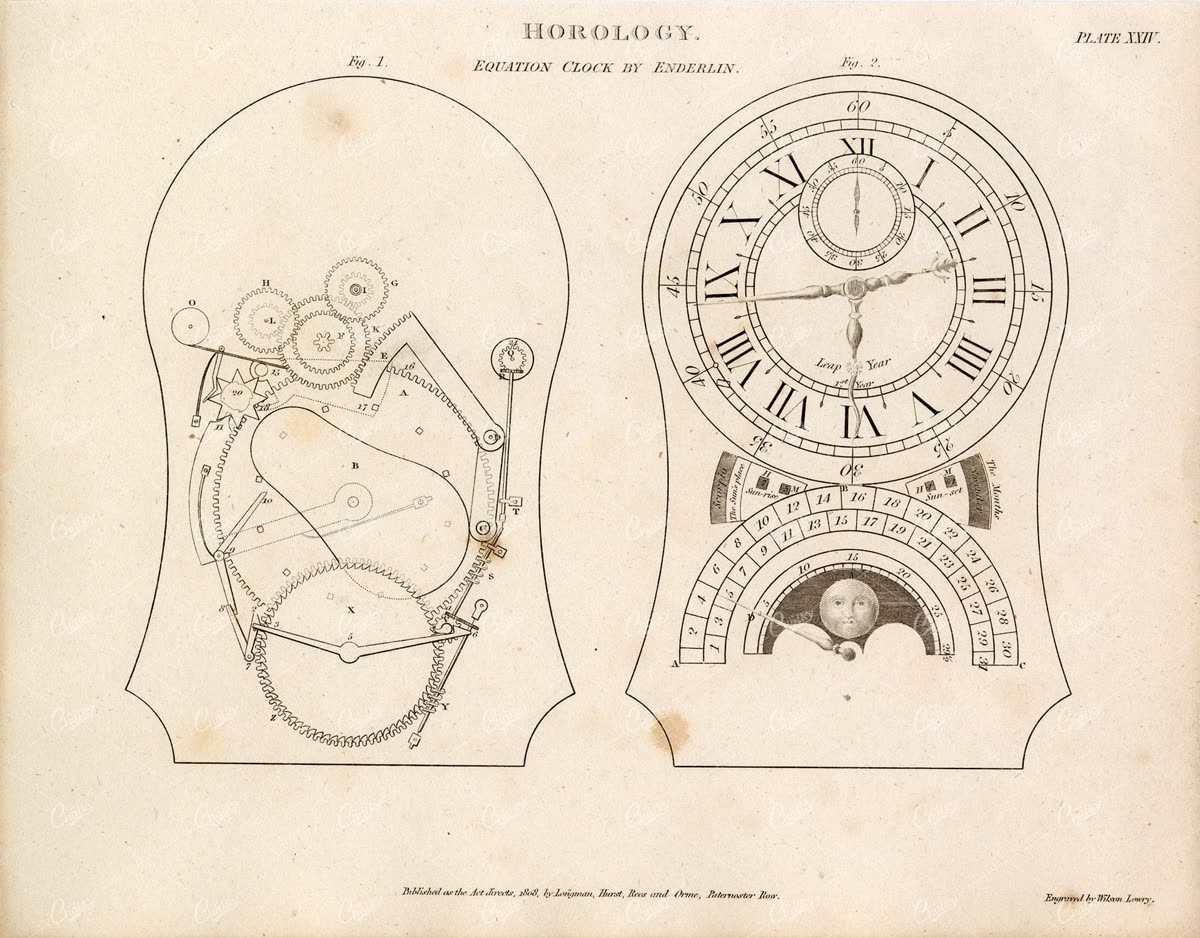
- The mechanism may utilize a kidney-shaped cam or a double shaft configuration to simulate the equation of time.
Movement & mechanism
- A kidney-shaped cam turning once a year drives the equation indication
- Some examples display both solar and mean time with two minute hands
- Accuracy depends on how carefully the cam is cut
Identification
- An equation indication reading plus or minus minutes
- A kidney cam visible in the movement
- Frequently combined with calendar work
Terminology
- Kidney cam
- Equation of time
- Mean time
Known variations
- Single-indication and dual-hand versions
Collecting notes
Originality decides value and interest: check that movement, dial and case belong together, and prefer honest wear over refinishing. Movement work belongs with a clockmaker; cleaning a dial or case yourself commonly destroys the evidence that dates the clock.
Photographs
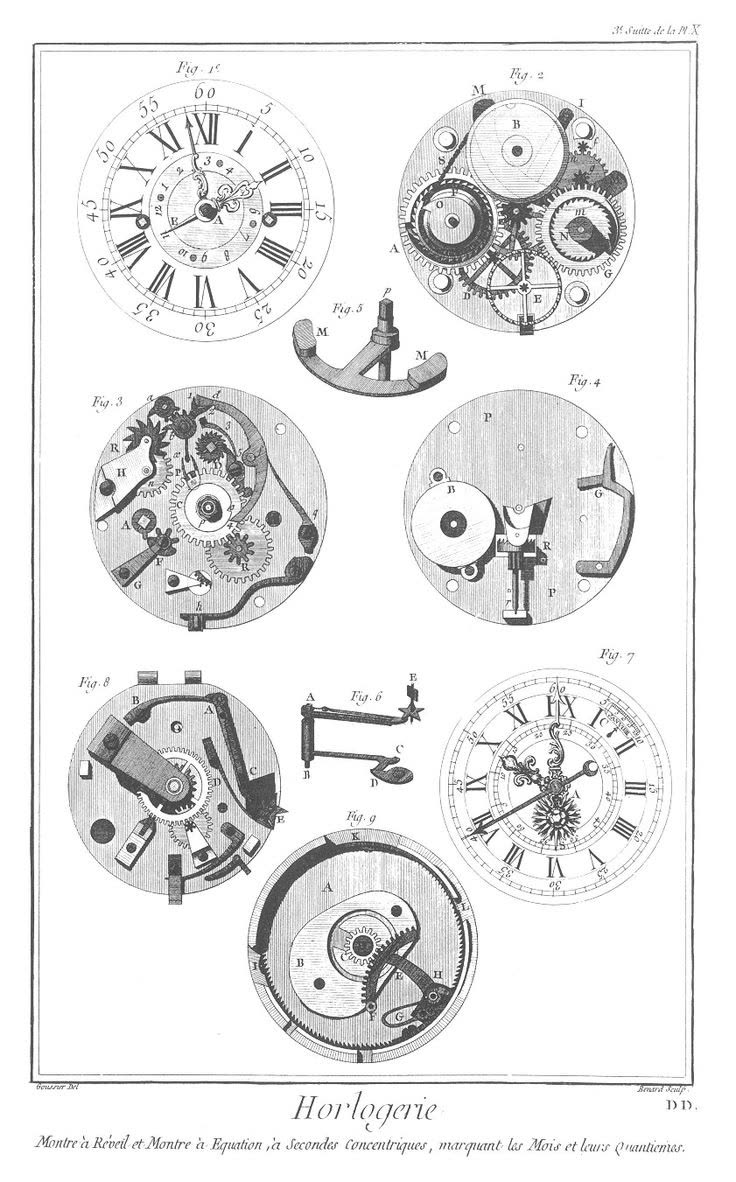
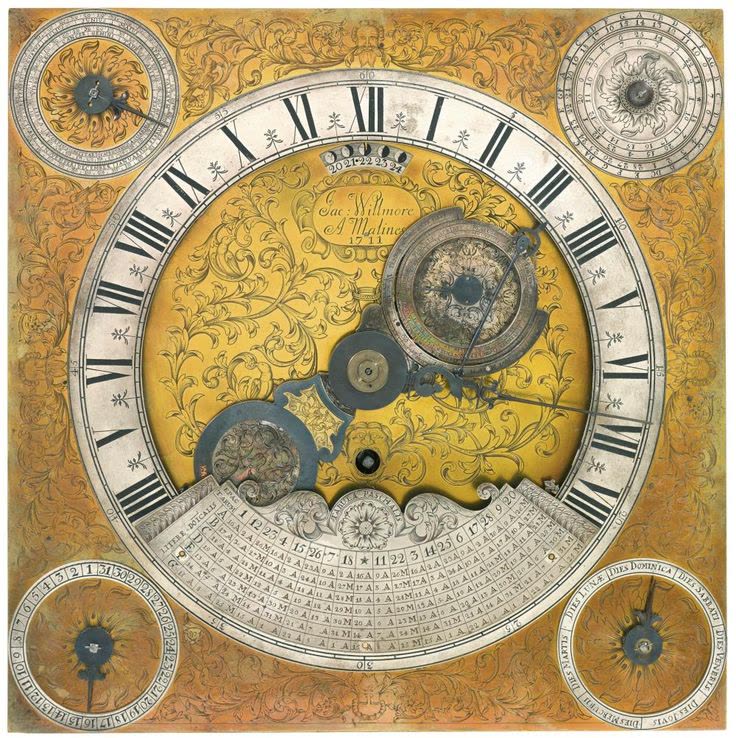
Photographs are illustrative examples of the type, not necessarily the exact object described. Verify details against the source file page.
Sources & references
- Equation clock, Wikipedia (English), retrieved 2026-10-28 (text CC BY-SA 4.0)
- Britten, F. J., Old Clocks and Watches and Their Makers
- Loomes, B., reference works on British clockmakers (edition-dependent)
- Museum catalogue descriptions of comparable examples
Where sources disagree, the disagreement is stated rather than resolved silently.