
Clock type · Domestic
Empire Clocks
Partially verifiedFrench mantel clocks from the Napoleonic era, typically in gilt bronze with classical or allegorical figures.
Background
The French Empire-style mantel clock emerged as a phase within the Neoclassical movement, flourishing primarily between 1799 and 1815, with production continuing through the Bourbon Restoration until the late 1820s. These clocks were mass-produced in Paris by workshops employing founders, gilders, silversmiths, and chasers who utilized standardized bronze casting techniques. Cases were typically constructed from bronze using the fire-gilding process, occasionally combined with stone bases such as marble or alabaster.
Written from the sources listed below; each statement was checked against the cited text.
Recognising one
- Clock authorship is frequently anonymous, though when signed, names may appear on the dial representing the bronzier, retailer, or movement maker.
Condition and survival
- Authorship is difficult to attribute because bronze casters commonly copied or readapted existing designs and sold pieces to one another.
- The golden age of production ended in the late 1820s as craftsmanship declined due to increased mechanization and the use of cheaper materials like brass.
Movement & mechanism
- High-quality French round-plate movements
- Silk-thread suspension for the pendulum
- Count-wheel striking on a bell
Identification
- Strictly classical or architectural forms
- Gilt bronze (ormolu) of exceptional quality
- Depiction of mythological or historical scenes
Terminology
- Empire style
- Ormolu
- Silk suspension
Known variations
- Figural and architectural variants
Collecting notes
Condition and originality are paramount. For technical clocks like regulators or atmospheric clocks, the completeness of the original mechanism is more important than case condition. For decorative clocks (Boulle, Empire), the quality of the case craft is central.
Photographs
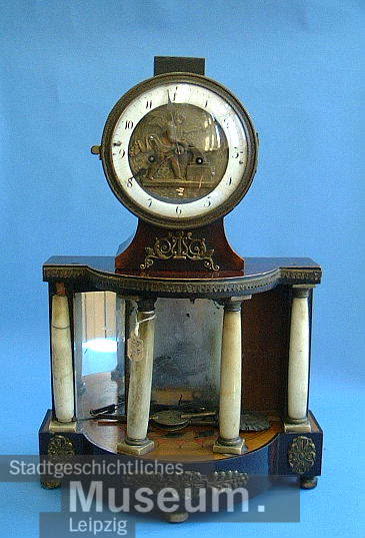
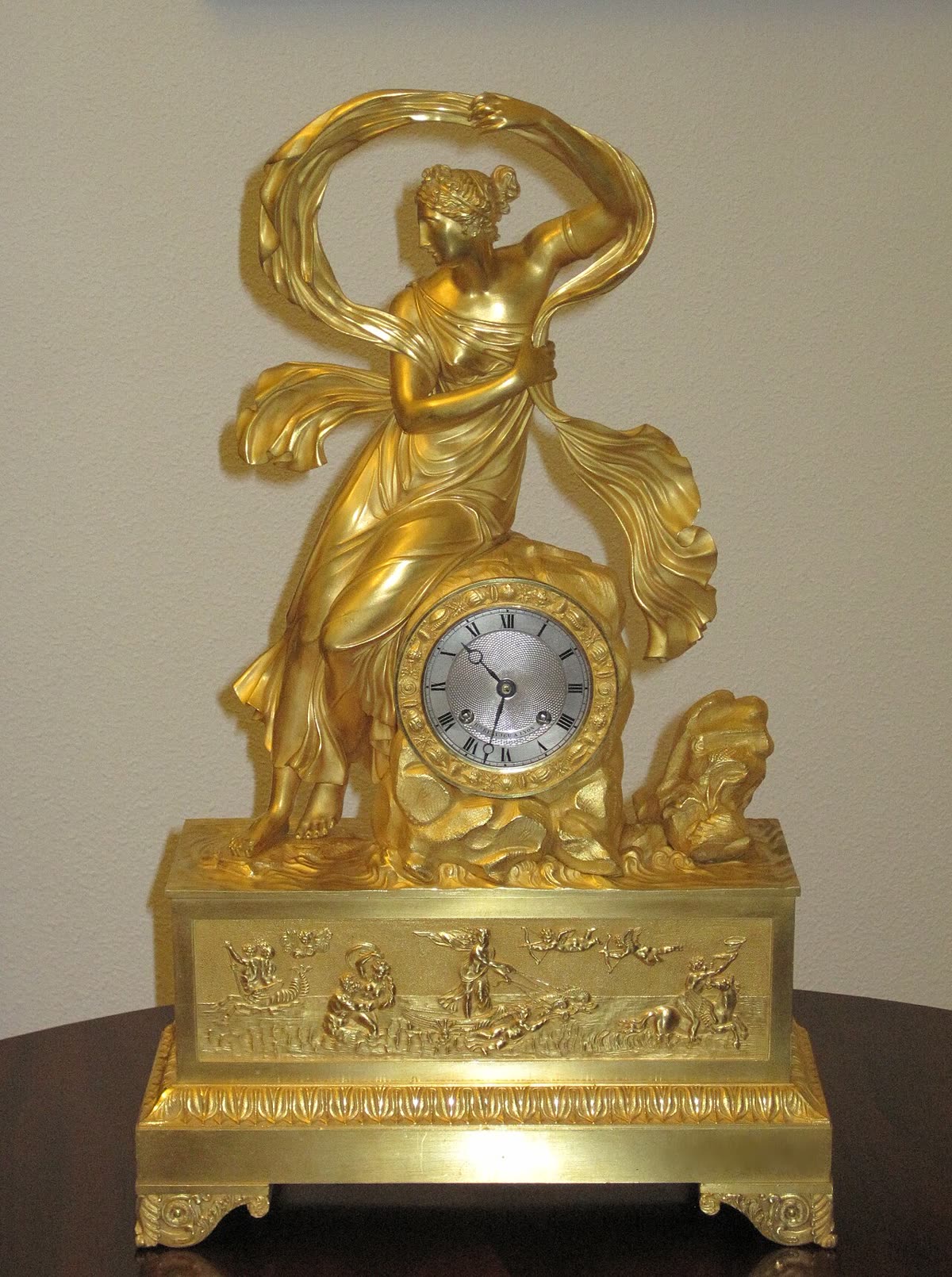
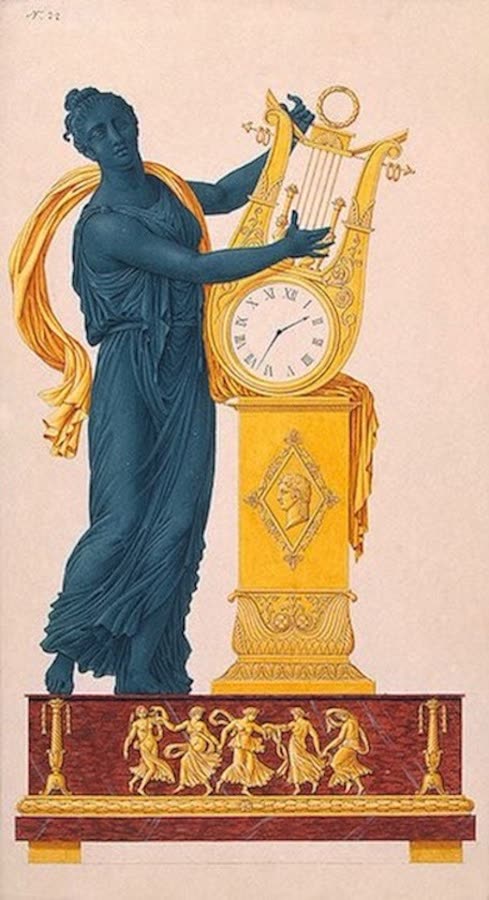
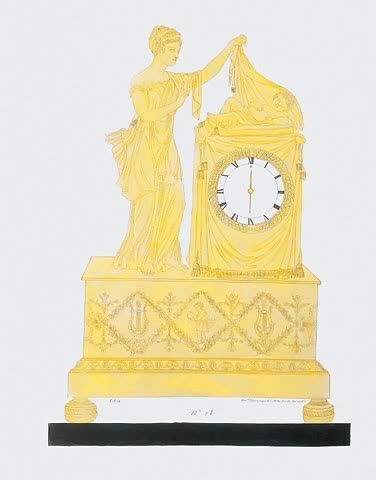
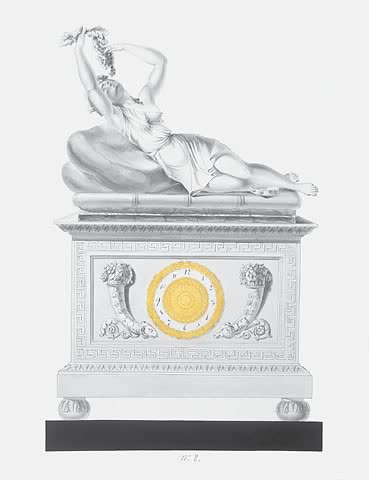
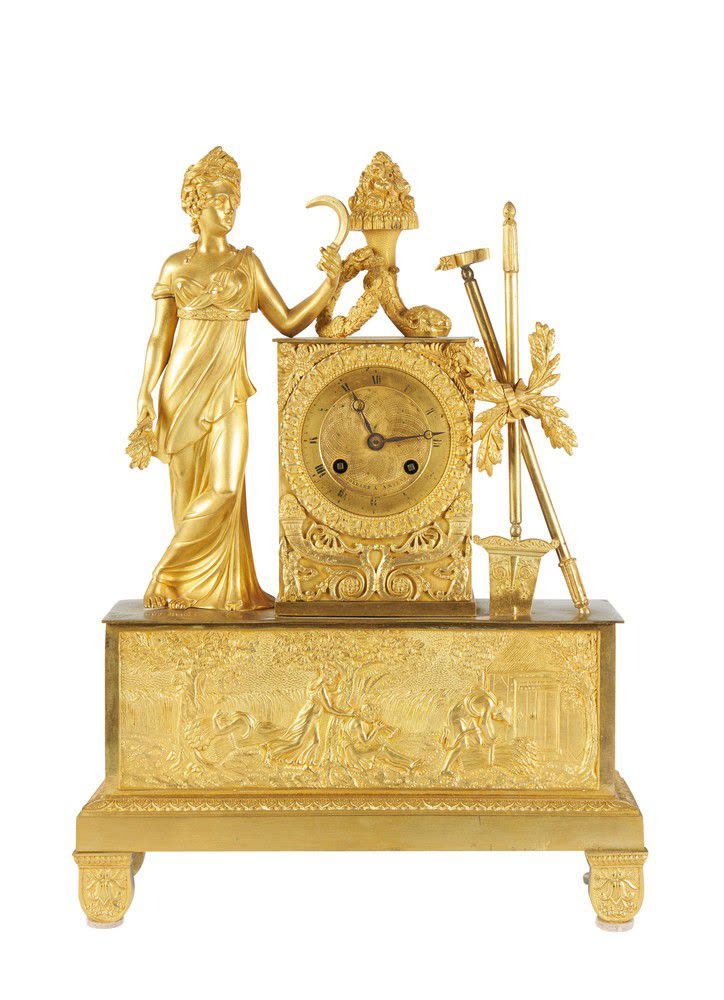
Photographs are illustrative examples of the type, not necessarily the exact object described. Verify details against the source file page.
Sources & references
- French Empire mantel clock, Wikipedia (English), retrieved 2026-10-28 (text CC BY-SA 4.0)
- Empire style, Wikipedia (English), retrieved 2026-10-28 (text CC BY-SA 4.0)
- Britten, F. J., Old Clocks and Watches and Their Makers
- Museum catalogue records
Where sources disagree, the disagreement is stated rather than resolved silently.