
Source catalogue · individual objects
Object Catalogue
Individual objects described by auction houses, specialist dealers and collection catalogues. Attribution, dates and specifications remain source-reported unless independently established; rights clearance is pending.
Browse makers and their key pieces · Thwaites & Reed profile
5 of 5699 objects · Page 1 of 1
Clock · Wall clock
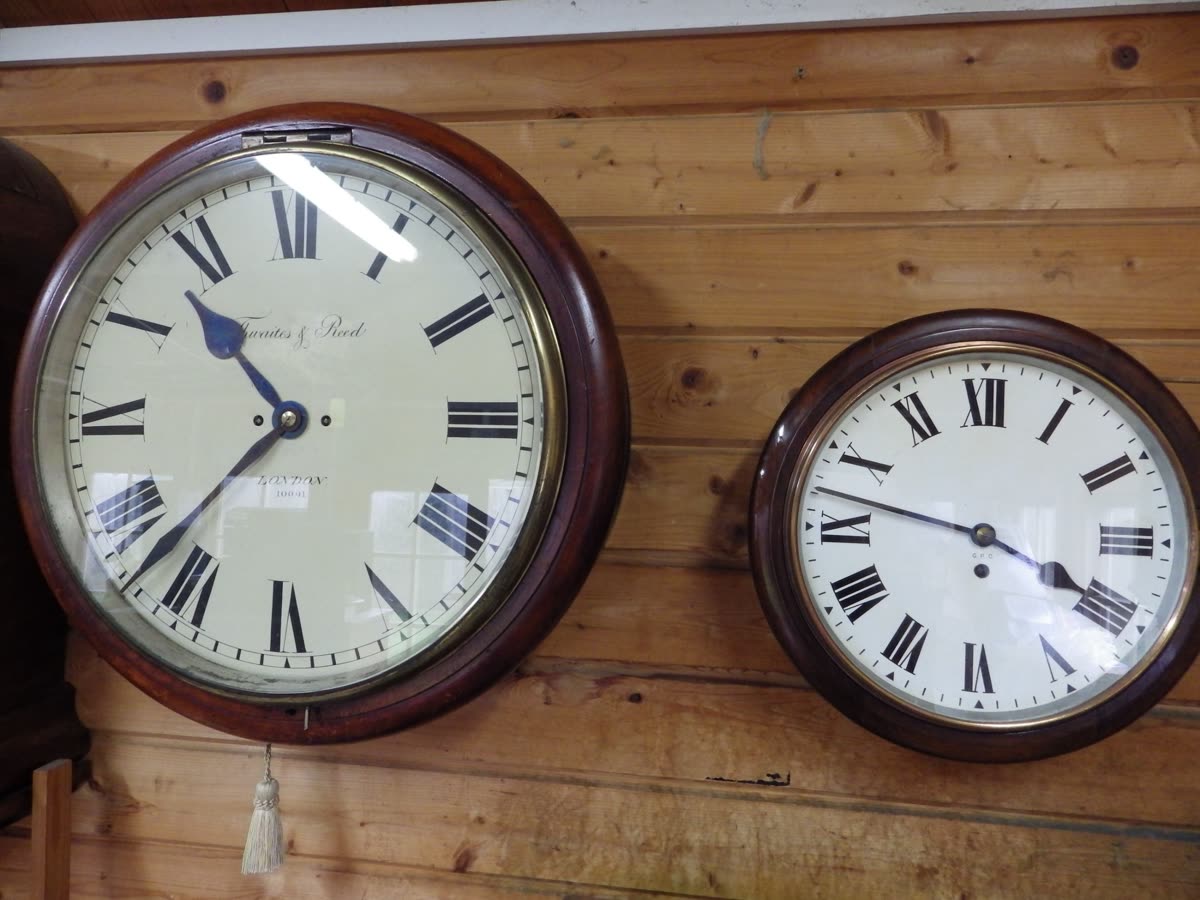
Thwaites & Reed 18-Inch Double Fusee Dial Clock, Build No. 10091
This 19th-century English wall dial clock features an 18-inch painted dial signed by Thwaites & Reed of London, numbered 10091. Set in a turned solid mahogany surround measuring 56 cm in diameter, the dial has black Roman numerals, spade hands, and a heavy brass bezel with bevelled glass. According to the seller, the eight-day movement is a thick-plated, five-pillar double fusee striking on an internal gong, with chains driving the fusee barrels. It is additionally reported to retain its bottom door, side sound frets, top hanging bracket, and strike/silent control.
Full description
www.sellingantiques.co.uk · SA1200381
Clock · Skeleton clock
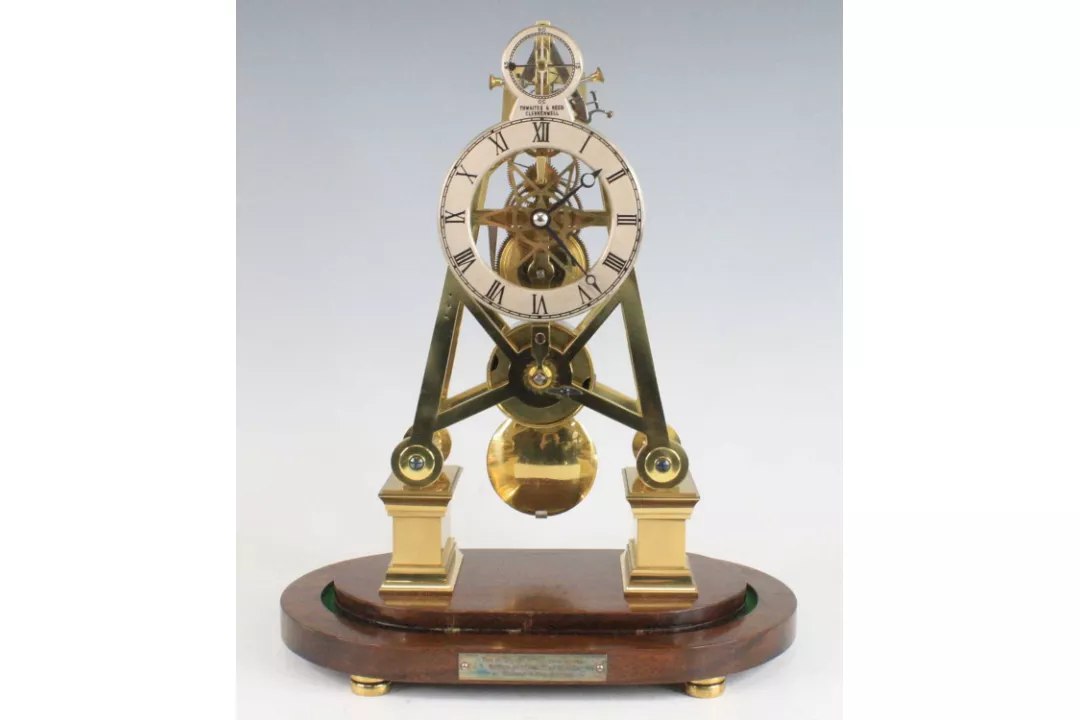
Thwaites & Reed brass skeleton clock after Dwerrihouse, Ogston & Bell
This brass skeleton clock was produced in 1973 by Thwaites & Reed of Clerkenwell as number 43 in an edition of 100, styled after an original by Dwerrihouse, Ogston & Bell. The source reports that it is powered by an eight-day brass movement featuring a coup-perdu escapement. The structure features a silvered chapter ring with Roman numerals and a six-pointed star centre, mounted below an upper subsidiary dial. The brass A-frame rests on dual pedestal plinths atop an oval mahogany base.
Full description
www.the-saleroom.com · 2367
Clock · Novelty & automaton clock
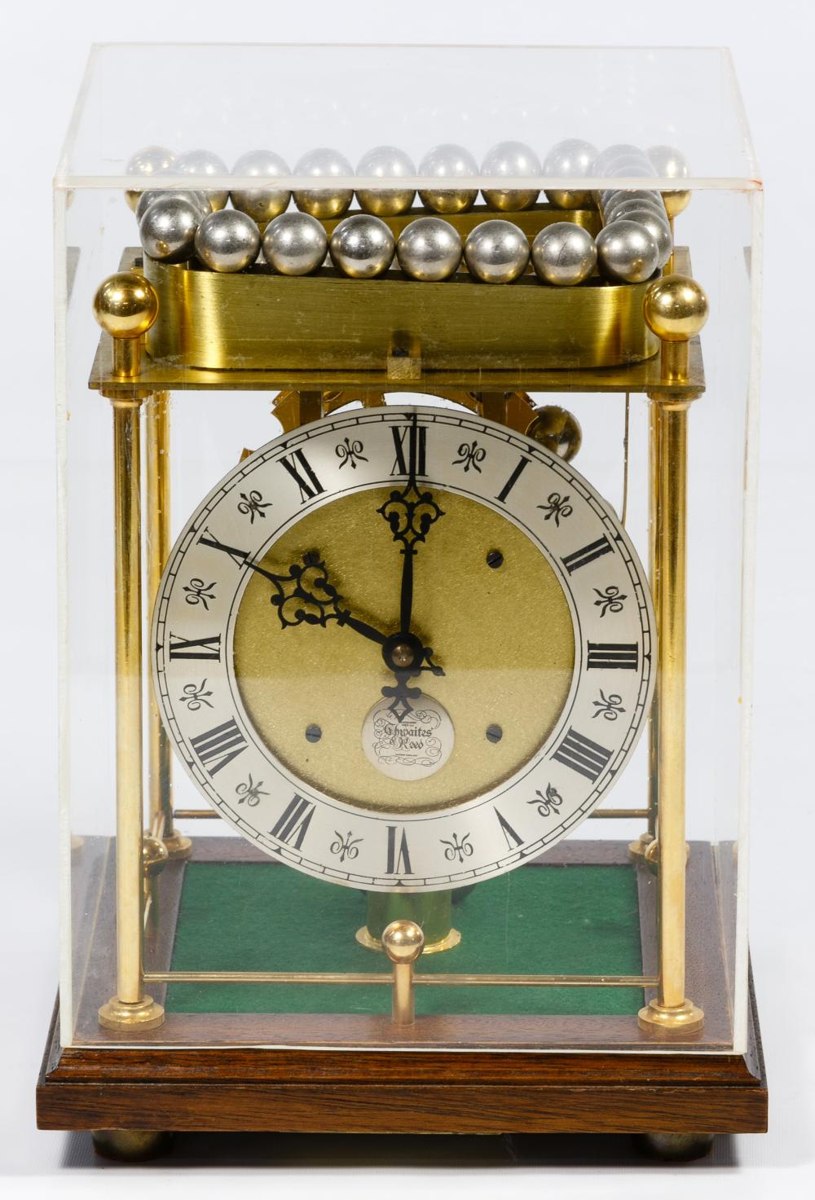
Thwaites and Reed 'Rolling Ball' Clock
Cataloged as a 1976 rolling ball clock attributed to Thwaites & Reed of London, England, this timepiece features an open brass four-pillar case mounted on a mahogany plinth with a green felt lining. A slanted upper track holds steel balls that feed into a spoked paddle wheel below, where the descending weight of each ball rotates the wheel clockwise to drive the clock movement. Expended balls drop via a vertical brass chute into the felt-lined lower tray. Time is displayed on a silvered chapter ring with black incised Roman numerals, pierced hands, and an oval brass signature tag.
Full description
www.invaluable.com · 188
Clock · Skeleton clock
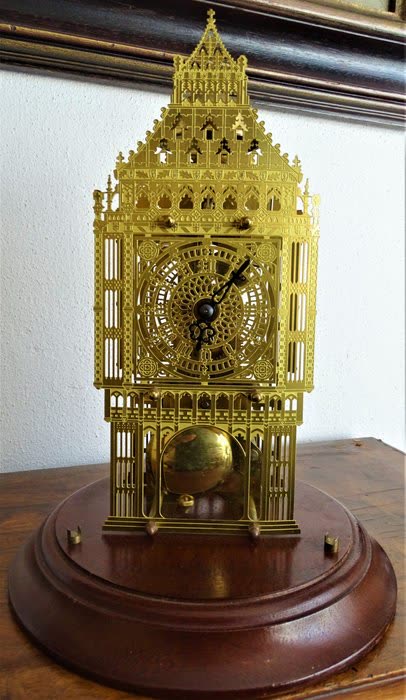
Thwaites & Reed Skeleton Clock
This skeleton clock is catalogued under Thwaites & Reed and mounted on a circular wooden base. The listing indicates that it contains a Hermle movement reference 791-681 and dates the piece to the second half of the 20th century. Constructed from brass, wood, and glass according to the lot description, the visible structure features openwork brass fretted architecture evoking the Gothic design of the Palace of Westminster clock tower. A central skeleton dial with dark pierced hands is supported above a visible pendulum bob.
Full description
www.catawiki.com · 63262037
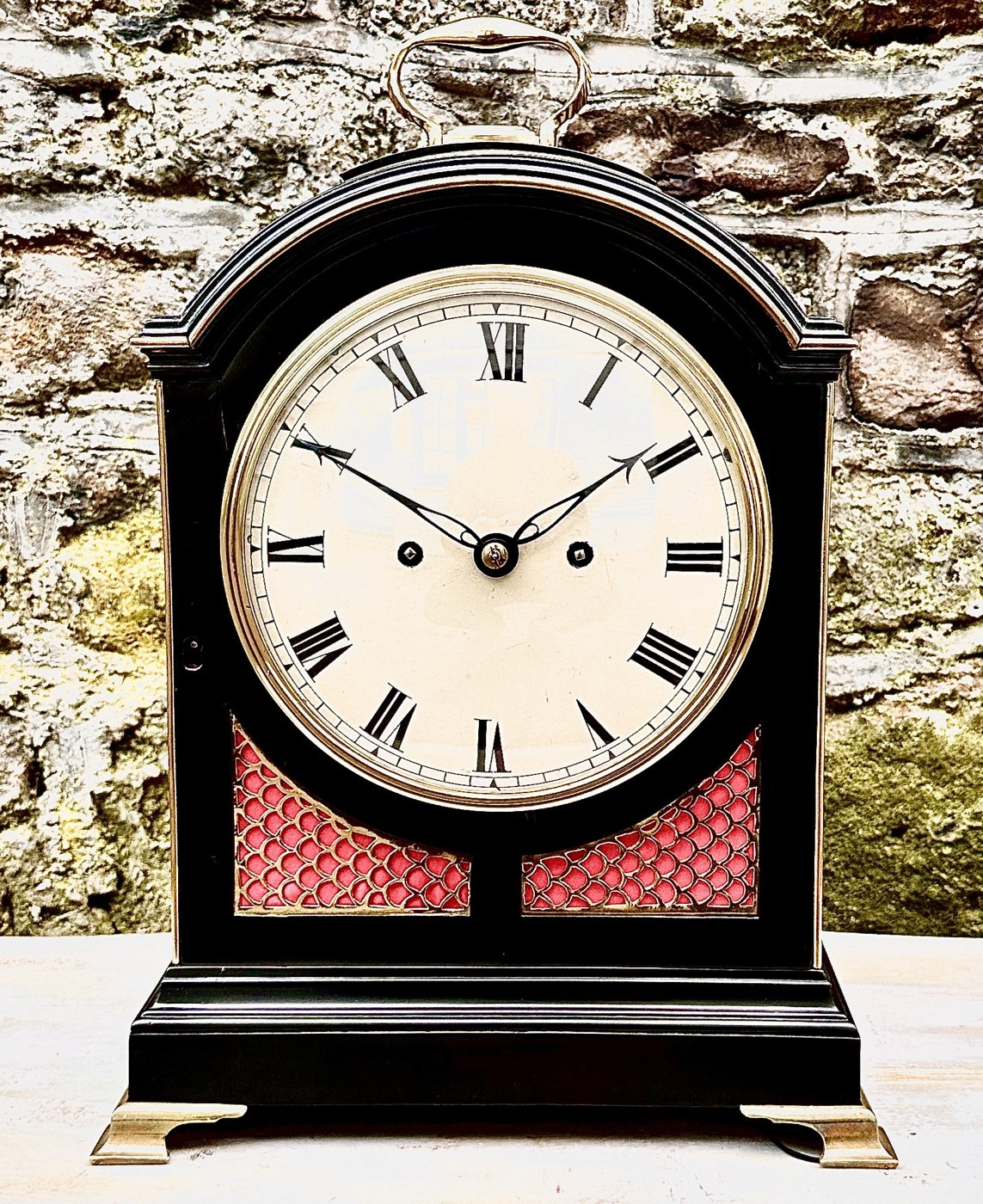
Clock · Bracket clock
George III bracket clock
This George III period bracket clock dates to approximately 1815. The timepiece features an ebonised wooden case topped with a decorative brass carrying handle and an arched cornice. The design incorporates gilded brass moldings, fish-scale brass acoustic frets backed by red silk, and gilded brass bracket feet. Its 7-inch convex dial is finished in a cream color with black Roman numerals and blue-steel skeletal hands. A Strike/Silent selector is positioned at the top of the dial, which is protected by a convex glass within a gilded brass bezel. The internal mechanism is an eight-day, twin fusee movement featuring an anchor escapement and a repeating function on a bell. The backplate includes engraved edges and an oval brass plaque for the vendor, Robt Simpson of Strand, London, with the name Thwaites and Reed engraved on the interior of the movement backplate.
Full description
Source listing