
Skip to content
The Encyclopedia of Horology

Component · Clock weight

Weight for Tide Gauge Clock

Partially verified

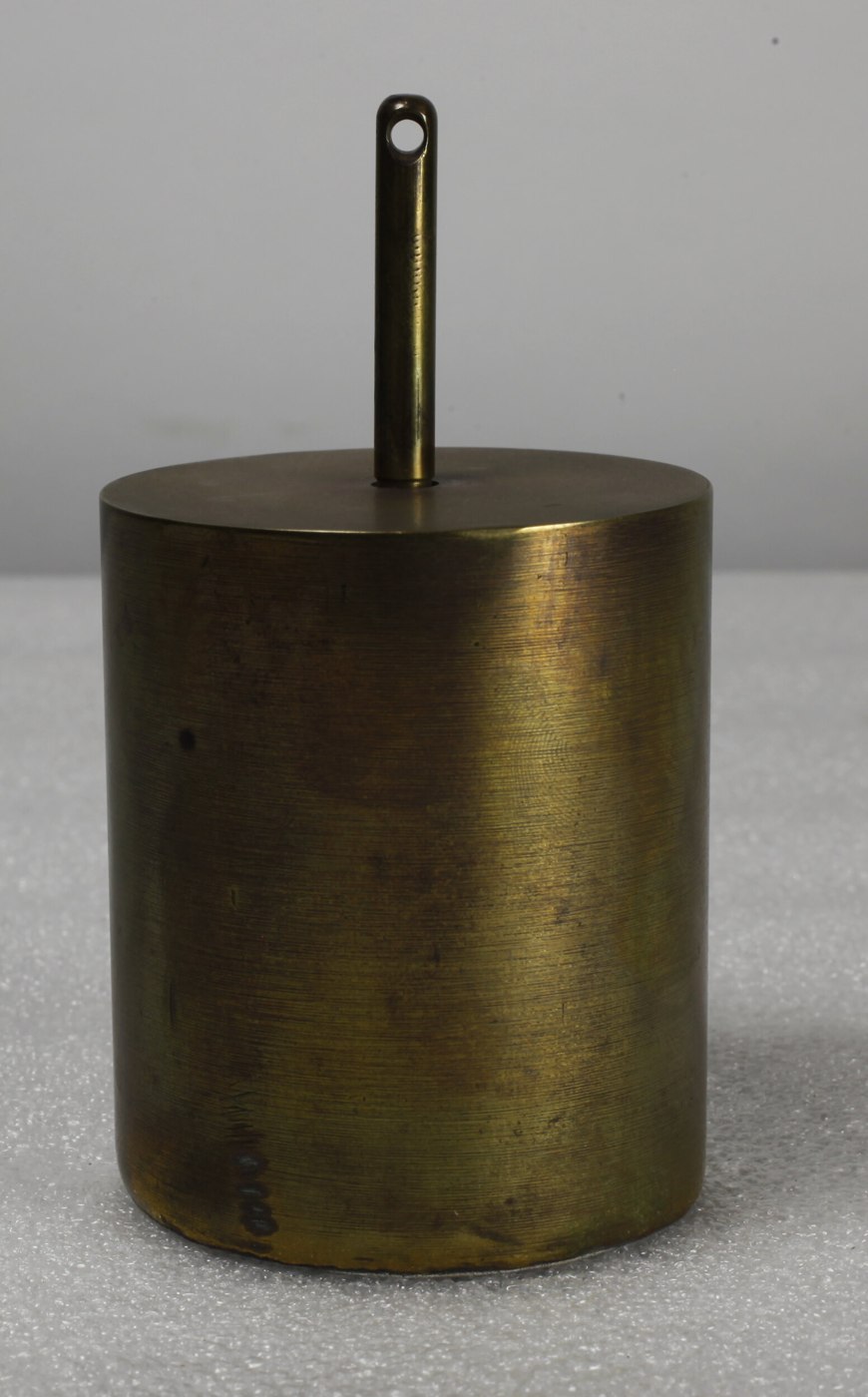
This object is a cylindrical weight for a pendulum clock, manufactured by J. Newman of London during the 1850s. The weight features a central rod with a suspension hole at the top, designed to provide the motive force for a self-registering tide-gauge recording apparatus. The clock system to which this weight belonged was originally installed at Breakwater Pier in Williamstown, Australia, in 1858. Ownership and supervision of the gauge passed through several entities, including the Harbour Department and the Melbourne Observatory, before eventually being donated to the museum by the Melbourne Harbour Trust Commissioners in 1962.

Cylindrical clock weight with suspension rod, manufactured by J. Newman, circa 1850s.
Cylindrical clock weight with suspension rod, manufactured by J. Newman, circa 1850s. — Museums Victoria. Rights pending — permission not yet requested. Original source

Catalogue identity

Source
collections.museumsvictoria.com.au
Category
Component · Clock weight
Maker / attribution
J. Newman
Reference
Not recorded
Catalogue / lot identifier
ST 25237.2
Source-reported date
circa 1850s
Source-reported place
England

Source-reported attribution and specifications are not independent authentication. A listing does not establish present ownership, current display, availability or permission to reproduce.

Object description

Construction and Function

The object is a cylindrical weight designed to provide power to a clock mechanism. It includes an integrated central vertical rod that extends from the top of the cylinder, featuring a drilled aperture at the upper extremity to facilitate attachment to a cable or cord.

The weight was utilized to operate a self-registering tide gauge. It provided the necessary force to drive a drum, which supported a calibrated strip of paper for recording tidal movements over time. The mechanism was part of a larger horological assembly used for scientific measurement.

Evidence for this section
  • “Weight for Pendulum clock, made by J. Newman, London.”
  • “Used to drive the recording apparatus of a self-registering tide-gauge”
  • “The movement of the tides was recorded on a calibrated strip of paper, which rotated on a drum driven by the clock.”

Provenance and History

The weight was part of a tide-gauge installation at Breakwater Pier in Williamstown, Australia, which began operation in 1858. The gauge was used to record tidal data for nearly a century, operating until the 1950s.

The supervision of the equipment changed throughout its life, moving from the Harbour Department to the Melbourne Observatory in 1874, and later to the Melbourne Harbour Trust. The weight was acquired by the museum collection in July 1962.

Evidence for this section
  • “which was erected at Williamstown by the Harbour Department in 1858, and operated until the 1950s.”
  • “before passing to the supervision of the Melbourne Observatory in 1874, until its closing in 1943.”
  • “Donation from Melbourne Harbour Trust Commissioners (MHT), Jul 1962”

Identification and Attribution

The object is attributed to the maker J. Newman, based in London. It is dated to the 1850s, aligning with the initial installation of the tide-gauge apparatus at the Williamstown site.

The weight is catalogued under registration number ST 25237.2. It is identified specifically as a component used for the pendulum clock that drove the tide gauge assembly, which is registered separately as ST 29815.

Evidence for this section
  • “J. Newman, London”
  • “circa 1850s”
  • “registered as ST 29815”

Open research questions

  • What specific type of metal was used for the weight body and the central suspension rod?
  • Does the weight show evidence of adjustments to its mass to calibrate the tide gauge clock's rate?

Source evidence

Recorded claims and source quotations for Weight for Tide Gauge Clock
FieldSource-reported valueSource quotation
MakerJ. Newman“J. Newman, London”
Datecirca 1850s“circa 1850s”
Registration NumberST 25237.2“ST 25237.2”
Original InstallationBreakwater Pier, Williamstown, 1858“which was erected at Williamstown by the Harbour Department in 1858”
FunctionDrive for tide-gauge recording clock“Used to drive the recording apparatus of a self-registering tide-gauge”
AcquisitionDonated July 1962“Donation from Melbourne Harbour Trust Commissioners (MHT), Jul 1962”

Visible details

  • Cylindrical body with a polished metal surface
  • Central vertical rod with an aperture for suspension
  • Visible textured base suggesting a lead or weighted core

Research qualifications

  • The exact weight or dimensions of the object are not specified
  • The material composition of the core is identified only by visual appearance

Photograph identity and source facts were screened before import; rights clearance remains pending.

Consulted source

Weight - Tide Gauge Clock - J. Newman, London

Reviewed 2026-10-26 · Record 69fc56ddba

Terms in this record

Glossary explanations for terms named in this object’s record.