
Skip to content
The Encyclopedia of Horology

Component · Clock tower automaton figures

Early 20th Century French Clock Tower Automaton Figures

Partially verified

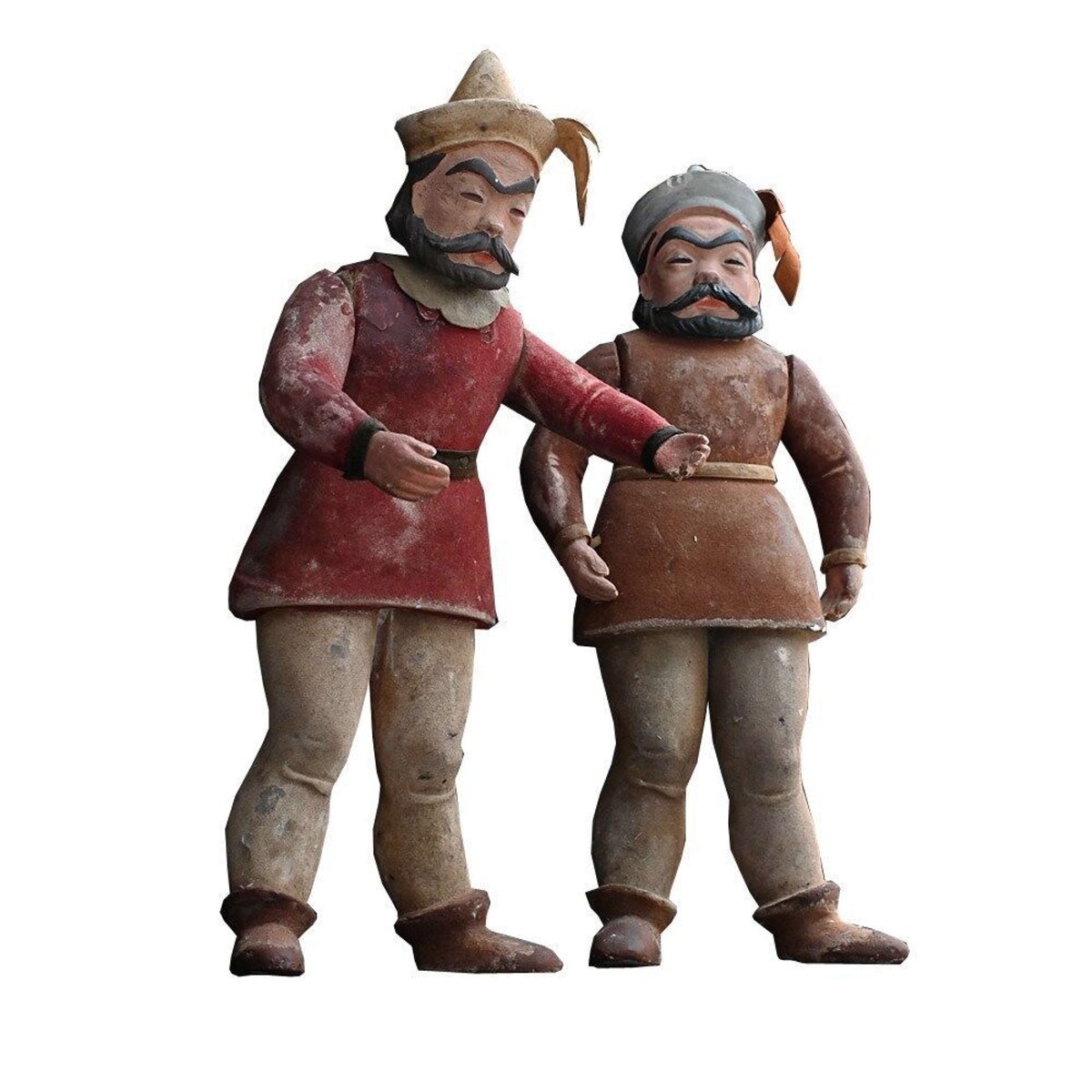
The House of Antiques lists a matched pair of automaton figures catalogued as originating from a clock tower in Paris, France, and dating to the early 20th century. The dealer reports they are constructed from carved wood and plaster components detailed in gesso with hand painting. According to the source, mechanical rods extending from the backs would have connected to a pulley system to raise both hands and cause one figure to nod. The pair measures 24 inches high by 21 inches wide and 10 inches deep.

Pair of painted wood and plaster automaton figures, reported to be French clock tower automatons
Pair of painted wood and plaster automaton figures, reported to be French clock tower automatons — The House of Antiques. Rights pending — permission not yet requested. Original source

Catalogue identity

Source
www.antiquesboutique.com
Category
Component · Clock tower automaton figures
Maker / attribution
Not established
Reference
Not recorded
Catalogue / lot identifier
THOA983 (AB-281341)
Source-reported date
Early 20th Century
Country
France

Source-reported attribution and specifications are not independent authentication. A listing does not establish present ownership, current display, availability or permission to reproduce.

Object description

Description and Origin

The item is a matched pair of male figures described by the dealer as 'French (Paris) clock tower automaton figures'. They are dated by the source to the early 20th century.

The figures are presented in a standing pose, featuring gesso detailing and hand-painted surfaces. They are currently mounted on an ebonised wooden base, which the dealer describes as 19th-century.

Evidence for this section
  • “A rare matched pair of French (Paris) clock tower automaton figures”
  • “Dated from the early 20th Century”
  • “later these figures have been secured to a 19th Century ebonised wooden base for display purposes”

Material and Condition

The objects are constructed from wood and plaster sections with gesso detailing. The source states the figures include applied velour clothing.

Visible condition is described as having wear across all surfaces, including crackled paint, surface loss, chipped gesso, and faded paint. The velour clothing is noted as being patchy and worn, exposing the underlying surfaces.

Evidence for this section
  • “Hand crafted from wood and plaster sections detailed in gesso and hand painted.”
  • “Wear is present across all the surfaces which includes crackled paint, worn surfaces, chipped gesso, and faded paint”
  • “The velour clothing is patchy in areas and worn to the gesso and wooden surfaces underneath.”

Mechanism

The source reports that the figures contain internal mechanisms consisting of metal rods extending from the backs. According to the description, these were intended to be connected to a pulley system to facilitate movement of the hands and head.

The mechanical components are described by the dealer, but their operational status and original context are not verifiable through the provided documentation.

Evidence for this section
  • “the metal rods extended from their backs, once pulled raise both hands and one figure moves his head in a nodding motion”
  • “the mechanism is simple and would have been on a mechanical pulley system.”

Open research questions

  • What specific architectural or historical records link these figures to a Parisian clock tower?
  • What is the provenance of the 19th-century ebonised base in relation to these 20th-century figures?

Source evidence

Recorded claims and source quotations for Early 20th Century French Clock Tower Automaton Figures
FieldSource-reported valueSource quotation
OriginFrance (Paris)“Origin: (France) Paris”
PeriodEarly 20th Century“Period: Early 20th Century”
MaterialWood & Gesso“Material: Wood & Gesso”
DimensionsH 24” x W 21” x D 10”“Size in inches: H 24” x W 21” x D 10””
MechanismPulley-operated rear rods“the metal rods extended from their backs, once pulled raise both hands and one figure moves his head in a nodding motion”
Catalogue CodeTHOA983 (AB-281341)“Code THOA983 (AB-281341)”

Visible details

  • Two carved and painted male figures depicted in side-by-side standing poses.
  • Left figure wears a conical hat with a plume, a red belted tunic, light-coloured leggings, and boots.
  • Right figure wears a rounded cap with a plume, a brown belted tunic, light-coloured leggings, and boots.
  • Both figures display stylised arched dark eyebrows, moustaches, and short beards.
  • Paintwork shows visible surface wear, cracking, chipping, and areas of loss revealing the underlying material.

Research qualifications

  • Attribution to Paris, clock tower origin, and early 20th-century dating are dealer-reported without independent documentation.
  • The rear control rods, mechanical linkages, and later ebonised base mentioned in the description are not visible in this cutout front-facing photograph.

Photograph identity and source facts were screened before import; rights clearance remains pending.

Consulted source

Clock Tower Automatons in Antique Figures

Reviewed 2026-10-21 · Record e24a6fc4bf

Terms in this record

Glossary explanations for terms named in this object’s record.